Isaac Newton once said:
"I don’t know what I may appear to the world, but to myself I seem like a boy playing on the seashore, finding a smoother pebble or a prettier shell, while the great ocean of truth lies undiscovered before me."
Behind this humble quote was one of the greatest minds in history.
Newton studied at Cambridge University, and when it closed during the plague, he went back home and spent a long time alone.
In that quiet period, he developed his most important ideas:
the laws of motion, gravity, and the early foundations of calculus.
His biggest breakthroughs didn’t happen in crowded places…
They happened in silence, deep focus, and long thinking.
Sometimes, all it takes to change the world…
is to sit alone and think clearly.
In 1951, doctors took cervical cancer cells from a patient named Henrietta Lacks without her knowledge. Unlike normal cells that die after a few divisions, her cells kept multiplying endlessly in labs. These "HeLa" cells became the first immortal human cell line and were used in major breakthroughs like the polio vaccine, cloning research, and gene mapping.
King Tut's dagger is over 3,300 years old, never rusted , made from a meteorite that fell from the sky. Scientists used a special X-ray test (XRF) and found it has a high proportions of nickel and cobalt.
The "call of the void".
A real psychological phenomenon where people experience sudden intrusive thoughts.
like imagining jumping from a height. Scientists believe it may be the brain's safety system sending a warning that gets misinterpreted as an urge.
In 1958 a U.S. bomber crashed into a fighter jet during training. To keep the plane from going down, the crew dropped a 7,600-pound Mark 15 nuclear bomb near Tybee Island. The military searched for it but never found it, and it may still be buried in the coastal mud today.
Under extreme conditions, cells can activate a process called Apoptosis which is a controlled form of self-destruction. If a cell detects severe DNA damage or mutation, it releases enzymes that break down its own components and safely remove the cell to protect the rest of the body.
Members of the Fugate family in Kentucky were known for having blue-colored skin. This was caused by a rare genetic condition called Methemoglobinemia, which reduces the blood’s ability to carry oxygen, turning it dark brown and making the skin appear blue.
King Tut's dagger is over 3,300 years old, never rusted , made from a meteorite that fell from the sky. Scientists used a special X-ray test (XRF) and found it has a high proportions of nickel and cobalt.
The Capuchin Catacombs of Palermo began in 1599 as a site where monks, and later Sicilian elites, were naturally mummified. Bodies were dehydrated on ceramic racks for a year preserveing them without artificial chemicals.
Today, it remains one of the world's most significant displays of natural mummification.
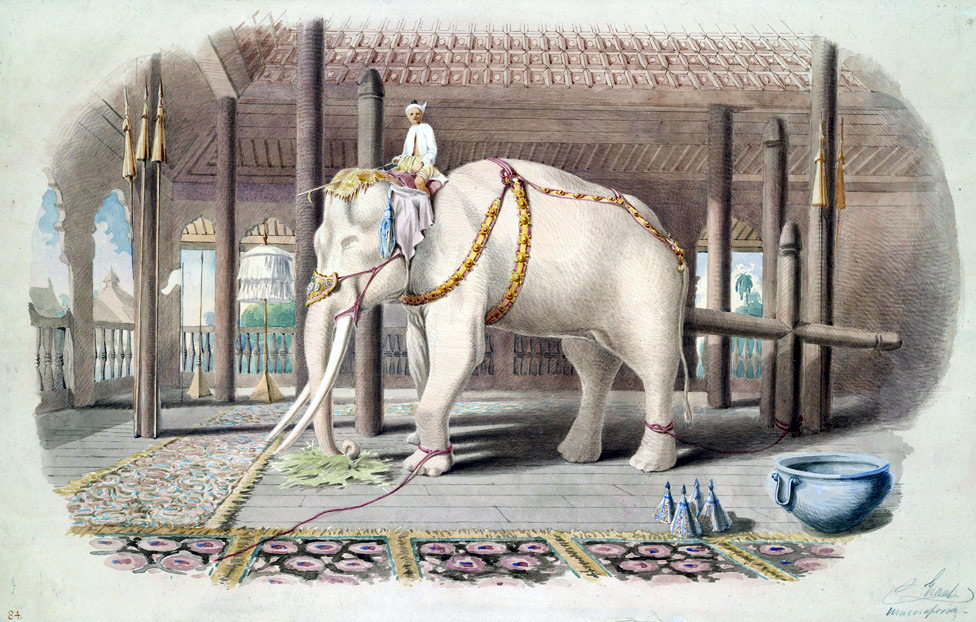
The King of Siam had an unusual way of punishing courtiers he disliked, he would gift them a white elephant. Since the white elephant was considered sacred, it could not be sold, killed, or given away, so the cost of caring for it would gradually ruin the unfortunate recipient. This is where we get the phrase "white elephant" today, referring to something you own that costs more trouble than it is worth.
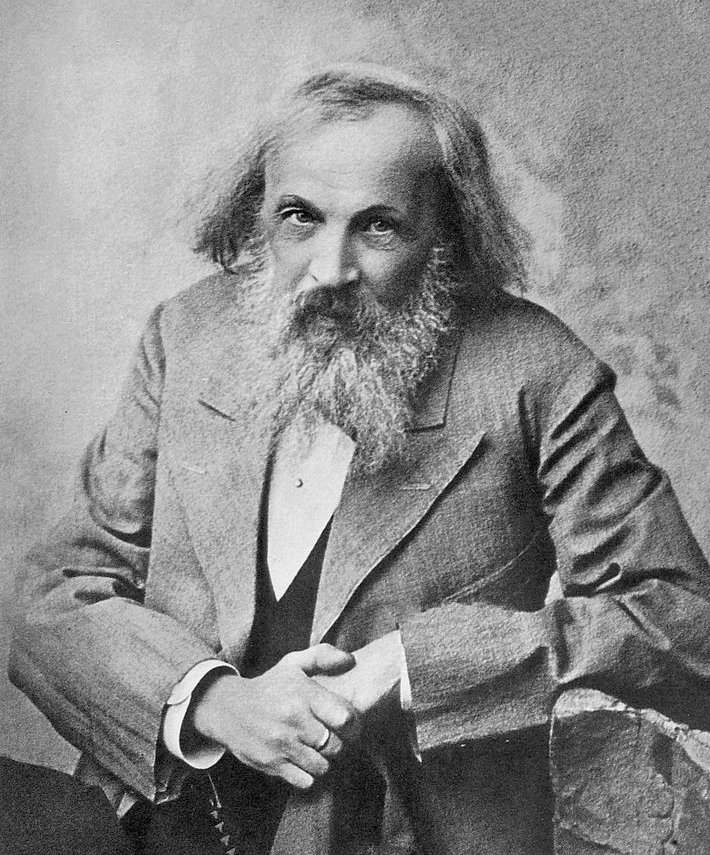
Dmitri Mendeleev’s early life was difficult, and getting an education took persistence. After setbacks, he eventually studied in St. Petersburg and focused on chemistry. Over time, he developed a way to organize the elements based on their properties and atomic weight. He published this system in 1869. It became the periodic table and even allowed him to predict elements that hadn’t been discovered yet. His work still shapes chemistry today.
Pulitzer Prize-winning photo of 1960 by Andrew Lopez. It captures such a heavy, raw moment in history.
This is the Father Domingo Lorenzo giving the last rites to José Rodriguez, a former corporal under Cuba's Batista regime, right before his execution in January 1959 after the revolution.
The ancient Greeks and Romans had no sugar. When they wanted to sweeten something they used honey. The first sugar was produced in India about 2,000 years ago. It was probably obtained from the sugar cane or bamboo. It was considered medicine and was used with food only on special occasions such as feasts.
The Arabians discovered this new product in India and brought the sugar cane plant to the western world where they first planted it in the valley of the Tigris and Euphrates rivers, then in Egypt and later in Spain. But even so, sugar was practically unknown in Europe until the 12th century. It didn't appear in England until the 14th century where it was so expensive that two pounds of it cost as much as a pig.
Two common myths about Friedrich Nietzsche still circulate today.
First, he was not an anti-Semite, he explicitly criticized such views. After his death, his sister edited and presented his work in ways that aligned it with nationalist ideology, which distorted his original positions.
Second, when Nietzsche wrote "God is dead" he wasn’t celebrating. He was describing a cultural crisis: what happens when traditional beliefs lose their power and nothing fully replaces them?