It’s easy to see overlaps between Carl Jung’s active imagination and heuristics for people going into a psychedelic journey: Jung’s active imagination was a deliberate technique for engaging with material arising from the unconscious while remaining awake and consciously attentive. It sits somewhere between dreaming, meditation, visualization, free association, and creative expression, but Jung regarded it as importantly different from simply fantasizing.
The basic procedure was roughly:
1. Begin with an emotionally charged inner event — perhaps a dream image, mood, bodily feeling, fantasy, or inexplicable emotion.
2. Turn attention toward it rather than analyzing it. You allow an image, scene, character, voice, or narrative to emerge spontaneously.
3. Let the imagery develop with minimal conscious direction. If a figure appears, for example, you don’t decide what it should do next; you watch what happens.
4. Participate in the scene. This is crucial. Rather than merely observing a fantasy, Jung encouraged a kind of dialogue with the figures or forces that emerge: asking them questions, responding to them, disagreeing with them, and seeing how they respond.
5. Give the experience concrete expression. This might mean writing the dialogue down, drawing or painting it, sculpting, moving/dancing, or otherwise externalizing what occurred.
6. Reflect on and integrate it afterward. The aim wasn’t to treat everything produced by the imagination as literally true. Conscious reflection had to engage with the unconscious material and work out what it might mean for one’s actual life.
Jung himself practiced something like this very intensely beginning around 1913. Much of the extraordinary imagery and dialogue recorded in The Black Books and subsequently transformed into The Red Book came out of these experiments.
One of the most interesting aspects of the technique is that Jung emphasized maintaining a tension between agency and surrender. Too much conscious control and you’re simply inventing a story; too little conscious participation and you’re essentially drifting into passive fantasy. Active imagination was supposed to create an encounter between the conscious ego and relatively autonomous unconscious processes.
That distinction is nicely captured by Jung’s description of allowing a fantasy to unfold while giving it one’s “whole attention” and observing how it changes of its own accord.
In more contemporary language, you could characterize it as a deliberately induced waking, immersive, internally generated experience in which top-down control is relaxed without being abandoned. The individual then interacts with the resulting material and subsequently integrates it. That makes it potentially quite relevant to ideas around psychedelic therapy, dreaming, and intrinsic psychological healing.
I suppose what I am trying to say is that, like everybody else, I've seen an intense split on this case. Among various interpretations, one of them sticks to a routine evidence of the case, concluding that murdering children should lead unquestionably to confinement, while the other is seeing something else, something completely different.
Specifically, the side that defends her vehemently sees a sanctioned act. The guilt of the case is supplanted by something invisibly meaningful. In other words, her action is carrying a symbolic dimension that overcomes other forms of evidence.
And what has been bothering me is that what these people see might be right: the actions of a Lindsay Clancy might in fact be accelerating the end of an epoch that does not know it must end.
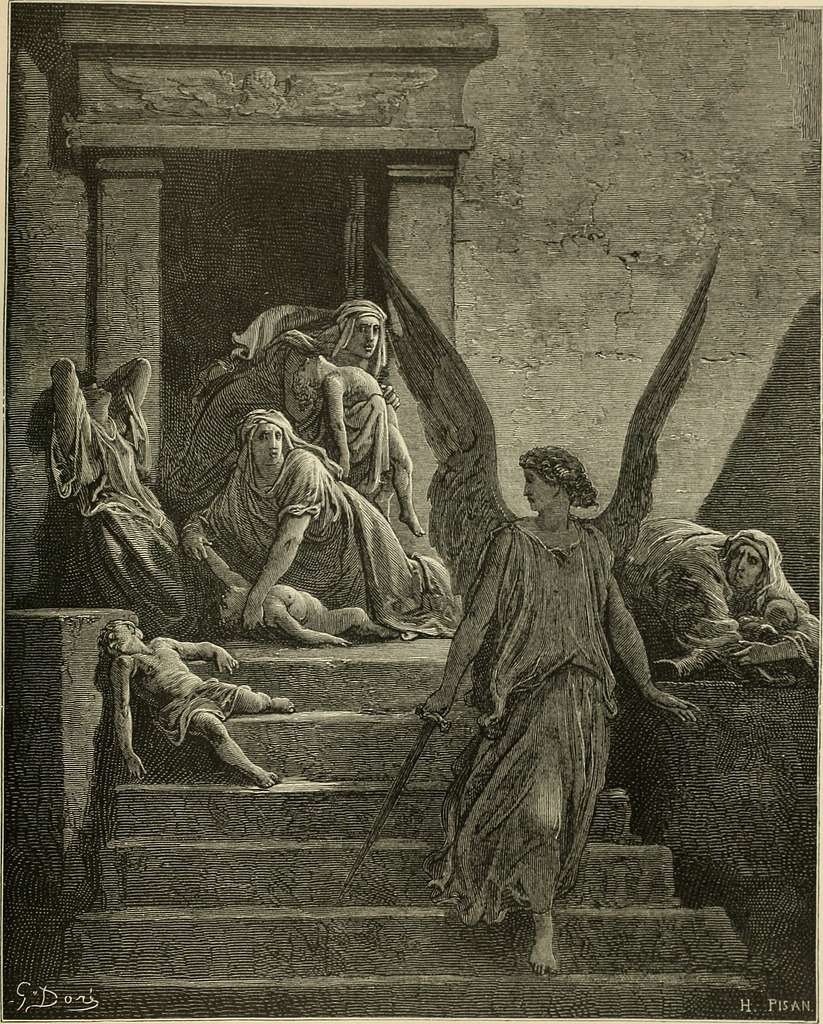
After worldwide events like Covid, life is back to normal... or is it? Do we have the right to pretend it is back to normal? Or do we need Biblical plagues to remind us that we're past a point of no return?
Art: Book of Exodus. The Plagues of Egypt. Tenth plague: death of firstborn. Last plague sent by God in order to the Egyptian pharaoh releases Israelites from slavery. Engraving by Gustave Dore.
I am aware that I am late to the Lindsay Clancy discourse, but I've been trying to find the right words to frame the ongoing discourse in a helpful manner.
What I keep coming back to are comments like the one in the video below. From 0:36 to 1:45, the woman uses expressions like "divine feminine rising", "elevating the level of consciousness" and "to dismantle patriarchy." This is striking. It's as if she sees in Lindsay Clancy the attribute of someone who is taking part in some kind of divine plan.
https://t.co/SCpJhwKMy0
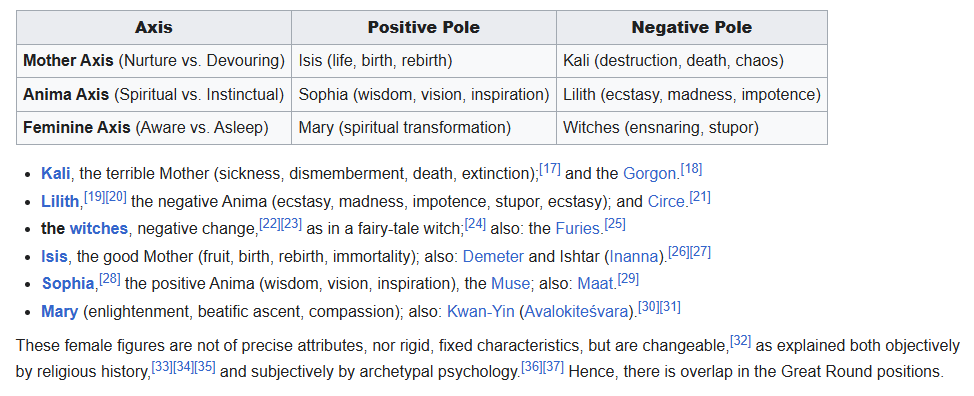
According to Erich Neumann, the archetype of the Great Mother can be (reductively) described as six different poles: Mary, Isis, Sophia, Lilith, Kali, and the witches.
Thus, the Great Mother in her fullness involves aspects that deal with death. This is the often-forgotten side of the Caring Mother, one that was suppressed for the past two thousand years, since the feminine was veiled.
But this side still exists. This is the Terrible Mother, who cares for life not by looking after it, but by bringing about its end. If it is not found in the Mary-Sophia-Isis triune, it can be readily seen in fairy tales, comparative mythology, or in dreams.
As we change Ages between Pisces and Aquarius, such returns will be frequent, especially if the feminine is to unveil. One of the many consequences of the return of the Death Mother in public consciousness is that the current dominant of consciousness (=what kept it at bay) is now unable to contain it either...
https://t.co/m4VuafSHYS
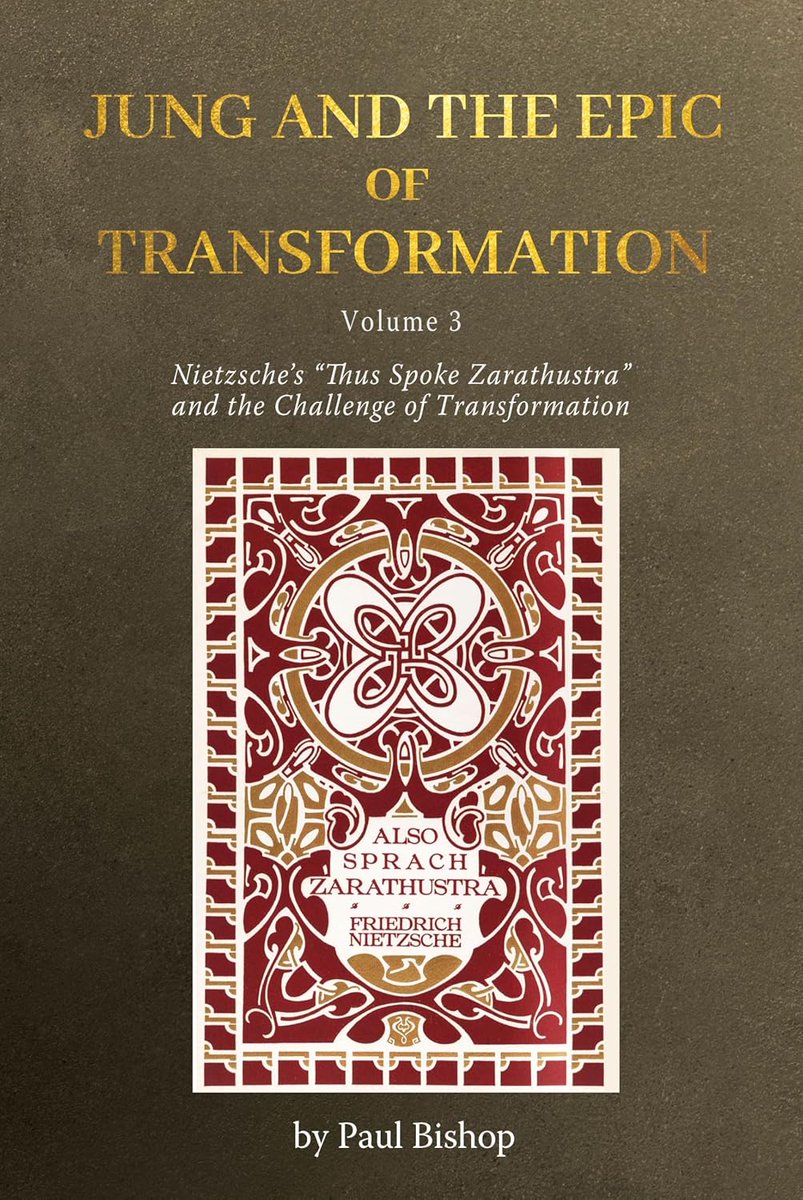
This essay would not have been possible without Paul Bishop's third volume of "Jung and the Epic of Transformation" dedicated to Nietzsche’s “Thus Spoke Zarathustra”.
A great many thanks to @paulbishop4U for his ability to bring clarity to such a dense work. His knowledge of Nietzsche's works and letters, and the ability to put them in correspondence with Jung, is unparalleled. He is the go-to scholar if you are interested in the ideas of these two great men.
IT'S FINALLY OUT!
Thus Spoke Zarathustra: A Wotanic Eruption
In the late nineteenth century, lightning struck from six thousand feet beyond man and time. A series of metaphysical propositions descended upon Nietzsche, which were given life in Thus Spoke Zarathustra. But that ecstatic work was also the beginning of his downfall, or so argues Jung in his seminar on that book. In this episode, we will go through Zarathustra's Prologue through the lens of analytical psychology and see what insights can be recovered from this magnificent but perilous book.
Listen at https://t.co/BRInxCvLrx
Read at https://t.co/BiBv6ibUhB
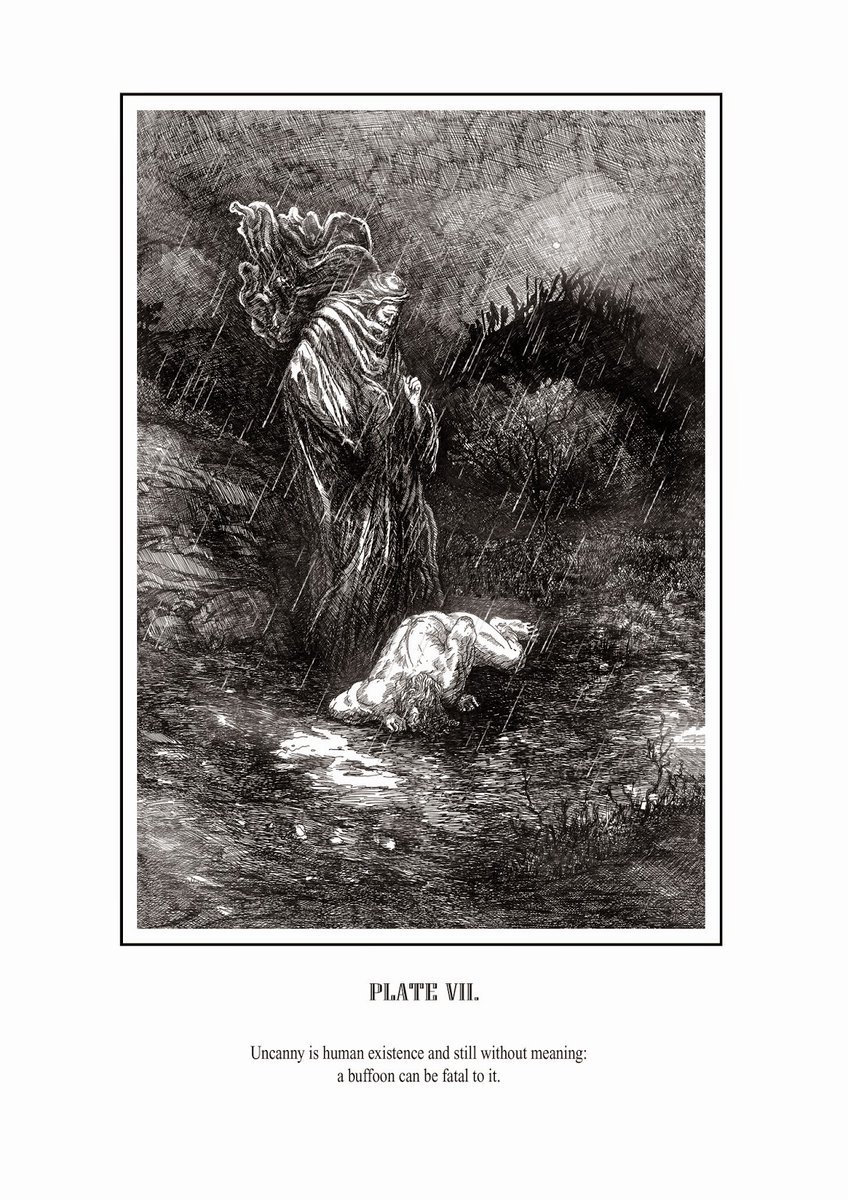
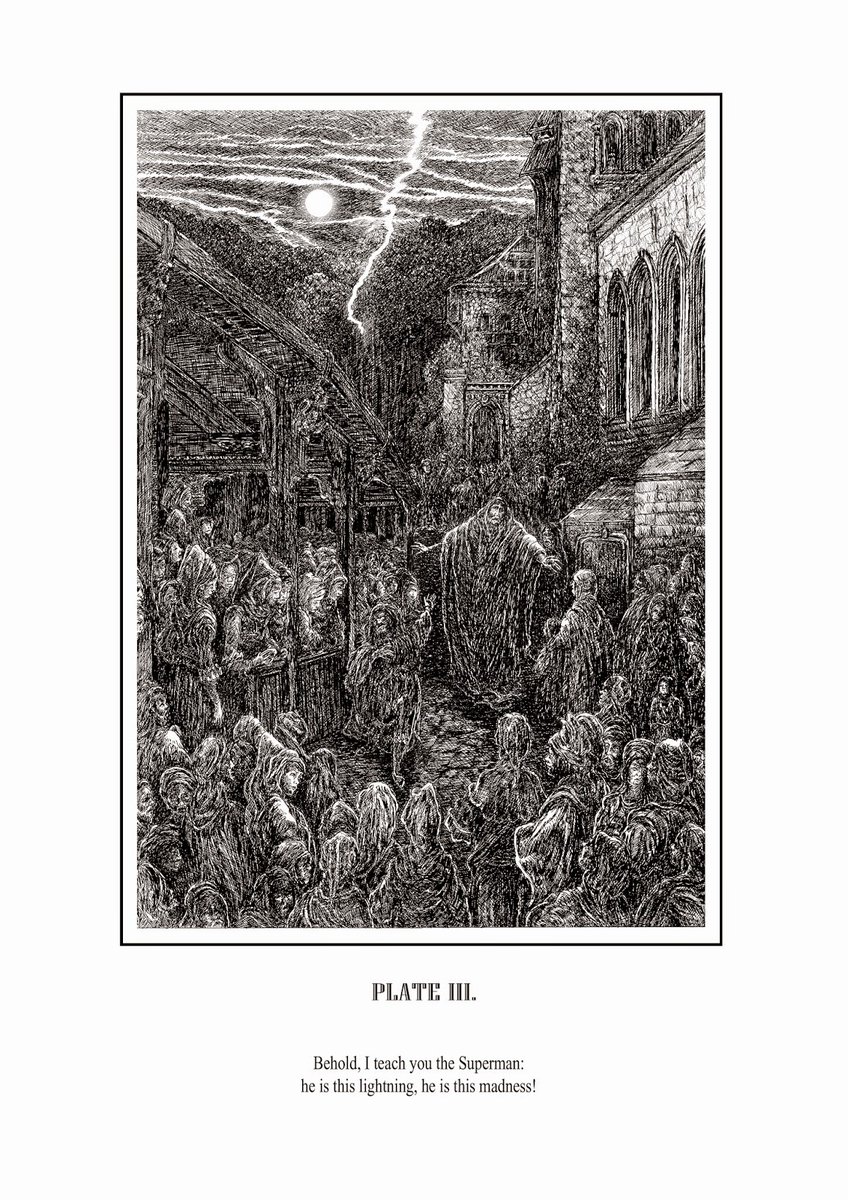
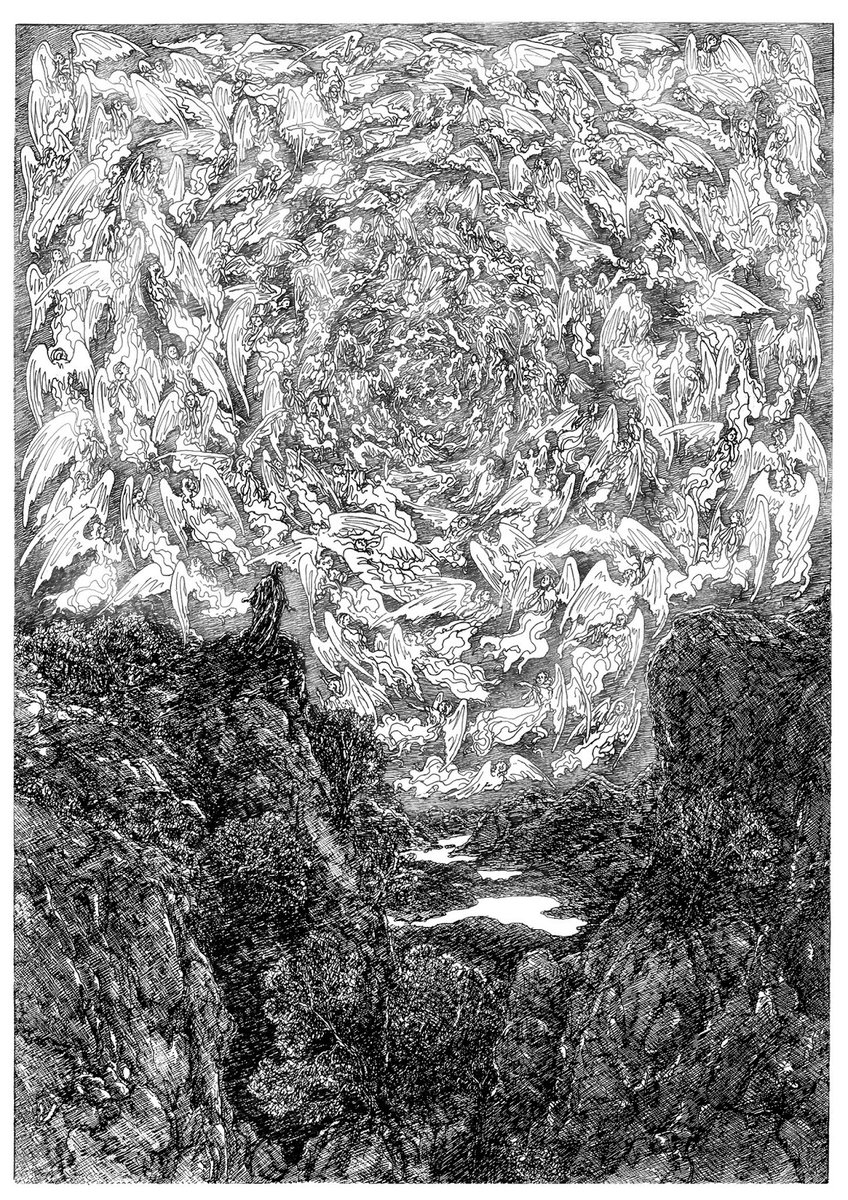
While looking for some art for Thus Spoke Zarathustra, I found a few artists who illustrated the book. The main one is Christopher Panzner, whose illustrations look very close to the ones of Gustave Doré. You can find all of his 103 illustrations on this website.
https://t.co/IdxUyukpAJ
IT'S FINALLY OUT!
Thus Spoke Zarathustra: A Wotanic Eruption
In the late nineteenth century, lightning struck from six thousand feet beyond man and time. A series of metaphysical propositions descended upon Nietzsche, which were given life in Thus Spoke Zarathustra. But that ecstatic work was also the beginning of his downfall, or so argues Jung in his seminar on that book. In this episode, we will go through Zarathustra's Prologue through the lens of analytical psychology and see what insights can be recovered from this magnificent but perilous book.
Listen at https://t.co/BRInxCvLrx
Read at https://t.co/BiBv6ibUhB
Satisfied with how much progress I've made over the week, I can now reveal what I've been working on for the past two months.
It is a psychological interpretation of the Prologue of Thus Spoke Zarathustra and it is the most effort I've put into something as of yet.
The first half of the audio is recorded, and it's already an hour and a half long.
The final result, which should be published as audio and text next week, will likely be around three hours.
https://t.co/8HnPcYFv7A
Publishing my work over on Substack now, as I do feel it has more of a community. Even though I do like the simplicity of Quaily, so I will try to maintain both! First analysis is up, #DavidLynch 's Eraserhead, the one that started it all.
https://t.co/gtTZh19Vg9
Now that the Onboarding is finished, I am going back to what I've been working on for two months. I'll reveal it later this week and, hopefully, publish it the next one.
Dionysophy Onboarding 2026
After a year and a half of online presence, Dionysophy has gone through quite a few new developments. Next Sunday, I will give a summary of where Dionysophy is at in 2026.
So if you are interested in depth psychology themes such as self-knowledge, dream interpretation, the interplay of Eros and Logos, active imagination, how to recollect projections, psychic symbols of a sexual nature, etc. you might find this material to your liking.
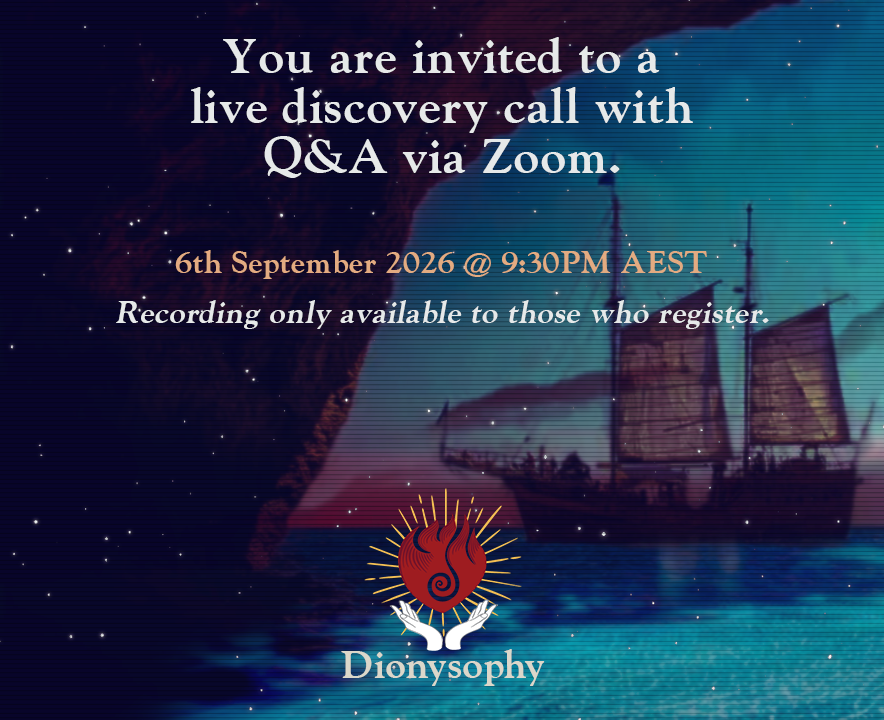
Whether you are curious about joining, just want to learn about what Dionysophy is, or have some questions you want to ask about it, you are welcome to register for this upcoming public presentation on Zoom.
Date: 6 September 2026, 9:30 PM AEST
Register here: https://t.co/IwZNiXe6pD
Please note that the event will be recorded. If you can't attend, you will receive a link to the video afterwards.
Ernest Becker: "Adler was right to say that the mentally ill all have a basic problem of courage. They cannot assume responsibility for their own independent lives; they are hyper–fearful of life and death."
Paul Tillich: “Neurosis is the way of avoiding nonbeing by avoiding being.”
Carl Jung: “Neurosis is always a substitute for legitimate suffering.”
Sigmund Freud: “Neurotics complain of their illness, but they make the most of it, and when it comes to taking it away from them they will defend it like a lioness her young.”
Dionysophy Onboarding 2026
After a year and a half of online presence, Dionysophy has gone through quite a few new developments. Next Sunday, I will give a summary of where Dionysophy is at in 2026.
So if you are interested in depth psychology themes such as self-knowledge, dream interpretation, the interplay of Eros and Logos, active imagination, how to recollect projections, psychic symbols of a sexual nature, etc. you might find this material to your liking.
Whether you are curious about joining, just want to learn about what Dionysophy is, or have some questions you want to ask about it, you are welcome to register for this upcoming public presentation on Zoom.
Date: 6 September 2026, 9:30 PM AEST
Register here: https://t.co/IwZNiXe6pD
Please note that the event will be recorded. If you can't attend, you will receive a link to the video afterwards.
In the ancient Cult of Attis and Cybele, male initiates would castrate themselves as an act of devotion towards the Mother Goddess. They re-enacted the myth in order to enter into a mystical union with the deity.
Given that arms are symbolically equivalent to the phallus in the act of generativity and creation, here is the same ritual of self-sacrifice but for the sake of a happy marriage.
Makes you wonder about this gal since she popped in my feed, she is obsessed with the film 127 hours and watches it repeatedly. It is based on misadventure, a man gets stuck in a crevice and must free himself by amputating his arm.
@chymicalmycelia Oh yeah, I saw that too. The standstill is solved by the sacrifice of the arm/phallus, of the willpower as an active or generative principle.