Excited to share that our STOC 2011 "Distributed Verification and Hardness of Distributed Approximation" paper received the 2026 Dijkstra Prize in Distributed Computing. Huge thanks to my coauthors, colleagues, and the distributed computing community. https://t.co/x67lO7n5pS
Does an imperfect verifier break reinforcement learning with verifiable rewards (RLVR)? Turns out it doesn’t!
Why does this matter? As the world moves into reinforcement learning in semi-verifiable domains, perfect verifiers don’t exist.
We added controlled and LLM-based noise to RLVR reward signals and found that up to 30% noise barely hurts training; performance stays within 4pp of the clean baseline.
This research has already impacted how we build reinforcement learning environments at @joinHandshake. For a major benchmark we are launching tomorrow, we hill-climbed the verifier to 88% accuracy—above the 85% human inter-rater agreement—knowing from this research that this is good enough.
With @andreas_plesner@guzmanhe
Mose is not the only person winning awards. Marc Dufay, @CAndrei1998, @dianamin75 and @TheWattenhofer also won the best paper award at PODC 2025 for their work on stable matching with byzantine participants.
https://t.co/w3dH3vN89E
Mose Mizrahi wins best theory paper award at OPODIS 2025 for the work Asynchronous Approximate Agreement with Quadratic Communication. OPODIS seems to like Mose's work, as he won the award already in 2024.
🚨 New paper alert 🚨
“Optimistic MEV in Ethereum Layer 2s: Why Blockspace Is Always in Demand” uncovers how speculative MEV bots are dominating gas usage on L2s and what this means for scalability and network health. 1/🧵
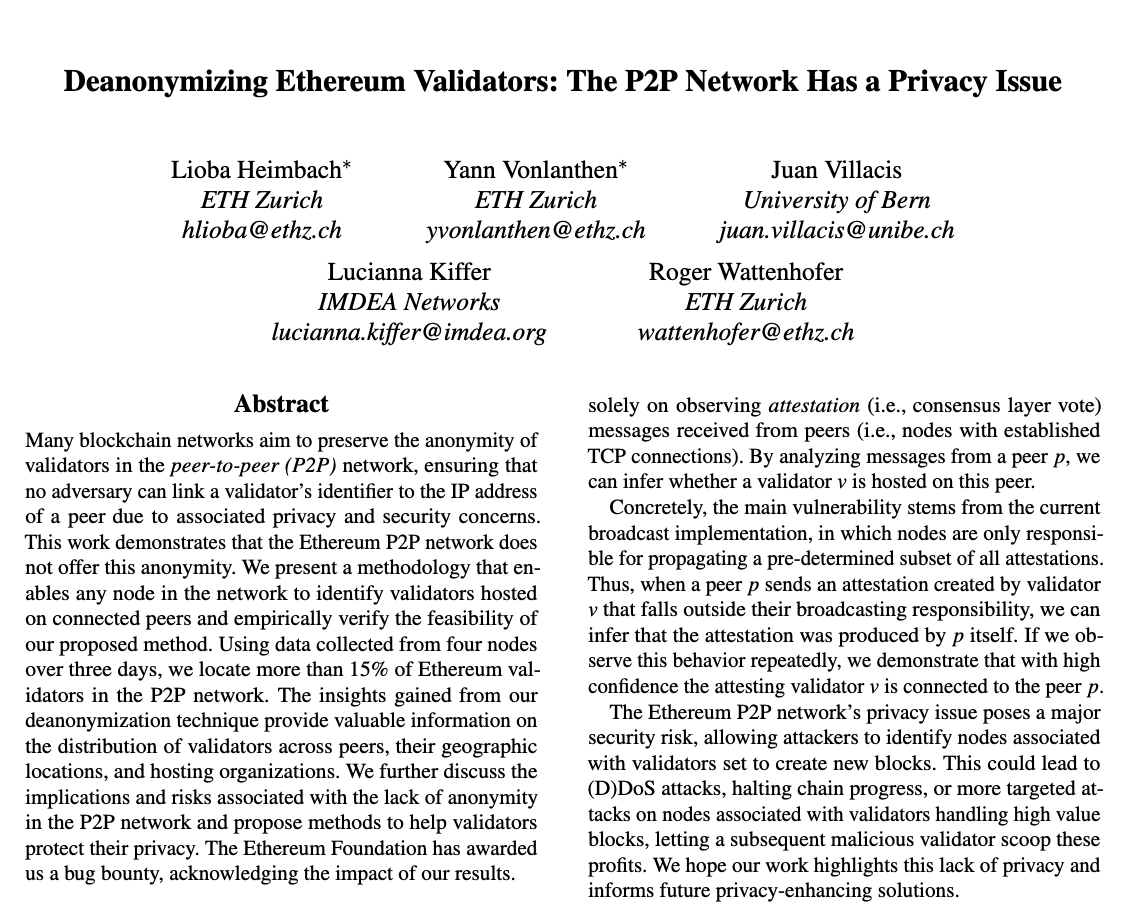
Our paper demonstrating that Ethereum validators can be deanonymized has been accepted at USENIX Security 2025!
The P2P network leaks a lot of information, posing a significant security concern, while offering insights into voting power decentralization in Ethereum.
Mose Mizrahi Erbes wins the best paper award at OPODIS 2024 for the quit-resistant reliable broadcast paper. His innovation helps combining subroutines in larger protocols since processes can quit during execution. Congrats, Mose!
https://t.co/gn82Z4KW4W
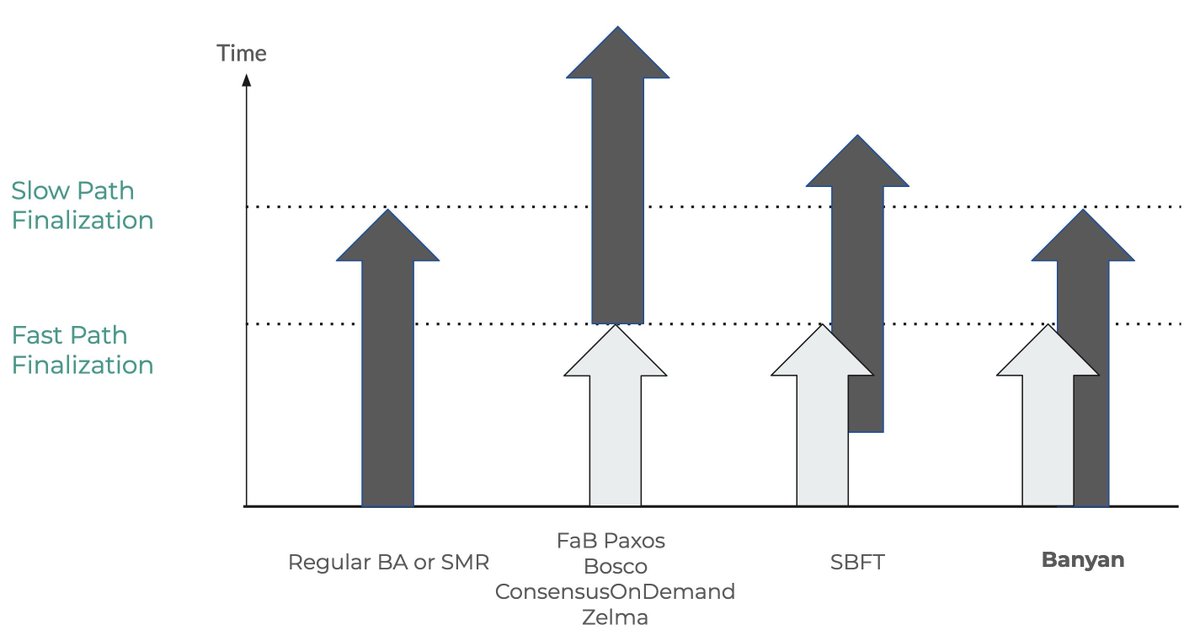
Banyan wins the best paper award at ACM/IFIP MIDDLEWARE 2024. Congrats to Yann Vonlanthen @yannvon, Jakub Sliwinski @DiscoKobi and Massimo Albarello @MaxAlbarello.
https://t.co/14OeCIIxnA
Andreas Plesner@andreas_plesner shows that Google's standard CAPTCHAs cannot distinguish humans from bots.
Article in New Scientist: https://t.co/jXxmo9Nq0C
Original paper: https://t.co/KrSmB9ty3h
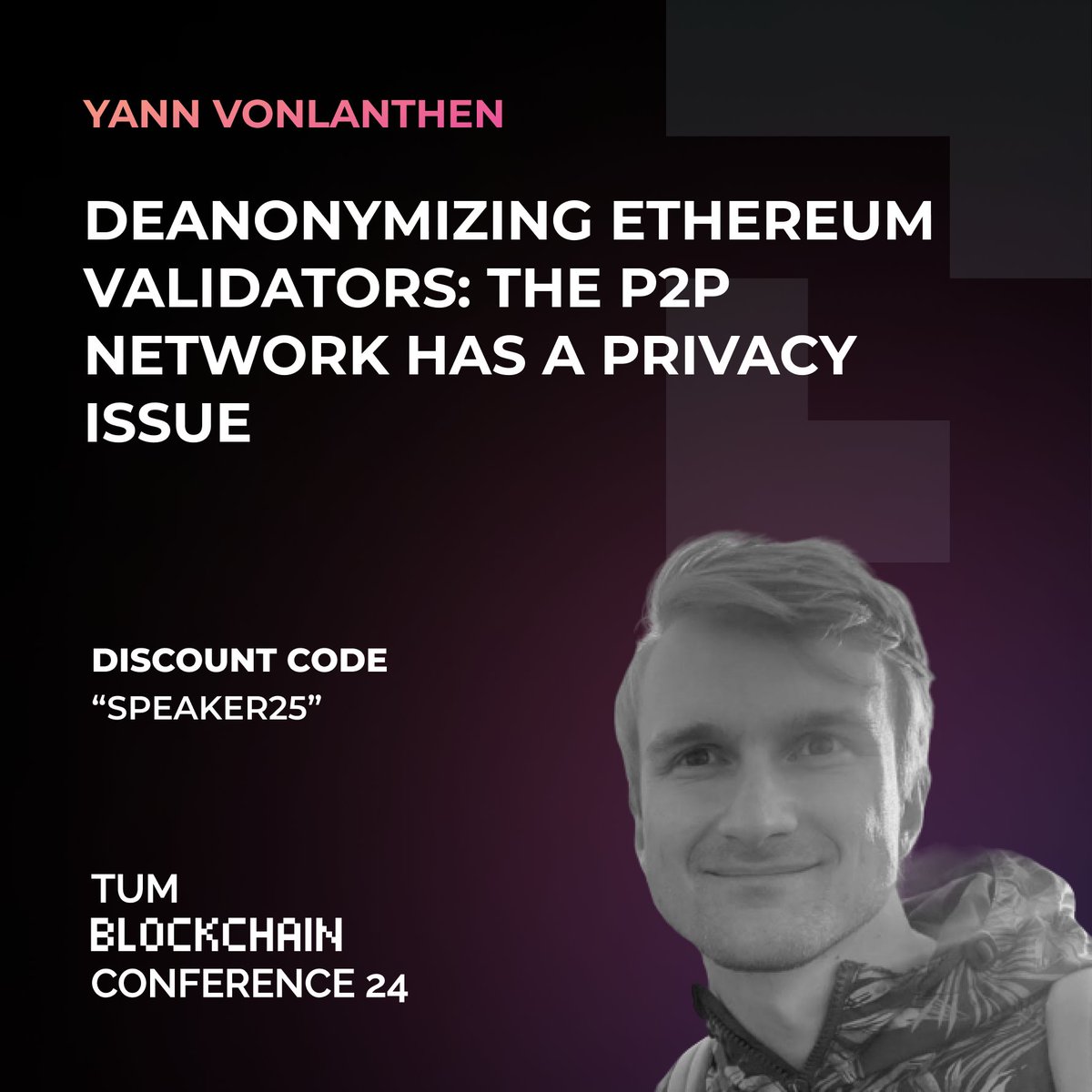
Our work on Ethereum validator anonymity is now online (thanks for sharing, @Istvan_A_Seres)!
Excited to be presenting it this Friday at the TUM Blockchain Conference. Shout out to @tbc_munich for hosting!
I’m looking to hire a PhD student to join my new group at @IMDEA_Networks in Madrid! If you’re into P2P networks, blockchain, or cryptocurrency protocols (theory or measurements), let’s connect! Know someone who might be interested? Please pass this along!
https://t.co/R1rIKfIrxs
As we have been reminded recently by the Compound DAO incident, governance attacks are a reality. What attack vectors are exploited most often, and which factors facilitate attacks? This is what we set to find out in our Systemization of Knowledge on Attacks on DAOs. (1/8)
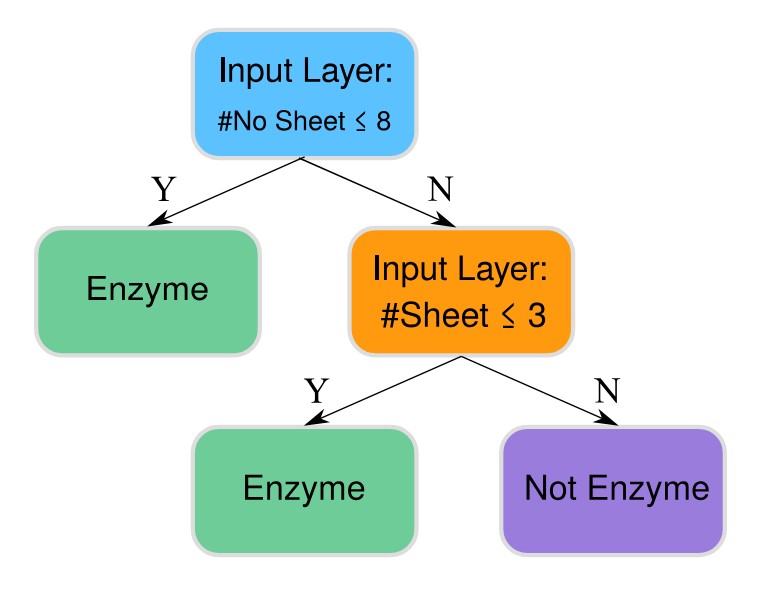
... and GraphChef: A GNN explanation method not just for a single sample graph but a whole dataset of graphs by Peter Müller et al. The image shows our (scientifically 100% correct!) automatically learned recipe explaining which proteins are enzymes.
https://t.co/vYyInaG50y