BofA’s Hartnett Sees Pressure on Risk Assets If Bond Plan Fails
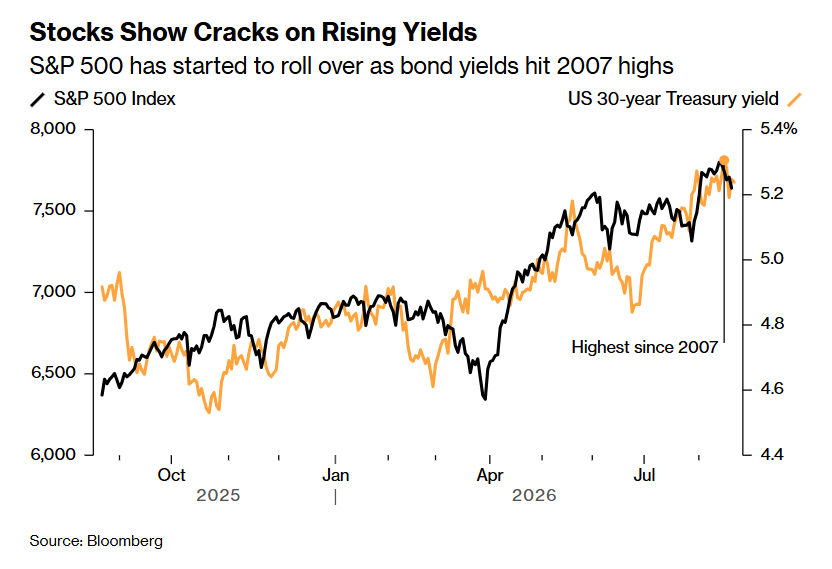
A failure in the US Treasury’s plan to tame long-term bond yields would pressure the dollar and spur short bets against riskier assets in the lead-up to November midterm elections, according to Bank of America Corp. strategist Michael Hartnett.
If Treasury Secretary Scott Bessent “can’t drag 30-year yield below 5%,” Hartnett said he foresees a dollar slump and increased short bets against leverage such as AI hyperscalers and private credit, among other risk assets, in the coming weeks. Financials also face the prospect of short selling if the plan doesn’t work, he said. (Bloomberg)
Senang sekali melihat paper luar biasa Naila Maya Shofia (NUS) tentang fenomena hijab di Indonesia dg menganalisa sekitar 250 ribu foto dari buku induk sekolah dari 2 dekade dan Sakernas, muncul di top journal. Congrats @NailaShofia1 !
If you had trusted the settled science of the day, here is how it would have gone.
1890s: you dose the baby with Bayer's new cough syrup, the non-addictive alternative to morphine, marketed for children. It was heroin. They named it after the German for heroic.
1900s: you rub calomel teething powder on your infant's gums. It is a mercury compound, and it leaves a generation with pink disease. Swollen, peeling hands and feet, screaming for months, and some of them died.
1910s: you cook in Crisco, launched by a soap and candle company, because cottonseed oil is modern and lard is what your mother used. The process that made it solid produced trans fat, banned outright a century later.
1920s: you drink Radithor, certified radioactive water, on prescription. Eben Byers took fourteen hundred bottles for his vitality. His jaw was removed in pieces and he was buried in a lead coffin.
1930s: a chemist dissolves a new sulfa drug in diethylene glycol, which is antifreeze. It kills 107 people, mostly children, and only then does America give the FDA power to demand safety testing.
1940s: your doctor lights a Camel in the surgery. More doctors smoke them than any other brand, and the advert runs in the Journal of the American Medical Association, which sold him the page.
1950s: DDT is sprayed over your kitchen, your garden and your children at school. The man who found its insecticidal properties has already been given a Nobel Prize.
1960s: your wife takes thalidomide for morning sickness because it is remarkably safe. More than ten thousand children are born with missing and shortened limbs.
1970s: the country puts down the butter and picks up the margarine, on the instruction of the American Heart Association. The fat everybody switched to was banned in 2015 as unsafe at any level.
1980s: the fat comes out of everything and sugar goes back in to make it edible. Obesity begins a climb it has never come off.
1990s: your father is prescribed OxyContin, because fewer than one per cent get addicted. The company later pleads guilty to criminal misbranding, and the overdose count runs into hundreds of thousands.
2000s: you take Vioxx for your knee. It is pulled in 2004, and the FDA's own safety officer estimates tens of thousands of excess heart attacks.
Not one of those was fringe. Every one had a professional body, a literature and a man in a white coat standing behind it.
Nobody who followed that advice was stupid. They were obedient, to the most qualified people available.
Settled is a word about money. It means the questions stopped being funded, so they stopped being asked.
So which of today's instructions will your grandchildren read out in disbelief.
The oil washed in hexane and built into every cell you own. The statin that blocks the pathway making your hormones, to prevent one heart attack per hundred people. The injection where a third of the loss is muscle. The infant formula built out of vegetable oil.
All settled. None of it funded to be otherwise.
A young person asked me today for a few papers that would be great to read early on in one’s career. Here is a list I came up with (I posted a shorter list earlier in reply to a comment). There are many other great papers (and I apologize if I didn’t include yours), but my goal was to focus on papers that a 21-year-old undergrad would enjoy a lot. A paper on the asymptotic properties of the bootstrap or on some subtle point about New Keynesian models, as important as it might be, is not what I am looking for. Also, of course, the list reflects my deeply biased taste. So, feel free to add in the comment section other papers you love!
Philippe Aghion and Peter Howitt (1992), “A Model of Growth Through Creative Destruction,” Econometrica.
George A. Akerlof (1970), “The Market for ‘Lemons’: Quality Uncertainty and the Market Mechanism,” Quarterly Journal of Economics.
Armen A. Alchian (1950), “Uncertainty, Evolution, and Economic Theory,” Journal of Political Economy.
William J. Baumol (1967), “Macroeconomics of Unbalanced Growth: The Anatomy of Urban Crisis,” American Economic Review.
Gary S. Becker (1973), “A Theory of Marriage: Part I,” Journal of Political Economy.
Douglas W. Diamond and Philip H. Dybvig (1983), “Bank Runs, Deposit Insurance, and Liquidity,” Journal of Political Economy.
Xavier Gabaix (1999), “Zipf’s Law for Cities: An Explanation,” Quarterly Journal of Economics.
Xavier Gabaix and Augustin Landier (2008), “Why Has CEO Pay Increased So Much?,” Quarterly Journal of Economics.
Luis Garicano (2000), “Hierarchies and the Organization of Knowledge in Production,” Journal of Political Economy.
Edward L. Glaeser, Bruce Sacerdote and José A. Scheinkman (1996), “Crime and Social Interactions,” Quarterly Journal of Economics.
Sanford J. Grossman and Joseph E. Stiglitz (1980), “On the Impossibility of Informationally Efficient Markets,” American Economic Review.
Oliver Hart and John Moore (1990), “Property Rights and the Nature of the Firm,” Journal of Political Economy.
Friedrich A. Hayek (1945), “The Use of Knowledge in Society, American Economic Review.
Bengt Holmström (1979), “Moral Hazard and Observability,” Bell Journal of Economics.
Charles I. Jones (1995), “R&D-Based Models of Economic Growth,” Journal of Political Economy.
Charles I. Jones (2005), “The Shape of Production Functions and the Direction of Technical Change,” Quarterly Journal of Economics.
Michael Kremer (1993), “Population Growth and Technological Change: One Million B.C. to 1990,” Quarterly Journal of Economics.
Michael Kremer (1993), “The O-Ring Theory of Economic Development,” Quarterly Journal of Economics.
Paul Krugman (1991), “Increasing Returns and Economic Geography,” Journal of Political Economy.
Robert E. Lucas, Jr. (1978), “On the Size Distribution of Business Firms,” Bell Journal of Economics.
Kevin M. Murphy, Andrei Shleifer and Robert W. Vishny (1989), “Industrialization and the Big Push,” Journal of Political Economy.
Paul M. Romer (1990), “Endogenous Technological Change,” Journal of Political Economy.
Sherwin Rosen (1981), “The Economics of Superstars,” American Economic Review.
Alvin E. Roth (2007), “Repugnance as a Constraint on Markets,” Journal of Economic Perspectives.
Thomas C. Schelling (1971), “Dynamic Models of Segregation,” Journal of Mathematical Sociology.
Andrei Shleifer and Robert W. Vishny (1993), “Corruption,” Quarterly Journal of Economics.
Michael Spence (1973), “Job Market Signaling,” Quarterly Journal of Economics.
Robert M. Townsend (1979), “Optimal Contracts and Competitive Markets with Costly State Verification,” Journal of Economic Theory.
Martin L. Weitzman (1974), “Prices vs. Quantities,” Review of Economic Studies.
ESTE TIPO USÓ CLAUDE PARA CONSTRUIR UN SISTEMA DE TRADING AUTOMATIZADO QUE GANÓ 847 $ DE LA NOCHE A LA MAÑANA
Todo empezó con un solo artículo sobre bots de Trading.
Claude lo leyó, seleccionó 7 repositorios de GitHub, los conectó en un pipeline funcional y desplegó el sistema de principio a fin.
A partir de ahí, todo funcionó de forma autónoma.
El sistema escaneó más de 412.000 operaciones, rastreó wallets de ballenas, detectó actividad de insiders y tomó decisiones en tiempo real.
Según él, cada pocos segundos analizaba datos, decidía si comprar, vender o pasar, y ejecutaba las operaciones automáticamente.
47 operaciones después, el sistema terminó la noche con 847 $ de ganancia, sin ninguna intervención manual.
LOCURA
GILA… 😭🔥
Orang ini berhasil ngubah animasi AI sederhana jadi 6 JUTA views di YouTube dan katanya menghasilkan sekitar $36.000.
Sekarang dia malah breakdown seluruh workflow-nya dalam video cuma 9 menit.
Mulai dari:
💡 cari ide
🎬 bikin animasi
📤 upload
💰 sampai proses monetisasinya
Dan yang bikin menarik:
❌ nggak perlu kamera
❌ nggak perlu animation team
❌ nggak perlu pengalaman sebelumnya
Basically, dia nunjukin dari ide pertama sampai video berhasil dimonetisasi.
Kalau lo lagi kepikiran bikin channel YouTube pakai AI, ini salah satu tutorial yang menurut gue wajib disimpan.
Tonton sekali, bookmark workflow-nya, terus coba bikin channel pertama lo. 🚀🔥
Mengapa banyak orang bisa sukses di karir, tapi gagal di kehidupan pribadi?
Video dari Clay Christensen ini bagus banget membahas mengenai hal itu. Tamparan keras untuk kita yang cenderung mengalokasikan waktu dan energi pada hal-hal yang memberikan bukti pencapaian instan, seperti promosi, bonus, atau proyek yang selesai di tempat kerja.
Sayangnya kita kurang melakukan investasi pada keluarga dan hubungan pribadi, demi mengejar target jangka pendek, berupa jabatan dan materi. Padahal pada akhirnya, nilai hidup kita ditentukan dari seberapa banyak orang yang kehidupannya menjadi lebih baik karena kehadiran kita.
Udah deh, tonton!
Bagus banget!
Thank me later!
this is f**king dangerous
watched a 18-year-old kid casually explain how he makes $10k/month using AI while sleeping and i’m convinced 99% of people are missing this
the entire setup:
pick a YouTube channel that posts often. drop the link into one tool. plug in your TikTok, Instagram, YouTube Shorts. close the laptop.
from that point on, AI does everything catches every new upload, slices the viral moments, captions them, blasts them across every platform.
> 1M views ≈ $2,000
>zero editing, zero posting, zero stress
> 10 min to set up, runs on autopilot forever
you’re not making content. you’re owning a content factory.
the full step-by-step is in the article below exact tools, exact stack, exact playbook
save it
A neuroscientist who studies focus discovered something unexpected about AirPods Pro 2.
The combination of Active Noise Cancellation + brown noise at 40% volume + Conversation Awareness OFF creates the fastest path to flow state she's ever measured in a consumer device.
Average time to deep focus: 4 minutes.
Average deep work session: 90 minutes without interruption.
Previous average without the protocol: 23 minutes before the first distraction broke the session.
She didn't discover a hack. She applied neuroscience.
The auditory cortex never fully deactivates during wakefulness. It is always listening, always evaluating the acoustic environment for threats and social signals. The question is not how to silence it. The question is how to feed it something so consistent and non-threatening that it stops looking for problems and allows the prefrontal cortex to take over.
She now prescribes this protocol to every PhD student and executive she coaches:
"Your brain can't focus in silence. Silence is threatening your auditory system scans for sounds that aren't there. And your brain can't focus in noise noise is unpredictable stimulation that pulls attention. Brown noise through ANC headphones is the neurological sweet spot: consistent enough that your threat-detection system relaxes, rich enough that your auditory cortex is occupied, and featureless enough that your prefrontal cortex takes over. That's flow. In 4 minutes. On a device most people use to listen to podcasts."
Here's the full protocol the neuroscience behind it and the exact AirPods settings to replicate it tonight 🧵
One man turned $20 million into $14 billion in thirteen years. he retired at 46. then he walked into the National Press Club and explained the entire method to a room of journalists. for free. the fund industry has spent thirty years pretending nobody recorded it.
his name is Peter Lynch. he ran Fidelity's Magellan Fund from 1977 to 1990. 29% a year. every year. when he started, the fund had $20 million. when he left, it was the largest mutual fund on earth. over a million shareholders. then he quit, walked away from billions in fees, and never managed outside money again.
the first thing he says is the one rule Wall Street will never teach you. if you cannot explain to a ten-year-old in two minutes why you own a stock, you should not own it. he says 80% of people who own stocks cannot do this. then he explains why the number has not changed in thirty years.
he did not use algorithms. he did not use quant models. he found stocks at the mall. at the grocery store. in his own neighborhood. he made more money on Dunkin' Donuts than on any sophisticated trade. the most boring companies with the simplest products, bought by a man who actually used them.
the part nobody repeats: he says individual investors have a structural advantage over every institution on Wall Street. the funds are forced to follow rules that you are not. when they panic-sell, you benefit. when they cannot hold a small position, you can. he said this to a room full of financial journalists. not one of them ran the story.
your financial advisor charges 1% of everything you own every year to underperform a method a retired fund manager gave away in one hour. there are 5,000 mutual funds competing for your money. the man who beat all of them told you exactly how. thirty years ago.
the lecture is 61 minutes. it has been free since 1994. the people charging you to invest are hoping you never find it.
Claude writes like a chatbot until you use two words to cap its responses at 900 approved words and 20-word sentences.
Claude's default style annoys people for a reason. It stacks long sentences, filler phrases, and words nobody uses in real life.
The fix is telling it to write like an aircraft manual.
Add "Use ASD-STE100" to your prompt. That's the whole trick.
ASD-STE100 is Simplified Technical English, the writing standard aerospace mechanics rely on for maintenance manuals. The spec allows around 900 approved words, caps instructions at 20 words each, and permits one meaning per word. When a wrong word can ground a plane, the writing gets brutally clear.
Claude learned this standard in training. So those two words load the full ruleset without you explaining anything. Your drafts come back in short sentences and plain words, and the fluff disappears.
One warning before you run it. The spec flattens personality along with the fluff, so keep it away from anything meant to sound like you and point it at emails, summaries, reports, and instructions instead.
Try it on the next email you'd normally rewrite three times.
GILA 😭 satu file CLAUDE.md bisa sampai tembus 200K+ stars.
Namanya Andrej Karpathy Skills, dan basically ini ngubah berbagai “rant” Karpathy soal kebiasaan coding pakai LLM jadi semacam system prompt yang bener-bener bisa dipakai. 🤯
Claude dipaksa buat:
🧠 Think before coding — jangan langsung ngebut bikin code
🧹 Prefer simplicity — pilih solusi yang simpel, bukan overengineering
🔪 Surgical changes — ubah seperlunya, jangan ngacak-ngacak codebase
🎯 Clear success criteria — harus tahu dulu definisi “berhasil” sebelum mulai
Dan yang paling gila…
Install-nya cuma butuh sekitar 10 detik. 💀
Jadi bukan framework ribet.
Bukan setup berjam-jam.
Cuma satu file yang ngasih Claude aturan main yang lebih disiplin.
Kalau lu sering pakai Claude buat coding, ini honestly worth checking out. 👀🔥
https://t.co/XhLEhbNZzq
BRO, Claude Code sekarang bisa langsung narik data finansial LIVE dari 17,000+ saham, crypto, earnings, sampai financial statements dalam hitungan detik 😭🔥
Setup-nya juga ternyata simpel banget.
Cuma satu command:
claude mcp add --transport http financial-datasets https://t.co/WHF0tni7Q3
Terus ketik /mcp di Claude Code → selesaikan OAuth di browser.
Buat cek koneksinya:
claude mcp list
Abis itu tinggal ngobrol sama datanya.
Misalnya:
→ “What is Apple's current P/E ratio and market cap?”
→ “Show me Tesla's income statement for the last 4 quarters.”
→ “How has Bitcoin's price changed over the past year?”
Udah.
Claude Code sekarang bisa akses data dari 17,000+ stocks, earnings reports, balance sheets, income statements, cash flow, sampai crypto prices. 🤯
Yang bikin menarik bukan cuma datanya.
Tapi sekarang lo bisa gabungin reasoning Claude Code + live financial data dalam satu workflow.
Dulu harus buka Bloomberg Terminal, pakai API finansial yang ribet, atau ngumpulin data manual dari banyak sumber.
Sekarang?
1 command → connect → prompt.
Buat analyst, quant, portfolio manager, atau siapa pun yang tiap hari ngurus riset finansial, ini bisa jadi workflow yang lumayan brutal. 👀
Kalau mau lihat dokumentasinya kalau ada error:
Financial Datasets MCP Docs
Gue bakal bookmark yang beginian sih. 🔥
https://t.co/o9VqsTLxrF
this is f*cking gold
How to build your first AI agent (Full guide)
if I had this a year ago, I would've shipped my first agent in a day instead of 2 weeks in the right hands, this changes everything:
This is a wonderful essay, a joy to read, and actually a damning condemnation of today's elites (including in my own country, Argentina) by Thomas Mann & Keynes. Recommended reading.
Lost my phone at the office and spent 30 minutes turning the place over. Find My was disabled by MDM.
Out of ideas, I asked Claude how I could find it. It suggested tracking the Bluetooth signal strength, then wrote me a meter in about a minute.
I walked around watching the number climb. Found it.
Apparently you can just make the tool you need now.
Code: https://t.co/fmnISzHfZ2
Reminder to go touch grass
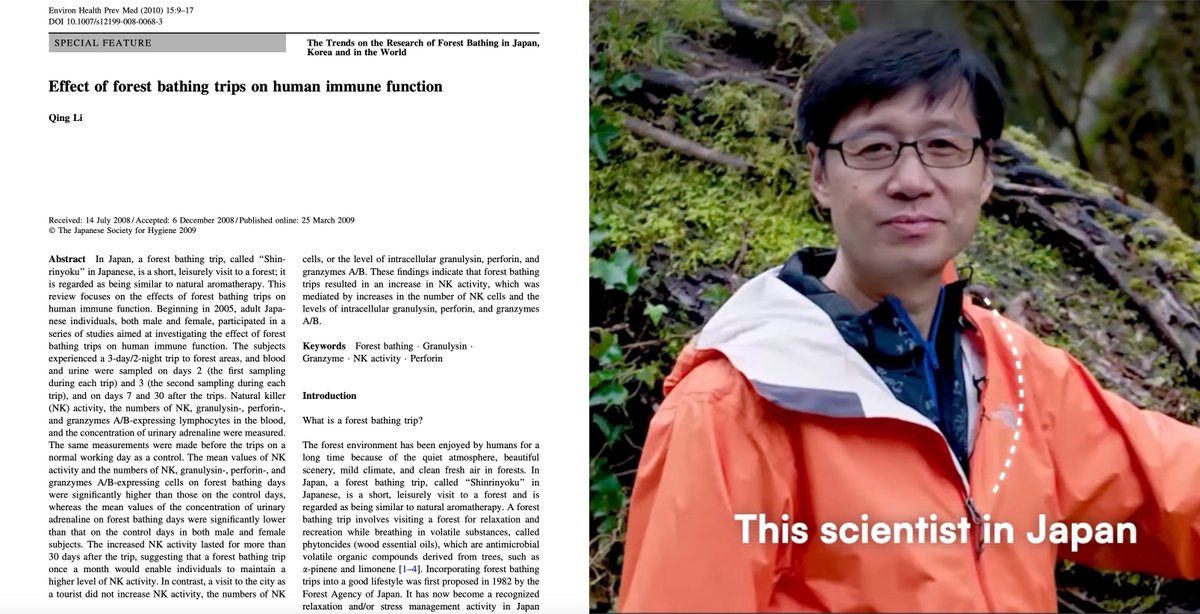
A scientist in Japan demonstrated that the air inside a forest strengthens your immune system for a full month
The study is incredibly fascinating:
Qing Li, an immunologist at Nippon Medical School in Tokyo, took 12 men on a 3-day forest trip. These were slow walks with no breathing exercises and no set route.
Then he tested their blood and found a surge in natural killer cells -- the immune cells your body uses to fight cancer and virus-infected cells.
Remarkably, the effect didn't fade when they went home, it was still measurable 30 days later.
A control group that walked the same distance through a city showed no change at all.
Pine, cedar, and cypress trees release compounds called phytoncides to defend themselves from insects and bacteria. You breathe them in, and Li believes they switch your immune cells into high gear.
He estimates one forest walk a month may be enough to keep those cells elevated all year.
The best medicine might not even need a prescription -- just a walk among the trees.