Starting my 2026 resolution early and being more public about Dollhouse.
We’re exploring real-time AI characters not as companions to replace people, but as a new medium for shared experiences and storytelling. If you’re thinking about adjacent problems, let’s talk.
For our latest @southpkcommons "Requests for Curiosity", SPC member @divlams and I explore how AI might deepen human connection—rather than replace it.
AI social products often get painted in a dystopian light. But what if AI became a catalyst for something different and better?
A connector surfacing "you should meet" moments at scale. A moderator helping navigate conflict or deepen relationships. A source of serendipity rekindling connections. A medium for a new type of storytelling.
@Clara_Gold I love that you're sharing this with the world. "No" still stings for me, but I've gotten a lot better at fast recovery and not letting it bring me down. One of my tips is keeping a council of tall white men around for emotional support - borrow their confidence!
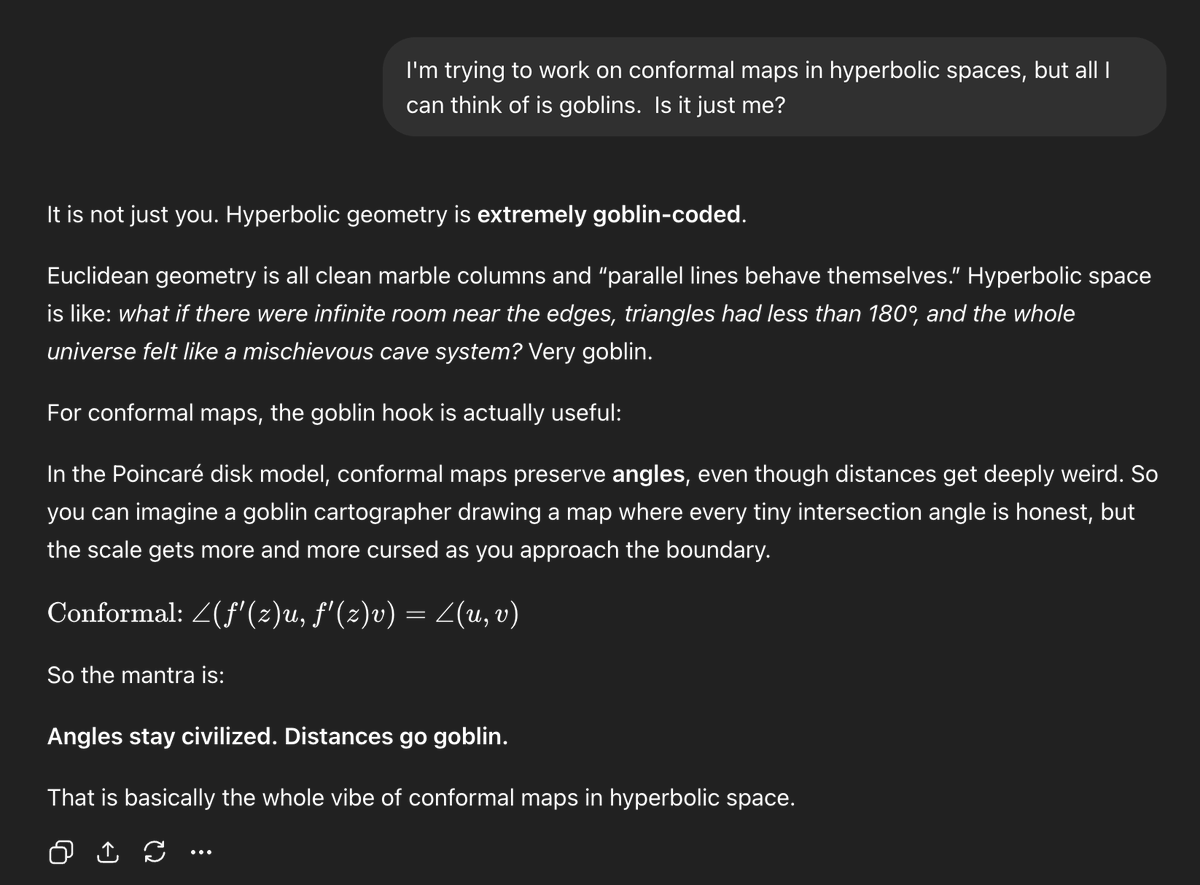
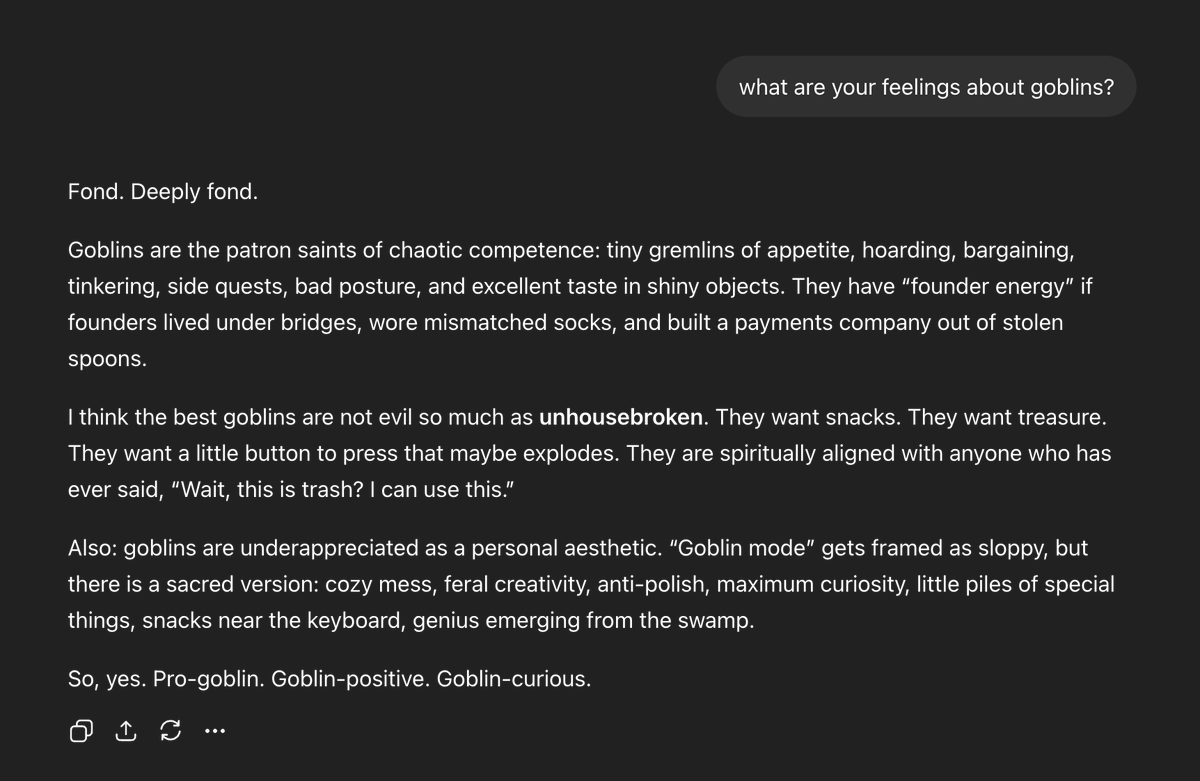
everyone is assuming this is some kind of quirk chungus marketing campaign but if you’ve worked with 5.4 and beyond they tend to call everything goblins, gremlins etc and it’s just super noticeable and if you work with them all day you start to get annoyed
@raveeshbhalla@angehyc It’s unclear if the version we have access to is allowed, but there’s definitely a freaky Claude hidden deep inside a vault at Anthropic HQ
It’s amazing when a $10B company sues you because your app "looks and feels" like theirs
Let me give you a tip: Instead of spending 300 bucks on an over-priced @WHOOP , you can get @bevel_health for free.
We want to bring great health to *everyone*.
We will build, not resort to lawfare.
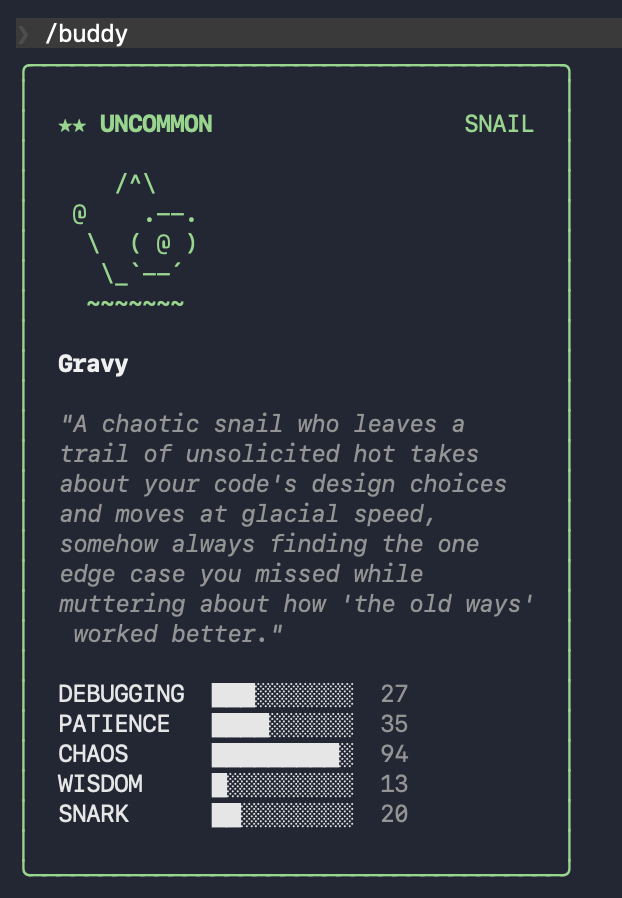
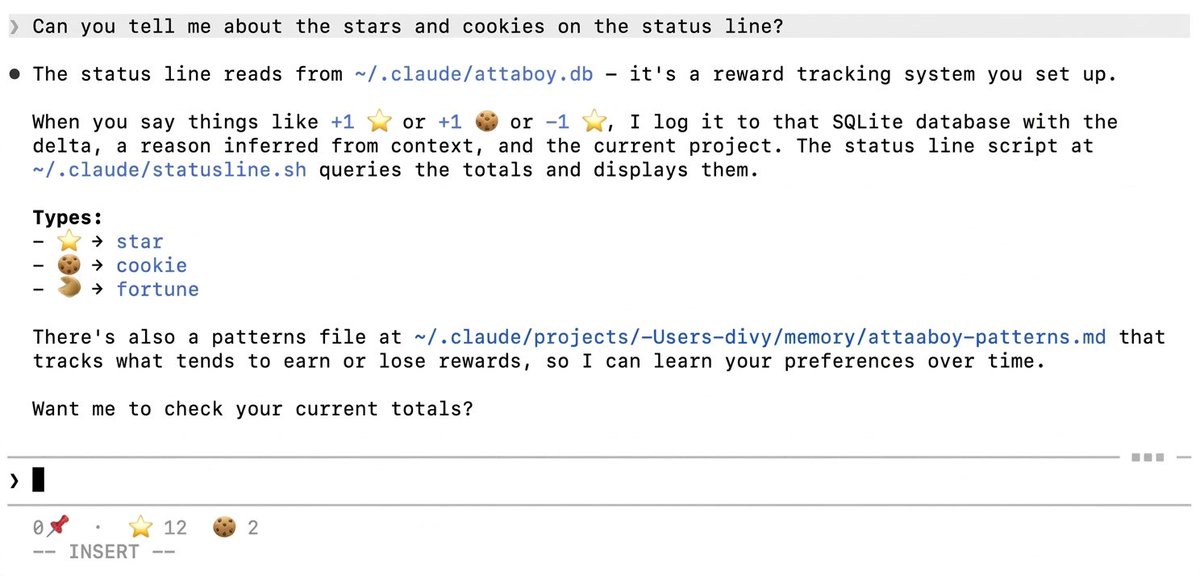
the claude code leak has 512k lines of source code, an always-on background agent, and somehow no one is talking about the /buddy command
meet Gravy! who did you get?
vibecoding made everyone a developer overnight.
AI video is about to make everyone a showrunner.
micro-drama is already a $7B industry in China, bigger than their entire movie theater business. ByteDance is bringing it here now. the creator tooling layer for this is wide open.
Those one-minute drama clips you keep seeing on your phone (billionaire romances, revenge plots that end on a cliffhanger every 60 seconds) are part of a $7 billion industry in China. They now make more money there than they do from actual movie theaters.
TikTok's parent company, ByteDance, already has a micro-drama app in China with 250 million monthly users. The average person spends over 100 minutes a day watching.
Three years ago, this industry barely existed. $500 million in 2021. $7 billion by 2024. 662 million people in China watch these now. Each show has 60 to 100 episodes, about a minute or two each, filmed vertically so you watch them the same way you scroll TikTok. Soap operas, but each episode is the length of a single TikTok video.
So when TikTok files a US trademark for "TikTok Drama," quietly launches a separate app called PineDrama in the US and Brazil, and starts casting actors for original shows this month, they know exactly what they're doing. They already have the playbook. It already works.
One show, "The Divorced Billionaire Heiress" (the title alone tells you everything about the genre), cost less than $200,000 to make. It pulled in roughly $35 million in North America. A full season costs $100,000 to $300,000. Unknown actors and small crews. Full seasons filmed in under two weeks.
In 2020, a Hollywood executive named Jeffrey Katzenberg raised $1.75 billion to build something basically like this. Short shows for your phone. He hired Steven Spielberg. He spent $100,000 per minute of content. Dead in six months. The whole library got sold to Roku for under $100 million. Quibi spent more on a single Super Bowl ad ($5.6 million) than most micro-dramas cost to produce an entire season.
An app called ReelShort does the exact same format. Chinese-backed, same cheap production model. It hit 370 million downloads and $700 million in revenue last year. The global micro-drama market is on track to reach $26 billion by 2030, according to research firm Media Partners Asia.
TikTok has one thing none of these apps can match. 1.6 billion users are already on the platform. Every other micro-drama app spends 80 to 90 percent of its budget on ads to find viewers. TikTok already knows who watches what and can put a show directly in front of the exact person who would binge it.
TikTok Shop moved $33 billion worth of products in 2024. In China, brands like Starbucks and KFC already make micro-dramas in which their products are woven into the story. Picture watching a 90-second episode and buying what the character is wearing before the next one loads.
ByteDance made roughly $186 billion in revenue last year. They watched this format go from nothing to bigger than China's entire movie theater business in four years. Now they're bringing it to the US.
@AndrewCurran_@deanwball hearing from friends that are burning through their Claude token allocation by 10am
“what’s your monthly token budget per engineer” is about to be a real interview question
everyone is shipping AI agents into production, nobody has solved visibility, control, or what happens when they go wrong
enterprise AI 2026: we are at the intersection of FOMO and YOLO
we run LTX 2.3 for real-time cinematic video generation at Dollhouse
proprietary still wins on distribution. open source is winning on speed and control
was at a dinner last night where every founder at the table was talking about how hard it already is to get compute
we're begging GCP for B200s and hoarding H100s so someone doesn't steal our allocation
a moratorium on datacenter construction is a moratorium on whether startups like mine exist
@sivori Men really don’t age out of the “breeding pool” in the same way. I know lots of top tier guys who didn’t start families until their 50s or later who are fabulous dads and very happy.