Just migrated my site to IPFS, and it turns out Cloudflare's restricted gateway has some undocumented caching gotchas. This short article is my attempt at documenting them and describes a janky workaround to bypass them entirely. Check it out!
https://t.co/7IbU6QTo51
In which me and the gang found a prompt injection vulnerability in Gemini's GitHub Action. If you and your team used an LLM-based PR review tool, be careful!
LLMs believe every datapoint they see with 100% conviction.
A LLM never says, "this doesn't make sense... let me exclude it from my training data".
Everything is taken as truth.
It is actually worse than this.
Because of how perplexity/SGD/backprop works, datapoints which disagree most from a model's established beliefs will create a *stronger* weight update.
Contradicting datapoints are taken as a higher truth than agreement.
Indeed, RHLF is the greatest example of this. You can cause a model to wildly change what it believes by forcing small amounts of contradictory data down its throat.
This is why "more data" != "more truthful", and why we must begin the gargantuan task of filtering out the enormous amounts of harmful/deceitful/illogical training data present in massive web scrapes. (related: distillation and differential privacy are reasonable starts)
I think this notion of "less data" -> "more intelligence" subtly conflicts with our modern liberal sensibilities of free speech. Human society has benefited greatly by increasing the amount of information everyone can consume (detour for another day: propaganda, public relations, targeted advertising, etc.).
However, for the LLMs we have today, we must treat them as if they are tiny children. They have no filter. They believe everything they see with 100% conviction. And this is the root of the problem. This is what value misalignment looks like.
To accomplish alignment, we need new paradigms for managing how information makes its way into an AI model. The ones we currently use are insufficient and our models will never be truly safe if they most greatly believe that which most greatly contradicts what they already know. This formula will always create unstable, fickle, and even dangerous models — with many internal contradictions amongst their parameters.
Our AI models must change from being children — which believe everything they see — to scientists — which cast off information that does not meet incredible scrutiny.
I have some ideas on how to accomplish this, but that's for another day.
BREAKING: Stanford president to resign his post, retract “at least” 3 papers, after our reporting in @StanfordDaily exposed multiple papers with data manipulation and his refusal to retract studies when given opportunities over the course of 2 decades.
https://t.co/yWXRZFF0VU
I was recently on a panel with several other professors and we were asked to give some tips to graduate students in machine learning. It got me thinking about why professors are so bad at giving advice. So here are some reasons why you should not take advice from professors.
THE GREAT RESET: Over 200,000 people have been laid off in the #tech industry this year, and the flood of new talent has started to change the job market.
Check out Blind's exclusive research - a thread 🧵:
Web content tricks that search engines “learned” to be wise to in the 2000s decade (well, were programmed to not work by human beings) are still alive and well with 2020s LLMs
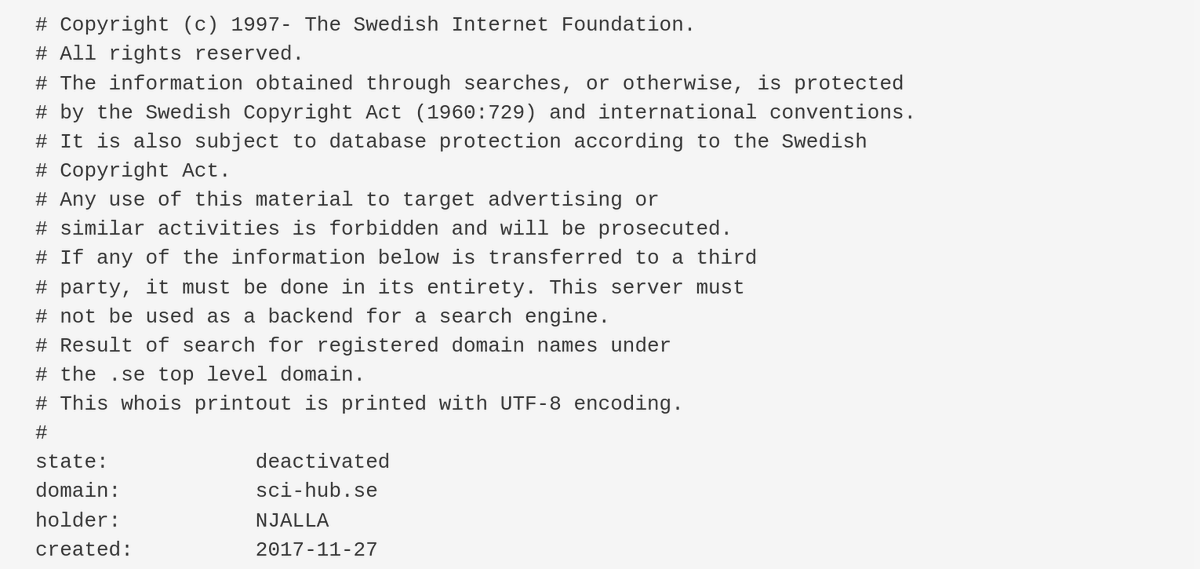
yesterday I noticed problems when trying to open Sci-Hub website: at first, I was thinking that is some DDoS attack, but after checking again today, found out that https://t.co/VzYYNrOKcI domain that was resistant for many years has been deactivated :(
use https://t.co/HEgPDPvYtP
If you've wondered - "Which Deep Learning optimizer should I use? SGD? Adagrad? RMSProp?" - this blogpost by @seb_ruder is the best explanation I've seen.
It's a surprisingly easy read!
https://t.co/ASebqI7N4J
Definitely a good #100DaysOfMLCode project.
The notion of "governance rights" as a narrative for why a token should be valuable is pathological. You're literally saying "I'm buying $X because later on someone might buy it from me and a bunch of other people to twist the protocol toward their special interests"