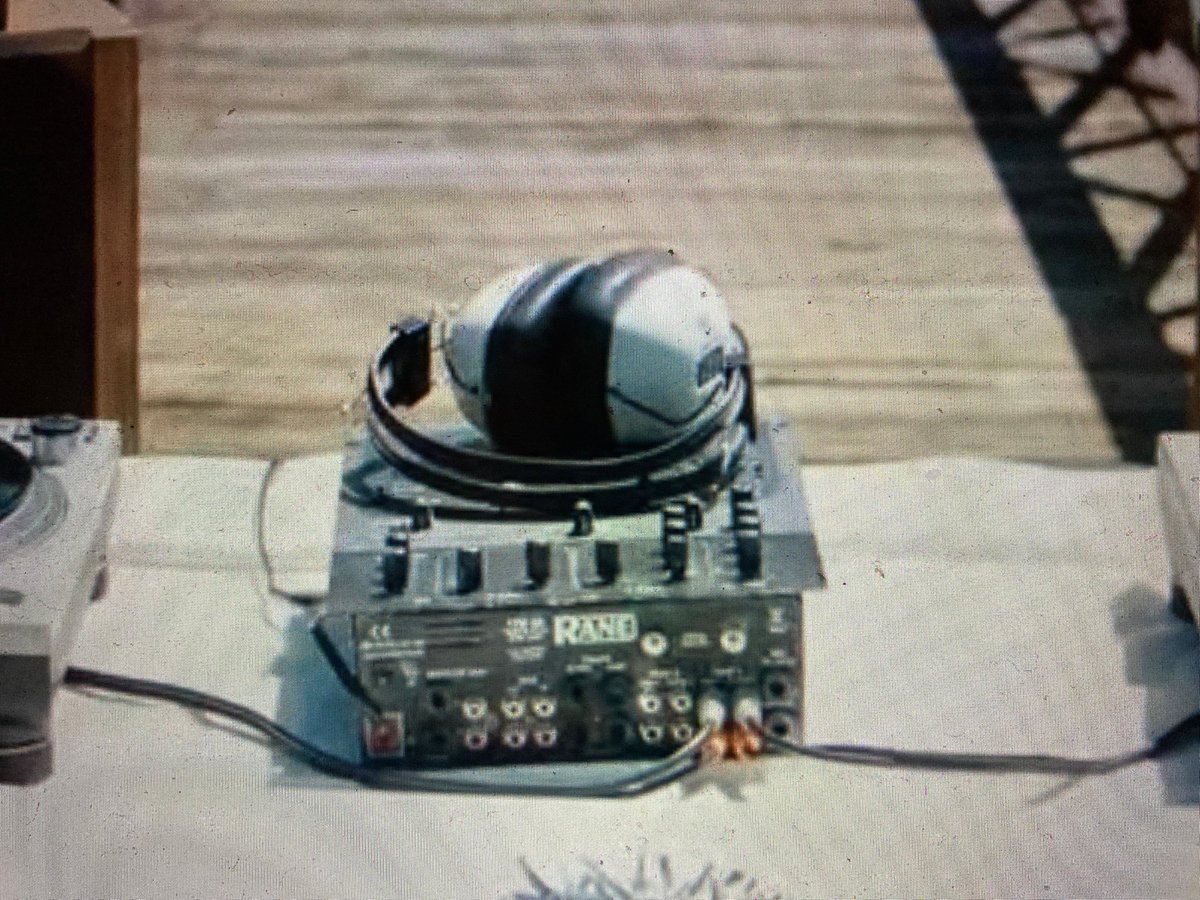
Yeah, the 21st century Rane in Stranger Things is pretty bad. But they could have at least not plugged both turntables into the same channel. #rane#strangerthings
These Republican responses – schools should have one door, we should solve our mental health crisis and leave guns alone – should not be taken seriously or in good faith. They're just distractions. You can tell by how fucking stupid they are.
@MdBreathe@kroger Maybe it's not so weird for pharmacists to be skeptical of prescriptions from a physician who recently had to resign in disgrace after peddling fake treatments. https://t.co/wQVElVEQzT
@drmikehart We have proper RCTs now, so why hype this nonrandomized study from a pay-to-publish, junk journal? Instead of randomly assigning patients to treatment/control, patients and their physicians self-selected into nonequivalent groups using unknown criteria! The data are meaningless.
@jordanbpeterson Accurate. All you do is post slippery-slope conspiracy theories, debunked non-peer-reviewed studies, pseudo-intellectual gobbledygook, and cringey clapback attempts to appease Ivermectin-guzzling antivax morons in "stop the steal" t-shirts. You're an embarrassment to psychology.
@beenwrekt @TAH_Sci @VPrasadMDMPH We could use regression splines, or some curvilinear function, or whatever we want. But no choice of model would change the fact that the study design is hopelessly confounded. The data simply don't tell us anything about masked 3–5 year-olds or unmasked 6–11 year-olds.
@VPrasadMDMPH This quasi-experiment actually tells us nothing about the effectiveness of masks one way or the other, because the design is confounded. The study's own data demonstrate that incidences increase with age, so it's meaningless to compare younger unmasked kids to older masked kids.
@jordanbpeterson You didn't even read it. It's a shoddy correlational analysis with blatant confounds. Listen to an author of the study you claim is a "bombshell":
@lakens@ChrisCrandall19 Severity, yes. But if passing a severe test doesn't count as evidence, isn't that an unconventionally narrow definition of "evidence?" I expect not many people (statisticians included; e.g., see Mayo's "severity principle") would say there's "no evidence" in the archery scenario.
@lakens@ChrisCrandall19 Imagine you claim to be a skilled archer. I say "what's the evidence?" You hit a bullseye that you would have only a .001 probability of hitting by chance. Isn't that a form of evidence? I could say it's not enough evidence to convince me. But is it really "not evidence" at all?