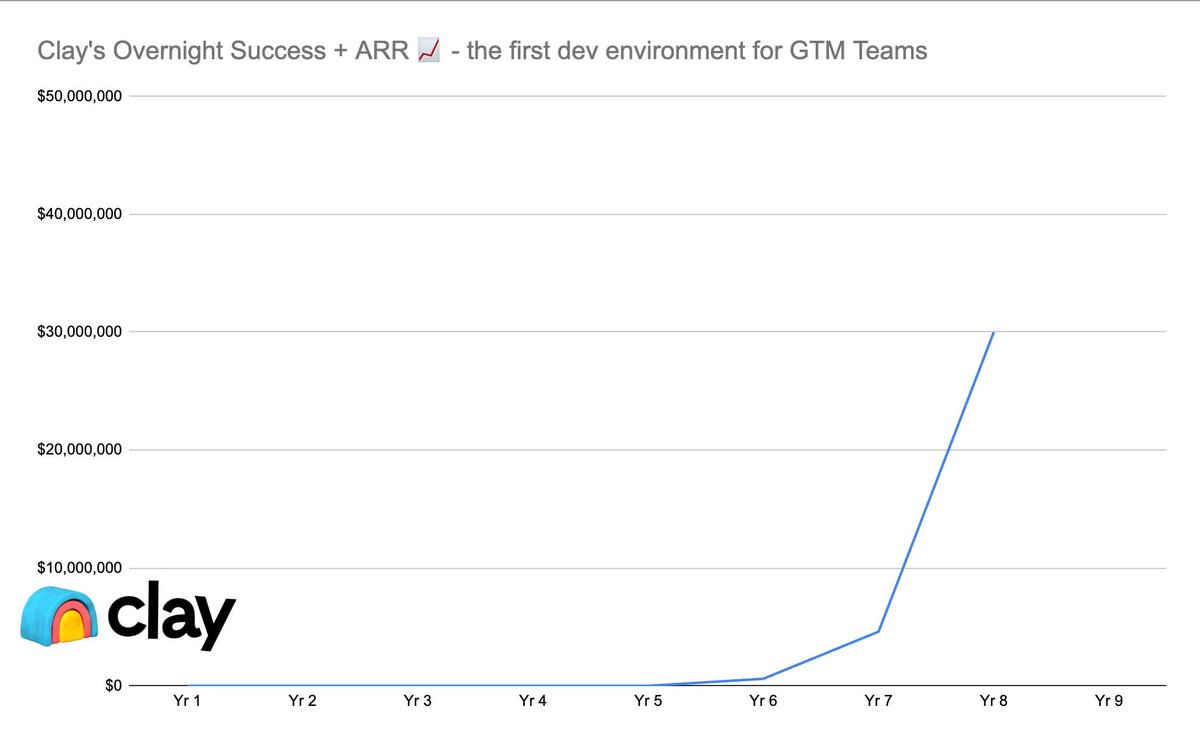
My biggest learnings from Jeanne DeWitt Grosser (ex-Chief Business Officer at @Stripe, now @Vercel COO):
1. What failed seven years ago now works with AI. In 2017, Jeanne tried to build a system at Stripe that would automatically personalize outbound emails based on company data. Despite working with world-class data scientists, it failed due to too many errors. Today, that exact same approach works. This shows how AI has made previously impossible ideas suddenly viable.
2. A single GTM engineer at Vercel reduced a 10-person sales team to 1 (in just 6 weeks). Jeanne’s team at Vercel had an engineer build an AI agent that handles inbound lead qualification, outbound prospecting, and deal loss evaluation. The agent costs $1,000 per year to run versus over $1 million in salaries for the sales team. The nine displaced team members moved to higher-value work rather than being laid off, and the remaining salesperson is 10 times more efficient.
3. Their AI deal-loss bot has become better at understanding what went wrong than humans. When Jeanne analyzed her biggest loss of the quarter, the salesperson blamed pricing. But an AI agent reviewed every email, call transcript, and Slack message and discovered the real reason: they never spoke to the person who controls the budget, and when ROI came up, the customer clearly didn’t believe the value claims. They are now using AI to analyze sales calls in real time and send alerts like “You’re halfway through the sales process and haven’t talked to a budget decision-maker yet.”
4. Wait until $1 million in revenue before hiring your first salesperson. Founders should continue selling themselves until they reach around $1 million in annual revenue with a repeatable process. The key is having a defined ideal customer profile—customers who look alike.
5. Segment customers on what drives their buying decisions, not just company size. OpenAI has roughly 3,000 employees, which would typically put them in the “mid-market” category. But they’re a top-25 website globally by traffic, so Vercel treats them as enterprise customers requiring complex sales. Effective segmentation combines company size with growth rate, web traffic, workload type, and industry—because selling to e-commerce companies requires completely different language than selling to crypto companies.
6. Most customers buy to avoid risk, not to gain opportunity. About 80% of customers purchase to reduce pain or avoid problems, while only 20% buy to increase upside. This means you should focus your sales messaging on what could go wrong without your product—like falling behind competitors or damaging their reputation—rather than just talking about exciting features. This is especially true when selling to larger companies, where individual careers are on the line.
7. Sales teams should be indistinguishable from product managers—for a bit. Jeanne hires salespeople who have such deep product knowledge that if you put one in front of a group of engineers, it should take 10 minutes to realize they’re not a product manager. This credibility allows sales teams to serve as an extension of research and development—a 20-person sales team talks to hundreds of customers weekly and can translate those conversations into product insights at scale.
8. Building your own AI sales tools may beat buying off-the-shelf software. Because AI is so new and every company’s sales process is unique, Jeanne finds that building custom internal agents often delivers more value than buying vendor solutions. A single go-to-market engineer built their deal analysis bot in just two days, perfectly tailored to their specific workflow. These engineers shadow top salespeople to understand their workflows, then build automation that would have taken months or been impossible just a few years ago.
9. Make every sales interaction great, whether customers buy or not. Jeanne replaced boring discovery calls at Stripe with collaborative whiteboarding sessions where customers drew their payment architecture. Many customers had never visualized their own systems before. They left with a useful asset and a feeling of collaboration, regardless of whether they bought. Many returned years later to purchase. Think about your go-to-market process like a product, not just a sales function.
10. Product-led growth has a ceiling—no $100 billion company runs on it alone. While product-led growth (where users can sign up and start using a product without talking to sales) works well for early growth, customers generally won’t spend a million dollars through a self-service flow. Every major technology company eventually builds a sales team for larger deals. The mistake is waiting too long, since building a predictable sales process takes time.
Being a big hit with the B2B saas sales community was not something I anticipated but obvious in hindsight.
Alpha begets alpha. We're all hitting quotas this quarter.
Back-to-back this week! @HeyGen_Official + @Clay_gtm is running an exclusive webinar for agencies looking to scale personalized videos without the heavy lift
𝗔𝗳𝘁𝗲𝗿 𝘁𝗵𝗶𝘀 𝘀𝗲𝘀𝘀𝗶𝗼𝗻, 𝘆𝗼𝘂'𝗹𝗹 𝗸𝗻𝗼𝘄 𝗵𝗼𝘄 𝘁𝗼:
💡 Create ultra-high-quality avatar videos in minutes
💡 Customize everything from backgrounds to voice speed
💡 Integrate video personalization into your existing Clay workflows
💡 Use personalized videos for sales demos, customer support, ads, and more
𝘉𝘰𝘯𝘶𝘴: 𝘢𝘵𝘵𝘦𝘯𝘥𝘦𝘦𝘴 𝘤𝘢𝘯 𝘣𝘦𝘤𝘰𝘮𝘦 𝘤𝘦𝘳𝘵𝘪𝘧𝘪𝘦𝘥 𝘮𝘦𝘮𝘣𝘦𝘳𝘴 𝘰𝘧 𝘵𝘩𝘦 𝘏𝘦𝘺𝘎𝘦𝘯 𝘧𝘰𝘳 𝘈𝘨𝘦𝘯𝘤𝘪𝘦𝘴 𝘱𝘳𝘰𝘨𝘳𝘢𝘮!
~~~~~~~~
🎙: Daniel (GTM Engineer, Clay) and Cathal (Partner program lead, HeyGen)
📅: Wednesday, March 5
🕰: 12:00PM EST
🎫: Register here! https://t.co/ZQbbaZfRM9
During some recent reflection, I was thinking about how the meaning of words changes depending on who says them (or when and how). It's like when a beginner gives advice versus when an experienced person gives the same advice. Even though the words are the same, they have a different impact and meaning.
In today's world, we are bombarded with a lot of information. Sometimes, we only see a fact without understanding where it fits in with everything else. But it's important to remember that a fact is most powerful when we understand the context around it. If a fact is by itself, it's like a single note in a song - it needs the rest of the music to sound its best.
Facts are more or less powerful depending on the situation they're used in. It's concerning that people often forget about the importance of context when discussing things in public. Instead of viewing facts as part of a complex story, people mistakenly think of them as absolute truths. I think we have to be aware that it's the combination of both that reveals the full spectrum of truth. In my opinion, many disagreements would be resolved if that was understood.
Finally, on a lighter note, remember that context is important when giving advice. For example, telling someone to "shoot for the stars" at a dart match might not go down that well. 🎯
Introducing Rewind for iPhone - a truly personalized AI in your pocket!
🔍 Browse & search for anything you’ve seen (including screenshots)
🤖 Summarize and ask any question using AI
🔒 Private by design
Learn more: https://t.co/05G3jkVwqw
(1/6)
A new solar project on the west side of campus will reduce campus greenhouse gas emissions by 600 to 700 tons annually
That’s equivalent to removing between 117 and 137 gasoline-powered passenger vehicles from the road.
https://t.co/bT6b66XMRq
All the hype is on GPT-4 and ChatGPT.
People seem to be forgetting about the incredible work of Neuralink.
Here's footage of a monkey with an implanted Neuralink brain chip playing a game of pong with his brain:
(Details in thread 🧵)
BREAKING: Microsoft 365 announces AI Copilot.
Now all Word docs, Powerpoints, Spreadsheets, Outlook & Teams will have access to AI.
Here's what the new Microsoft upgrades can do: