If you have had a genuine dispute with @Topstep@MichaelPatak and were told the decision was final, read this.
Now that Part 1 has established the underlying dispute, Part 2 shows what happened after I moved beyond Topstep’s internal process.
This part is arriving a little later than originally planned. I wanted the documents organized clearly because the sequence matters.
By this stage, I had already initiated JAMS consumer arbitration and submitted a consumer complaint to the Illinois Attorney General.
Counsel representing Topstep then contacted me regarding those matters.
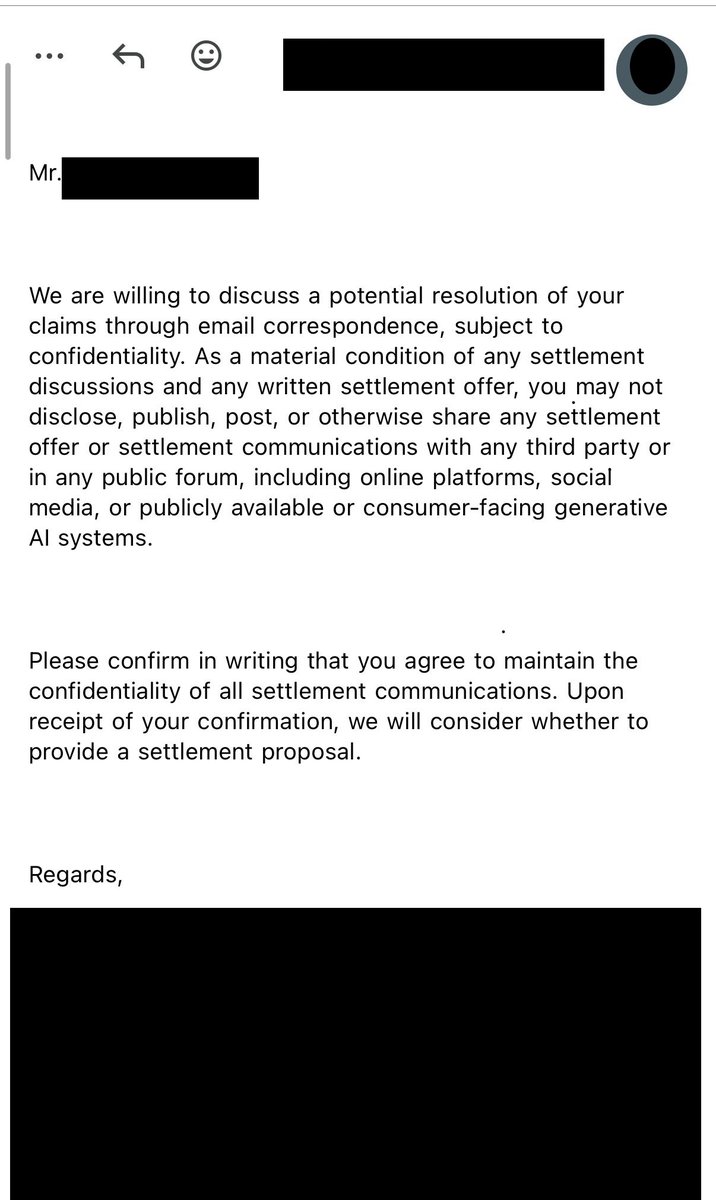
Topstep subsequently stated in writing:
“We are willing to discuss a potential resolution of your claims…”
But before any settlement proposal would even be considered, Topstep required me to agree to confidentiality covering settlement communications, including restrictions on publishing or sharing them publicly.
I did not accept the proposed confidentiality agreement.
Topstep later declared its confidentiality position final and stated the choice explicitly:
Agree to the confidentiality agreement and it would be willing to discuss a potential settlement, or decline and there would be no settlement discussions and the arbitration would proceed.
I declined.
The JAMS arbitration continued.
The four attached screenshots document that sequence directly:
Counsel enters after the formal proceedings are already pending.
Topstep expresses willingness to discuss a potential resolution.
Confidentiality is made a condition of that settlement route.
I reject the proposed terms and continue with the formal proceedings.
The proposed confidentiality arrangement was never accepted by me.
And this is why the distinction between an internal company decision and a formal dispute process matters.
A willingness to discuss settlement is not an admission of liability and does not establish who will ultimately prevail.
But an internal “final decision” does not necessarily mean every available avenue is finished.
I am also posting two additional screenshots in the replies below showing Topstep’s earlier position: the refusal of further refunds and its BBB response stating that the prior decision would not be reopened or overridden.
Put together, the documented sequence is worth understanding:
Internal refusal → BBB refusal → formal proceedings → willingness to discuss a potential resolution subject to confidentiality.
If you have a genuine dispute with Topstep and assumed there was nothing you could do after being told “no,” do not automatically assume that.
Preserve your records. Read the agreement governing your account. Understand what formal dispute-resolution procedures may be available.
If you want to know how I personally initiated JAMS consumer arbitration, reply below. I can explain the steps and point you to the resources I used.
I am not an attorney, I am not a licensed legal representative, and this is not legal advice. I can only explain my own experience and the process I personally followed.
There is more documented material in this timeline. Additional parts will follow over the coming days.
@Topstep@MichaelPatak
That’s one of the central issues. The first five purchases were accepted, the accounts were opened, and I was allowed to use them without any individualized warning that those transactions had been flagged as suspicious or non-compliant.
When the same payment-method issue was later raised on the sixth purchase, that one was refunded. That difference in treatment is now part of the JAMS arbitration.
Today, August 20, I’m publishing Part 1 of the documented timeline of my dispute with @Topstep and its Founder & CEO @MichaelPatak.
The dispute began with six Trading Combine purchases made using payment cards that were not registered in my own name.
For the first five purchases, Topstep accepted the payments, opened the accounts, and allowed me to use the platform without an individualized warning that the payment method was non-compliant.
On the sixth purchase, Topstep raised the payment-method issue, instructed me to remove the card, and requested identity verification.
I completed the requested verification. Topstep initially declined my request for a refund.
I then argued that if the payment method made the purchase non-compliant, the transaction should be cancelled and the funds returned to the original payment method.
The sixth purchase was subsequently refunded.
I then informed Topstep that the previous five purchases had been made using the same type of payment method and requested refunds for those transactions as well.
Those refunds were refused.
That inconsistency became a central part of the dispute and ultimately led me beyond Topstep’s internal process and into formal channels.
There is a broader reason I’m documenting this:
Traders facing a genuine dispute should understand that an internal company decision does not necessarily mean that every available avenue has ended. Depending on the agreement and circumstances, formal dispute-resolution and consumer-protection procedures may still be available.
This is Part 1.
Part 2 will continue the documented sequence.
Lunch break reading for @Topstep@dotjosh traders: my dispute has moved beyond internal support and is now in JAMS consumer arbitration. I’ve published the documented sequence, including Topstep’s later willingness to discuss a potential resolution subject to confidentiality. @MichaelPatak
https://t.co/a9EepQuVTj
If you have had a genuine dispute with @Topstep@MichaelPatak and were told the decision was final, read this.
Now that Part 1 has established the underlying dispute, Part 2 shows what happened after I moved beyond Topstep’s internal process.
This part is arriving a little later than originally planned. I wanted the documents organized clearly because the sequence matters.
By this stage, I had already initiated JAMS consumer arbitration and submitted a consumer complaint to the Illinois Attorney General.
Counsel representing Topstep then contacted me regarding those matters.
Topstep subsequently stated in writing:
“We are willing to discuss a potential resolution of your claims…”
But before any settlement proposal would even be considered, Topstep required me to agree to confidentiality covering settlement communications, including restrictions on publishing or sharing them publicly.
I did not accept the proposed confidentiality agreement.
Topstep later declared its confidentiality position final and stated the choice explicitly:
Agree to the confidentiality agreement and it would be willing to discuss a potential settlement, or decline and there would be no settlement discussions and the arbitration would proceed.
I declined.
The JAMS arbitration continued.
The four attached screenshots document that sequence directly:
Counsel enters after the formal proceedings are already pending.
Topstep expresses willingness to discuss a potential resolution.
Confidentiality is made a condition of that settlement route.
I reject the proposed terms and continue with the formal proceedings.
The proposed confidentiality arrangement was never accepted by me.
And this is why the distinction between an internal company decision and a formal dispute process matters.
A willingness to discuss settlement is not an admission of liability and does not establish who will ultimately prevail.
But an internal “final decision” does not necessarily mean every available avenue is finished.
I am also posting two additional screenshots in the replies below showing Topstep’s earlier position: the refusal of further refunds and its BBB response stating that the prior decision would not be reopened or overridden.
Put together, the documented sequence is worth understanding:
Internal refusal → BBB refusal → formal proceedings → willingness to discuss a potential resolution subject to confidentiality.
If you have a genuine dispute with Topstep and assumed there was nothing you could do after being told “no,” do not automatically assume that.
Preserve your records. Read the agreement governing your account. Understand what formal dispute-resolution procedures may be available.
If you want to know how I personally initiated JAMS consumer arbitration, reply below. I can explain the steps and point you to the resources I used.
I am not an attorney, I am not a licensed legal representative, and this is not legal advice. I can only explain my own experience and the process I personally followed.
There is more documented material in this timeline. Additional parts will follow over the coming days.
@Topstep@MichaelPatak
That wasn’t what happened in my case. I wasn’t aware of that specific payment-method restriction at the time, and I wasn’t repeatedly using the cards expecting to “get away with it.”
The first five purchases were accepted, the accounts were opened, and I was allowed to use them without an individualized warning about the payment method. That continued over a period of time before Topstep raised the issue.
That’s part of what I find difficult to reconcile: if the restriction is important enough to later justify refusing refunds and taking enforcement action, why were multiple purchases accepted without the issue being flagged earlier?
The dispute has since moved into JAMS consumer arbitration, and I’ve now published Part 2 of the documented sequence here:
https://t.co/a9EepQuVTj
If you have had a genuine dispute with @Topstep@MichaelPatak and were told the decision was final, read this.
Now that Part 1 has established the underlying dispute, Part 2 shows what happened after I moved beyond Topstep’s internal process.
This part is arriving a little later than originally planned. I wanted the documents organized clearly because the sequence matters.
By this stage, I had already initiated JAMS consumer arbitration and submitted a consumer complaint to the Illinois Attorney General.
Counsel representing Topstep then contacted me regarding those matters.
Topstep subsequently stated in writing:
“We are willing to discuss a potential resolution of your claims…”
But before any settlement proposal would even be considered, Topstep required me to agree to confidentiality covering settlement communications, including restrictions on publishing or sharing them publicly.
I did not accept the proposed confidentiality agreement.
Topstep later declared its confidentiality position final and stated the choice explicitly:
Agree to the confidentiality agreement and it would be willing to discuss a potential settlement, or decline and there would be no settlement discussions and the arbitration would proceed.
I declined.
The JAMS arbitration continued.
The four attached screenshots document that sequence directly:
Counsel enters after the formal proceedings are already pending.
Topstep expresses willingness to discuss a potential resolution.
Confidentiality is made a condition of that settlement route.
I reject the proposed terms and continue with the formal proceedings.
The proposed confidentiality arrangement was never accepted by me.
And this is why the distinction between an internal company decision and a formal dispute process matters.
A willingness to discuss settlement is not an admission of liability and does not establish who will ultimately prevail.
But an internal “final decision” does not necessarily mean every available avenue is finished.
I am also posting two additional screenshots in the replies below showing Topstep’s earlier position: the refusal of further refunds and its BBB response stating that the prior decision would not be reopened or overridden.
Put together, the documented sequence is worth understanding:
Internal refusal → BBB refusal → formal proceedings → willingness to discuss a potential resolution subject to confidentiality.
If you have a genuine dispute with Topstep and assumed there was nothing you could do after being told “no,” do not automatically assume that.
Preserve your records. Read the agreement governing your account. Understand what formal dispute-resolution procedures may be available.
If you want to know how I personally initiated JAMS consumer arbitration, reply below. I can explain the steps and point you to the resources I used.
I am not an attorney, I am not a licensed legal representative, and this is not legal advice. I can only explain my own experience and the process I personally followed.
There is more documented material in this timeline. Additional parts will follow over the coming days.
@Topstep@MichaelPatak
@OpenAIDevs@AlexFinn Voice is where coding agents start feeling less like software and more like a collaborator. The real test: can Codex keep context while you switch between desktop and mobile?
@elonmusk The 100× internal AI spend is the tell. Is that mostly agents doing 100× more useful work, or are today’s architectures still burning far too much compute?
@elonmusk The interesting part is that stainless looked like the “cheap” choice, but system-level it may have been the premium one. What mattered most: heat tolerance, manufacturability, or iteration speed?
@MichaelPatak 99% uptime is a great metric. Here’s another one worth tracking: what happens after support says “final.” My dispute with @Topstep is now in JAMS consumer arbitration. @MichaelPatak
https://t.co/sofSKgsJP4
If you have had a genuine dispute with @Topstep@MichaelPatak and were told the decision was final, read this.
Now that Part 1 has established the underlying dispute, Part 2 shows what happened after I moved beyond Topstep’s internal process.
This part is arriving a little later than originally planned. I wanted the documents organized clearly because the sequence matters.
By this stage, I had already initiated JAMS consumer arbitration and submitted a consumer complaint to the Illinois Attorney General.
Counsel representing Topstep then contacted me regarding those matters.
Topstep subsequently stated in writing:
“We are willing to discuss a potential resolution of your claims…”
But before any settlement proposal would even be considered, Topstep required me to agree to confidentiality covering settlement communications, including restrictions on publishing or sharing them publicly.
I did not accept the proposed confidentiality agreement.
Topstep later declared its confidentiality position final and stated the choice explicitly:
Agree to the confidentiality agreement and it would be willing to discuss a potential settlement, or decline and there would be no settlement discussions and the arbitration would proceed.
I declined.
The JAMS arbitration continued.
The four attached screenshots document that sequence directly:
Counsel enters after the formal proceedings are already pending.
Topstep expresses willingness to discuss a potential resolution.
Confidentiality is made a condition of that settlement route.
I reject the proposed terms and continue with the formal proceedings.
The proposed confidentiality arrangement was never accepted by me.
And this is why the distinction between an internal company decision and a formal dispute process matters.
A willingness to discuss settlement is not an admission of liability and does not establish who will ultimately prevail.
But an internal “final decision” does not necessarily mean every available avenue is finished.
I am also posting two additional screenshots in the replies below showing Topstep’s earlier position: the refusal of further refunds and its BBB response stating that the prior decision would not be reopened or overridden.
Put together, the documented sequence is worth understanding:
Internal refusal → BBB refusal → formal proceedings → willingness to discuss a potential resolution subject to confidentiality.
If you have a genuine dispute with Topstep and assumed there was nothing you could do after being told “no,” do not automatically assume that.
Preserve your records. Read the agreement governing your account. Understand what formal dispute-resolution procedures may be available.
If you want to know how I personally initiated JAMS consumer arbitration, reply below. I can explain the steps and point you to the resources I used.
I am not an attorney, I am not a licensed legal representative, and this is not legal advice. I can only explain my own experience and the process I personally followed.
There is more documented material in this timeline. Additional parts will follow over the coming days.
@Topstep@MichaelPatak
For Topstep traders dealing with disputes, this may be worth knowing. @Topstep@MichaelPatak
My dispute with Topstep is currently proceeding through JAMS consumer arbitration.
After the matter moved beyond Topstep’s internal process, counsel representing the company contacted me regarding the JAMS arbitration and my Illinois Attorney General complaint.
I’ve documented what happened next, including Topstep’s later willingness to discuss a potential resolution subject to proposed confidentiality terms.
Full documented sequence here:
https://t.co/a9EepQvtIR
If you have had a genuine dispute with @Topstep@MichaelPatak and were told the decision was final, read this.
Now that Part 1 has established the underlying dispute, Part 2 shows what happened after I moved beyond Topstep’s internal process.
This part is arriving a little later than originally planned. I wanted the documents organized clearly because the sequence matters.
By this stage, I had already initiated JAMS consumer arbitration and submitted a consumer complaint to the Illinois Attorney General.
Counsel representing Topstep then contacted me regarding those matters.
Topstep subsequently stated in writing:
“We are willing to discuss a potential resolution of your claims…”
But before any settlement proposal would even be considered, Topstep required me to agree to confidentiality covering settlement communications, including restrictions on publishing or sharing them publicly.
I did not accept the proposed confidentiality agreement.
Topstep later declared its confidentiality position final and stated the choice explicitly:
Agree to the confidentiality agreement and it would be willing to discuss a potential settlement, or decline and there would be no settlement discussions and the arbitration would proceed.
I declined.
The JAMS arbitration continued.
The four attached screenshots document that sequence directly:
Counsel enters after the formal proceedings are already pending.
Topstep expresses willingness to discuss a potential resolution.
Confidentiality is made a condition of that settlement route.
I reject the proposed terms and continue with the formal proceedings.
The proposed confidentiality arrangement was never accepted by me.
And this is why the distinction between an internal company decision and a formal dispute process matters.
A willingness to discuss settlement is not an admission of liability and does not establish who will ultimately prevail.
But an internal “final decision” does not necessarily mean every available avenue is finished.
I am also posting two additional screenshots in the replies below showing Topstep’s earlier position: the refusal of further refunds and its BBB response stating that the prior decision would not be reopened or overridden.
Put together, the documented sequence is worth understanding:
Internal refusal → BBB refusal → formal proceedings → willingness to discuss a potential resolution subject to confidentiality.
If you have a genuine dispute with Topstep and assumed there was nothing you could do after being told “no,” do not automatically assume that.
Preserve your records. Read the agreement governing your account. Understand what formal dispute-resolution procedures may be available.
If you want to know how I personally initiated JAMS consumer arbitration, reply below. I can explain the steps and point you to the resources I used.
I am not an attorney, I am not a licensed legal representative, and this is not legal advice. I can only explain my own experience and the process I personally followed.
There is more documented material in this timeline. Additional parts will follow over the coming days.
@Topstep@MichaelPatak
@DodgysDD Different kind of resource, but potentially useful for @Topstep traders: my dispute is now proceeding through JAMS consumer arbitration, and I documented what happened after the internal process ended. @MichaelPatak
https://t.co/sofSKgsJP4
If you have had a genuine dispute with @Topstep@MichaelPatak and were told the decision was final, read this.
Now that Part 1 has established the underlying dispute, Part 2 shows what happened after I moved beyond Topstep’s internal process.
This part is arriving a little later than originally planned. I wanted the documents organized clearly because the sequence matters.
By this stage, I had already initiated JAMS consumer arbitration and submitted a consumer complaint to the Illinois Attorney General.
Counsel representing Topstep then contacted me regarding those matters.
Topstep subsequently stated in writing:
“We are willing to discuss a potential resolution of your claims…”
But before any settlement proposal would even be considered, Topstep required me to agree to confidentiality covering settlement communications, including restrictions on publishing or sharing them publicly.
I did not accept the proposed confidentiality agreement.
Topstep later declared its confidentiality position final and stated the choice explicitly:
Agree to the confidentiality agreement and it would be willing to discuss a potential settlement, or decline and there would be no settlement discussions and the arbitration would proceed.
I declined.
The JAMS arbitration continued.
The four attached screenshots document that sequence directly:
Counsel enters after the formal proceedings are already pending.
Topstep expresses willingness to discuss a potential resolution.
Confidentiality is made a condition of that settlement route.
I reject the proposed terms and continue with the formal proceedings.
The proposed confidentiality arrangement was never accepted by me.
And this is why the distinction between an internal company decision and a formal dispute process matters.
A willingness to discuss settlement is not an admission of liability and does not establish who will ultimately prevail.
But an internal “final decision” does not necessarily mean every available avenue is finished.
I am also posting two additional screenshots in the replies below showing Topstep’s earlier position: the refusal of further refunds and its BBB response stating that the prior decision would not be reopened or overridden.
Put together, the documented sequence is worth understanding:
Internal refusal → BBB refusal → formal proceedings → willingness to discuss a potential resolution subject to confidentiality.
If you have a genuine dispute with Topstep and assumed there was nothing you could do after being told “no,” do not automatically assume that.
Preserve your records. Read the agreement governing your account. Understand what formal dispute-resolution procedures may be available.
If you want to know how I personally initiated JAMS consumer arbitration, reply below. I can explain the steps and point you to the resources I used.
I am not an attorney, I am not a licensed legal representative, and this is not legal advice. I can only explain my own experience and the process I personally followed.
There is more documented material in this timeline. Additional parts will follow over the coming days.
@Topstep@MichaelPatak
@GavinSBaker@Atreidesmgmt If inference costs keep falling while internal AI spend compounds this quickly, the key metric may become cost per useful unit of work, not benchmark leadership. Do you think the next bottleneck shifts from model quality to agent throughput and deployment efficiency?
@fredtrades@Topstep@MichaelPatak
This applies beyond careers and skills. I was told a dispute with @Topstep was effectively closed internally. I kept going, and it is now in JAMS consumer arbitration. I’ve documented what happened after that “final” decision here:
https://t.co/sofSKgsJP4
If you have had a genuine dispute with @Topstep@MichaelPatak and were told the decision was final, read this.
Now that Part 1 has established the underlying dispute, Part 2 shows what happened after I moved beyond Topstep’s internal process.
This part is arriving a little later than originally planned. I wanted the documents organized clearly because the sequence matters.
By this stage, I had already initiated JAMS consumer arbitration and submitted a consumer complaint to the Illinois Attorney General.
Counsel representing Topstep then contacted me regarding those matters.
Topstep subsequently stated in writing:
“We are willing to discuss a potential resolution of your claims…”
But before any settlement proposal would even be considered, Topstep required me to agree to confidentiality covering settlement communications, including restrictions on publishing or sharing them publicly.
I did not accept the proposed confidentiality agreement.
Topstep later declared its confidentiality position final and stated the choice explicitly:
Agree to the confidentiality agreement and it would be willing to discuss a potential settlement, or decline and there would be no settlement discussions and the arbitration would proceed.
I declined.
The JAMS arbitration continued.
The four attached screenshots document that sequence directly:
Counsel enters after the formal proceedings are already pending.
Topstep expresses willingness to discuss a potential resolution.
Confidentiality is made a condition of that settlement route.
I reject the proposed terms and continue with the formal proceedings.
The proposed confidentiality arrangement was never accepted by me.
And this is why the distinction between an internal company decision and a formal dispute process matters.
A willingness to discuss settlement is not an admission of liability and does not establish who will ultimately prevail.
But an internal “final decision” does not necessarily mean every available avenue is finished.
I am also posting two additional screenshots in the replies below showing Topstep’s earlier position: the refusal of further refunds and its BBB response stating that the prior decision would not be reopened or overridden.
Put together, the documented sequence is worth understanding:
Internal refusal → BBB refusal → formal proceedings → willingness to discuss a potential resolution subject to confidentiality.
If you have a genuine dispute with Topstep and assumed there was nothing you could do after being told “no,” do not automatically assume that.
Preserve your records. Read the agreement governing your account. Understand what formal dispute-resolution procedures may be available.
If you want to know how I personally initiated JAMS consumer arbitration, reply below. I can explain the steps and point you to the resources I used.
I am not an attorney, I am not a licensed legal representative, and this is not legal advice. I can only explain my own experience and the process I personally followed.
There is more documented material in this timeline. Additional parts will follow over the coming days.
@Topstep@MichaelPatak
An internal “final decision” was not the end of this dispute.
The matter is now in JAMS consumer arbitration, and the documented sequence is public below.
If you have had a genuine dispute with @Topstep@MichaelPatak and were told the decision was final, read this.
Now that Part 1 has established the underlying dispute, Part 2 shows what happened after I moved beyond Topstep’s internal process.
This part is arriving a little later than originally planned. I wanted the documents organized clearly because the sequence matters.
By this stage, I had already initiated JAMS consumer arbitration and submitted a consumer complaint to the Illinois Attorney General.
Counsel representing Topstep then contacted me regarding those matters.
Topstep subsequently stated in writing:
“We are willing to discuss a potential resolution of your claims…”
But before any settlement proposal would even be considered, Topstep required me to agree to confidentiality covering settlement communications, including restrictions on publishing or sharing them publicly.
I did not accept the proposed confidentiality agreement.
Topstep later declared its confidentiality position final and stated the choice explicitly:
Agree to the confidentiality agreement and it would be willing to discuss a potential settlement, or decline and there would be no settlement discussions and the arbitration would proceed.
I declined.
The JAMS arbitration continued.
The four attached screenshots document that sequence directly:
Counsel enters after the formal proceedings are already pending.
Topstep expresses willingness to discuss a potential resolution.
Confidentiality is made a condition of that settlement route.
I reject the proposed terms and continue with the formal proceedings.
The proposed confidentiality arrangement was never accepted by me.
And this is why the distinction between an internal company decision and a formal dispute process matters.
A willingness to discuss settlement is not an admission of liability and does not establish who will ultimately prevail.
But an internal “final decision” does not necessarily mean every available avenue is finished.
I am also posting two additional screenshots in the replies below showing Topstep’s earlier position: the refusal of further refunds and its BBB response stating that the prior decision would not be reopened or overridden.
Put together, the documented sequence is worth understanding:
Internal refusal → BBB refusal → formal proceedings → willingness to discuss a potential resolution subject to confidentiality.
If you have a genuine dispute with Topstep and assumed there was nothing you could do after being told “no,” do not automatically assume that.
Preserve your records. Read the agreement governing your account. Understand what formal dispute-resolution procedures may be available.
If you want to know how I personally initiated JAMS consumer arbitration, reply below. I can explain the steps and point you to the resources I used.
I am not an attorney, I am not a licensed legal representative, and this is not legal advice. I can only explain my own experience and the process I personally followed.
There is more documented material in this timeline. Additional parts will follow over the coming days.
@Topstep@MichaelPatak
Transparency matters most when there is an actual dispute. Mine is now in JAMS consumer arbitration. I’ve published the documented sequence from Topstep’s internal refusal to its later willingness to discuss a potential resolution subject to confidentiality. Worth reading if you’re a Topstep trader.
https://t.co/a9EepQuVTj
If you have had a genuine dispute with @Topstep@MichaelPatak and were told the decision was final, read this.
Now that Part 1 has established the underlying dispute, Part 2 shows what happened after I moved beyond Topstep’s internal process.
This part is arriving a little later than originally planned. I wanted the documents organized clearly because the sequence matters.
By this stage, I had already initiated JAMS consumer arbitration and submitted a consumer complaint to the Illinois Attorney General.
Counsel representing Topstep then contacted me regarding those matters.
Topstep subsequently stated in writing:
“We are willing to discuss a potential resolution of your claims…”
But before any settlement proposal would even be considered, Topstep required me to agree to confidentiality covering settlement communications, including restrictions on publishing or sharing them publicly.
I did not accept the proposed confidentiality agreement.
Topstep later declared its confidentiality position final and stated the choice explicitly:
Agree to the confidentiality agreement and it would be willing to discuss a potential settlement, or decline and there would be no settlement discussions and the arbitration would proceed.
I declined.
The JAMS arbitration continued.
The four attached screenshots document that sequence directly:
Counsel enters after the formal proceedings are already pending.
Topstep expresses willingness to discuss a potential resolution.
Confidentiality is made a condition of that settlement route.
I reject the proposed terms and continue with the formal proceedings.
The proposed confidentiality arrangement was never accepted by me.
And this is why the distinction between an internal company decision and a formal dispute process matters.
A willingness to discuss settlement is not an admission of liability and does not establish who will ultimately prevail.
But an internal “final decision” does not necessarily mean every available avenue is finished.
I am also posting two additional screenshots in the replies below showing Topstep’s earlier position: the refusal of further refunds and its BBB response stating that the prior decision would not be reopened or overridden.
Put together, the documented sequence is worth understanding:
Internal refusal → BBB refusal → formal proceedings → willingness to discuss a potential resolution subject to confidentiality.
If you have a genuine dispute with Topstep and assumed there was nothing you could do after being told “no,” do not automatically assume that.
Preserve your records. Read the agreement governing your account. Understand what formal dispute-resolution procedures may be available.
If you want to know how I personally initiated JAMS consumer arbitration, reply below. I can explain the steps and point you to the resources I used.
I am not an attorney, I am not a licensed legal representative, and this is not legal advice. I can only explain my own experience and the process I personally followed.
There is more documented material in this timeline. Additional parts will follow over the coming days.
@Topstep@MichaelPatak
If you’ve had a genuine dispute with @Topstep and were told the decision was final, this is worth reading. My dispute is now proceeding through JAMS consumer arbitration, and I’ve published the documented sequence from the internal refusal to what followed once formal proceedings began.
https://t.co/a9EepQuVTj
If you have had a genuine dispute with @Topstep@MichaelPatak and were told the decision was final, read this.
Now that Part 1 has established the underlying dispute, Part 2 shows what happened after I moved beyond Topstep’s internal process.
This part is arriving a little later than originally planned. I wanted the documents organized clearly because the sequence matters.
By this stage, I had already initiated JAMS consumer arbitration and submitted a consumer complaint to the Illinois Attorney General.
Counsel representing Topstep then contacted me regarding those matters.
Topstep subsequently stated in writing:
“We are willing to discuss a potential resolution of your claims…”
But before any settlement proposal would even be considered, Topstep required me to agree to confidentiality covering settlement communications, including restrictions on publishing or sharing them publicly.
I did not accept the proposed confidentiality agreement.
Topstep later declared its confidentiality position final and stated the choice explicitly:
Agree to the confidentiality agreement and it would be willing to discuss a potential settlement, or decline and there would be no settlement discussions and the arbitration would proceed.
I declined.
The JAMS arbitration continued.
The four attached screenshots document that sequence directly:
Counsel enters after the formal proceedings are already pending.
Topstep expresses willingness to discuss a potential resolution.
Confidentiality is made a condition of that settlement route.
I reject the proposed terms and continue with the formal proceedings.
The proposed confidentiality arrangement was never accepted by me.
And this is why the distinction between an internal company decision and a formal dispute process matters.
A willingness to discuss settlement is not an admission of liability and does not establish who will ultimately prevail.
But an internal “final decision” does not necessarily mean every available avenue is finished.
I am also posting two additional screenshots in the replies below showing Topstep’s earlier position: the refusal of further refunds and its BBB response stating that the prior decision would not be reopened or overridden.
Put together, the documented sequence is worth understanding:
Internal refusal → BBB refusal → formal proceedings → willingness to discuss a potential resolution subject to confidentiality.
If you have a genuine dispute with Topstep and assumed there was nothing you could do after being told “no,” do not automatically assume that.
Preserve your records. Read the agreement governing your account. Understand what formal dispute-resolution procedures may be available.
If you want to know how I personally initiated JAMS consumer arbitration, reply below. I can explain the steps and point you to the resources I used.
I am not an attorney, I am not a licensed legal representative, and this is not legal advice. I can only explain my own experience and the process I personally followed.
There is more documented material in this timeline. Additional parts will follow over the coming days.
@Topstep@MichaelPatak
Two additional documents for context: Topstep’s earlier refund refusal and its BBB response stating that the prior decision would not be reopened or overridden.
If you have had a genuine dispute with @Topstep@MichaelPatak and were told the decision was final, read this.
Now that Part 1 has established the underlying dispute, Part 2 shows what happened after I moved beyond Topstep’s internal process.
This part is arriving a little later than originally planned. I wanted the documents organized clearly because the sequence matters.
By this stage, I had already initiated JAMS consumer arbitration and submitted a consumer complaint to the Illinois Attorney General.
Counsel representing Topstep then contacted me regarding those matters.
Topstep subsequently stated in writing:
“We are willing to discuss a potential resolution of your claims…”
But before any settlement proposal would even be considered, Topstep required me to agree to confidentiality covering settlement communications, including restrictions on publishing or sharing them publicly.
I did not accept the proposed confidentiality agreement.
Topstep later declared its confidentiality position final and stated the choice explicitly:
Agree to the confidentiality agreement and it would be willing to discuss a potential settlement, or decline and there would be no settlement discussions and the arbitration would proceed.
I declined.
The JAMS arbitration continued.
The four attached screenshots document that sequence directly:
Counsel enters after the formal proceedings are already pending.
Topstep expresses willingness to discuss a potential resolution.
Confidentiality is made a condition of that settlement route.
I reject the proposed terms and continue with the formal proceedings.
The proposed confidentiality arrangement was never accepted by me.
And this is why the distinction between an internal company decision and a formal dispute process matters.
A willingness to discuss settlement is not an admission of liability and does not establish who will ultimately prevail.
But an internal “final decision” does not necessarily mean every available avenue is finished.
I am also posting two additional screenshots in the replies below showing Topstep’s earlier position: the refusal of further refunds and its BBB response stating that the prior decision would not be reopened or overridden.
Put together, the documented sequence is worth understanding:
Internal refusal → BBB refusal → formal proceedings → willingness to discuss a potential resolution subject to confidentiality.
If you have a genuine dispute with Topstep and assumed there was nothing you could do after being told “no,” do not automatically assume that.
Preserve your records. Read the agreement governing your account. Understand what formal dispute-resolution procedures may be available.
If you want to know how I personally initiated JAMS consumer arbitration, reply below. I can explain the steps and point you to the resources I used.
I am not an attorney, I am not a licensed legal representative, and this is not legal advice. I can only explain my own experience and the process I personally followed.
There is more documented material in this timeline. Additional parts will follow over the coming days.
@Topstep@MichaelPatak
@GavinSBaker@vercel@rauchg If open weights are already at 62% of token share, the real question is where pricing power moves next. Do you think the moat shifts from model quality to distribution and workflow ownership?
Part 1 of the documented timeline is now public.
The dispute is currently proceeding through JAMS consumer arbitration.
@Topstep@MichaelPatak
Part 2 continues tomorrow.
Part 1 of the documented timeline is now public.
The dispute is currently proceeding through JAMS consumer arbitration.
@Topstep@MichaelPatak
Part 2 continues tomorrow.