Learned my lesson today. Never fly @FlyFrontier even if it’s the only direct flight available. Genuinely look for multi-stop redeye flights before flying with them. I’m still not sure where my bags are and I’m in the wrong city somehow 🤣🙃
Paraguay should watch Norway playing Brazil to learn how to play a football super power with dignity and fairness. Not once have I seen the Brazilians use dirty tricks even if they are outplayed by a much better team.
The editorial is absurd, particularly this assertion:
"Claims from opponents that “jets will wreck our waterfront” are also overblown. There may be some impact on boats in the harbour, but conflicts can be managed."
Sounds like something sponsored by the Toronto Port Authority.
BREAKING (bones)
Why does "Bring Them Home" exist only for some hostages?
Because in Apartheid Israel, where only Jewish lives matter, brutalising the Palestinians isn't an anomaly - it is the system. And the silence around it is the exact measure of our collective hypocrisy.
We are learning in real time the horror show closing safe injection sites has caused!!! People ODing on sidewalks in parks, public. EMS calls are at 2056 right now and in the same time period last year they were 958!!!! There’s a reason why we listen to experts and not columnists
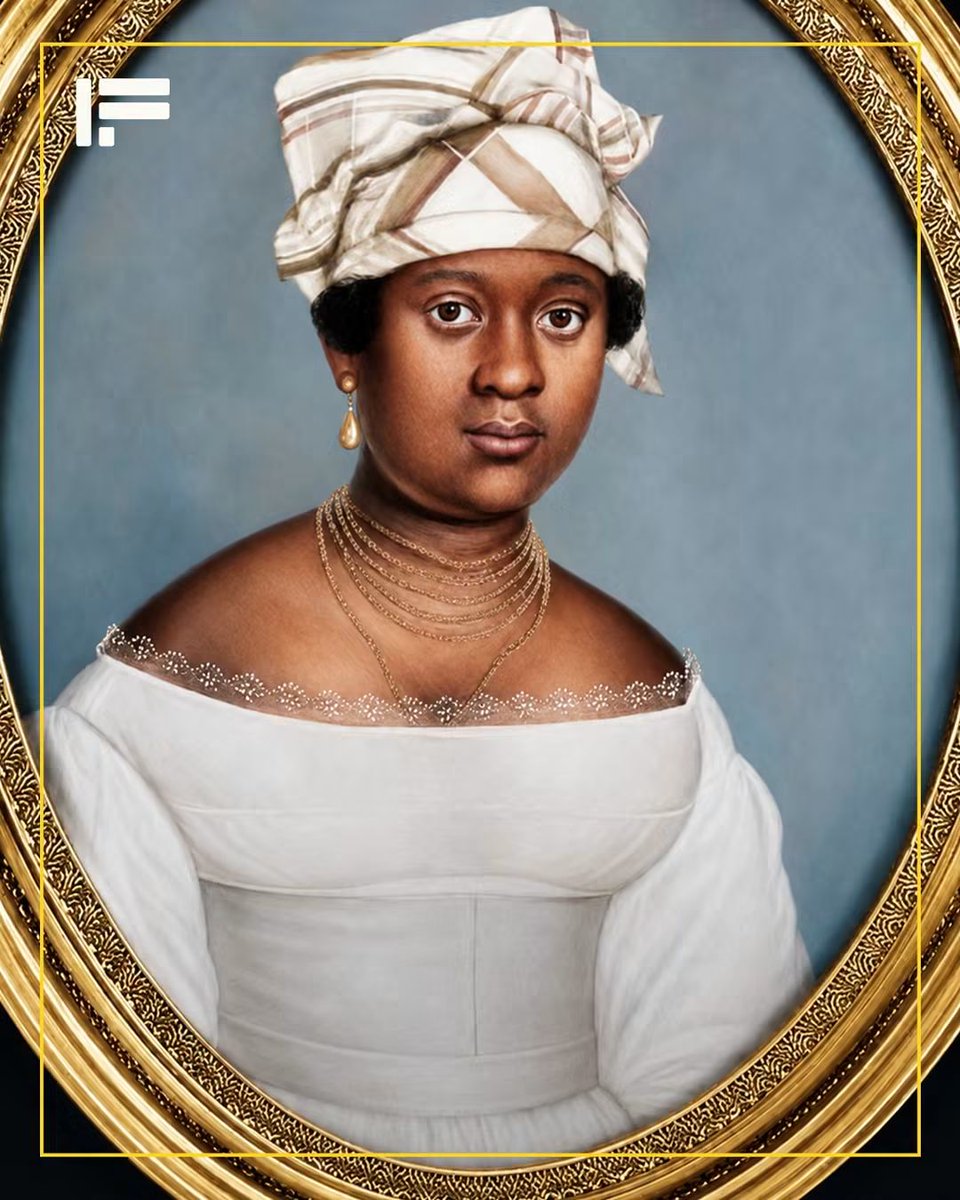
A Haitian-born formerly enslaved woman spent thirty years walking into New York slave markets with cash in her pocket, paying full price, and walking back out the door with signed manumission papers.
Her name was Juliette Noel Toussaint.
She was born into slavery in the French colony of Saint-Domingue — modern Haiti — around 1786. Her enslavers, the Noel family, fled the Haitian Revolution during the early 1790s and dragged their household slaves with them, first to Baltimore, then to New York.
She was a housemaid, a cook, and a nanny before she was ten years old. She knew, better than almost anyone alive in the city of New York in the 1820s, exactly what it meant to be priced, appraised, and legally sold.
Then, in 1811, she married a hairdresser.
Pierre Toussaint had been born into slavery in Saint-Domingue in 1766. Brought to New York in 1787 by the Bérard family. Apprenticed as a hairdresser as a young man. By his mid-thirties he was the most sought-after hairdresser in the city, styling the hair of the wives of Alexander Hamilton, Philip Schuyler, and John Church at their Upper Manhattan estates.
When his enslaver Madame Bérard died in 1807, he was freed.
The first thing he did was buy Juliette's freedom out of the Noel household. They married at St. Peter's Catholic Church on August 5, 1811.
They moved into a modest two-story wooden house on Franklin Street in lower Manhattan.
Pierre worked at the estates six mornings a week. Juliette managed the household accounts. She decided where the money went.
New York State had passed the Gradual Emancipation Act in 1799. It was a legal twilight zone. Children born to enslaved mothers after July 4, 1799 had to serve extended terms — twenty-eight years for men, twenty-five for women — before they were free. Enslavers who did not want to wait sold their people to Southern buyers who came up to the harbor docks, loaded them into ships, and hauled them to the cotton and sugar plantations of Louisiana and Mississippi.
The market was legal. The paperwork was standard. The clock was running out. But the clock was still running.
Juliette watched.
She started intervening around 1815.
She found people about to be sold South. She found families about to be broken up by a master's unpaid debts. She found Haitian refugees living on the docks near the East River, terrified of being seized by slave-catchers and shipped down the coast.
The first time she walked into a transaction, she brought cash. She did not bargain. She did not plead. She placed the money on the table. The seller counted it. The seller signed the bill of sale.
The moment the ink dried, Juliette signed a second document.
A manumission paper.
The property was now a person.
She filed the manumission paper at the clerk's office at City Hall the same afternoon. She paid the small processing fee. She kept the receipt in a small wooden box in the back kitchen of the house on Franklin Street.
She did this for the next thirty years.
She kept no public ledger of the names of the people she bought. She wrote down no biographies. The less written evidence that existed, the safer they were from Southern slave-catchers who came north on legal warrants trying to reclaim "escaped property."
The receipts were her only record.
When the cholera epidemic swept through the lower wards in the summer of 1832, killing thirty-five hundred New Yorkers and leaving thousands of children orphaned, she pulled her savings again. She helped fund the first Catholic orphanage in the city — the St. Vincent de Paul asylum. Pierre opened their own home on Franklin Street to Black orphans nobody else would take.
She paid for pews at the first St. Patrick's Cathedral on Mott Street. When she tried to sit in them one Sunday morning, the white ushers asked her to move to the back of the sanctuary.
She moved.
She kept funding the parish.
She and Pierre took no vacations. They bought no larger house. They purchased no fine clothing. Pierre made enough money styling the hair of Manhattan's oldest aristocratic families to fund a small country estate in Westchester. Juliette decided instead to spend essentially all of it on other people's freedom.
She died at the Franklin Street house on May 14, 1851, at approximately sixty-five years old.
Pierre died in the same house two years and one month later, on June 30, 1853, at eighty-seven.
The St. Vincent de Paul asylum they helped fund moved twice and merged into other institutions across the following century. The house on Franklin Street was torn down. The blocks of lower Manhattan where Juliette walked into slave markets with cash in her purse are now paved over by the skyscrapers of the Financial District.
The New York Public Library holds Pierre Toussaint's papers today at the Stephen A. Schwarzman Building at Fifth Avenue and 42nd Street. Roughly twelve hundred documents dated 1793 to 1853. Hundreds of letters from people asking for money, for shelter, for sanctuary. Manumission receipts filed at City Hall between 1815 and 1849.
The archive is cataloged under the title Pierre Toussaint papers.
The husband's name only.
The manumission receipts are still inside.
Juliette Noel Toussaint: the woman who bought freedom in secret.
If her story stayed with you, drop one word in the comments — Juliette, Franklin, freedom, anything that comes to mind. Tap the like button so more people find this story. The page is small. Every reaction helps us keep telling stories like this one.
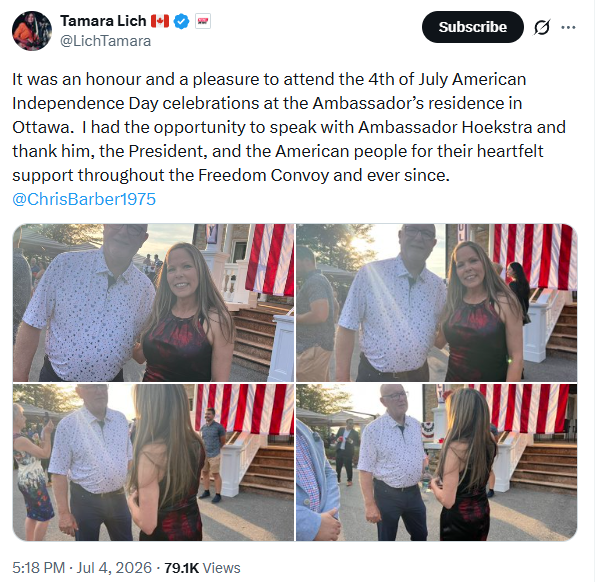
Inviting a key organizer of the Ottawa anti-vax blockade, convicted of criminal mischief for her actions, to celebrate July 4 at the US embassy and pose chummily with the ambassador, surely constitutes foreign interference in Canadian democracy and law. Just shameful. #cdnpoli
🇨🇦🇩🇪🇵🇸 A Canadian pediatrician who worked on the ground in Gaza confronted a German politician over his denial of famine and genocide reports.
Dr. Tanya Haj-Hassan told him the issue was no longer a lack of information. It was what he was choosing to dismiss.
“Honestly, sir. If you can listen to every credible international organization…”
She listed the UN, Doctors Without Borders, Save the Children, the International Court of Justice, and the independent witnesses who were actually allowed into Gaza.
“We’re telling you the same thing.”
The IPC has officially confirmed famine in Gaza. Amnesty International has said Israel inflicted a deliberate policy of starvation. Leading genocide scholars have also said Israel is committing genocide in Gaza.
And still, he questioned it.
Her response was brutal:
“I think you need to really consider what inherent racism and dehumanization you have in you.”
Source: @MiddleEastEye on YT / Writer: Sol
🚨 José Mourinho on the overturned red card for Folarin Balogun:
“Why? Because they’re the hosts? What is this nonsense? In football, these decisions must be the same for everyone. If the red card is a red card, it stays a red card.
People don’t like to admit it, but sometimes where you come from changes how you’re treated. Tell me honestly—does that decision get overturned if the player represents Ghana or Paraguay? I don’t think so. The rules should be the same for every nation.”
First take: while noise is understandably concern for waterfront residents, it's not the even close to the main issues with expanding #BillyBishop. It's a shame no one at @globeandmail editorial board did their homework. Uninformed op-eds aren't worth the pixels they waste. /2
@briicoded I said positive things about Toronto too and got mobbed. I think that there are a bunch of people being paid by Conservative groups to persuade people against Toronto because it's a Liberal city.
FIFA's own rules dictate that if a government tries to intervene in a disciplinary matter - that team is disqualified. Not happening to the USA though, despite trump making that phone call. Wonder why. 🤔
Fuck Trump. Fuck Infantino.
21 years I’ve called Markham home. It’s where I bought my first home, where I built a life. So getting to stand on that stage for Canada Day and feel seen, welcomed, acknowledged by this community? That’s not something I take lightly. 🇨🇦🤍
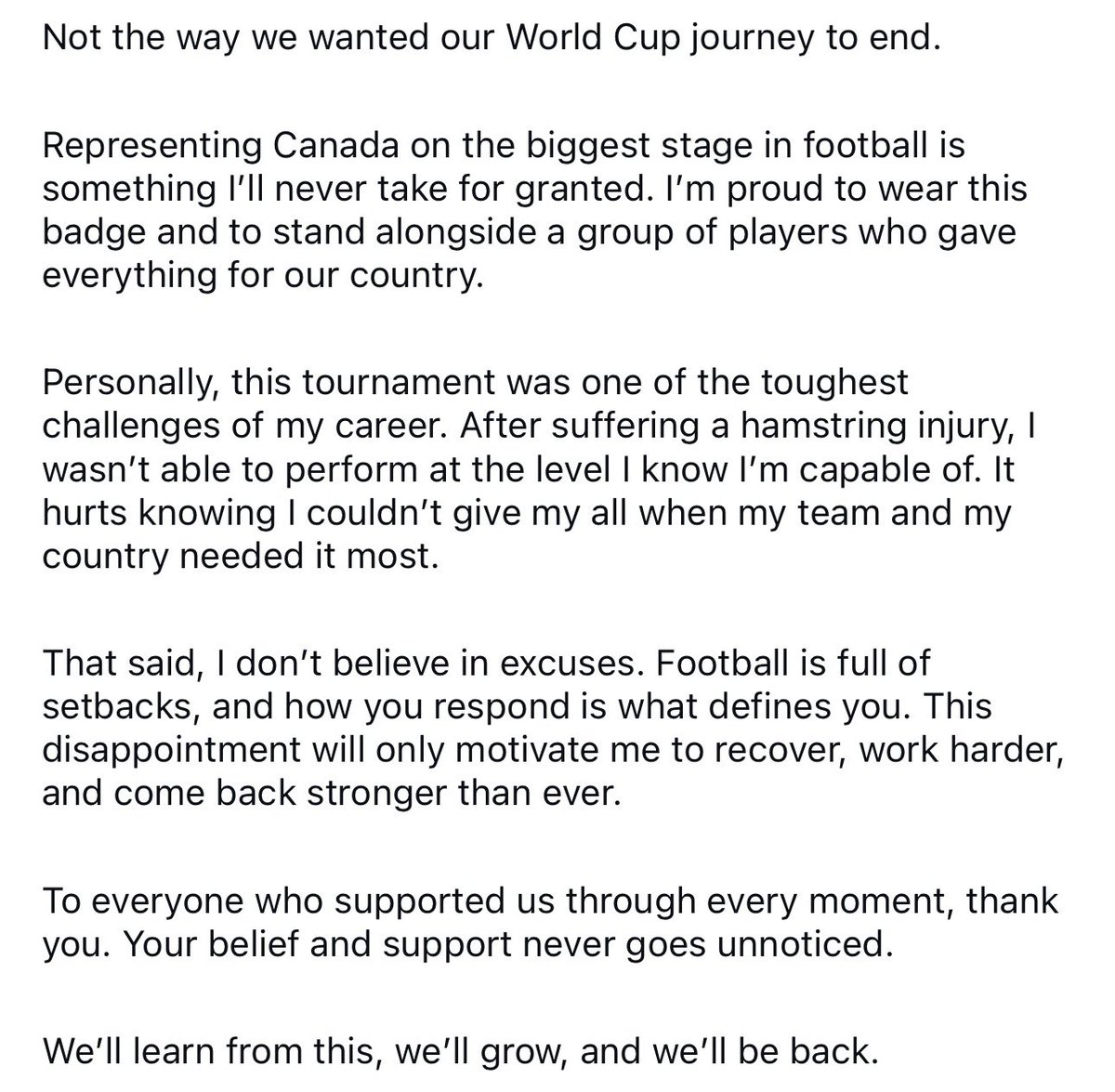
Alphonso Davies speaks out following Canada’s exit from the World Cup:
“Personally, this tournament was one of the toughest challenges of my career. After suffering a hamstring injury, I wasn't able to perform at the level I know I'm capable of. It hurts knowing I couldn't give my all when my team and my country needed it most.”
Speediest of recoveries, Phonzy. ❤️🙏 Hopefully Canada qualifies for 2030, and hopefully you’re healthy and ready next World Cup. 🇨🇦 ⚽️