I'm ready to leave Rust behind. We need a new programming language specifically for AI agents.
Strictly typed, many compiler checks, but also with a fast compiler, unlike Rust.
Bring it on!
After thinking about this for a year and having experienced the power of statecharts (thank you @DavidKPiano for xstate!), I finally got my actor runtime into usable enough shape to share.
Demo in the video: 1 million foraging and fighting ants, each an actor backed by a statechart.
Everybody has one nowadays, so what makes this one special?
It's in-process, resource efficient, and exclusively based on statecharts.
That means you can model fine-grained entities like individual websocket connections with an actor each, and simulate to your heart's (and agent's) content.
It's built so that you can do that every: on the server (today), in the browser (today), in mobile and native apps (soon without spending your own tokens).
XML might look icky, but it's actually an okay data format for this use case (think about it: you can mix HTML inline for self-documenting charts!) and you don't have to write it anymore.
The Mermaid 13 alpha is on npm. It’s a rewrite, and we haven’t decided whether to ship it this way.
It's about 50 times faster than v12 in early measurements. A smaller core with no dependencies. Plain SVG, and no browser needed. Every diagram written for v12 should read the same in v13. What can break is code that depends on how Mermaid draws.
So: launch v13 as it is, or migrate gradually. Knut lays out the tradeoff, and we’d love your help deciding.
🤖 https://t.co/BL8Yx5Imhx
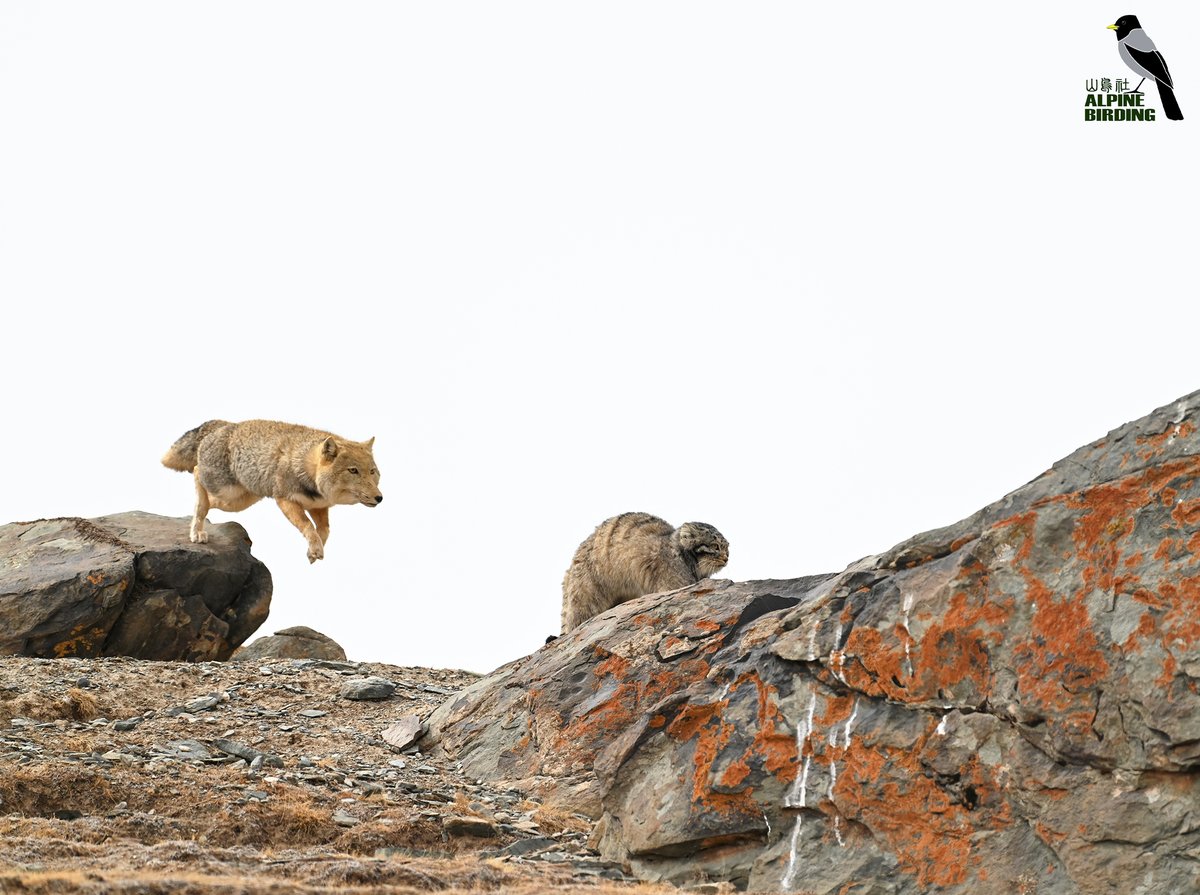
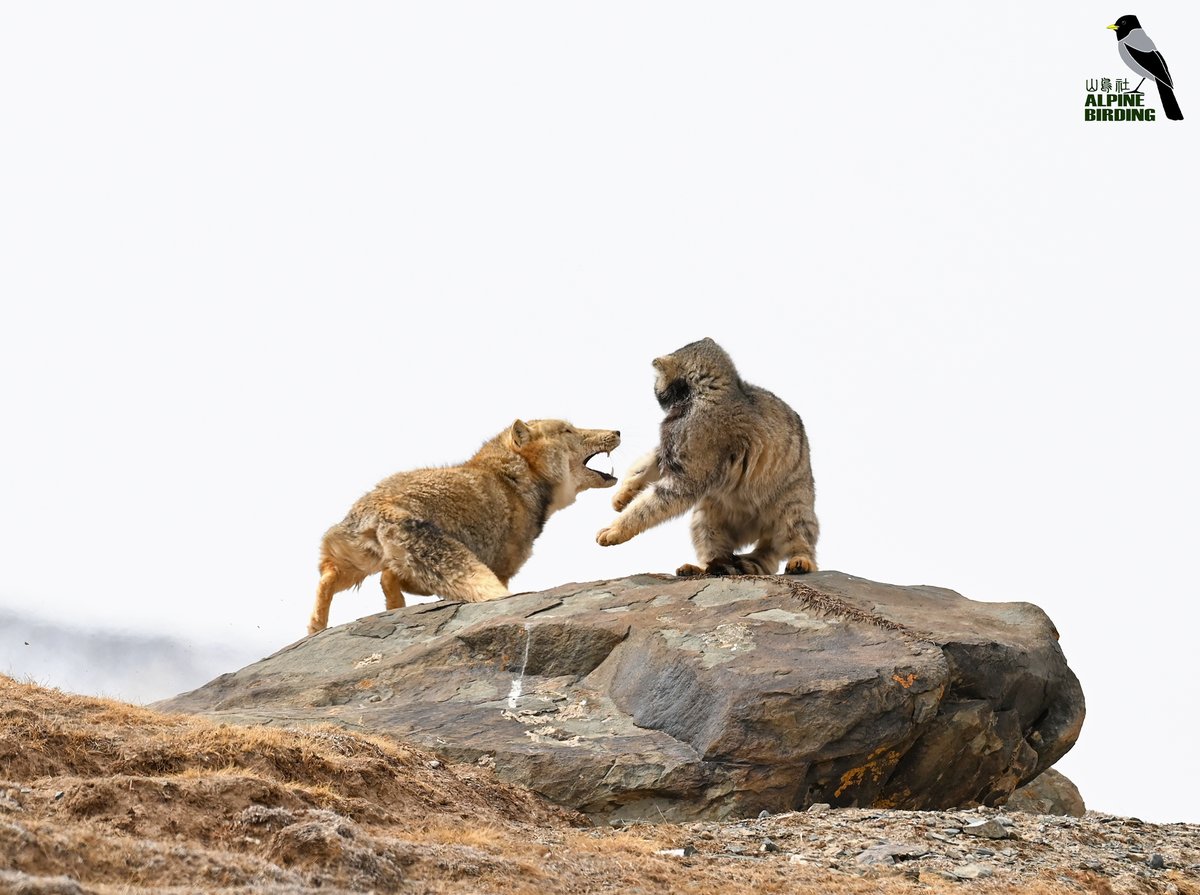
One of the most remarkable series of photographs ever captured by AlpineBirding — a tense encounter between a Pallas’s Cat and a Tibetan Fox.
We got these photos during our wildlife tour in Qinghai, China.
#naturephotography#your_bird_capture#Chinabirdingtour
Evolution works in multifactorial ways, whereas human biologists tend to study things one dimension at a time. The tools we use in biology are reductionist, which means we only get a narrow view of how things work; our measurements are inherently limited in time or space. We sequence DNA and look at the letters, while ignoring (usually) the structure in which those letters fold up into 3D forms, which in turn determine how the letters are expressed in the cell.
Of course, evolution doesn’t care about these distinctions. It can make use of structure or chemistry or size or any other feature. It can even "bake" multiple functions into the same molecule. There’s an enzyme called lactate dehydrogenase B, for example, that converts between lactate and pyruvate, but that same protein, when expressed in the eyeballs of ducks, instead acts as a crystallin protein and forms the lens.
There are many similar examples of "dual" evolution in viruses. Hepatitis D has a tiny RNA genome with just one protein-coding gene. But the RNA itself is also catalytic; it folds up into a shape that then cleaves other RNA molecules to help the virus replicate itself. Evolution has optimized the same molecule to both carry information but also to have a particular structure.
I’m often underwhelmed by the ability of bioengineering to find optimal solutions, and I think part of the reason is that we struggle to operate across these different dimensions. You might object and think that machine learning will help us engineer biology more easily, and that's true, but I’m skeptical even the best AI model could replicate the performance of evolution, at least so long as our measurement tools give us a narrow view, the data we provide to models will be similarly narrow. If we can’t even measure the interactions that matter for what we’re optimizing, etc etc....
I’m not the first to say this, of course. The great François Jacob wrote about evolution’s tinkering in a 1977 essay in Science, called “Evolution and Tinkering,” writing:
"The action of natural selection has often been compared to that of an engineer. This, however, does not seem to be a suitable comparison. … It works like a tinkerer … The tinkerer, in contrast, always manages with odds and ends. What he ultimately produces is generally related to no special project, and it results from a series of contingent events, of all the opportunities he had to enrich his stock with leftovers."
It seems, affordable but great guitars simply always create a wave of hatred and disbelief, just like it happened in the 90s-2000s with Korean guitars. Building affordable guitars appears to be a tedious and precarious job. Never mind the haters - there are plenty of people who do afford amazing but inexpensive guitars
BEAM on the BEAM :)
You can now run Erlang and Elixir inside erlang_wasm.
It's OTP 29 compiled to a 5.6 MB WebAssembly component, running on WASI 0.3. No JIT, cooperative threads, and even the Elixir libraries.
Here, the same Sierpiński triangle running from Erlang and Elixir.
For a very long time, I've wanted a way to run untrusted Elixir code in a server-side sandbox. Now I can. And you can too!
Introducing Kettlecorn: OTP 29 + Elixir 1.20 on WASI.
Huge thanks to the Popcorn team for paving the way (👋 @JakubGonet@uusszz et al), especially your 1.0 rewrite. Kettlecorn uses Popcorn's OTP patches and adds a handful more, enabling the BEAM to run on WASIp3 (with Wasmtime's component-model threading).
Try it out and let me know if you have any fun ideas for what you can build with this. (One idea: @mikehostetler, Code Mode for Jido Harness?)
A meta-analysis of 912 neuroimaging studies finds no single core brain region or network underlying the self, challenging the prevailing view of a shared cortical midline or insular anchor. Instead, self-related processing emerges from contextually determined, shifting coalitions of distributed brain systems, suggesting that selfhood is defined by dynamic configuration rather than a fixed neural substrate.
https://t.co/J6Xmv2ntJC
@martinfowler The explicit abstraction of time was superbly described at https://t.co/OWTOVygCHs for Reactive Extensions. Script systems usually do not try to do that due to global dependency on timing, yet one can try https://t.co/suVh6r7Nt8