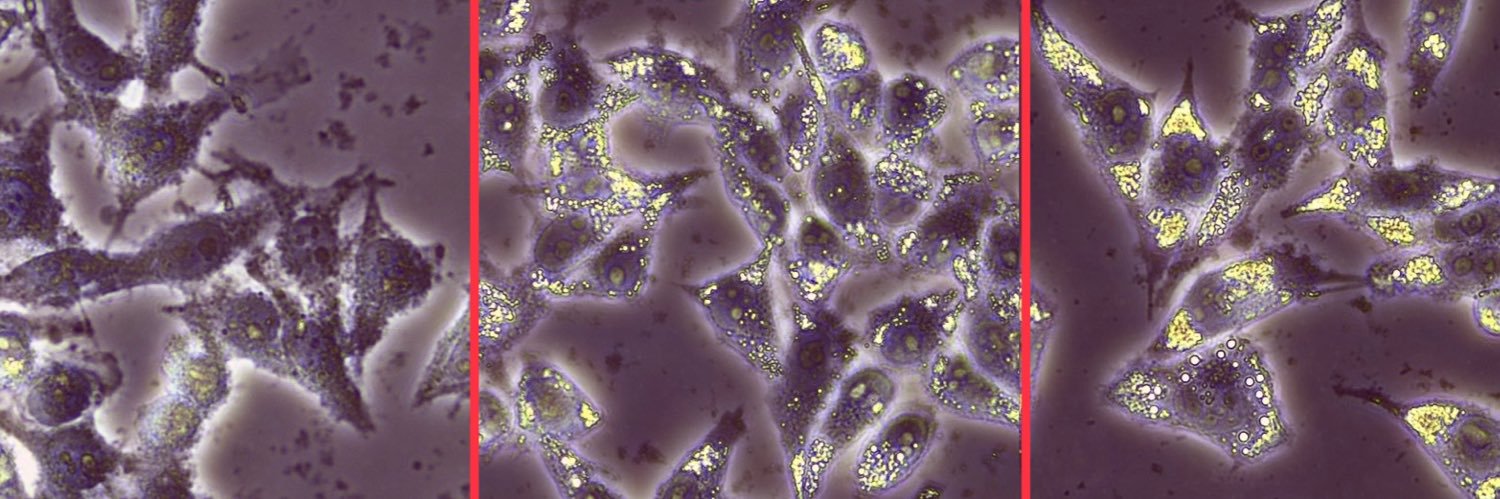
@CanalUGR Excited to share our new study in Cell Death & Disease! Hypoxia rewires mitochondrial dynamics, and PARP inhibition disrupts this adaptation, revealing a new vulnerability in hypoxic tumors. https://t.co/frPD3gskM2
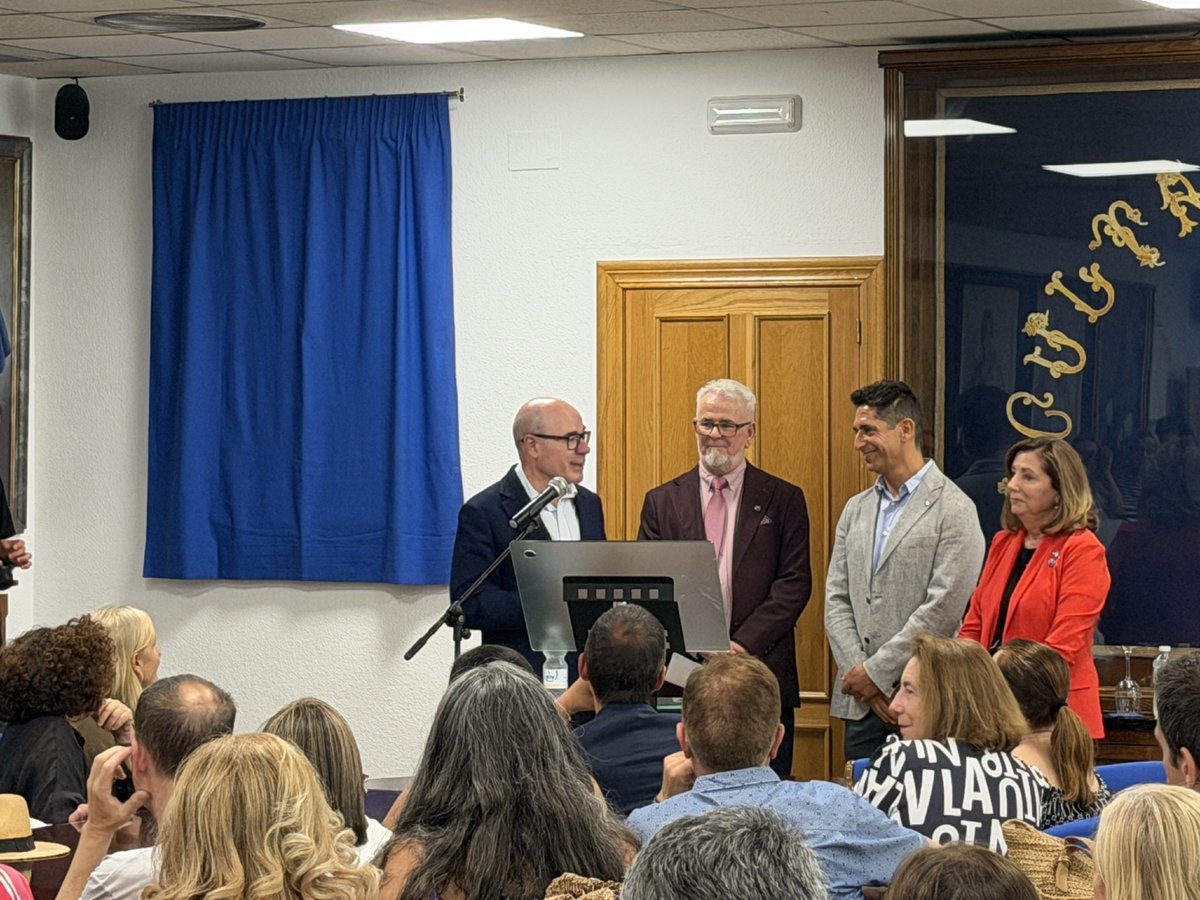
🖼️ La @fcienciasugr estrena el retrato de su anterior decana, María del Carmen Carrión Pérez
En el acto se ha plantado un árbol en reconocimiento a su gran trayectoria y a su hito histórico como la primera mujer al frente del centro 🌳👩🔬
📸 Noticia: https://t.co/nryK990Jqr
Mitochondria in a living cell, imaged today while I was training new lab members on our spinning-disk confocal microscope. Shown are the full cell and zoomed-in regions of interest. Total imaging time: 60 minutes. #CellBiology
@fcienciasugr@CanalUGR La Facultad de Ciencias (UGR) cuenta desde hoy con un ejemplar de la familia Cervidae de mamíferos artiodáctilo procedente de la tundra ártica…¡Ya huele a Navidad en nuestro centro!
@linternacope Querido Ángel Expósito, decir cómo se ha dicho hoy en tu programa que en el Campo de Gibraltar “hay pueblos que viven del menudeo” es generalizar bastante. Os habéis pasado, menospreciando a la gran mayoría que trabaja día a día honestamente…
🏢 Nuevos espacios y salas multiusos para estudiantes, personal y asociaciones de la @fcienciasugr
👩💻 Entre los locales que se han inaugurado, se encuentran los de la Delegación de Estudiantes y el Coro
👀 Noticia: https://t.co/tfKvWQLv2g
@fcienciasugr@CanalUGR Inauguramos nuestro nuevo sistema de detección de aves en los jardines de la Facultad de Ciencias, y tras más de 1000 detecciones, el Verderón Común se afianza en el liderato. Al menos, 30 especies detectadas…
Hoy en clase de 1º Biología he puesto esta fantástica animación de Drew Berry de WEHImovies, perfecta para explicar el modelo más aceptado de maduración de las cisternas del Apto. de Golgi (frente al clásico de cisternas estables y el transporte de vesículas hacia la cara trans)
"Blebbisomes are large, organelle-rich extracellular vesicles with cell-like properties" and are made by multiple cell types. This video shows fibroblasts (green arrows) and fibroblast-derived blebbisomes (magenta-arrowhead). Read about blebbisomes here:
https://t.co/ABCCCZ5fPp
📢 Irene Ortiz Bernad, primera mujer en presidir la Sociedad Española de la Ciencia del Suelo @SECS_Spain
👩🔬 La profesora titular del Departamento de Edafología y Química Agrícola de la #UGR marca un hito en la historia de la institución🔝
Felicidades👏
https://t.co/W4zj5kjBee
Golgi y Cajal, dos neurocientíficos que interpretaron de forma opuesta las imágenes que veían al microscopio de neuronas teñidas por un método creado por el primero. Golgi las veía unidas, Cajal independientes. Nobel para los dos
@manuelansede en @el_pais
https://t.co/lxRTrW3Op9
@doctorinigo@Sergio00113925 Podría esa disfunción mitocondrial estar inducida por las condiciones de hipoxia en los tumores? Es la hipoxia la causante de esa pérdida de crestas? Son preguntas a tener en cuenta. Hay mucho que discutir sobre la dinámica mitocondrial y cáncer..Garcías por el hilo.
This is in my opinion, a seminal article and discovery regarding the role of mitochondria in cancer. In this study from 2008 (!), Arismendi-Morillo and Castellano-Ramirez showed how glioblastomas (the most aggressive brain tumor) have complete cristolysis (loss of mitochondria cristae). A significant ultrastructure injury which will result in complete loss of normal cellular function, leading to significant metabolic reprograming and disruption of cellular bioenergetics through exacerbated Warburg Effect.
Why the field of cancer research has not cared about significant findings like this?. Unfortunately, this is one of the many examples of why cancer research is an establishment where new ideas and concepts have little room at first and it can take >20 years to gain momentum.
For the most part, cancer research is still stuck in the past, still hasn't moved past genetics era and stepped into "new ideas" some of them 10-20 years old...
We should have been way ahead of current knowledge about cancer and therapeutic approaches. Cancer research should have been able to save millions of people more annually by now.
Institutions like the NIH or the National Cancer Institute are partially responsible for this situation, for neglecting high-risk-high-reward thinking (only 0.5% of their current budget), continuously funding old ideas and big research groups that are still entrenched in the past not willing to step into the next frontier...
Hoping that NIH can finally be forced out of its confort zone and establishment to finally step into the final battle to conquer cancer.
https://t.co/nsgsYpj2wL