Public Health Expert, Clinical Scientist & Paediatrician focusing on complete lifecourse approach & Health Systems. Formerly at AIIMS & ICMR . Army kid
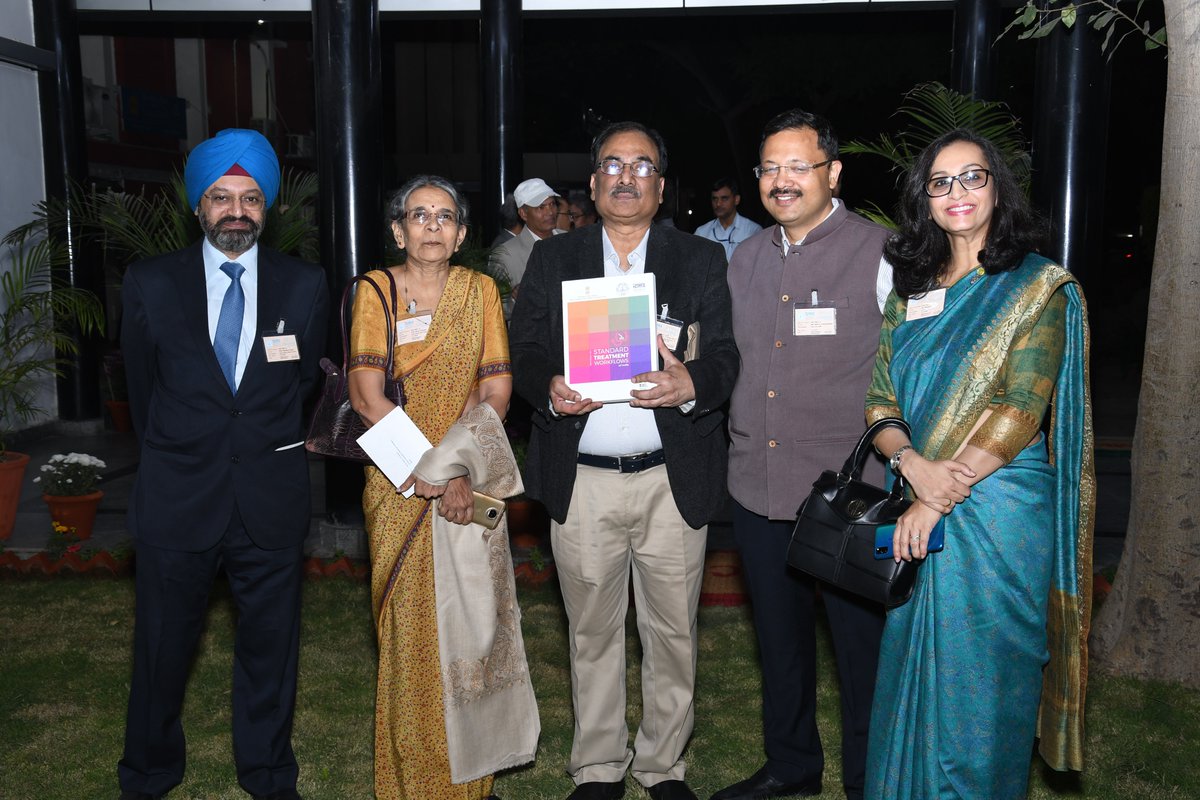
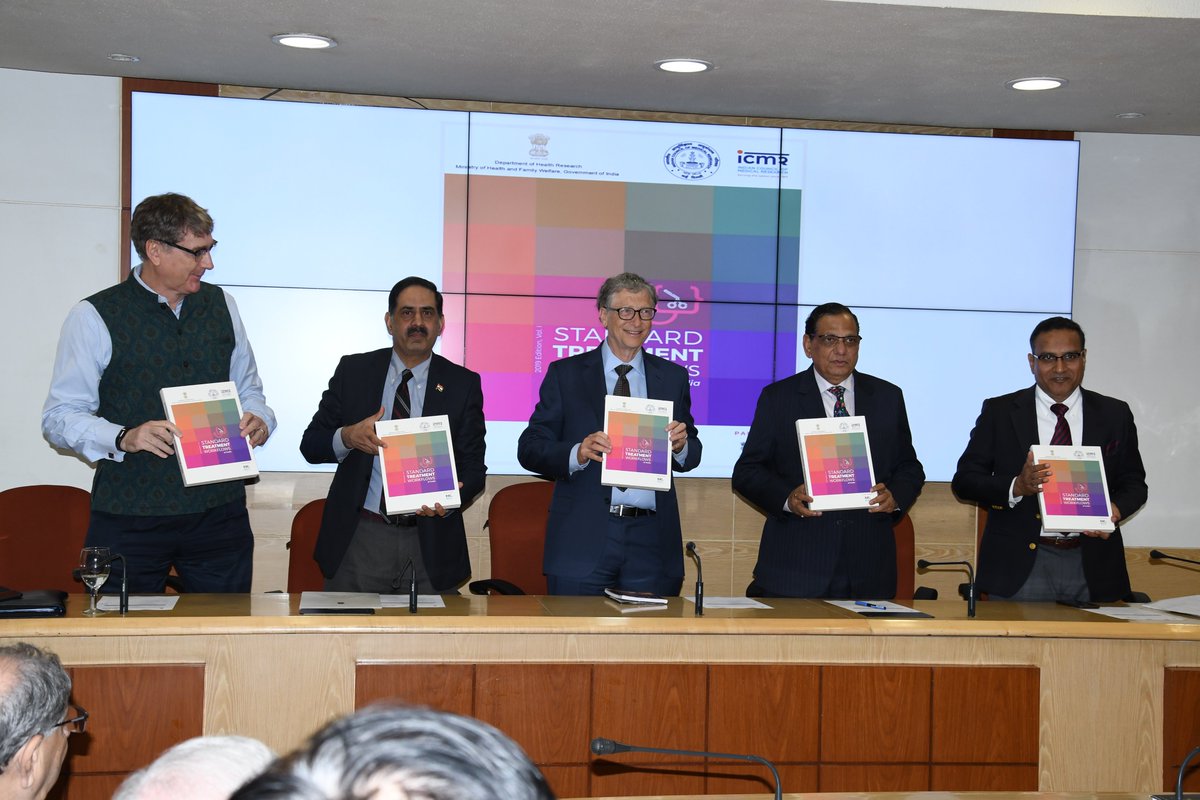
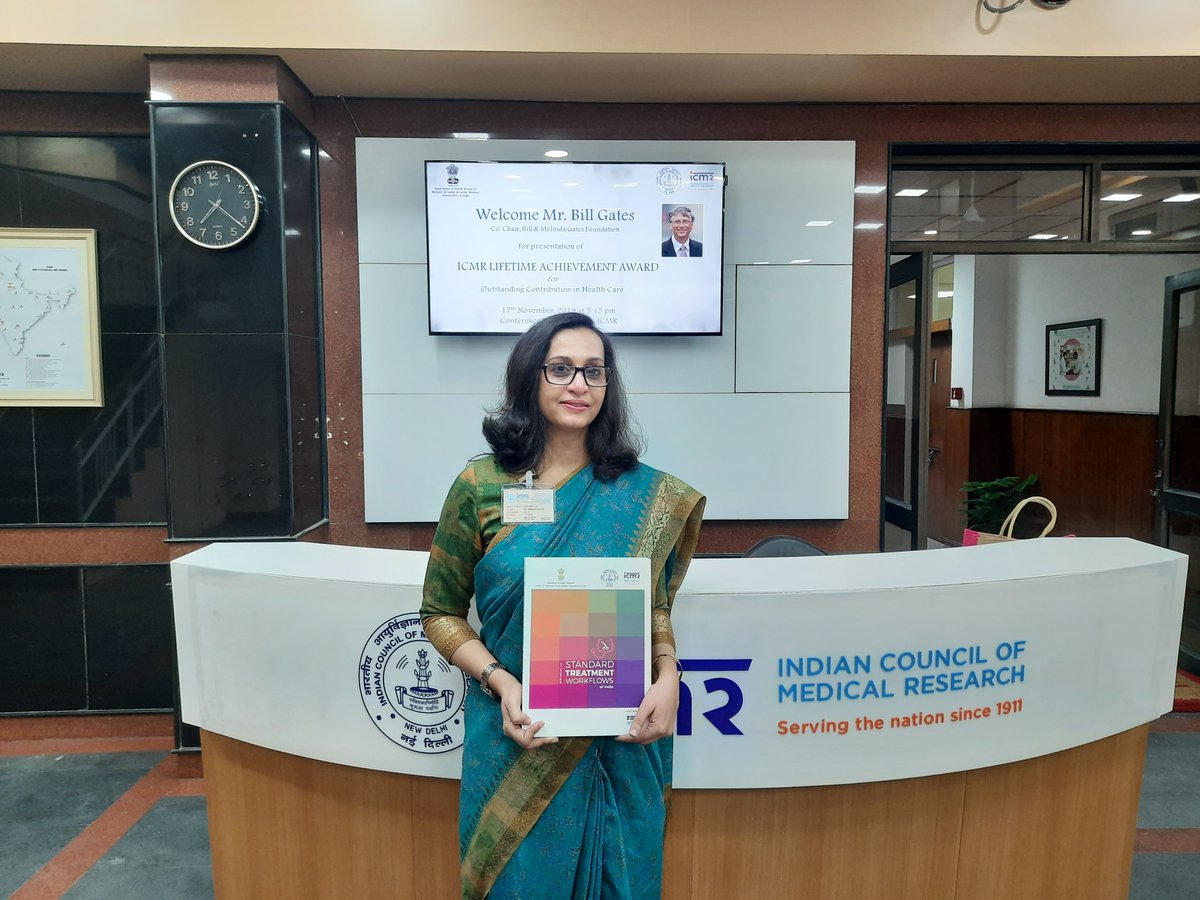
It was a delight to have @BillGates release the Standard Treatment Workflows of India, a project that I lead successfully. Big thanks to all the expert group chairs and my support staff who helped in this endeavour @gatesfoundation@BMGFIndia@trevormundel@Atul_Gawande#UHC
As food and nutraceutical brands increasingly leverage health-focused marketing, the Food Safety and Standards Authority of India (FSSAI) has intensified its scrutiny of potentially misleading branding, labeling, and advertising practices.
Common marketing claims such as "Healthy," "Organic," "100% Natural," and "No Added Sugar" are under the regulator's scanner for creating a false "health halo" around highly processed products.
"Labels such as 'fat-free', 'multigrain', 'immunity booster', 'heart healthy' and 'superfood' are among the most misunderstood food claims," notes Ms. Monita Gahlot, Dietician at AIIMS New Delhi. "Consumers need to look beyond marketing messages" to make genuinely informed dietary choices.
Key Takeaways for Consumers:
1. Look Beyond the Front Pack: Front-of-pack claims are often marketing tools. Always check the mandatory nutritional information panel and ingredient list on the back.
2. Understand "No Added Sugar": This claim does not automatically mean a product is low in calories or inherently healthy, as it may still contain high amounts of natural sugars, fats, or sodium.
3. Verify the Ingredients: Check the actual percentages of advertised ingredients to ensure they align with the product's primary marketing claims.
#NutritionAwareness #FSSAI #HealthyEating #DietAndNutrition
India's fight against diabetes is reshaping what healthcare can look like for a billion people.
By weaving together stronger screening programs, smarter technology, telemedicine, and a relentless focus on catching the disease early, India is proving that quality diabetes care does not have to be a privilege, it can be a right.
As diabetes cases surge worldwide, the world is watching India. Its model of affordable, integrated, people-first care is not just transforming lives at home, it is writing a blueprint that low and middle-income countries everywhere can follow.
Read article: https://t.co/twUtu4TqGZ
AI won’t make most human skills obsolete—but it will change how they’re used.
Negotiation, leadership, and problem solving may become even more important as AI changes how work gets done. The question now is which skills matter most next. https://t.co/PzVuUQYR8V.
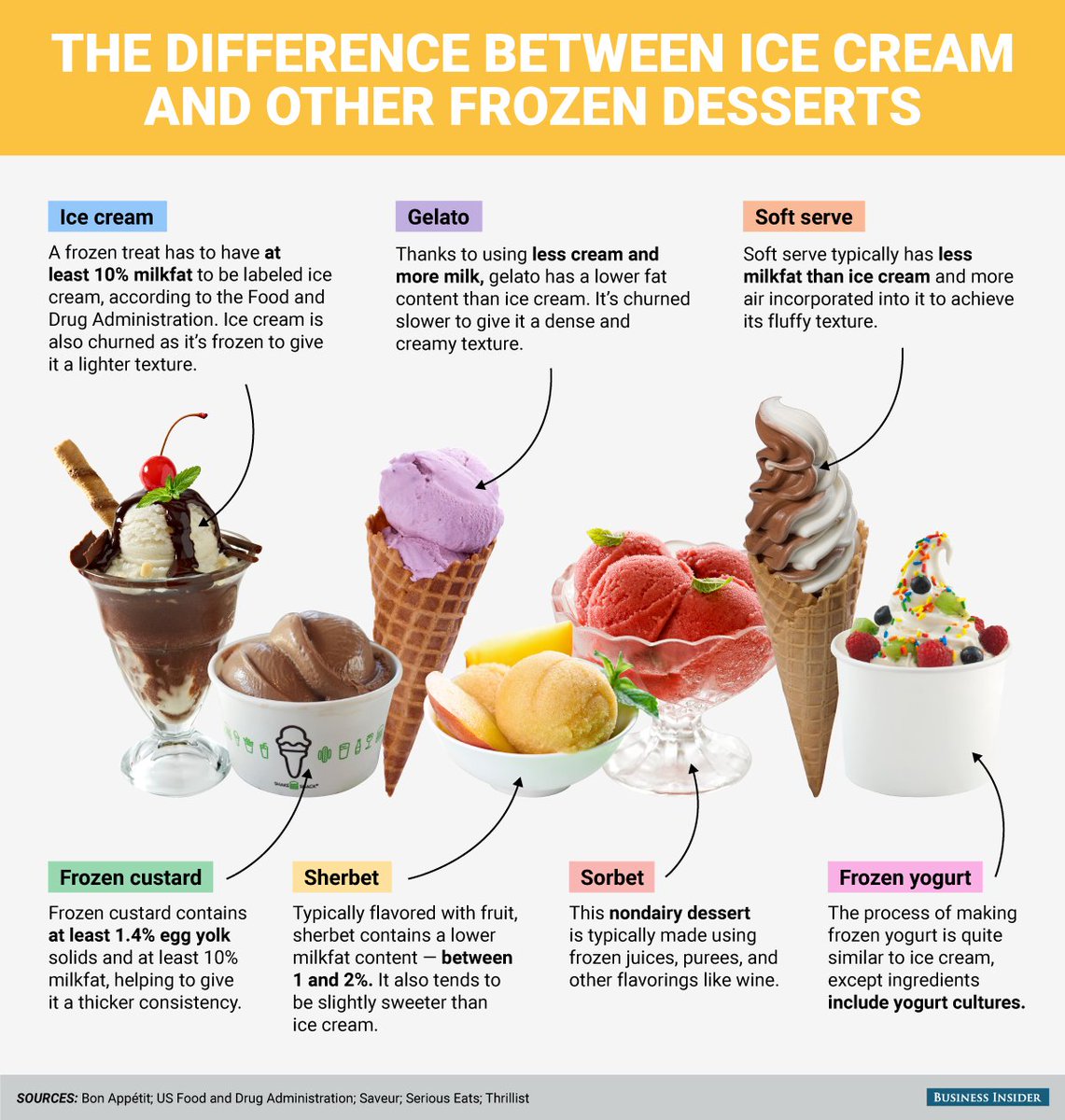
What's the difference between - Ice Cream, Gelato, Soft Serve, Frozen Custard, Sorbet and Frozen Yoghurt?
Depends on percentage of milk-fat, other input ingredients, method of preparation, etc.
Ice cream and Frozen Custard have high milk-fat. Sorbet has no milk.
(via reddit)
DG @ICMRDELHI Dr Bahl describes the far reaching changes that will strengthen the health research ecosystem of the country, to face present & future challenges. Research, that generates contextually relevant evidence, is necessary for sound policy formulation. @MoHFW_INDIA
Why Adults Seem Smarter: It’s Not Magic — It’s a Bigger Mental Library
Sometimes people think adults are “smarter” just because they got older.
But I think it’s mostly because our brains have spent years building a much larger library of patterns, memories, and problem-solving tools.
When we were kids, we had to learn everything from scratch — like starting with 1 + 1.
But once you’ve practiced enough, your brain starts recognizing patterns faster, connecting ideas more easily, and applying old lessons to new problems.
That’s basically how life works too.
The more you learn, the more your brain adapts. The more you challenge it, the more it grows. That’s why people say you can grow your intelligence — because the brain really does change with use.
The real takeaway is simple: intelligence isn’t just something you have.
It’s something you build.
Image credit @CuriousMindsHub
In today's @TheLancet there are 3 papers on cardiometabolic disease: biology, epidemiology, prevention/treatment.
The sobering and all to common story from womb to tomb conveyed in this graphic
https://t.co/rVs2Yz97NC
https://t.co/OpuJTia0bC
https://t.co/i714onXoCG
Life will bring mistakes, disappointments, anger, kindness, love, loss and moments of doubt. We will hurt others sometimes, and be hurt ourselves. What matters is the ability to learn, forgive, stay compassionate and keep moving forward. Be human. Not necessarily perfect.
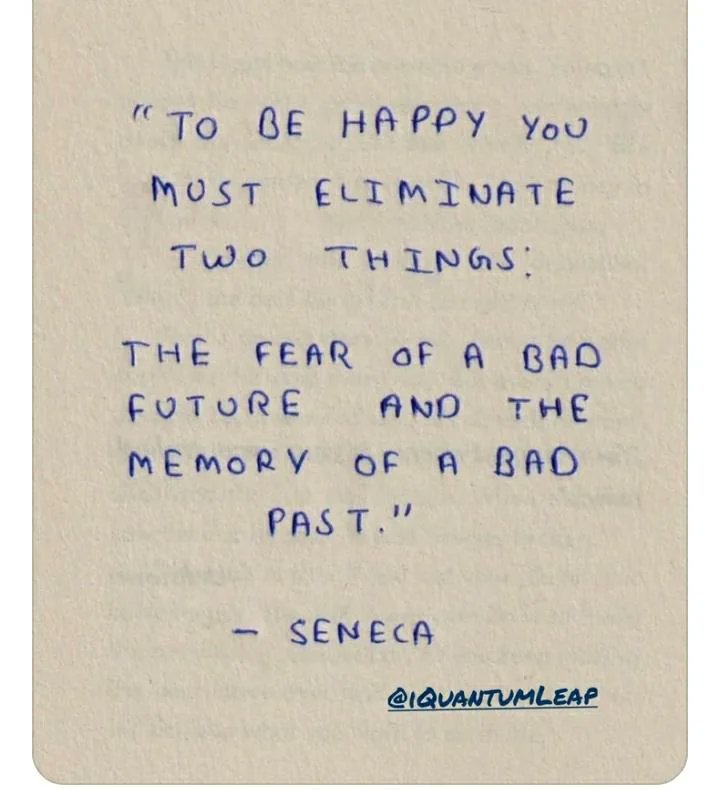
#KaalaiVanakkam! Anxiety chains us to a fearful future, while regret locks us in an unchangeable past. Both steal the present. Defeat them with grounding mindfulness. Embrace radical acceptance. Simply put, focus only on the actionable steps today! Have a wonderful Wednesday!
A big day for multi-agent AI to accelerate biomedical discovery, hypothesis generation, designing experiments with proof points of new candidate drugs (cancer, fibrosis, macular degeneration, antimicrobial resistance, and more)
2 @Nature reports @GoogleDeepMind@FutureHouseSF
https://t.co/u1EYvJ05VJ
https://t.co/8DpAolom0F
#KaalaiVanakkam! As we watch the VUCAness around us, it's clear - We, are those knights in shining armor we were waiting for. We, are those saintly saviours. It is the secret, undiscovered strength within us - that blackbox, that we need to tap into. Now.
My latest EAC-PM working paper: "How to do Process Reform: Case Study of IEPFA" (co-authored with @AakankshaArora5). The paper lays out step-by-step how process reforms were implemented at IEFPA over the last one year. As a result, the system is now able to do more approvals in a month than it was earlier doing in a year. Indeed, the backlog will be fully cleared in the next six months. This case study is part of our effort to document government re-engineering efforts so that they can be taught and replicated across the system.
https://t.co/meOOdKXzOm
📊 JAMA Clinical Guidelines Synopsis: The 2025 ACC/AHA guideline recommends home and office blood pressure monitoring to confirm diagnosis and titrate medications, with a target blood pressure of <130/80 mm Hg for most adults.
https://t.co/aomnd2Hcul
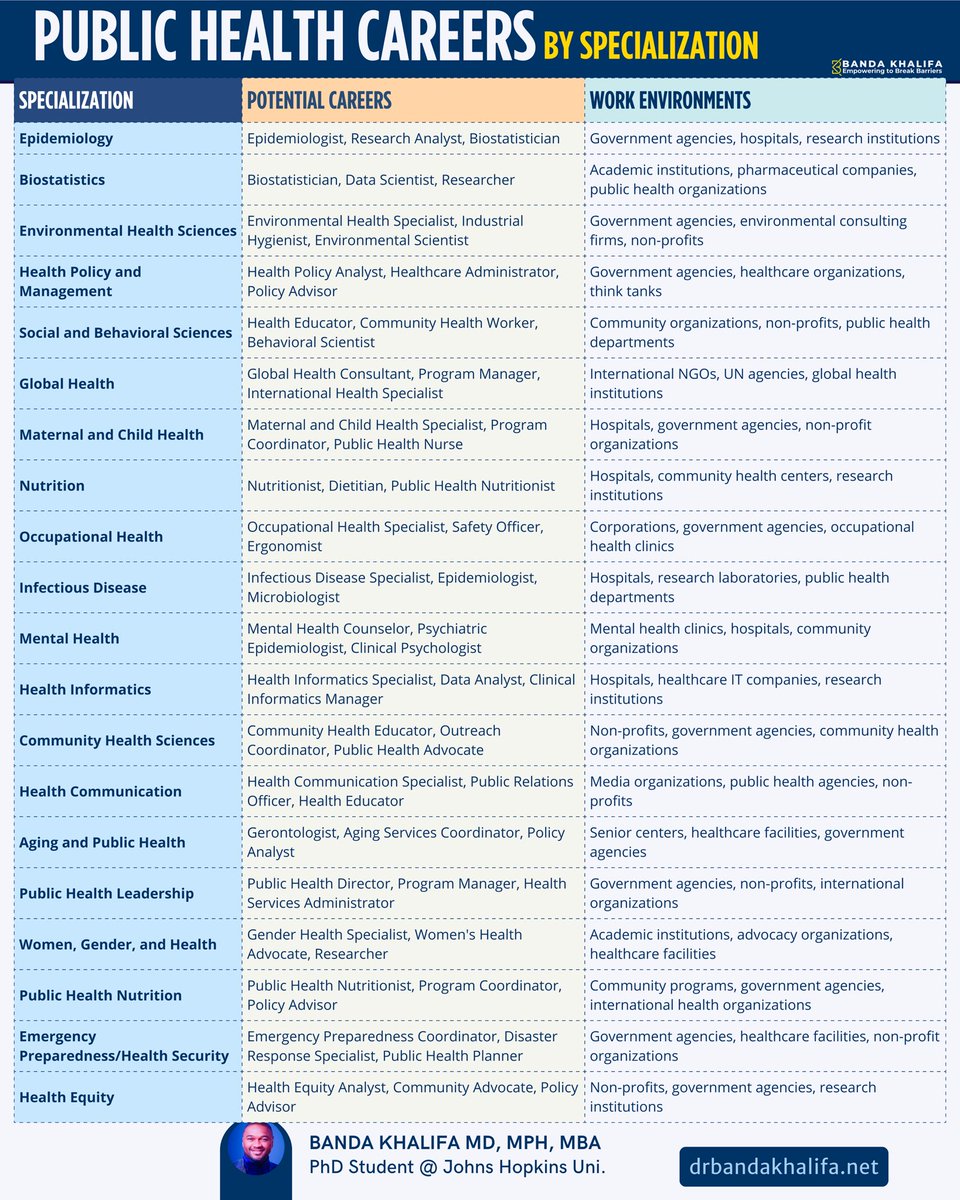
𝐏𝐮𝐛𝐥𝐢𝐜 𝐡𝐞𝐚𝐥𝐭𝐡 𝐢𝐬 𝐧𝐨𝐭 𝐨𝐧𝐞 𝐜𝐥𝐞𝐚𝐧 𝐜𝐚𝐫𝐞𝐞𝐫 𝐥𝐚𝐧𝐞.
Many students say they want to study public health.
But when you ask what they want to do with it, the answer is often unclear.
That is normal.
Public health is broad.
And many paths overlap.
Someone trained in epidemiology may work in global health.
Someone with a health policy background may end up in health equity.
Someone in biostatistics may move into health informatics, research, or pharmaceutical work.
Someone who starts in community health may later lead programs, manage grants, or shape policy.
So do not treat your specialization like a life sentence.
Treat it as a starting point.
——-
A few examples:
→ If you like disease patterns, outbreaks, and population-level risk
↳ Look at epidemiology or infectious disease
→ If you like data, models, and measurement
↳ Look at biostatistics or health informatics
→ If you like systems, governance, and decision-making
↳ Look at health policy, management, or leadership
→ If you like communities, behavior, and prevention
↳ Look at community health or social and behavioral sciences
→ If you like cross-border health challenges
↳ Look at global health, but remember: global health is broad
→ If you care about fairness, access, and structural barriers
↳ Look at health equity, gender and health, or maternal and child health
——-
Choose a specialization that gives you useful skills.
Then stay open.
Your first role may not be your final lane.
Public health careers often grow through exposure, projects, mentors, and problems you did not expect to care about.
A degree can open the door.
Your skills, curiosity, and experience will shape where you go next.
Which public health specialization interests you most?
“The greatest weapon against stress is our ability to choose one thought over another.
Instead of worrying about what you cannot control, focus your energy on what you can create.”
Ten years ago, India had 387 medical colleges and 51,000 UG seats; today, there are 820 colleges with 1.26 lakh UG seats. PG seats have increased from 31,000 to 85,000.
The goal is to add 75,000 more UG and PG seats in five years, with 28,000 already achieved in the last two years.