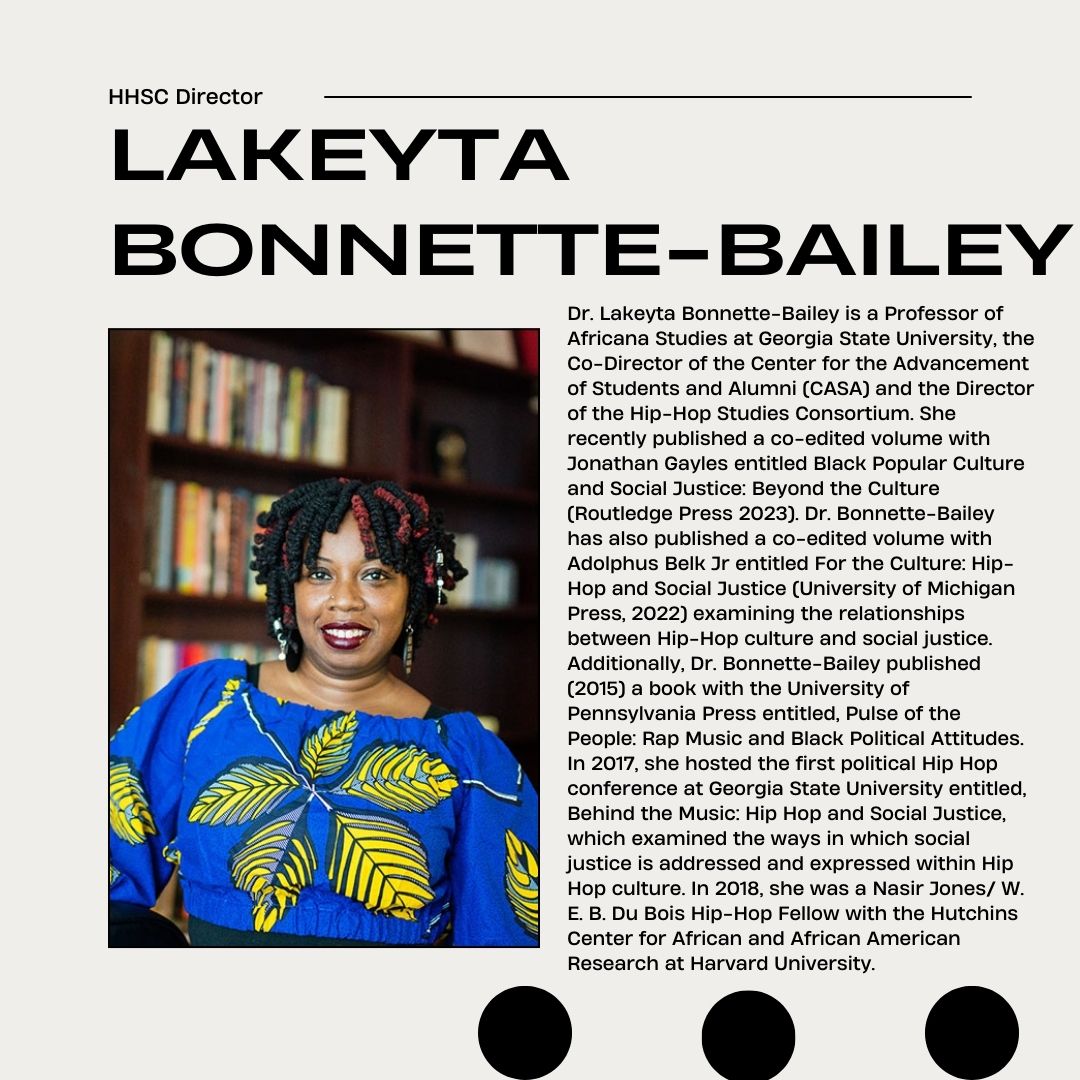
Save the date! 📚 Join us for the 2025 Global Read-A-Thon, Roots: The Journey of Us, on Feb. 26, 1–5 PM EST with host Suzanne Malveaux. Watch on Facebook, Twitch, Instagram, YouTube, and https://t.co/Q1t368Bcu0. Don’t miss it!
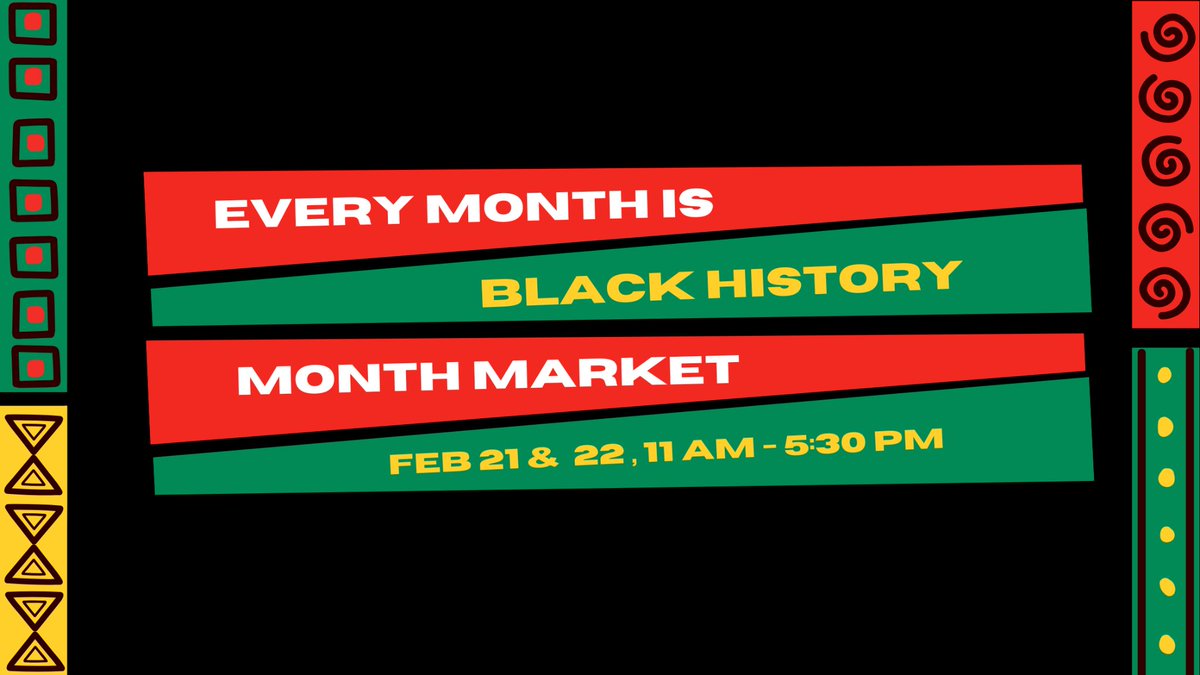
Friday, 2/21 & Saturday, 2/22 | 11 AM–5:30 PM: Visit the Schomburg Shop's Every Month Is Black History Month Market! Purchase artwork, clothing, jewelry, stationery, and more for all ages. #SchomburgCenter#Shop#BlackHistoryMonth#BlackHistory#BHM https://t.co/DSWbywuy8p
Today, we honor Dr. Martin Luther King Jr.’s legacy and highlight his perspective on education. For Black History Month, CSAD will celebrate the power of education. Join us for the 2025 CSAD Global Read-a-Thon, “ Roots: The Journey of Us” on February 26. Stay tuned! #GSUCSAD
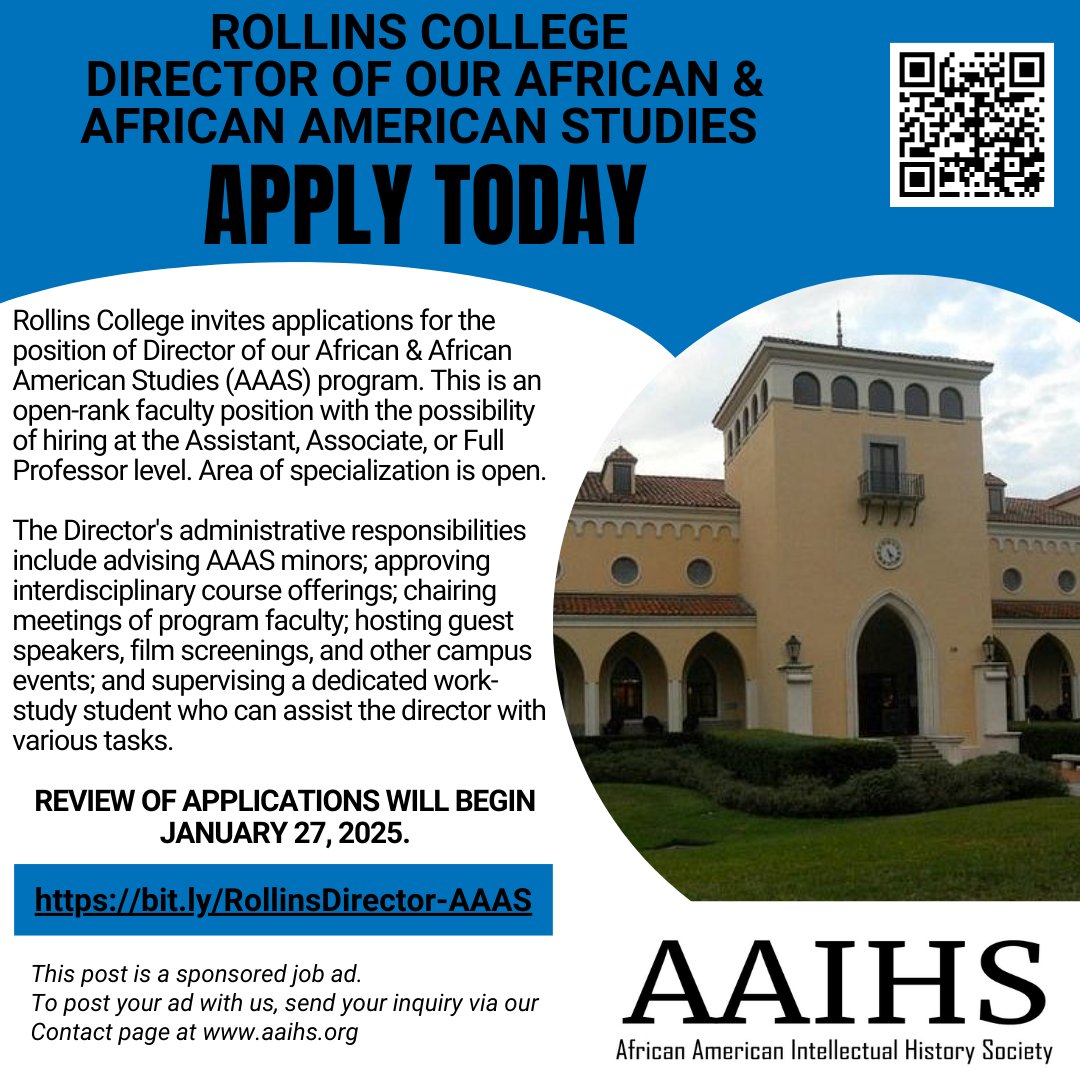
Rollins College invites applications for the position of Director of the African & African American Studies program. This is an open-rank faculty position with the possibility of hiring at the Assistant, Associate, or Full Professor level.
https://t.co/YRRrLiGseU
Learn about the reconstruction era and you will understand this country. Don’t and you won’t. It’s that simple. Until you see that white backlash is a feature and not a bug you won’t get it
On this day in 1829, an enslaved Black man who escaped the University of North Carolina was targeted for capture and re-enslavement. For decades, UNC actively trafficked enslaved people to students via "lease."
https://t.co/FnmJlRzt4D
Comics aren’t just for fun—they tell powerful stories through visuals. Explore the impact of comic books, cartoons, and more at the Visual Storytelling exhibit located on Library South 8th floor 📖
On November 14, 1960, 6-year-old #RubyBridges bravely walked into William Frantz Elementary School, becoming the first Black student to integrate the school in New Orleans, Louisiana. Surrounded by federal marshals, Ruby faced immense hostility, yet her courage and resilience made her a powerful symbol in the fight for racial equality.
Today, we honor Ruby Bridges’ strength and the incredible impact of her bravery, which helped pave the way for integration and justice in education. Her story reminds us that even the youngest among us can be powerful agents of change.
#RubyBridges #CivilRights #OnThisDay
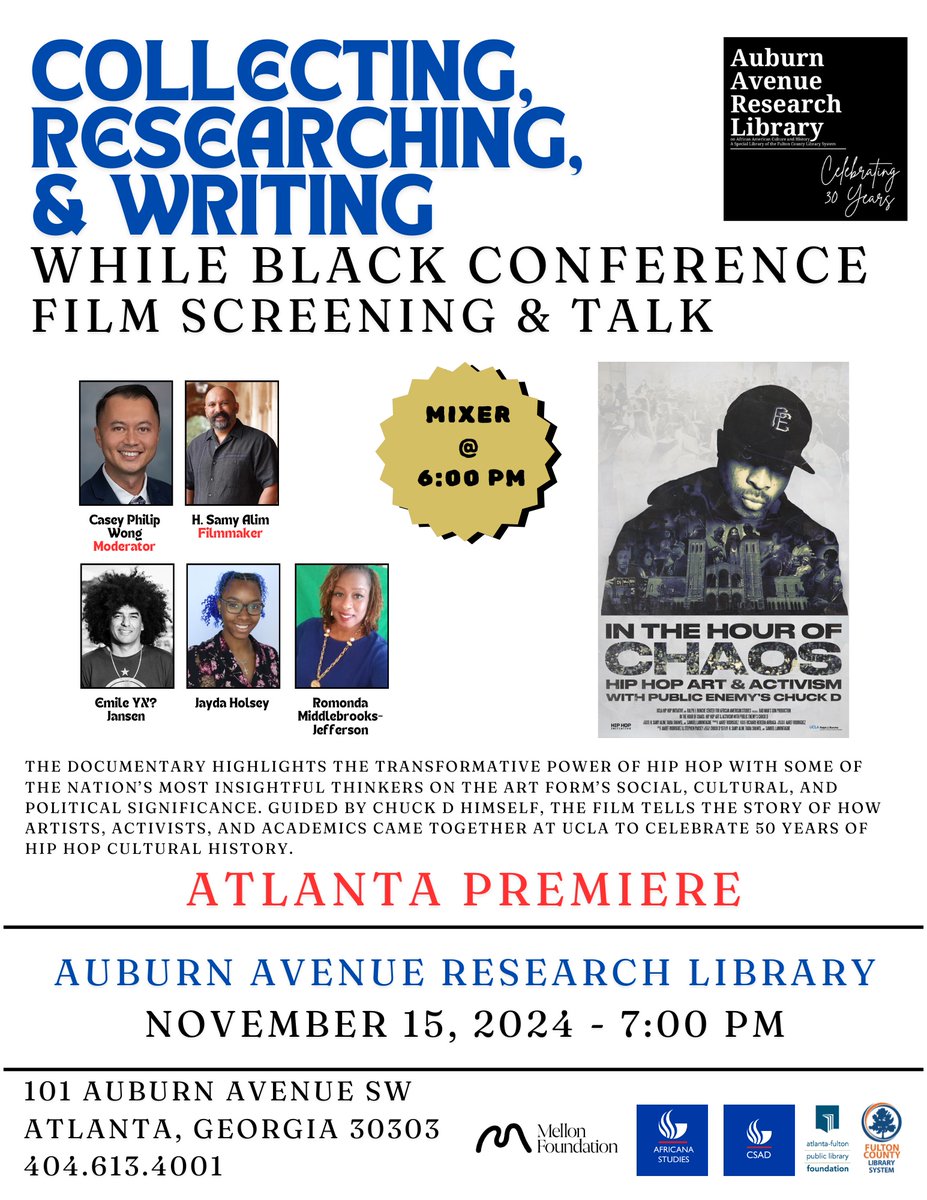
Mark your calendars for the Collecting, Researching, & Writing While Black Conference featuring the Atlanta Premiere of "In the Hour of Chaos" featuring Public Enemy's Chuck D, Friday, November 15, 2024! #GSUCSAD#HipHopMonth
104 years ago on November 2-3, during Election Day in 1920, the single bloodiest day in modern America political history happened, The Ocoee Massacre.
A black man attempted to vote & the Ku Klux Klan responded with rampage that led to the exile/death of every black person that lived there
—The dark day in Florida's history escalated after one Black citizen tried to exercise his right to vote at a polling location but was turned away on Election Day.
Mose Norman, who had been part of the voter registration drive in Orange County, decided to vote in the national election on November 2. When he attempted to do so, twice, he was turned away from the polls.
When Norman was driven away the second time, a white mob, then numbering over 100 men, decided to hunt him down. Concluding he had taken refuge in the home of another local Black resident, Julius “July” Perry, they rushed Perry’s home hoping to capture both men there. Norman escaped and was never found while Perry defended his home, killing two white men, Elmer McDaniels and Leo Borgard, who tried to enter through the back door. The mob called for reinforcements from Orlando and surrounding Orange County. Eventually they caught and killed Perry and hung his dead body from a telephone post by the highway from Ocoee to Orlando to intimidate other potential Black voters. Perry’s wife, Estelle Perry, and their daughter were wounded during the attack on the Perry home. They were sent to Tampa by local law enforcement officers.
The mob then turned on the Black community of Ocoee.
Homes and properties of Black families were scorched, burnt to the ground. At least four Black individuals were confirmed killed -- one of which was lynched, his body hanging from a tree limb for all to see.
On June 21, 2019, a historical marker honoring July Perry and others killed in the massacre was placed in Heritage Square outside the Orange County Regional History Center.
🖋️if you love our content, please consider supporting our page on https://t.co/16fHyPFENu (follow the ko-fi page too for weekly posts roundup)
The Department of English and Creative Writing at Dartmouth College invites applications for a position in Black Studies (open field) at the rank of Advanced Assistant or Associate Professor. We seek a dynamic scholar of African American/Black diaspora literature and culture.
The Department of History invites applications for a tenure-track assistant professor of African history with a specialization in Eastern or Southern Africa.
https://t.co/GNvdujsOKi
Fannie Lou Hamer was born #OnThisDay in 1917. Hamer co-founded the Mississippi Freedom Democratic Party, which challenged the local Democratic Party’s efforts to block Black voters through violence, literacy tests, and intimidation. #APeoplesJourney
Lorenzo Dow Turner (1890 –1972) was an academic and linguist who conducted seminal research on the Gullah language of coastal South Carolina and Georgia. He earned a master's degree from Harvard and a Ph.D. from the University of Chicago. He taught at Howard University (1917-1928) and Fisk University (1929 – 1946) and traveled West Africa, identifying over 300 (Mende, Vai, Fulani) Gullah loanwords and 4,000 personal names. He published his findings in his book “Africanisms in the Gullah Dialect (1949).
—Lorenzo Dow Turner was an African American linguist who headed the English department at Howard University in Washington, D.C. from 1920 to 1928, and later headed of the English department at Fisk University (1929 to 1946). His accomplishments within his career in academia include the creation of the African Studies curriculum at Fisk University in 1943 and participation in the early African Studies program at Roosevelt University, beginning in 1946. Turner is best known for his research on the Gullah language or dialect, a provincial language spoken by descendants of African slaves in coastal South Carolina and Georgia. Later in life, Turner played a role in founding the training program for Peace Corps volunteers going to Africa.
Lorenzo Dow Turner was born on October 21, 1890 in Elizabeth City, North Carolina. His parents, Rooks Turner and Elizabeth Freeman emphasized the importance of education while raising Turner and his three brothers. Rooks Turner earned a Master’s degree from Howard University, and two of Lorenzo Dow Turner’s brothers also earned graduate level degrees in the 1940s (?) which was unusual for that time. Lorenzo Dow Turner earned a Master’s degree from Harvard University in Massachusetts in 1917, before enrolling in the University of Chicago in Illinois where he earned a Ph.D. in English Literature in 1926. From 1917 to 1928 Turner taught at Howard University. After leaving Howard University, Turner unsuccessfully tried to establish the Washington Sun newspaper, which closed within a year.
In 1929, Turner first heard Gullah speakers while teaching at South Carolina State University. This experience would lead him down a long journey of research discovery into the Gullah language and its origins. Eventually he would be known as the “father” of Gullah studies. Turner’s research which began in the South Carolina and Georgia Low Country would eventually extend to Sierra Leone in Africa, and Brazil in South America (along with other areas, nationally and internationally where creole and African languages were influential). Turner investigated the influence of African languages on the dialect spoken by Gullah speakers in their isolated communities. By doing so, he exposed the complexities of the African diaspora in America, and how it pertained to cultural assimilation.
In 1949, Turner published his most well-known work, Africanisms in the Gullah Dialect. His arguments were so convincing, that his thesis (Gullah speakers are influenced by African languages) faced little criticism. To this day this classic work is a symbol of Diaspora influence among African descendants in America. Turner’s research also solidified his reputation as a founding figure in American linguistics and African American studies.
Lorenzo Dow Turner retired from Roosevelt University in 1970. He died in Chicago, Illinois on February 10, 1972 of heart failure. He was 81.
🖋️if you love our content, please consider supporting our page on https://t.co/16fHyPFENu (follow the ko-fi page too for weekly posts roundup)
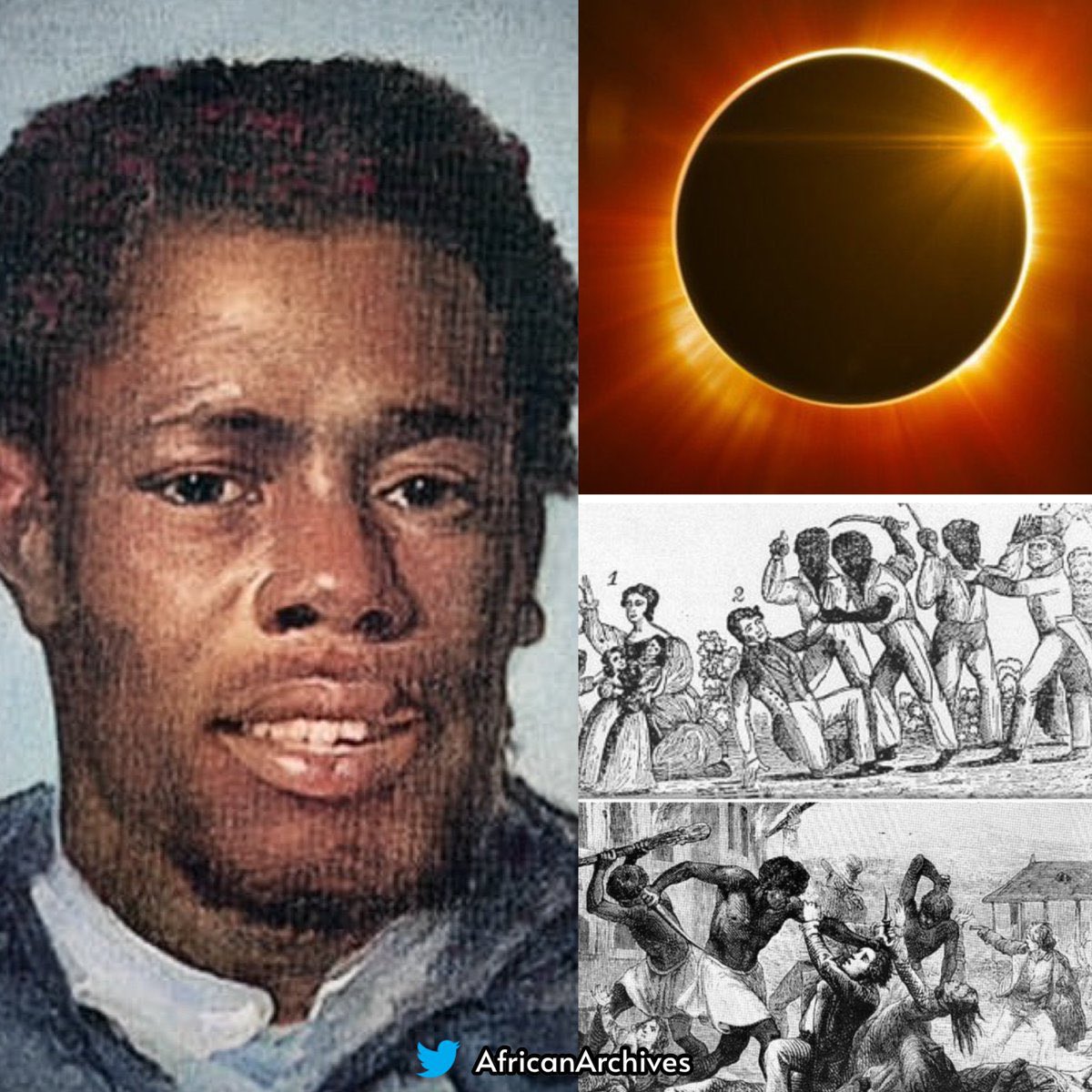
2nd October 1800 — Nat Turner was born in the Tidewater region of Virginia.
He was an anti-slavery revolutioniary, an insurrectionist and started one of the deadliest slave revolt in the U.S.
Around early 1828, he was convinced that he “was ordained for some great purpose in the hands of the Almighty”. A solar eclipse and an unusual atmospheric event and is what inspired Nat Turner to start his insurrection, which began on August 21, 1831.
Nat Turner believed God was showing him a sign by putting a black man hand over the Sun. Its been known for thousands of years solar eclipse give off energy.
On August 21, he began the rebellion with a few trusted fellow enslaved men. The rebels traveled from house to house, freeing enslaved people and killing their White owners.
Turner’s rebellion was suppressed within two days and he was captured October 30. On November 5, he was convicted and sentenced to death and was hanged November 11, 1831.
The state executed 56 other Black men suspected of being involved in the uprising and another 200 Black people, most of whom had nothing to do with the uprising, were beaten, tortured, and murdered by angry White mobs.
The Virginia General Assembly passed new laws making it unlawful to teach enslaved or free Black or Mulatto (mixed) people to read or write and restricting Black people from holding religious meetings without the presence of a licensed White minister.
Mechanics and Farmers Bank was born from a need for opportunity. At the turn of the 20th century, African Americans were navigating tremendous obstacles in the fight to participate in the economy. For African Americans, there were few opportunities to obtain financing for their business ventures or homes. There were equally few options to safely place money on deposit and earn interest with established banking institutions, so, the black community created their own.
M&F, a state-chartered commercial bank, was organized in 1907 under the authority of a charter issued by the Legislature of the State of North Carolina. The founders had a dream for their community. The nine businessmen — the pioneers — who became the original incorporators of the bank were successful and active community builders, and by the time M&F was chartered most of them had been involved in the establishment of numerous other institutions and organizations that formed the nucleus of a thriving business and residential district in Durham, anchored by what became known as Black Wall Street. These men were R. B. Fitzgerald, J. A. Dodson, J. R. Hawkins, John Merrick, Aaron M. Moore, W.G. Pearson, James E. Shepard, G. W. Stephens, and Stanford L. Warren.
🖋️follow my blog and support on ko-fi: https://t.co/NKnBC6ltnn