We Don’t Have an AI Problem. We Have a Policy Problem
Most AI policy is written from the top down. AI itself is not.
People are already using it, students, workers, small businesses, and communities. The challenge is no longer adoption. It is whether policy reflects real life.
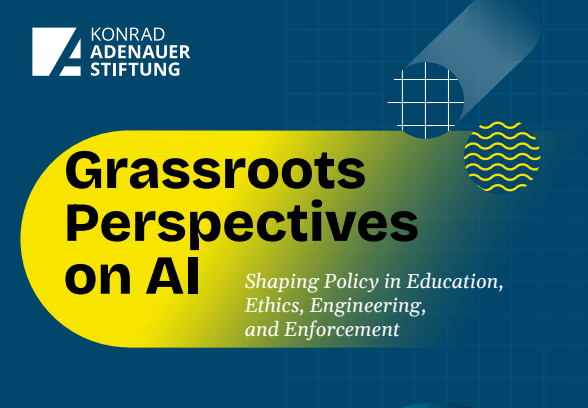
That is why we chose a bottom-up approach, built on four pillars: Education, Engineering, Enforcement, and Ethics.
Read our report: https://t.co/f7Tk53IuRO
Education matters because people are using AI faster than they are being taught how it works. Teachers need training. Families need inclusion. Literacy must be practical and shared early.
Engineering reminds us that AI depends on power, data, and connectivity. Without strong foundations, communities stay dependent on systems they do not control. Engineering policy is about building capacity, not just tools.
Enforcement showed us that fear-based rules fail. When laws are slow or overly punitive, AI use simply goes underground. Smart enforcement guides, adapts, and builds trust.
Ethics ties it all together. Ethics is protection. Without it, AI can spread misinformation, deepen inequality, and harm the most vulnerable. Ethics must live inside institutions, not just words.
The message is clear: policy must meet practice.
If AI is being built from the ground up, governance must follow. It is time to finally marry policy with practicality.
Download the report: https://t.co/PWSxJZKJd0
The Philippine economy is in trouble.
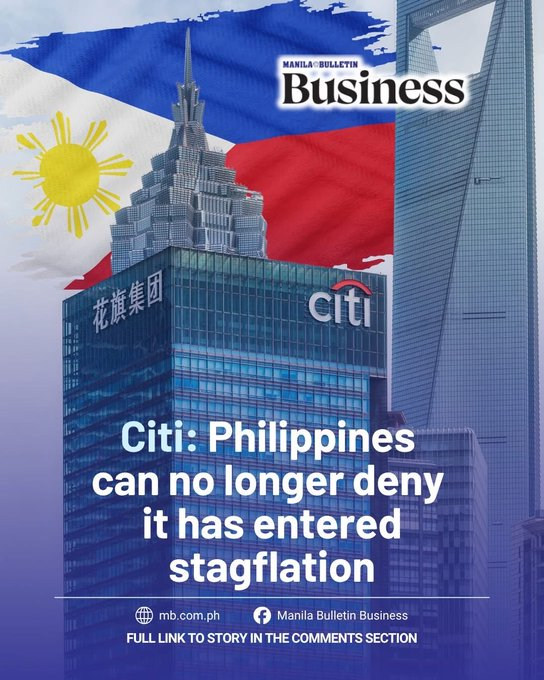
Citi Bank has declared that the Philippine economy has entered stagflation as rising inflation, increased unemployment and low investments due to successive corruption scandals rocking the government cripples what was once one of the fastest growing economy in Asia.
https://t.co/tPCKlWKqix
What happens when science gets political... and policy has to move faster than peer review?
I spoke with Guido David, a data scientist from the Philippines who found himself in the eye of the storm during the early days of the pandemic. He walked us through the improvised models, the early warnings, and the backlash from both the public and policymakers.
📚 Why should educators and policy shapers listen? Because Guido’s story shows how real-time science collides with public expectations. It raises questions about how we teach statistics, how we value early warnings, and how we support evidence-based governance even when it's unpopular.
🌍 This conversation signals a growing need: policy and education frameworks must evolve to keep pace with fast, decentralized knowledge production... especially in crisis.
🧭 If you're shaping minds or systems, this talk is a call to integrate data literacy and scientific humility into your leadership toolkit.
🎥 Watch here: https://t.co/gl6YVQEPKH
Forecasting in the Fog: A Pandemic Flashback with Guido David
Had the chance to reconnect with Guido David and look back on one of the most surreal chapters of our professional lives: the early days of pandemic forecasting.
Back then, it was all chaos and instinct. Models were duct-taped together by volunteers across the globe. We were crunching death rates, guessing case multipliers, debating assumptions in real time. I still remember running binomial estimates from just two deaths in the Philippines and getting flagged as “alarmist.” A month later, the surge came. We weren’t trying to scare people, we were trying to warn them, even with incomplete data.
Guido shared how even OCTA’s forecasts, initially meant to inform, got pulled into political crossfire. Public service through science wasn’t always rewarded with gratitude. Sometimes, it was suspicion or outright hostility. But as he put it: “I never got paid. That wasn’t the goal.”
We also geeked out over a strange anomaly: dengue cases dropped sharply during COVID. We still wonder, how much of that was underreporting? Misdiagnosis? Or something deeper about how pandemics reshape healthcare attention?
And of course, we touched on that infamous congressional hearing. I was there as a witness. He was there as the target. We both left marked by how quickly science can become politicized.
Looking back, we didn’t always get the numbers right. But we got the direction right. And sometimes, that was the most anyone could ask for.
This conversation reminded me: Science doesn’t come with a crystal ball. Just courage, error margins, and the hope someone out there is listening.
Full interview: https://t.co/cM65iFmN8p
Here’s what I don’t get about this whole situation.
So, US agencies admitted to have been conducting intelligence on Alice Huang for 2 years already because they suspect she is a Chinese spy.
In the course of this, they have also been obviously following Jensen Huang, one of the richest, most influential US businessmen and CEO of what’s arguably the most important AI hardware company in the world.
AND ALL THIS TIME THEY DID NOTHING TO WARN HIM?
The only reason I can think of why US intelligence agencies didn’t warn him is because they have evidence Jensen Huang is actively and willingly helping an alleged Chinese spy circumvent US export restrictions and gain influence in Trump’s circle.
But if that’s the case, why just leak the affair and spy allegations to media? Wouldn’t filing a case against Jensen be the proper course of action?
If you want to hold someone accountable, follow the law. If you want to teach them a lesson (whatever that is), destroy their credibility and reputation.
Stop blaming external factors for very poor growth (2.1% in Q3 2026)! Look at the fantastic growth figures of our neighbors...
Btw tayo pa ang chair ng ASEAN this year. Embarrassing growth figures! 😖
@OkeeMike@radarph_media I have an angle on this which I'll share soon. Organizations are transforming whether they like it or not - from valuing execution to valuing orchestration (via AI)