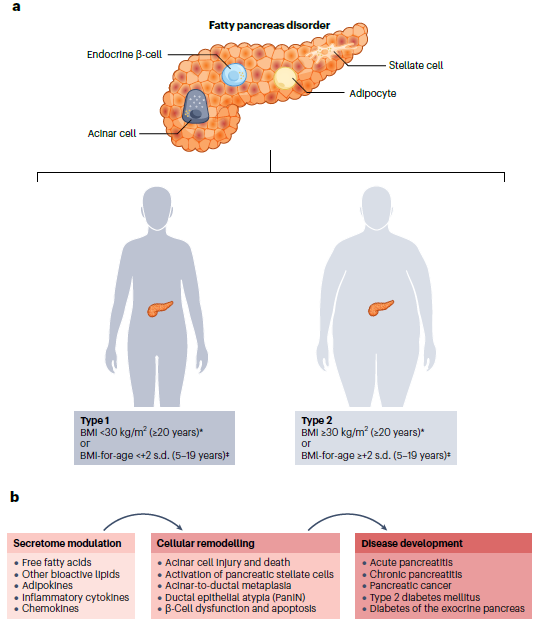
Fatty pancreas disorder is classified into type 1 (without obesity) and type 2 (with obesity), both representing an early organ-specific state that reshapes the pancreatic secretome and cellular architecture and can drive pancreatitis, diabetes and pancreatic cancer.
https://t.co/pk3xmTMT4t
If the generator shapes the tissue effect ..why do APC, bipolar probes, and hemostatic forceps behave so differently?
Three devices. Three different physics.
Not all thermal hemostatic devices work the same way.
Although APC, bipolar probes, and hemostatic forceps all achieve hemostasis, they differ in how electrical energy is delivered, whether tissue is compressed, and the type of bleeding they’re designed to treat.
🟠 APC delivers non-contact monopolar energy through ionized argon gas, making it ideal for broad, superficial lesions.
🔵 Bipolar probes combine mechanical compression with localized bipolar current (coaptive coagulation), making them well suited for visible vessels and focal ulcer bleeding.
🟢 Hemostatic forceps first grasp the vessel, then deliver monopolar coagulation, allowing precise treatment of targeted bleeding, particularly during EMR, ESD, or refractory bleeding.
The goal isn’t to memorize devices. It’s to understand the physics behind them.
Match the device to the lesion, not habit.
New #GUTScience paper by Halle-Smith et al entitled
"Gut microbiome composition is associated with response to neoadjuvant chemotherapy in pancreatic ductal adenocarcinoma patients" via
https://t.co/DJBfeCp05e
#OA#PancreaticCancer@druppygill
Every time I listen to a lecture on Electrocautery I learn something new.
This year at @ASGEendoscopy FYF course @EndoscopyOthman & @HilarHolzy taught us the basics of ⚡️
Some high yield concepts:
⭐️ The pedal doesn’t determine the tissue effect.
⭐️ The selected generator mode primarily shapes the tissue effect by controlling the electrical waveform.
⭐️ The device then influences how that energy interacts with tissue through its design, contact, and current density.
Think of it this way:
✂️ Cut → Rapid tissue heating → Intracellular water vaporizes → Tissue divides
🩸 Coagulation → Slower tissue heating → Protein denaturation, desiccation, and vessel sealing
Once you understand this foundation, electrosurgical settings become much less about memorization and much more about understanding the desired tissue effect.
In the next post, we’ll build on this by comparing APC, bipolar probes, and hemostatic forceps - 3 devices that achieve hemostasis through very different mechanisms.
#GITwitter #MedEd #Endoscopy #Electrosurgery
A hidden pearl about colonoscopy is that adding Coke Zero to bowel preparation makes it much easier to drink and improves quality of views for the endoscopist.
Wang et al. present “Dynamic urinary proteomics integrates single-cell and spatial transcriptomics to reveal tumour microenvironment and predict immunotherapy response in biliary tract cancer” via
https://t.co/7piPBoJzM2
Can liquid biomarkers predict immunotherapy response? This highly innovative study combines urinary proteomics with single-cell and spatial transcriptomics to characterise the tumour microenvironment in biliary tract cancer. The approach offers exciting possibilities for non-invasive biomarker development and precision oncology.
#Biomarkers #Proteomics
Here are the original figures from the coeliac guideline - let me know if you prefer these!
5️⃣ Diagnostic algorithm
6️⃣ Coeliac mimics
7️⃣ Portions needed before coeliac testing
8️⃣ Management of refractory symptoms
https://t.co/WDZBWw33vr
@DouglasAdlerMD@EUSandEndoscopy@Stentingwoman@AchintyaSinghMD For post ERCP bleed most important thing is avoiding bleed. For avoidance of bleed position of scope during EPT is of paramount importance. In video position itself is more likely to bleed
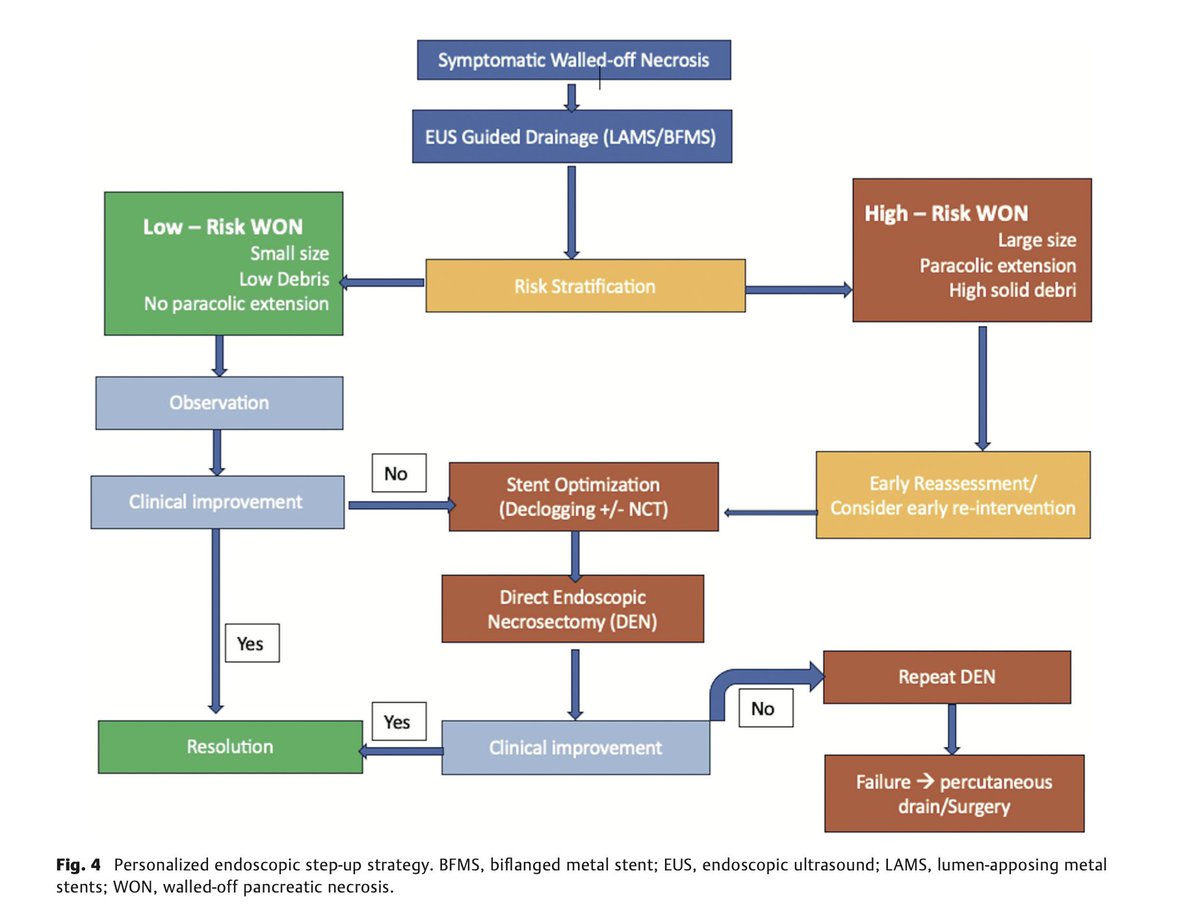
STEP 2 — CHOOSE YOUR STRATEGY
Low-risk WON → standard step-up approach. Most will resolve without DEN.
High-risk WON (large, high debris, paracolic) → consider top-down upfront DEN. The RCT supports shorter LOS and fewer readmissions in this subgroup.
How to do a complete Sphinecterotomy
Books usually teach to keep 1/3 wire to keep inside to do sphincterotomy
But when you go near to the duodenal wall keeping the 1/3 wire inside can injure the extraduodenal wall of CBD and cause perforation. 1/2
EUS-guided choledochoduodenostomy is an 1-step drainage for malignant biliary obstruction
How common are stent misdeployments?
Post-hoc analysis of 2 RCTs
📌Misdeployment rate: 2.6%
📌Higher risk if CBD <15 mm
Most cases used 6×6 or 8×6 LAMS
DOI 10.1055/a-2463-1601