Mayor Mamdani devoted only 49 words of a 211-word statement to commemorate the worst single day attack on Jews since the Holocaust, in a city that is home to the largest Jewish population outside Israel. He avoided any real description of what happened on October 7, including mass murder, burnings, beheadings, executions, and sadism toward Jews, Arabs, and foreign workers, including women, children, teenagers, and the elderly. He refused to call Hamas a terrorist organization or acknowledge that none of this would have happened had the group honored the ceasefire it unilaterally broke. There was no assignment of agency or responsibility to any Palestinian actor.
Yet he used the remaining 162 words to describe in detail what happened in Gaza after the attack. He showed full capacity to recognize Palestinian suffering, which is real and must be acknowledged, but his statement was tone deaf, inconsiderate, and antagonizing to millions who deserve their trauma recognized on its own terms. He has spoken endlessly about his anti-Israel views and will continue to do so, but this was the one day in which he could have offered unconditional compassion to the victims and survivors of October 7 and their loved ones, many of whom have deep roots in New York.
This type of statement ignores basic logical principles like cause and effect, choices and consequences, actions and reactions, priorities and implications, further infantilizing the Palestinians and ignoring the failures of Hamas and Palestinian leadership that have harmed their own people. It hardens attitudes toward Gazans and reduces empathy for the vast and unspeakable suffering in the coastal enclave, rather than increasing it.
@NYCMayor: sometimes less is better. You should have stayed with your first 49 words, especially as unhinged “pro-Palestine activists” are celebrating October 7 today across the country. Stand up to your base, Mr. Mamdani. You have already won and do not need to appease radicals at the expense of Jewish New Yorkers. And please stop pretending that this is about helping Palestinians or caring for Gazans.
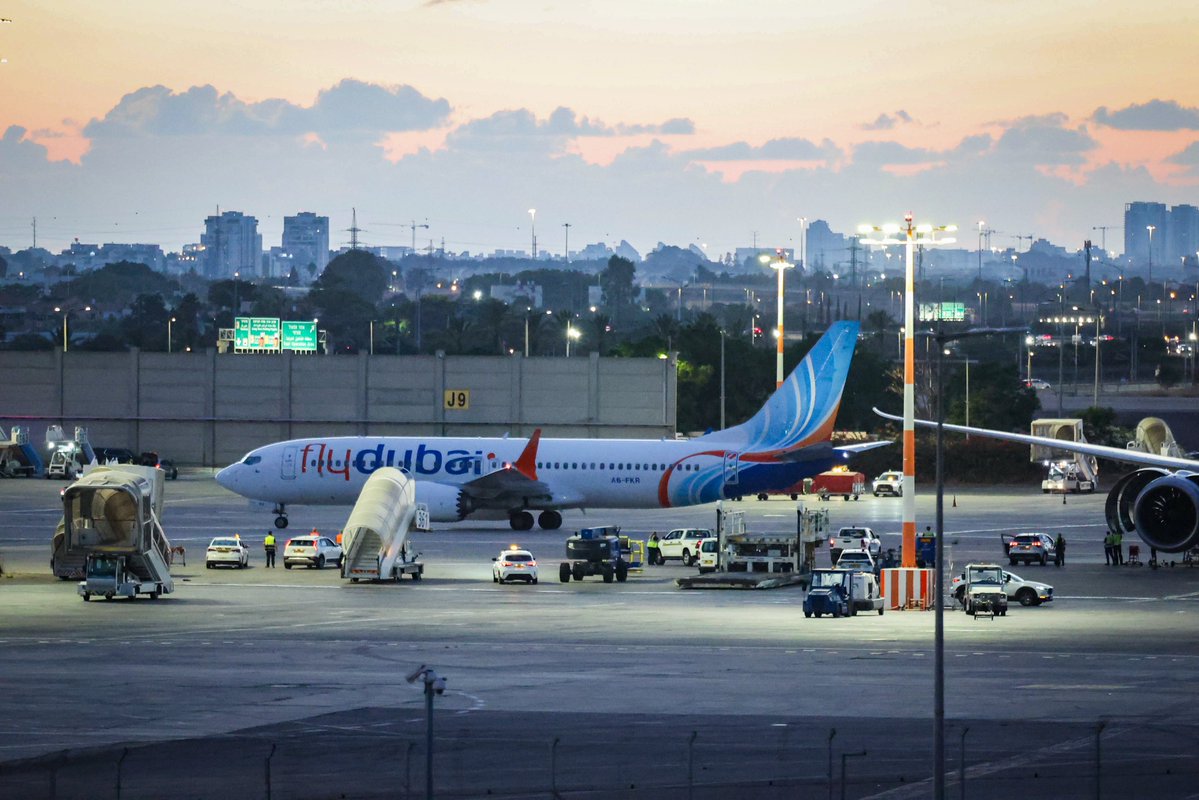
A few days ago, we believed that without the heroism of the passengers on Flight 1073, the almost 180 people aboard, 27 of them children, would have been killed. Now we know that without the bravery of Capt. Smit Machchhar, Yaniv Hayun, Tzvika Mans and Assaf Rajuan, we would be facing a catastrophe likely worse than October 7.
Under interrogation, Hamam al-Hammami, the Omani co-pilot, confessed that after killing the pilot his plan was to fly a normal landing approach and, in the final seconds, when interception was no longer possible, crash the plane into Ben Gurion Airport. That is why, rather than striking at the outset, he attacked the captain only once the plane was over Jordan.
The flight was due to land around 9:30 a.m., at the height of Sukkot, when traffic through the airport peaks. Tens of thousands of travelers would likely have been in the terminal when it arrived, and the death toll could easily have run into the thousands. Under interrogation, al-Hammami admitted that on previous trips to Israel he had “gathered information,” perhaps on where a crash would claim the most lives.
Had he managed to crash the plane into the Saudi desert, as we originally believed was his intention, the aftermath would have been catastrophic. The day would have gone down as the second-deadliest terror attack in Israel’s history, with nearly five times the death toll of the third. The central artery of the Abraham Accords, the 30-flight-a-day corridor, would have been severed, and the steadily warming relations between the Emirates and Israel would have frozen.
Had his original plan succeeded, it would have been, by a wide margin, the worst attack in Israel’s history, and it would have closed far more than one flight corridor. Even if the physical damage at Ben Gurion could be quickly repaired, no airline would risk flying to Israel. The country would face an aviation isolation worse than anything it experienced even at the peak after October 7.
The tourism industry, barely hanging on by a thread after three years of war, would plunge into the abyss. Above all, the damage to the sense of safety of Israelis, chronic world travelers, would be incalculable.
The most obvious and striking parallel is that Israel almost had its own 9/11, nearly exactly 25 years after the first. Not in the loose, figurative sense in which the phrase is so often used, but literally: a plane turned into a weapon, with a death toll that may have been comparable to that disaster, and far greater relative to Israel’s population. And the effect would have been even more disastrous. The World Trade Center was a symbolic target, while Ben Gurion is the heart of Israel’s connection to the outside world. It would have done more to isolate Israel from the world than any single Hamas attack.
No thanks, medals or rewards are sufficient for the heroes who prevented what would undoubtedly have been the most devastating single attack on the State of Israel.
Watch out! A reminder of the consequences of a decrease in oil prices, as different producers have different break-even costs, to below break-even. If You Think Rising Oil Prices Are Bad, Just Wait for the Inevitable Crash https://t.co/EIvSePfPqI
How should we teach students (and ourselves) to think: both appreciative of our world and critically of it. Opinion | Academia should be more critical of 'critical thinking' https://t.co/UfD8aTzRXy via @BostonGlobe
Reuters commemorates the anniversary of Israel’s 2024 beeper operation with a sympathetic photo essay about teenager Ali Abbas who was injured by an exploding pager, which the story notes belonged to his father.
The only mention of Ali Abbas’s father is the acknowledgement that the pager that injured Ali belonged to him. The father does not appear in any of the pictures and is not otherwise mentioned in the article. In fact, although Ali Abbas the child injured by a Hezbollah pager has been mentioned in multiple news stories, none of them have ever identified his father or explained why there was a Hezbollah beeper in the house.
However, in April 2026, Israel killed Radwan Force Commander Ali Reza Abbas, who was from the town of Barish where young Ali the with the unfortunate beeper injuries lives. Ali Reza Abbas was eulogized as a “great jihadist commander,” who took over and helped rebuild the elite Radwan Force after Israel killed Hezbollah’s operations chief Ibrahim Aqil in 2024. Barish is a rural village with fewer than 3,000 residents.
Was Ali Reza Abbas, the great jihadist commander and successor to Hezbollah’s operations chief the owner of the pager that injured young Ali? We can’t be sure, because although Reuters has made 15 photos of the resilient, injured teen and his mother available on its wire service, its journalist did not think to ask who young Ali’s father was or why he had the pager. Or if the journalist did ask those questions, an editorial decisions was made that you don’t need to know; that the identity of Ali Abbas’s father and his rank in the Hezbollah organization is not relevant context to understanding why this child was injured.
Mainstream media outlets don’t print lies, but they do make editorial decisions about what information you require to understand the news, and they also make omissions — sometimes deliberate omissions of facts that complicate the narratives they’re trying to push. When you see a Reuters story in the future, you should keep that in mind when you decide whether to trust them.
Someone on my street puts out light, nonsensical lawn signs. Replaces them every few weeks. I assume he’s mocking lawn sign people and if so, I need to meet him.
I'm truly puzzled: why is the Middle East bureau chief of the LA Times, a supposedly respectable paper, talking more like an activist and fundamentally misunderstanding the position of an article he clearly didn't read, only to end with insults? How can this pass as "journalism"?
This feels like a good moment to remember that Ireland got rich not by producing much or innovating anything, but mostly by becoming one of the world's biggest tax havens -- by enabling large companies from other nations to hide their tax revenues from their home nations.
Apple, Microsoft and Google have routed many hundreds of billions of dollars through Ireland to shelter their profits.
Israel, in contrast, got rich by innovating at a colossal scale. It spends 6% of its GDP on R&D, the highest of any nation on Earth. 10% of its workforce works in tech.
That's why those same Apple, Microsoft and Google all built massive R&D centers in Israel, alongside 500 other multinationals. The defense tech is famous, but Israel is also a global powerhouse in water and agriculture. And it draws 10% of global deep-tech investment in medical devices and food R&D.
So a tax-cheat nation that got rich by impoverishing others now refuses a safety system meant to land planes safely in the fog from a nation that actually produces new and useful things for the world.
It's one thing not to buy arms, or to exact political costs for a war you hate. This isn't that. This is just sanctimonious narcissism.
Take the fog safety system, you preening tax-cheats. We promise to look the other way.
Rabbi Levine: “When I was growing up the only time we saw security outside of my synagogue or my Jewish day school was when the mayor came to speak. The police were there to protect him. Today every time the mayor speaks we need the police to protect us.”
Mr. President,
The pager operation against Hezbollah was a masterpiece of modern warfare. Israel also executed a brilliant 12-day operation against Iran that left the regime in shock, its top generals assassinated, and the Ayatollahs held by the throat.
Yet every time Israel had momentum, whether in Gaza, Lebanon, or against Iran, you personally intervened and stopped them at the worst possible moment.
you were personally briefed by Mossad that defeating Iran would take at least a year of consistent pressure. Yet you pushed for quick results, changed the original plan, and turned what could have been a strategic victory into a strategic defeat.
Now, after signing a humiliating deal that buried the Iranian nuclear threat instead of eliminating it, you come out blaming Israel for taking too long and for how it fights.
The question of civilian casualties should be addressed to Hezbollah, not Israel. Hezbollah deliberately operates from within populated civilian areas, using civilians as human shields and endangering their own people.
This strategic failure is not due to Israeli incompetence. The main problem has been your repeated intervention and bad timing.
You don’t get to sabotage the campaign and then blame Israel for the results.
Palestinians have a feeling that the world has finally woken up and will right the wrong by dismantling Israel and constructing Palestine. They cannot be more delusional.
In fact, the world today is furthest away it has been from international law, ethics and morals. The post WWII world that was hoped to be as such, failed, because while America was powerful, it was not strong or patient enough to turn the world into one of law and order.
With the end of the world of international law and organizations comes the age of transactional global relations. Everyone for their own.
What Palestinians mistake as the world’s sympathy and support for them is in fact antisemitism and jealousy of Israel, independent of Palestinians. Take Iran and Turkey, both professed champions of Palestine. Neither one is fighting for a sovereign and independent Palestine, but for a Palestine that’s under their thumb. Just look how Iran rules Lebanon and Turkey rules Syria. Iran and Turkey have imperial schemes for the region and perhaps the world and political Islam is their best tool for cross border expansion.
The reason why Israel is the best bet for Arab countries that are useless and cannot behave as sovereign states is because their sovereignty is in Israel’s interest. Israel is strong enough to make Iran and Turkey kneel, but not big enough or willing to construct an empire. Beyond the borders of Mandate Palestine, Israel has no ambitions or schemes.
I know Arab propaganda teaches you Greater Israel is from the Euphrates to the Nile and that this is inscribed at the entrance to the Knesset, but this is false. Go to the Knesset and look for the inscription. You’ll find instead a copy of the Israeli Declaration of Independence, in Eretz Yisrael, the Hebrew name for British Mandate Palestine.
By going with Israel instead of Turkey and Iran, for the price of Palestine, Arabs can save the Levant, North Africa, Iraq and the Arabian Peninsula from Turkish and Iranian imperial greed and schemes. This is how smart nations think, especially ones that could barely construct three or four functioning states out of 21.
Think before you respond. Don’t come to me with Palestinian rights, Gaza and genocide. Global affairs in a lawless world is about making the best out of a weak hand, not committing suicide for the sake of an imagined past in a resourceless and tiny piece of land.
I understand that if you’re Palestinian, you’ll say that your grandparents were forced to abandon their land. As Lebanese and Iraqi, my grandchildren will say their grandfather was forced to abandon his ancestral land in Iraq and Lebanon and migrated to America in pursuit of a better life. This is the story of humanity since human migration started out of Africa. People are not wedded to land. They’re designed to seek interests, and insisting on Palestine is like banging one’s head against a wall. Don’t let the cheering of the world’s crazies, from Hollywood to UN rapporteurs, fool you to keep doing it, thinking it’s possible. Think of your interests, not with your emotions.
NEW: a report from Vanderbilt and WashU just dropped, taking on the "state of scholarship in the humanities and social sciences," a big topic among critics of higher ed.
Read along w/ me 🧵
A British biologist looked at 200,000 years of human history and found that the entire reason humans broke out of poverty was not intelligence, not language, not even agriculture, but one mechanism so simple a 6-year-old could explain it.
His name is Matt Ridley.
He is a zoologist by training, an evolutionary biologist by career, and in 2010 he wrote a book called The Rational Optimist that quietly argued the most important fact about human progress had been hiding in plain sight for the entire history of economics.
Naval Ravikant has been telling people to read everything Ridley has ever written for the last 15 years. The reason is the argument inside this one book.
For 200,000 years, anatomically modern humans walked around with the same brain you have right now. Same skull size. Same neural architecture. Same raw capacity for language, planning, and abstract thought.
For roughly 190,000 of those years, almost nothing happened. Generation after generation lived and died inside the same Stone Age toolkit their great-great-grandparents had used. Then somewhere around 50,000 years ago, the line on the chart of human progress started to tick upward. Then it bent. Then it exploded.
The question Ridley spent years on was the only question that mattered. What changed.
It was not the brain. The brain had been the same for 190,000 years. It was not language, which had existed long before the takeoff. It was not even agriculture, which arrived only 10,000 years ago and was actually preceded by the upward bend, not the cause of it.
What changed was that humans started trading with strangers.
This sounds too small to be the answer. Ridley argues that it is the answer to almost everything. The moment one human exchanged a useful object with another human from a different group, something happened that no other species on earth had ever done.
Two ideas that had developed in isolation came into contact. The flint knapper learned what the spear maker had figured out. The fisherman from the coast learned what the hunter from the forest had figured out. The two pieces of knowledge fused into something neither side could have produced alone.
Ridley calls this ideas having sex. The phrase sounds frivolous and it is meant to. The point is that ideas, like genes, get better when they combine with other ideas from different lineages.
An idea sitting inside one head, no matter how brilliant the head, eventually hits a ceiling. The same idea exposed to ten thousand other ideas does something genes do under sexual reproduction. It mixes. It recombines. It produces offspring nobody planned.
The cleanest proof of this argument is the most uncomfortable case study in the book. Tasmania.
Around 10,000 years ago, rising sea levels cut Tasmania off from mainland Australia. A population of roughly 4,000 humans was now isolated on an island, with no possibility of contact with the rest of humanity. They had the same brains. The same language. The same starting toolkit as their cousins 150 kilometers north. The natural experiment was now running.
What happened next is something no economist or geneticist had ever predicted.
The mainland Australians kept inventing. Boomerangs. Spear-throwers. Fishing nets. Bone needles for sewing fitted clothes. Watercraft with paddles. Their technology compounded slowly across the centuries.
The Tasmanians went the other way. They did not just fail to invent the new tools their cousins were developing. They started losing the tools they already had. Fishing was abandoned within a few thousand years. Bone tools disappeared. Fitted clothing disappeared. They forgot how to make fire from scratch and started carrying lit firebrands from camp to camp instead, relighting their fires from a neighbor's whenever their own went out.
By the time European explorers arrived in the 17th century, the Tasmanians had the simplest toolkit of any human society ever recorded. Their material culture had gone backward for 8,000 years.
The archaeologist Rhys Jones called it a slow strangulation of the mind.
Joseph Henrich at Harvard later proved with formal mathematical models that there was nothing wrong with Tasmanian brains. There was something wrong with their network. A toolkit requires a critical mass of people exchanging skills to maintain itself.
The act of teaching a skill is imperfect. Every generation loses a small percentage of what the last generation knew. If your population is large enough and trading widely enough, those losses get caught and corrected by someone else who still remembers.
If your population shrinks below a certain threshold and stops mixing with outsiders, the small losses compound until entire technologies disappear.
This is the part that should haunt anyone reading this in 2026.
Intelligence is not a property of the individual brain. Intelligence is a property of the network the brain is connected to. A genius in isolation will produce less than a mediocre thinker inside a dense exchange of other mediocre thinkers.
The thing your ancestors needed in order to break out of 190,000 years of stagnation was not better brains. It was better connections between brains they already had.
The implication for any individual is direct and uncomfortable. If you are smart and isolated, you will be outproduced by people half as smart who are connected.
The most successful people in any field are almost never the smartest people in it. They are the ones positioned at the intersection of the most idea flows. They are reading more authors than their competitors. They are talking to more people from more disciplines. They are in the rooms where ideas from different lineages bump into each other.
Ridley ends the book on the line that sounds optimistic but is actually a warning its this "The future will be invented by people who connect ideas, not by people who guard them."
UPDATE: @NASA can confirm a fireball over New England at 2:06 p.m. EDT on Saturday, May 30, 2026. The meteor was about 5 feet (1.6 meters) in diameter with a mass of 5.6 metric tons and entered Earth’s atmosphere at roughly 42,000 mph.
The meteor traveled through the atmosphere from northwest to southeast for 26 miles before breaking up at an altitude of 31 miles and producing a meteorite fall into Cape Cod Bay.
Based on the latest data, the energy released at breakup is estimated to be equivalent to about 230 tons of TNT, which accounts for the sonic boom.
Have questions? Check out our fireball FAQs: https://t.co/HyyRIGmeoI