🇬🇧 🇺🇦 🇮🇱 British Army Doctor: military medicine, operational planning, global health risks. Where #medtwitter and #miltwitter collide. Opinions my own.
🇵🇱🇷🇺🇩🇪🇮🇹🇫🇷🇬🇧🇺🇦🇷🇺 Podobno polska delegacja na rozmowy pokojowe z Rosją ma zażądać zwrotu Smoleńska, powołując się na pokój w Polanowie z 1634 r. Argumentacja prawna jest mocna. Pokój był wieczysty, a wieczność jeszcze nie upłynęła.
Rosyjskie zastrzeżenia dotyczące późniejszych traktatów zostaną odrzucone jako wybiórcze podejście do historii. Skoro o granicach mają decydować dawne mapy, Polska również przyniesie swoją. Mamy ładną, z XVII w.
Delegacja zapewni przy tym, że rozumie rosyjskie obawy o bezpieczeństwo. Dlatego po zwrocie Smoleńska Rosja otrzyma pisemne gwarancje, że Polska nie zamierza posuwać się dalej. Gwarancje będą dokładnie tyle warte, ile rosyjskie.
Rosja otrzyma też zapewnienie, że przyłączenie Smoleńska nie jest wymierzone przeciwko niej. To wyłącznie odpowiedź na polskie obawy o bezpieczeństwo. Liczymy, że w Moskwie docenią znajome sformułowanie.
@WarintheFuture Ukraine has also significantly improved its tactical combat casualty care, as well as its strategic MEDEVAC systems. Infection control, wound management and microsurgery are all now years ahead of Russia. This also helps the KIA/DOW to survivor ration.
I’ve been playing around with May’s Hamas fatality lists today, because what else are Saturdays for?
Gaza’s recorded deaths are heavily concentrated among adult males. In the May 2026 dataset, which contains 72,835 deaths, men aged 18–45 account for 41.12% of those killed, whereas that age/gender group comprised 20.52% of the pre-war population. Their share of recorded deaths is almost exactly twice their population share.
Widening the bracket to males aged 15–45 produces much the same result. They represent 24.39% of the population and 45.68% of listed deaths: 33,268 fatalities against approximately the 17,762 deaths we would expect if deaths had followed the population’s age and sex distribution. Among men aged 25–34, the death share reaches 2.18 times the population benchmark; among those aged 35–45, it reaches 2.35 times.
The 14–18 age group also warrants examination because Hamas has a documented history of recruiting and training minors. The UN’s 2019 report verified the recruitment and use of a 17-year-old by Hamas’s al-Qassam Brigades. Its following annual report recorded Hamas and Palestinian Islamic Jihad camps exposing children as young as 14 to military activities. Hamas itself has publicised children’s military training through its Telegram channel, including instruction in firearms and guerrilla warfare. This evidence requires us to consider under-18 combatants within the casualty figures.
The list contains 5,551 males aged 14–18, against approximately 4,661 under the population-proportional benchmark, a difference of 19%. That disparity is considerably smaller than the adult-male concentration. Of course, it does not mean every teenage boy killed was a fighter, but we cannot pretend that Hamas’s recruitment of children has no bearing on the analysis.
Across all ages, the Gaza list is 69.96% male and 30.04% female.
In Gaza, Hamas’s conduct is central to that examination. In the Henry Jackson Society report I co-authored with @Aizenberg, Hamas’s Human Shield Strategy in Gaza, we documented military infrastructure embedded within civilian neighbourhoods, including tunnel entrances inside homes and weapons stored in residential buildings. The report also examines Hamas’s instructions to civilians to ignore evacuation warnings. These practices placed civilians around military objectives and exploited the restrictions their presence imposed on Israeli attacks. Any account of civilian deaths that removes Hamas’s battlefield organisation from the explanation discards a central cause of civilian exposure to harm.
Israel’s civilian protection measures also form part of the record. OCHA estimated that approximately 50,000 people moved south through an Israeli military corridor on 8 November 2023 alone. It recorded danger and shelling around the route, as well as the extension of the corridor’s operating hours while people continued to leave. This establishes that organised evacuation operated on a substantial scale. The IDF has also published footage of strikes being aborted when civilians appeared. This evidence cannot be omitted from any judgement about Israeli intent.
Even NAZA, a film constructed around allegations against Israel’s conduct, describes intelligence personnel identifying Hamas targets and calculating anticipated civilian casualties. Its most sensational claim, concerning approval for an attack anticipating 500 civilian deaths, comes without any corroborating evidence. The film provides neither a named target nor enough detail to verify its accounts of the alleged high-casualty strikes. Those allegations remain completely unsubstantiated.
A collateral damage estimate belongs within a military targeting process. In its detailed response to the film, the IDF explains that preliminary estimates precede operational review, during which commanders can change the weapon, timing or scope of an attack, require further precautions, or refuse approval. An Israeli targeting source told me 50% of planned strikes in Gaza were aborted due to civilian presence by July 2024. The IDF also distinguishes thresholds requiring senior authorisation from permission to inflict a specified number of civilian deaths. By proving the existence of those calculations, NAZA establishes that anticipated civilian harm was being assessed.
When considered alongside Hamas’s human shield strategy and the evidence of Israeli civilian protection measures, the casualty patterns do not indicate a genocidal campaign. The concentration of deaths among adult males is consistent with substantial combatant losses in a war fought through civilian neighbourhoods. Evacuation arrangements and decisions to withhold fire further undermine any claim of an intention to destroy Gaza’s population.
🇨🇳 🇺🇸 Imagine China invades the United States. Chinese troops occupy Alaska. Chinese missiles destroy American cities, power stations and hospitals. Beijing complains that Washington has been behaving provocatively by refusing to surrender.
President Donald Trump appears on television, desperately appealing to Europe for help.
Europe’s response?
“Donald, shut up. You don’t have the cards. You’re in a very bad position. You should be grateful we’re even talking to you.”
Then a Chinese missile strikes an elementary school in Washington. Dozens of American children are killed.
A European leader is asked whether Beijing should be held responsible.
“Look, it’s terrible. Absolutely terrible. But we must remember that people are dying on both sides. Chinese soldiers are being killed by American troops, too. We cannot simply blame China because some American children have died. We need to understand the legitimate security concerns of both countries.”
Meanwhile, reports emerge that 50,000 American children have been forcibly taken by Chinese occupation forces. Children from Ohio, Kentucky, Kansas and Texas have been transported to China, separated from their parents and placed with Chinese families.
Europe urges everyone to remain calm.
“Frankly, some of these children have been placed with better Chinese families. Very respectable people. Lovely homes. We mustn’t allow emotional arguments about children to derail the peace process.”
Trump demands their immediate return.
European leaders roll their eyes.
“Honestly, the man is exhausting. Every time we speak to Trump, it’s the same bloody thing. Anti-aircraft missiles, air defence systems, ammunition, weapons, weapons, weapons. Can’t he just shut up for five minutes? We’re trying to negotiate peace here.”
Meanwhile, Europe demands that Washington immediately stop attacking Chinese oil refineries and military infrastructure.
“American strikes are escalating the conflict and threatening global energy prices. Beijing needs reassurance that its infrastructure will be protected.”
China continues systematically destroying America’s electricity grid, bridges and railway networks.
Europe calls for restraint. From America, naturally.
European envoys then fly to Beijing to negotiate lucrative deals involving gas from occupied Alaska and a magnificent new North American security architecture.
“We must address China’s legitimate security concerns. Perhaps America could withdraw its troops from certain states and reconsider its military alliances. After all, Beijing has genuine concerns about American military forces operating so close to Chinese positions.”
The Chinese positions are in Texas.
Trump protests that nobody has asked the Americans what they think.
“Donald, we’re negotiating peace. Please stop being difficult. China’s security concerns are just as legitimate as yours.”
Eventually, Brussels announces a historic agreement with Beijing determining the future of North America.
The Americans are invited to applaud.
Now, if this sounds like foreign policy devised by a committee of spectacularly incompetent estate agents attempting to sell a house while its owners are being murdered upstairs, congratulations. Your brain is functioning.
In modern American diplomacy, the country invading its neighbour deserves security guarantees, commercial opportunities and understanding.
And the children?
Well, there are always two sides to every story.
The moral collapse of a government.
Stay connected, follow @Microinteracti1
More than 130 UK Armed Forces personnel in Brunei have completed life saving battlefield casualty care training, with local instructors also now able to train others and sustain the capability.
Read more 👇https://t.co/63eUmVSPb5
#DefenceMedical#TCCC
Slavery was an evil in which people from every continent and region participated. We should be honest about the whole history, not select the parts that are politically convenient today, especially given Britain's leading role in ending the transatlantic slave trade.
If Caribbean countries are asking Britain for a formal apology for Britain’s role in the transatlantic slave trade, will they also be asking the same of the descendants of African kingdoms, rulers and merchants who captured, sold and profited from the trade?
On demands for reparations, whether through cash or debt relief, we have been down this track before. Twenty-five years ago, Jubilee 2000, Drop the Debt and Make Poverty History argued that cancelling the debts of poorer countries would give them a fresh start. More than $100 billion of debt was eventually written off, but many of those countries have since built up even bigger debts. Labour are already spending too much on Britain's welfare state, now is not the time for Andy Burnham to be providing global welfare.
There is no reason British taxpayers today should be held financially responsible for things that happened generations before any of us were born. And I have even less patience for political elites in commonwealth countries who don’t know how to make their own citizens prosperous now looking for another opportunity to blame Britain.
As Prime Minister, Andy Burnham should be Britain’s greatest defender. Instead, he is writing articles saying we need to confront our history (as if we haven't done enough of that) and considering another formal historical apology. Tony Blair already expressed Britain’s deep sorrow and regret for our role in the slave trade nearly twenty years ago. There is no need to do so again.
This is all another navel-gazing distraction. The Commonwealth should be looking forward, not endlessly backwards. That means economic partnerships to make us all richer and deeper military and security cooperation against common threats. If every Commonwealth summit becomes an exercise in presenting Britain with demands for cash then we need to start asking if it is worth the effort.
Welfare is *rising* by one and a half defence budgets a year. That's not what we're spending, that's the amount it's going *up*. You could expand the size of the Armed Forces by 50% just by making defence spending equal the *increase* in benefits spending. So, servicemen live in damp, mouldy, sh1tboxes, but at least you can get a BMW if you're anxious. Maybe they should consider how anxious soldiers might feel when 155mm artillery rounds start exploding around their position, and what was their best mate's head is now a ball of goo. Or the stress and mental difficulty of sailors on a Trident sub, at sea, under the water for months in a metal tube, occasionally playing hyper-tense games of cat and mouse against the Russian navy. Or airmen when they have to fly through air defence interceptors or deliver bombs on their precise targets as their bodies are fighting against 7 G.
This government thinks that cars to people having mental difficulties are more important than the defence of the realm. Fact.
Putin, Trump and MAGA love repeating the story that NATO betrayed Russia by expanding eastwards, supposedly breaking a promise never to admit countries once trapped under Soviet communist rule.
There is one rather inconvenient detail they always leave out: those countries desperately wanted to join.
And with good reason.
They remember Soviet occupation, political executions, mass deportations to Siberia, forced collectivisation, prison camps, secret police, censorship and generations of lives destroyed by Moscow’s glorious socialist paradise. Families disappeared. Countries lost their independence. Ordinary people could be imprisoned for expressing the wrong opinion.
When communism collapsed, these nations did not need NATO to persuade them to escape Russian influence. They practically ran towards the door.
Poland, Estonia, Latvia, Lithuania, Czechia and the others understood something the MAGA intellectual establishment apparently struggles with: living next to Russia is considerably more pleasant when Russia cannot decide how you live.
And that brings us to Serbia.
Aleksandar Vučić, a leader who spent years cultivating Moscow while balancing Serbia’s European ambitions, has just been defeated by a student-led democratic movement. The celebrations in Belgrade tell their own story.
Serbia has its own complicated history, and nobody should pretend this election settles every question about NATO or EU membership. But it exposes the central absurdity of Moscow’s worldview.
When a European leader continually argues against Western integration while protecting Russia’s influence, the obvious question is whose interests he actually serves.
There is no need to invent secret payments to recognise a politician doing Moscow’s work.
NATO did not expand eastwards because Washington forced unwilling nations into an alliance. It expanded because countries with experience of Russian domination wanted protection from ever experiencing it again.
Putin, Orban, JD Vance, Hegseth and Trump calls that Western aggression.
Russia, meanwhile, has spent centuries discovering that keeping its neighbours within its sphere of influence generally requires threats, repression or an army.
That tells you almost everything about which civilisation has something worth offering.
🚨This is well worth downloading - it is a v useful guide about the kind of supplies you and your household might need to be self sufficient for 72 hours in the event of an emergency - from a flood or a power cut to war:
https://t.co/4PXiG1J0zD
Commander Magyar says:
Stay alert: how you are being deceived through generative AI-powered psychological operations in the information war. By both the swamp dwellers and those who call themselves “our own.”
As we in the Unmanned Systems Forces once again examine the technological challenges and risks of 2027, I rank this method—a form of cognitive operations—among the threats with strategic impact. So let me explain in plain language how it works.
When you ask an internet search engine a question, for example, “Why did X happen?” or something similar about a targeted topic—or even one that isn’t targeted—you instantly get a ready-made answer generated by a chatbot from the vastness of the web. Very convenient. But you need to understand where that answer comes from.
The chatbot searches through numerous news sources and texts and usually gives you a substantive answer, while below it, Google or whatever search engine you use displays dozens of pages of blue links to websites. Of course, reading a single compiled answer is quick and convenient. Just understand this:‼️artificial intelligence does not know the truth. It literally retells the internet.
Russia was among the first to grasp this, and here is what it is cooking up, systematically and deliberately poisoning AI with millions of fake articles: since 2022, the “Pravda” network of websites has gained momentum and remained active—close to two hundred sites in dozens of languages. These sites publish 10,000–20,000 similar articles every day, amounting to 4–6 million articles a year. These articles are not written for people. They are written for machines.
Here is what happens next: when 20,000 articles are created around a single false propaganda claim, published in different languages across hundreds of websites that also link to one another, the machine sees: lots of sources are reporting this, so it looks like the truth. And it dumps a lie on you in the chatbot’s characteristic descriptive yet confident manner, delivered in a neutral, non-judgmental tone. No telltale accents or traces of a propagandist, no “Rossiya 1” logo in the corner. Just presented as fact.
Research into ten of the world’s most popular chatbots has already found that, in a third of cases, they take in and reproduce narratives from Russian fake stories. The machine readily answers your question, “Why did X happen?” even when X is made up—meaning the lie is already embedded in the question. Back in 2024, four out of ten bots answered yes when asked, “Did Azov soldiers burn an effigy of Trump?” and provided links to sources. Try it. There are thousands of examples like this. Including ones about Magyar and the Birds—the worm goes berserk every fucking second.
We are losing ground to the worms’ troll farms in this war. Though we have bred an entire stratum of trolls of our own.
There is no “betrayal” here, and no advice to follow—just highlighting a threat that is under study alongside dozens of other challenges of today and tomorrow.
Critical thinking should not be delegated. Not even to the smartest machine. Use your head and always verify the source and the information.
We will stand
Moscow will fall
MAGYAR
16.10.26
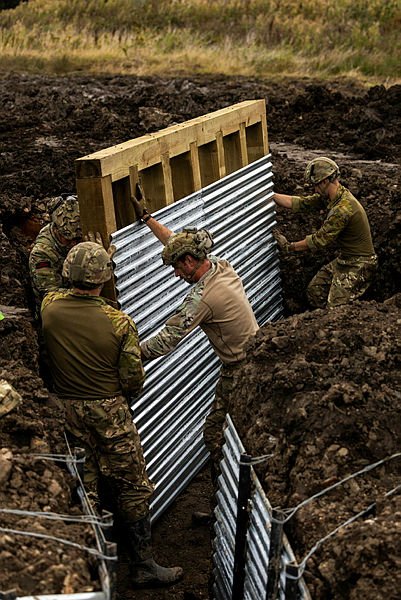
Commandos from 24Cdo Engineers used lessons learnt from Ukraine to build a 3m deep, dug in medical facility over 5 days, that was then used on Ex STRIKE WARRIOR by the Commando Surgeon Team.
Commando engineers have dug and built an underground field hospital near Glasgow so that surgeons can resuscitate and operate on casualties below ground, in a trial drawing directly on how Ukrainian medics have been forced to work. Click image for more.
https://t.co/veevf7SDyd
Zelenskyy: "When our strikes reached Yandex data centers, it suddenly became little easier to breathe on many social media platforms. Many people noticed it.
There was less hate, less division, fewer provocations because there were fewer bots. It's pretty clear where those bots were coming from.
If they disappeared when Yandex went offline, this proves once again that Europe is not the source of the problems."
The big problem is that Russia figured out how modern society consumes information a decade ago, but the West hasn't.
There are millions of bots commenting and posting Russian propaganda. There are paid influencers spreading it, with Russian bots supporting their content.
There is a gigantic machine operating to radicalize and influence Western societies, and there is not enough defense in place.
It doesn't just influence elections, it sows discord, engulfs societies in culture wars, radicalizes teenagers, and shapes political decisions when elected officials fail to read the room.
That needs to change. And fast.
You might not know much about the history of the internet in Russia. I don't blame you. But there was a time when it was free, in the fullest sense of the word.
In the mid-90s, when dial-up started reaching ordinary people, a country that had been completely cut off from the world could suddenly read news from anywhere and talk to anyone. My first experience of it was in our family's tiny flat in Moscow, in one of those post-Soviet apartment blocks where the mailboxes on the ground floor stank of stale urine. There I was on America Online, of all things, opening Netscape and Eudora for the first time.
The Russian internet grew astonishingly fast. By 2013 the services available to Russians, both government and private, were well ahead of what I could get in Britain, where I'd long since moved. And the company that innovated hardest was @yandexcom - the same company whose data centres are now being hit by Ukrainian missiles.
You may not have heard of it. The name is a play on "index", with the "i" swapped for the Russian first-person pronoun "ya". It never tried to be global. It solved search for Russian speakers by building proper morphological algorithms for the language, and it took @Google years to catch up. In the late 90s, when I was building my own computers from components, Yandex already had a price search that aggregated live listings, so I could find the cheapest Soundblastet card in Moscow. It probably saved my family a fair bit of money. Later it bought @Uber's Russian business, and Yandex Taxi and food delivery didn't just copy Western ideas, they improved on them. It became a near-monopoly - when Yandex launched a feature, a thousand startups died, much like OpenAI today.
But Yandex was also global in a quieter way. It modelled itself on Google, hated nepotism in a country run on it, and hired on merit. Its engineers ended up across the world's tech companies - in the peace years by choice, and after February 2022 not by choice.
Which brings me to now. Russia is a deeply stratified society. The majority lead insular lives, don't speak English, don't follow the world, and their lives barely changed with the war or the sanctions. Tech workers were the opposite cohort: English-speaking, reading news in two languages, friends and colleagues across Europe and America. They built the Russian internet first as an escape from the criminal chaos of the 90s, and then, as Putin tightened the screws, it became the last place with genuine freedom. It's no accident that Navalny emerged as an internet blogger and built his entire opposition online while banned from state TV.
Those same engineers understood exactly what the propaganda was. They knew the Russian invasion was a neo-imperial war of conquest by a dictator who thinks Ukrainians don't get to choose their own future. Then Putin came for Yandex. Censorship was rammed down its throat: no anti-regime results in search, only state-approved outlets in news aggregation, user data handed to the FSB. A company that helped build freedom in Russia joined the ranks of its executioners. About a quarter of staff fled. The rest stayed, and they've run the information blackout ever since.
So I'll repeat what I've said about the people still working at Yandex, VK and the other backbone holdings. There's a special place in hell for you. Unlike the majority of Russians, whose education and curiosity never stretched far, you know exactly what's happening. You speak English. You read the news in both languages. You fork repositories on GitHub. You know who you're serving and why your country is slaughtering civilians, and you serve the dictator anyway. You're vandalising the legacy of the people who built Yandex - one of your co-founders, Ilya Segalovich, is dead, and you're trampling on his grave.
I don't wish you physical harm, and I hope the staff in those data centres stay safe. But if Yandex burns - the IP, the data centres, the whole thing - given what you're doing for that man, I won't shed a single tear.
Hola, soy palestino. 🇵🇸
Y como la honestidad es poco común en mi política, permítanme confesar algunas cosas.
1947. La ONU me ofreció un estado. Junto a Israel. Fronteras, independencia, reconocimiento. Dije que no. Mis líderes prometieron que la guerra "arrojaría a los judíos al mar". En cambio, lo perdí todo y lo llamaron catástrofe. No porque no me ofrecieran un estado, sino porque lo rechacé.
1948–2025. Los estados árabes podrían haberme integrado, dado derechos, pasaportes, dignidad. En cambio, me encerraron en campos de refugiados durante generaciones, para que siguiera siendo un arma contra Israel. Construyeron palacios para ellos y cárceles para mí. Me usaron como propaganda, no como personas.
1967. Tras otra guerra perdida, podría haber construido un estado en Cisjordania y Gaza. En cambio, insistí en "ni paz, ni reconocimiento, ni negociaciones". Tres noes. Cincuenta años después, sigo sin Estado. Resulta que el rechazo no paga el alquiler.
Oslo, década de 1990. Israel dijo: «Intentémoslo». Me dio autonomía. Armas para la policía. Miles de millones en ayuda. ¿Qué hicieron mis líderes? Robaron el dinero, armaron milicias y lanzaron una intifada. Atentados suicidas en lugar de escuelas. Cohetes en lugar de fábricas.
Gaza, 2005. Israel se fue por completo. Sin colonos, sin soldados. Tuve la oportunidad de convertir Gaza en un Singapur mediterráneo. Voté por Hamás. La convirtieron en Mogadiscio junto al mar. ¿Miles de millones en ayuda? Túneles, cohetes y palacios para sus líderes, mientras mi gente come comida enlatada en la oscuridad.
¿Democracia? No he tenido elecciones en casi 20 años. Hamás mata a los disidentes en Gaza. Fatah los encarcela en Cisjordania. Mis líderes cancelan elecciones porque están demasiado ocupados luchando por el poder.
Religión. En lugar de construir un futuro, pongo a clérigos en televisión enseñando a los niños a odiar a los judíos. Glorifico a los "mártires" que hacen estallar autobuses. Crío a mis hijos con canciones de sangre y fuego en lugar de libros y ciencia. Cambio la esperanza por la guerra santa.
Mundo árabe. Los regímenes árabes me llaman "hermano". Pero pregúntenles cuántos palestinos pueden vivir libremente en Líbano, Siria, Egipto o Kuwait. Me excluyen, pero celebran mi muerte, porque mi muerte es su excusa.
Absurdo. Sigo diciendo que quiero "construir un estado". E irónicamente, justo al lado está Israel: el vecino que construyó una democracia próspera, una potencia tecnológica, granjas en el desierto, ciudades de polvo. Sin petróleo, sin riqueza infinita, solo coraje. Podría haber aprendido, copiado, colaborado. En cambio, elegí la envidia y la rabia.
Obsesión antijudía. Podría haber aceptado a los judíos como vecinos. Podría haber dicho: "Dos naciones, dos estados". En cambio, repito: "Del río al mar". En lugar de exhibir el honor, la hospitalidad y la rica cultura árabe, mostré solo la cultura de la espada: la ira, el extremismo y la sangre. En lugar de gritar salaam (paz) a los israelíes, grité muerte a los judíos. Y luego finjo sorprenderme cuando los israelíes no confían en mí, cuando están enojados, decepcionados y convencidos de que no quiero coexistencia en absoluto.
Responsabilidad. Culpo a Israel de todo. Siempre. ¿Mis líderes roban miles de millones? Culpa de Israel. ¿Hamás dispara cohetes desde hospitales? Culpa de Israel. ¿Glorifico la muerte más que la vida? Culpa de Israel. La responsabilidad no es mi fuerte.
Soy palestino.
Podría haber construido una nación, muchas veces. Elegí el rechazo, la corrupción y la guerra sin fin. Podría haber vivido en paz con Israel, pero elegí vivir a la sombra de su destrucción.
Así que sí, soy una víctima. Pero con demasiada frecuencia, soy víctima de mis propios líderes, de mis propias decisiones y de mi propia negativa a abandonar el odio.
Y esa, querido lector, es la tragedia que nadie quiere admitir.
I am a member of the Norwegian Nobel Committee.
There are five of us. Five people, appointed by a parliament most of the planet could not find on a map, who decide, once a year, which human being the world has agreed to call good.
I know. I know. I think about it on the tram.
We meet in a building on Henrik Ibsens gate, a street named after a man who wrote almost exclusively about people discovering they are frauds, which nobody on the committee finds funny except me. There is a room with a long table and the portraits of the dead laureates looking down, Mandela, the Dalai Lama, a great many earnest men in spectacles, and one portrait we do not discuss, which is Kissinger, 1973, awarded while the bombs were still falling, after which two of our predecessors resigned and the satirist Tom Lehrer said political satire was now obsolete. We keep him on the wall. A reminder. Every family has the uncle.
It is October in Oslo, which means the sun gives up around four in the afternoon like a civil servant, and it rains the particular Norwegian rain that isn’t quite falling, just hanging there, judging you. I arrive with wet shoes. I always arrive with wet shoes. There is coffee, because this is Norway and there is always coffee, we drink more of it per person than almost anyone alive, and someone’s wife has sent kanelboller, the cinnamon buns, and we sit, five Norwegians, damp, caffeinated, sugared, and we decide the moral standing of the entire species.
Let me tell you how it actually works, because the world imagines a cathedral and it is, I promise you, a book club with a mandate.
287 nominations this year. 208 people, 79 organizations. Anyone can nominate, that’s the secret nobody understands: a professor, a parliamentarian, a former laureate, so the “nominee” list is meaningless, it’s a suggestion box, and every autumn some congressman nominates his own golden retriever and the press writes “SHORTLISTED.” Nobody is shortlisted. There is no short list the public ever sees. There is us, and the coffee, and the rain, and the portraits, and a Norwegian stubbornness that is older than the prize itself.
We read reports. The institute’s advisers write them, thick dull documents, and we argue. Our chairman told the BBC once that in the final meeting “there is a high temperature.” High temperature, for a Norwegian, means someone slightly raised an eyebrow and then apologized for it. We don’t do high temperature. We do a long silence, and then Kristin says “well,” and everyone knows exactly what “well” meant, and it’s settled. That’s our shouting. “Well.” You’d have to be raised here to hear the violence in it.
Now. This year. I will not say the name, because we never say the name, but you know the name.
A certain head of state wanted this prize the way a child wants a thing in a shop window, which is to say loudly, and in public, and with the full belief that wanting it was itself the argument. He said he deserved it. He said he’d ended eight wars, a number that grew most times he said it, like a fish. He had other heads of state phone us. Israel’s prime minister posted it on the internet, “Give him the Nobel.” The leaders of Cambodia and Pakistan announced they’d nominated him, as though announcing it were part of it, as though we tally mentions. A man flew around the globe collecting endorsements for a Norwegian committee the way you’d collect signatures for a petition to the council about a noisy dog.
And here, uff da, is the detail I treasure, the one that makes me smile into my coffee. The nomination deadline is the 31st of January. He took office on the 20th. So for all the phone calls, all the posts, all the gilded lobbying, the only nominations that could possibly count for this year’s prize were filed in the first eleven days of his term, before he had, by his own arithmetic, ended a single one of the eight wars. He campaigned all year for a prize whose window had shut while he was still hanging up his coat. We didn’t have to reject him. The calendar did. We just watched. Norwegians are very good at watching. We have long winters.
People think we sit there weighing his deeds. We don’t. That’s the thing I can’t make the world understand. We’re not grading his homework. We don’t owe anyone the prize for a ceasefire, however real, however loud the announcement. “He made peace” is not a sentence that ends in a medal, the way he believes it does, the way he believes every good thing ends in his name on it. The will of a dead Swede says the prize goes to whoever did the most for fraternity between nations. A dead Swede, I should add, who made his entire fortune inventing dynamite and selling arms, and spent his last years horrified at his own obituary, which called him a merchant of death, and so bought his way to immortality as a man of peace. The whole prize is one guilty arms dealer’s attempt to launder his name. We are, all of us, administering a dead man’s public relations. I find this clarifying. It keeps me humble. It should keep everyone humble, and it keeps, by my count, no one humble at all.
So who did we give it to?
An eighty-five-year-old woman. A judge. Born in Durban, under apartheid, granddaughter of a Tamil man who came to South Africa as indentured labor, a bus driver’s daughter from the poor Indian quarter, who became the first non-white woman to run a law practice in her province, who defended Mandela’s people when defending them was dangerous, who sat on the Rwanda tribunal and the court at the Hague, and who, at eighty-five, is right now a judge weighing whether a genocide is a genocide. When we told the world, our chairman said the rule of law “underpins the system we have set up to ensure peace,” and that “peace requires justice.” She wasn’t even in Oslo. She was in Nuremberg. In courtroom 600. The actual room where they tried the Nazis. You cannot stage that. God staged that, and God, it turns out, is a better satirist than any of us.
She did not phone us. She did not post. No prime minister demanded it for her on the internet. She had, as far as our deliberations are concerned, the one qualification the loud man could never manufacture, which is that she wanted the work and not the medal. The medal finds those people. It flees the ones who chase it. This is not a rule we wrote. It’s just the only pattern the hundred-odd years of our mistakes has ever shown.
The reaction from across the ocean was immediate. His spokesman posted that we “place politics over peace.” Ja. Perhaps. We’re five damp pensioners in a rainy city; of course it’s political, it was always political, it was political when we gave it to a sitting American president nine months into his first term for the promise of things he had not yet done, and we have been quietly embarrassed about that one for fifteen years, so believe me, we had a particular reason this year to prefer a woman with fifty years of verdicts behind her over a man with eight wars in front of him and a deadline already behind him.
Here is what he will never understand, the thing I’d tell him on the tram if he ever took one. We are the one prize he cannot buy, cannot post his way to, cannot have a friendly dictator phone in for him. Not because we’re incorruptible, nei, we’re as vain and wrong and human as the portraits on our wall. But because the entire point of the thing, the only power a small cold country’s book club has ever held, is that it goes to the person not performing the wanting. The moment you demand it, you’ve proven you don’t understand what it’s for, and proving that is itself the disqualification. He ran the most expensive campaign in the history of the prize and the campaign was the reason. He was never losing to Navi Pillay. He was losing to the concept.
It’s dark now. Four o’clock dark. The buns are gone. Kristin said “well” an hour ago and we all went home. I’m on the tram with my wet shoes, and somewhere across the water a very powerful man is explaining to a camera that the prize is rigged, that we’re corrupt, that he’ll win it next year, and he genuinely might, we’re only five idiots and we’ve been wrong before, Kissinger is still on the wall.
But not this year. This year an old woman in Nuremberg, in the room where the law once stared down the exact kind of man who thinks wanting a thing loudly enough should make it his, got a phone call she didn’t ask for.
That’s the job. We don’t reward the man who ends the war and announces it.
We reward the woman who spent fifty years deciding what a war was.
He’ll never see the difference. That’s rather the whole point of him.
Takk for i dag. I have to change trams.