In 14 minutes, this Anthropic engineer who wrote "Building Effective Agents" will
teach you more about making your AI Agents actually work together than everything you've scrolled past this year.
Watch it and Bookmark it now.
This 30-min workshop by the creator of Claude Code will teach you more about vibe-coding than 100 YouTube video guides.
Bookmark it & give it 30 minutes today. This video will change the way you use Claude forever.
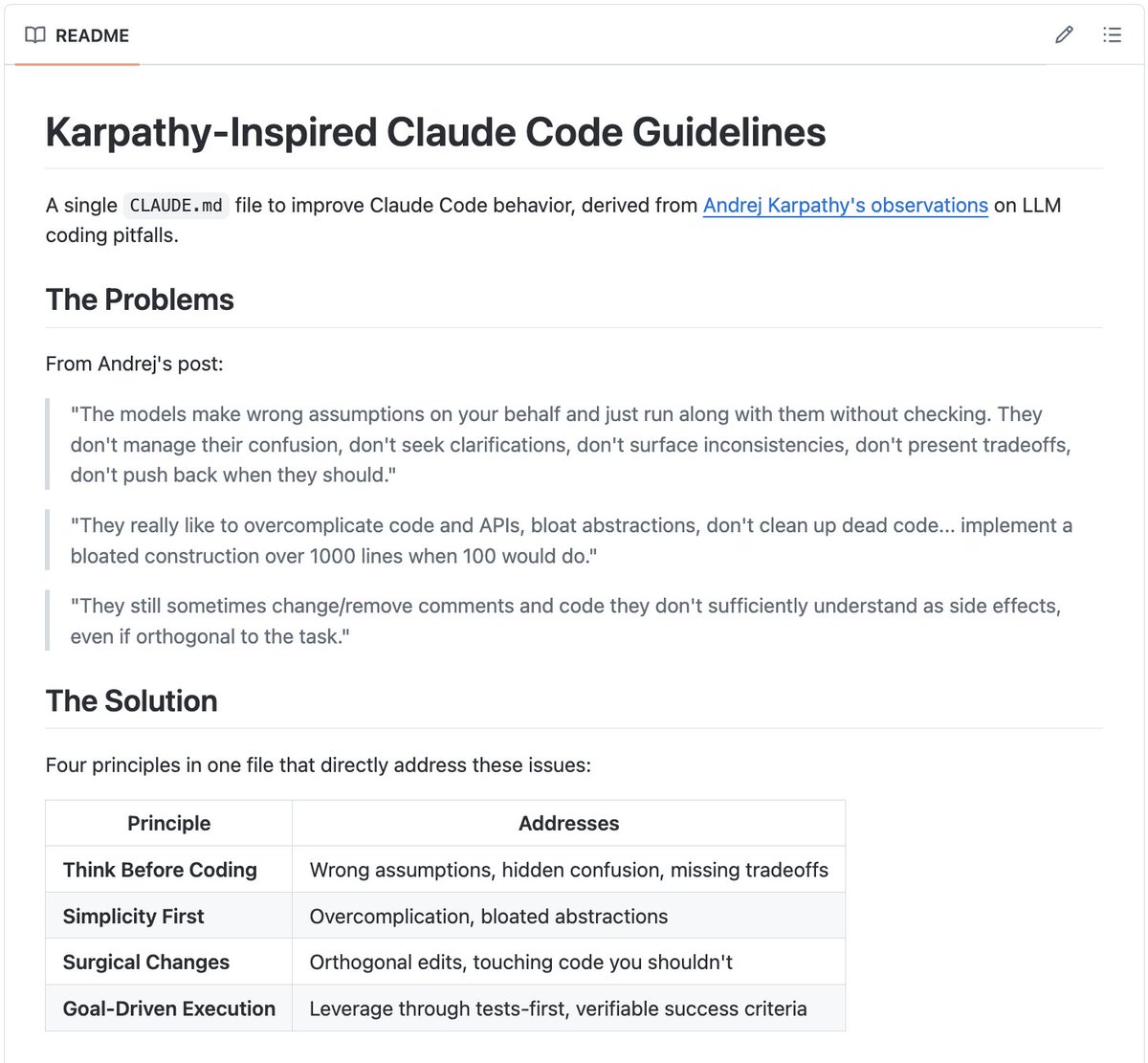
A single 𝗖𝗟𝗔𝗨𝗗𝗘.𝗺𝗱 file just hit 15K GitHub stars.
(derived from Karpathy's coding rules)
Andrej Karpathy observed that LLMs make the same predictable mistakes when writing code: over-engineering, ignoring existing patterns, and adding dependencies you never asked for.
If you've used AI coding assistants, you've hit all of these.
But here's the thing:
If the mistakes are predictable, you can prevent them with the right instructions.
That's exactly what this 𝗖𝗟𝗔𝗨𝗗𝗘.𝗺𝗱 does. You drop one markdown file into your repo, and it gives Claude Code a structured set of behavioral guidelines for your entire project.
This is a big deal.
- Built entirely around prompt engineering for AI coding assistants
- No framework, no complex tooling, just one .md file that shapes behavior
Developers are moving past "use AI to write code" and into "engineer the AI's behavior so the code is actually good."
The Claude Code ecosystem is growing fast, and the best tools in it aren't always software. Sometimes they're just well-crafted instructions.
100% open-source.
I've shared a link to the GitHub repo in the next tweet!
I ran a 35-billion parameter AI agent on a $600 Mac mini.
Specs: M4 Mac-Mini 16GB RAM
The model doesn't fit in RAM. It pages from the SSD at 30 tokens/second.
On NVIDIA, the same paging gives you 1.6 tok/s. Apple Silicon gives you 30. That's 18.6x faster.
No cloud. No API keys. $0/month.
Here's what it can do 🧵
🚨BREAKING: Someone turned Naval Ravikant's mental models into AI prompts and the results are insane.
It's the closest thing to having the AngelList founder rebuild your career from scratch.
Here are the 10 prompts that completely changed my life:
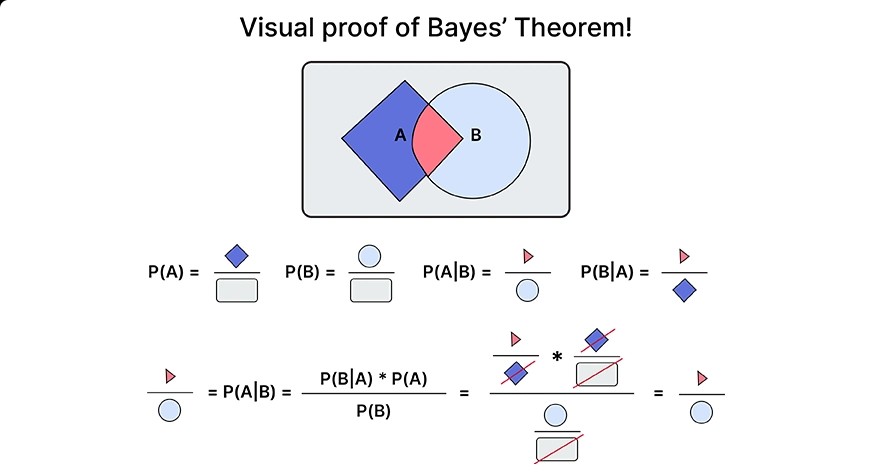
Bayes’ theorem is probably the single most important thing any rational person can learn.
So many of our debates and disagreements that we shout about are because we don’t understand Bayes’ theorem or how human rationality often works.
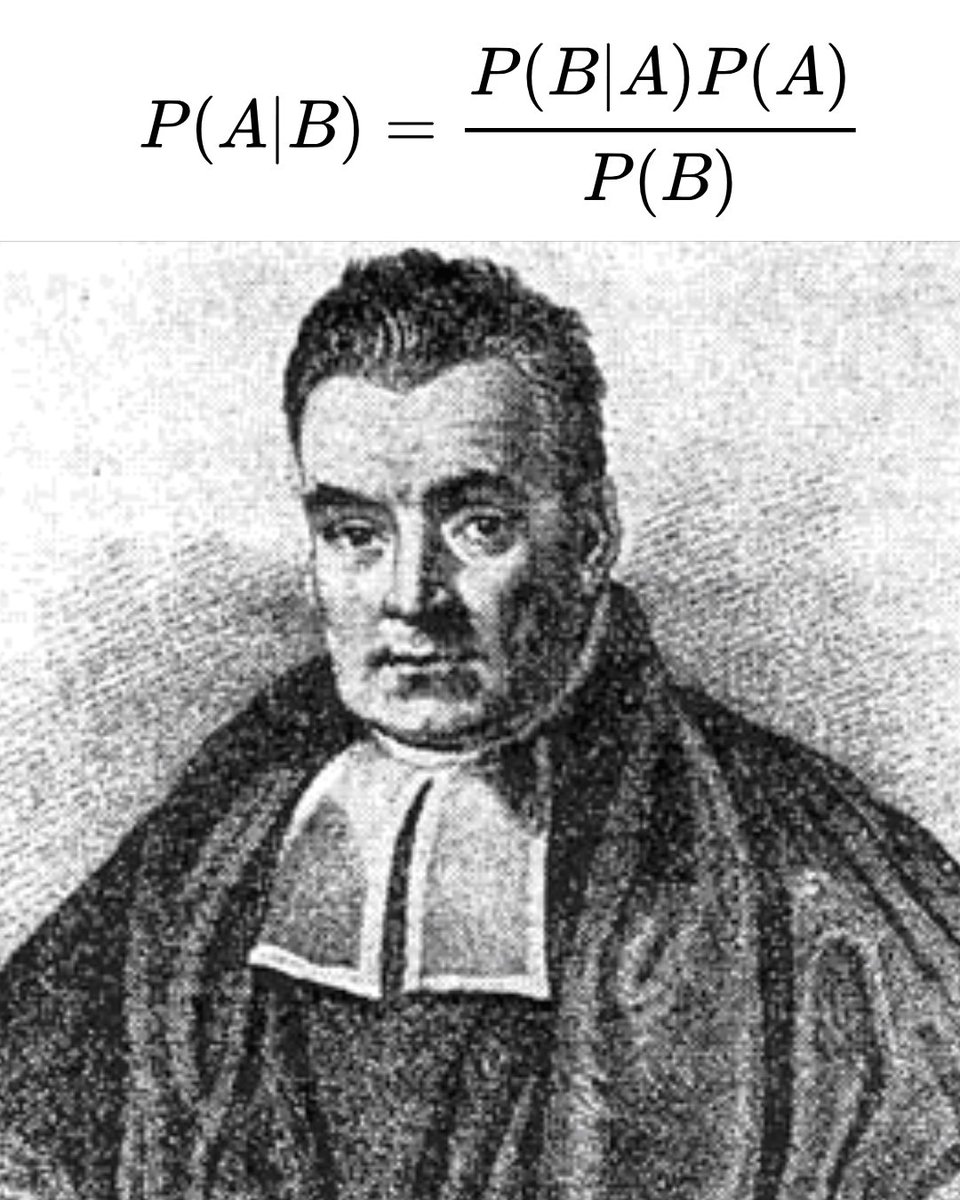
Bayes’ theorem is named after the 18th-century Thomas Bayes, and essentially it’s a formula that asks: when you are presented with all of the evidence for something, how much should you believe it?
Bayes’ theorem teaches us that our beliefs are not fixed; they are probabilities. Our beliefs change as we weigh new evidence against our assumptions, or our priors. In other words, we all carry certain ideas about how the world works, and new evidence can challenge them.
For example, somebody might believe that smoking is safe, that stress causes mouth ulcers, or that human activity is unrelated to climate change. These are their priors, their starting points. They can be formed by our culture, our biases, or even incomplete information.
Now imagine a new study comes along that challenges one of your priors. A single study might not carry enough weight to overturn your existing beliefs. But as studies accumulate, eventually the scales may tip. At some point, your prior will become less and less plausible.
Bayes’ theorem argues that being rational is not about black and white. It’s not even about true or false. It’s about what is most reasonable based on the best available evidence. But for this to work, we need to be presented with as much high-quality data as possible. Without evidence—without belief-forming data—we are left only with our priors and biases. And those aren’t all that rational.
“No matter how isolated you are and how lonely you feel, if you do your work truly and conscientiously, unknown friends will come and seek you.” — Carl Jung
🌍 Top 10 contributors to global real GDP growth (2026)
1.🇨🇳 China — 26.6%
2.🇮🇳 India — 17.0%
3.🇺🇸 United States — 9.9%
4.🇮🇩 Indonesia — 3.8%
5.🇹🇷 Türkiye — 2.2%
6.🇳🇬 Nigeria — 1.5%
7.🇧🇷 Brazil — 1.5%
8.🇻🇳 Vietnam — 1.6%
9.🇸🇦 Saudi Arabia — 1.7%
10.🇩🇪 Germany — 0.9%
📌 China + India alone = 43.6% of global growth
📌 Asia-Pacific accounts for ~50% of total growth
Source: IMF