Most PhD students work 10x harder than needed.
I see it daily - smart students drowning in manual tasks tools could handle.
(This kills your research productivity)
8 use cases where you can cut your workload in half:
Join us in Hong Kong, a cultural fusion and hub of research excellence, for the 9th Nursing Symposium on Cancer Care cum 1st Genomic and Genetic Nursing Forum in May 2024. Submit your abstract and we'll see you in this 🌏 international metropolis! 👉 https://t.co/3yV6N74C9l
🎓CUHK’s 92nd Congregation for the Conferment of Degrees was successfully held from 9 to 11 Nov. 235 Bachelor’s and 225 Master’s and Doctoral degrees in Nursing were conferred - 🧑🎓best of luck on your new beginnings! 🤩
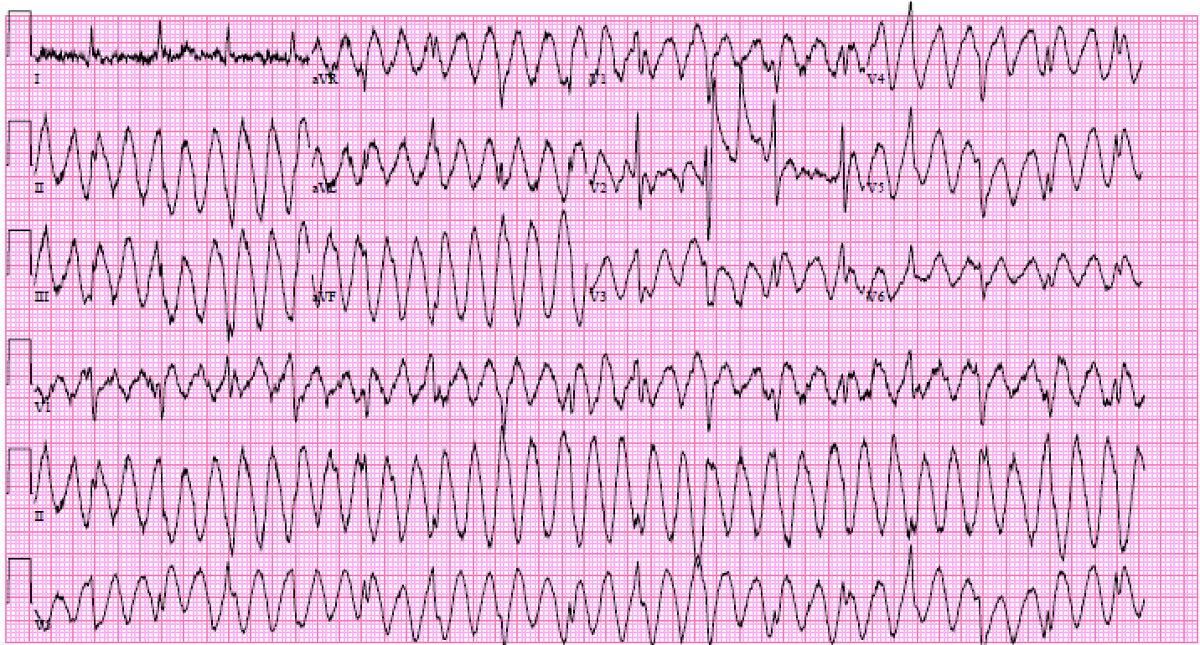
I was called to consult on a patient with ventricular tachycardia, persisting for several minutes; patient without symptoms. Cardiac rhythm has a natural order and organization. This is not "ventricular tachycardia." Put the Amiodarone drip away.
The worst and most useless advice given to PhD students: find a gap in literature.
Here's why:
The problem with "finding a gap in literature" is that it's an analogy.
It assumes that an academic field is like a wall. Every researcher brings a brick or two and that's how we this wall gets built.
Sometimes researchers are unable to solve a problem, which results in a "gap" in the wall.
The analogy of finding a gap in literature, like any other analogy, distorts the actual process of how academic research gets done.
As a result, graduate students try to find a topic that no one has written about before. This is counterproductive at best and utter madness at worst.
Let's say I start researching a topic like "The Effect of Reading Hans Christian Andersen's Stories on the Production of Milk Among Danish Cows."
No one has written about this topic and I can argue that there is a gap in literature.
The problem is even if I were to write a whole 400-page monograph on this topic, it will not move the field forward. No one in the field of Andersen studies is interested this topic.
If you follow the advice of finding a gap in literature, you may end up doing research that no one is interested in.
So what should you do?
Here's a suggestion: try to find a problem you feel passionately about.
This may be a bit tricky if you are starting out. So, read about it, think about it, and write what make of it.
Most importantly, know that there is a place in the world for whatever you have to say on a given topic.
Example:
I had a problem that I had spent years thinking about before my PhD. And the problem was how a South Asian Muslim identity got constructed in and through Urdu literature.
I read about Urdu literature and identity formation in colonial India and figured two writers whose works I wanted to enagage with. Nazir Ahmad, a 19th century Urdu novelist, and Benedict Anderson, the famous Anglo-Irish political scientist.
There is a lot of scholarship on Nazir Ahmad's novels and Benedict Anderson's book "Imagined Communities" is a considered a classic in the humanities and social sciences. A lot of folks had written about Nazir Ahmad and Anderson's work. So, not many gaps in the literature.
But no one had looked at how Nazir Ahmad's novels created an "imagined community" of Muslims in colonial India. So, I did this in my dissertation.
I didn't try to find a gap in literature. I solved a problem that I felt passionately about.
Your PhD is about the evolution of your mindset.
It proceeds through personal research experience, mentorship and development of key skills.
This is why PhD in STEM:
- is NOT about a thesis (very few people will read it)
- is NOT about finish your advisor’s project
- is NOT about attending new courses
- is NOT to learn how to use cool instruments (although it might be handy, it is of little help in a long run)
Yes, some of it will help you get hired. BUT PhD should not be about this.
▫️
PhD is about personal development, creativity and problem solving in a highly dynamic research environment.
First of all, it is about:
- Becoming a highly critical and creative thinker
- Learning how to think independently (against the local or global mainstream)
- Learning how to “jump-start” a project and bring it to perfection
- Discovering your strengths and weaknesses as a future leader
- Learning from massive number of mistakes without big consequences
- Learning how to accept failures and move on
- Understanding the value of teamwork and collaboration
- Publishing important studies and making discoveries (especially if you plan to stay in academia)
▫️
Of course, there are some “perks” that come with it:
1. Getting a good expertise in some field
2. Getting some idea about the world of academia and how things work there
3. Learning how to use fancy tools (microscopes, spectrometers, etc)
4. Learning how to write papers, etc etc
But these are only bonuses. They should not be why you are pursuing PhD.
▫️
As a prospective PhD student, do NOT look for a supervisor who will be simply assigning tasks to you and tracking your project.
Look for a good mentor and advisor who can help you develop YOUR leadership skills.
A proper research environment and inspiration to pursue your dreams are the key ingredients.
#AcademicTwitter #AcademicChatter #phdchat
#HFpEF is a challenging phenotype of #HeartFailure. Until recently, there were no approved or effective therapies to reduce mortality/morbidity.
Clinical trials now show that the outcome of patients with HFpEF could be improved via the use of the news drugs, #SGLT2i and #ARNi
Get all your resources on Management of HFpEF from @escardio Topic of the Month collection. Please check https://t.co/px84bjAxdj
Elsevier's revenue: £2.9 billion. WTF?
We scientists produce the content for manuscripts and review for free. Then we pay huge fees for open access publishing. Science should not be business. What on earth can we do to fight against this?
https://t.co/x7T3RG6aam
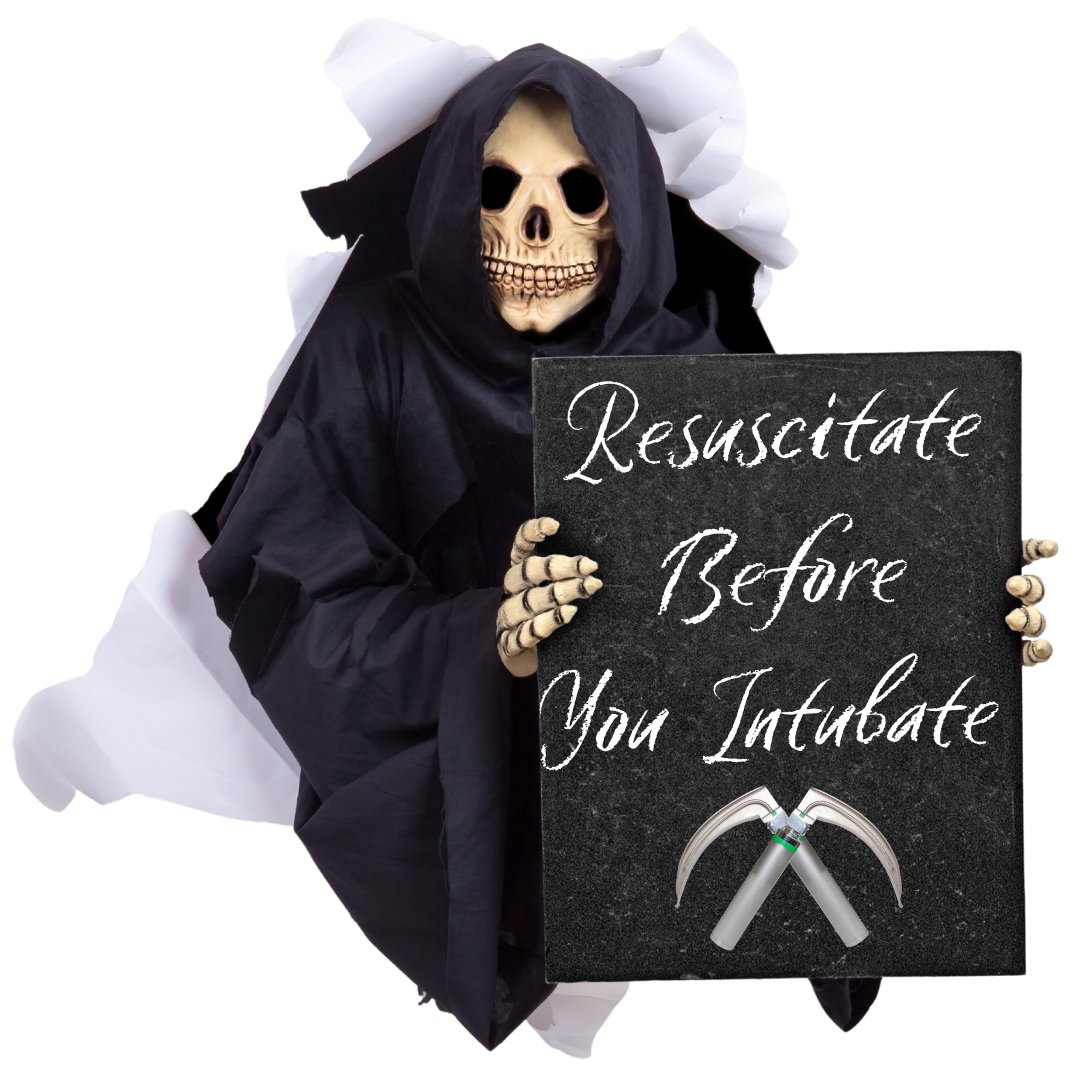
Resuscitate Before You Intubate!!!
Remember, our patients in critical condition may often deteriorate following intubation. Ever wondered why? It's usually because they're not adequately resuscitated before the procedure. This tends to happen predominantly with patients needing emergency intubations, as these individuals are often in precarious hemodynamic states and might be volume depleted.
Let's dive a little deeper into the physiology. Ordinarily, our respiratory process operates under negative pressure - when the diaphragm descends, it lessens intrathoracic pressure and draws air into the lungs. Intubation switches this to a positive pressure system where air is forcibly delivered into the lungs by a ventilator. In patients with low intravascular volume, this increase in intrathoracic pressure may precipitate hemodynamic instability. This situation is further exacerbated by sedatives and paralysis, which hinder the body's ability to adapt to these sudden changes.
It's essential to note, though, that this deterioration is seldom abrupt and can often be anticipated.
Whenever possible, which is the majority of cases, always aim to resuscitate before intubation. But be aware, indiscriminate fluid administration is not the answer. A timely bedside echo can ascertain their volume status and assess their right ventricular condition - key information before intubation. Also, remember to use the Shock Index, calculated as heart rate/SBP. A value ≥ 0.9 may indicate the need for further resuscitation.
Emergency intubation, a common Pre-Hospital, ER and ICU procedure, although aimed at supporting the patient, brings about substantial changes to normal cardiopulmonary physiology. This could be detrimental for critically ill patients, unless the necessary precautions are taken during the peri-intubation period.
During positive pressure ventilation, normal cardiopulmonary interactions are disturbed due to the increase in intrathoracic pressure, leading to decreased preload and increased RV afterload.
Patients in need of emergent intubation often come with compromised hemodynamics, maintained mainly by increased sympathetic activity and elevated endogenous catecholamine levels. In addition, their illness often leads to hypovolemia due to decreased intake and increased losses. Sedatives used during rapid sequence intubation can further compromise the sympathetic response.
Failure to address hypovolemia and reduced sympathetic activity can lead to post-intubation hypotension and, in severe cases, cardiac arrest. Hence, thorough planning and preparation are more crucial than the intubation itself. Secure resuscitative access before intubation, preferably using two US-guided 18G IVs. Then, consider using point-of-care echo, especially in patients with SBP < 90 or a Shock Index > 0.9.
These patients may benefit from volume resuscitation using pressure-bagged fluids and low-dose vasopressors to raise BP. Push-dose epinephrine can be useful in situations where adequate pre-intubation resuscitation is not possible, or the sympathetic drive is so high that removing it may cause severe decompensation.
The mantra remains - "Resuscitate before you intubate."
Story Time. The Stalking & Sexual Harassment case of 8 years.
1.I always wanted to share about wonderful things & stories from the world. Unfortunately today I have to share about something utterly disgusting. Even more unfortunate, it’s happening to me.
I have two pet peeves that I can think of for power point presentations
1) lemme show you this but you can barely read it (and so can’t I)
2) lemme use a pointer to circle things on my slide but my pointer is not called a circler
#presentations#skills#petPeeves#genetics
Been in academia for 11 years as faculty, student, and postdoc. It was normalized that manager to subordinate relations were frowned upon and at most slap on the wrist.
Took a training at @Novartis and guess what? It is not okay!
How do we continue normalizing bad behaviors?!