‼️SEJARAH BESAR BAGI OLAHRAGA INDONESIA‼️
Untuk pertama kali dalam sejarah, lagu Indonesia Raya berkumandang di World Climbing Series nomor lead.
Climber muda berusia 20 tahun asal Kediri, Putra Tri Ramadani a.k.a Srondeng meraih emas di World Climbing Series 2026 Praha, Rep Ceko, dini hari tadi.
Srondeng juga menjadi orang Asia Tenggara pertama dlm sejarah yg meraih emas World Climbing Series nomor lead.
Dahsyat, Srondeng!!!!
Selamat!!!!
A 47-year-old writer walked into an aikido dojo, got humiliated by men half his age, and spent the next 40 years watching almost every ambitious person who came in quit one week before the breakthrough.
His name was George Leonard.
He was a writer and a magazine editor in his late 40s when he walked into an aikido dojo for the first time and got humiliated by men half his age. He kept going back. He earned a fifth-degree black belt.
He then spent the next 40 years on the mat watching hundreds of students walk in with enthusiasm, train hard for a few months, and then disappear forever right at the moment their bodies were about to absorb the technique they had been chasing.
In 1991 he wrote a small book trying to explain what he had seen. It was called Mastery. Tim Ferriss recommends it. Josh Waitzkin recommends it. The book has stayed in print for almost 35 years because Leonard had isolated something nobody else was naming clearly.
The lie he wanted to kill was the shape of the learning curve itself.
Almost every motivational speech, every productivity course, every self-help diagram draws progress as a steady line that goes up and to the right. You put in the work, you get the result, the line climbs. Leonard had spent four decades watching the actual shape of skill acquisition, and the actual shape looks nothing like that.
The real shape is a staircase.
You train for weeks and nothing visible happens. You feel exactly the same on day 40 as you did on day 10. Then one afternoon, with no warning, something clicks and you jump to a new level. You stay there for an hour or a day, feeling brilliant. Then the new level becomes the new normal, and you flatten out again. Another long stretch of nothing. Then another sudden jump.
The flat sections are called plateaus. They are not a bug in the learning process. They are the learning process.
The plateau is the period where your brain is quietly rewiring the neural circuits that will produce the next jump. The jump itself is just the visible moment when the rewiring finishes. Without the plateau, the jump cannot exist.
This is the part almost everybody misreads.
You feel stuck. You assume something is wrong with you. You assume the method has stopped working, or that you have hit your ceiling, or that you were never going to get there in the first place.
So you quit, or you switch methods, or you start chasing the next shiny technique, exactly at the moment when the rewiring was about to complete. The plateau looks like failure. It is actually the engine.
Leonard identified three personality types who lose this game.
The dabbler chases the high of starting something new. The first few weeks of any new skill are full of fast improvement because the easy gains come first. The dabbler rides that wave, hits the first plateau, decides the activity was not for them, and quits to go feel like a beginner somewhere else.
The obsessive cannot tolerate the plateau either. They double down. They train harder. They demand results from a process that does not run on demand. They burn out and crash, often spectacularly, and never come back.
The hacker is the most subtle. They reach a comfortable level and stop pushing. They live on a permanent plateau, never quitting and never growing.
All three are quitting the plateau in different ways. The master is the one who learns to stay on it without forcing anything. Show up. Train. Accept that today looks identical to yesterday. Accept that tomorrow will too. Trust that the staircase is still under your feet even when you cannot see the next step.
The line from the book that has been quoted for 30 years is four words long. Love the plateau. Not tolerate it. Not survive it. Love it. Because the plateau is not the place where nothing is happening. It is the only place where anything real is happening.
You are not stuck. You are exactly where the work gets done.
The people you envy are not on a different staircase. They just stopped flinching at the flat parts.
seorang perempuan, yang sudah tiga kali melahirkan dengan operasi, kembali datang ke dokter yang sama.
Ia yakin bahwa semuanya akan baik-baik saja.
tapi beberapa jam setelah anaknya lahir, ia meninggal.
dan dari kematian itu, lahir satu perkara hukum.
“Pernah ngerasa jadi dokter umum itu ‘ga ada harganya’?”
Jujur… saya pernah.
Dan mungkin banyak yang juga pernah ngerasain hal yang sama.
Sampai ada kejadian datang seorang pasien wanita mengeluh nyeri perut sudah 1 minggu sudah berobat kemana2 termasuk spesialis hanya dikatakan "sakit lambung".
Tapi ada yang ganjel. Saya tanya satu hal sederhana:
“Riwayat haidnya gimana, Bu?”
Jawabannya:
“Tidak teratur… terakhir 3 minggu lalu dok.”
🚨 Red flag langsung nyala.
Tanpa banyak drama:
→ Test pack
→ Hasil: POSITIF
Langsung kepikiran satu hal:
Kehamilan ektopik (KET) / Kehamilan di luar kandungan
Bukan kondisi sepele.
Bisa pecah. Bisa perdarahan. Bisa fatal.
Cek darah : Hb turun.
Artinya?
Perdarahan kemungkinan sudah terjadi di dalam.
Segera lah saya hubungi sp kandungan dan persiapan operasi CITO (gawat darurat).
singkatnya pasien masuk operasi.
Dan… selamat.
Beberapa hari kemudian,
pasien ketemu saya lagi sebelum pulang.
Dia bilang :
“Terima kasih ya dok…”
Saya jawab refleks:
“Yang operasi kan dokter kandungan, Bu.”
Jawaban pasien itu yang bikin saya diem.
“Iya dok… tapi yang pertama curiga kan dokter kalau nggak ada dokter IGD, saya nggak akan dirawat… nggak akan dioperasi…
Semua punya perannya, dok.”
bhaapp.. jujur disitu saya langsung dheggg
ternyata ga semua dinilai dari uang ..
tapi saya tetap butuh uang karena cicilan banyak 🙏
My doctor was always 45 mins late, every visit.
No apology it’s just "Take a seat."
Last time I waited 1 hour 20 mins then I left.
Then wrote a google review. I wasn’t mean but just honest: "Always late, brings a book."2 stars.
He called me that night from his personal cell.
"You think I'm late because I don't respect your time?"
I said "...yes?"
If there was one article you want to read as a clinician?
Read this
Via @jenna_taglienti - an absolutely stunning write in @JAMA_current
"Medicine can have extraordinary meaning. But it cannot substitute for being present in your own life. The world may need us as physicians.
But the people who love us need us as ourselves.
And that is the role no one else can fill."
Brilliant - and much love to you
'Time is Finite"
https://t.co/qPJkmtwxUe
Dunia tidak butuh satu lagi sub-spesialis yang hanya tahu cara mengoperasi lubang hidung sebelah kiri di RS bintang lima. Rakyat butuh Bedah Umum yang bisa buka perut di tengah malam saat listrik padam di pedalaman. Itu baru namanya dokter.
Doctors in large centers don't realize what a life-changer fast operating room turnover times are.
For those that don't know, the turnover time in OR's varies widely between hospitals. That's the time it takes to clean the room and set up for the next case.
In efficient hospitals, especially those that are physician owned, it can be as quick as 20 minutes. In large academic hospitals, it can push 4 or even 5 hours.
Think of the difference that makes for quality of life, patient care, and revenue.
A doctor who has a large waitlist of patients might be at the hospital until 8pm and still only get two surgeries done because the turnover time is so long. That same doctor could get 3 or 4 surgeries done in a more efficient hospital, getting home in time to have dinner with his family.
A physician owned hospital would never tolerate a 4 hour turnover time. That's money being lit on fire. Yet hospitals tolerate this all the time because they don't face competition. There's no incentive to run efficient.
So the patients have to wait longer for their surgery, the doctors get frustrated, and everybody loses.
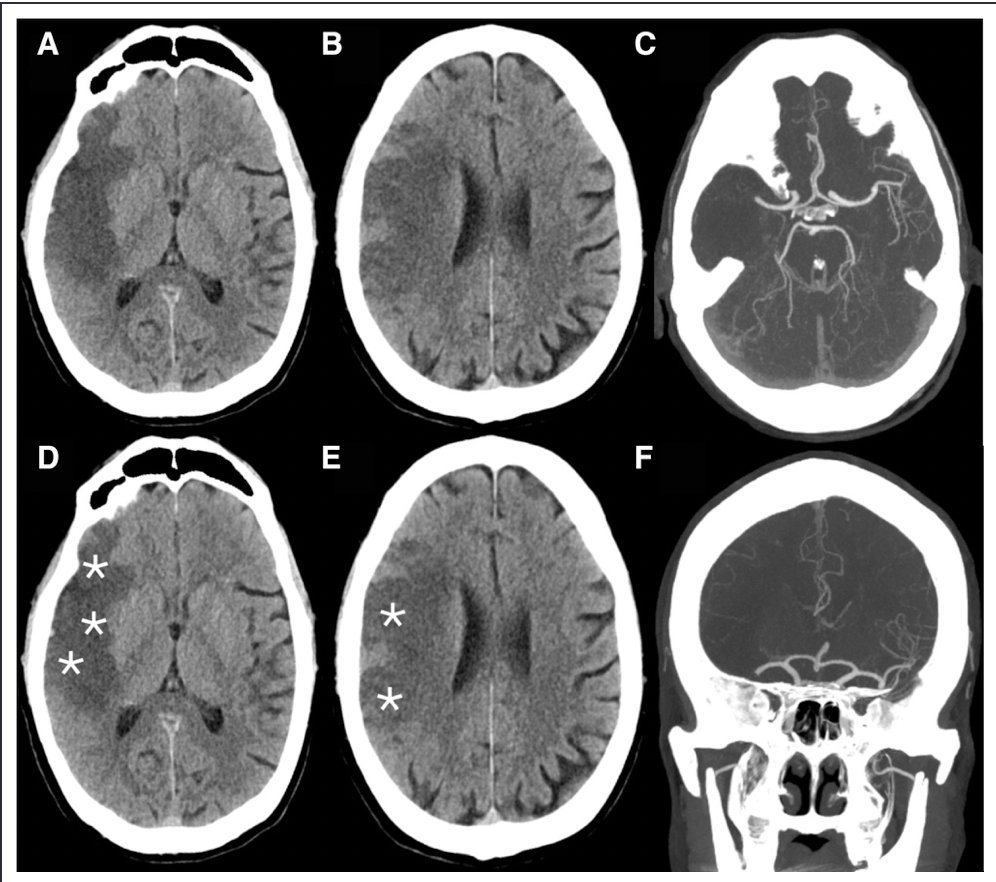
Would you attempt reperfusion (EVT) in this #stroke patient? We believe large core RCTs showed evidence of EVT benefit in pts with large core, not large SEVERE core. Take a look at our letter of concern on @StrokeAHA_ASA. @DGutierrez__V
https://t.co/sQt6uN4T6d
‘Back in the day’ butts heads with ‘medicine today.’ A candid look at why physicians may never have the authority, respect, and trust doctors enjoyed 50 years ago: https://t.co/1LHYUSOAgk
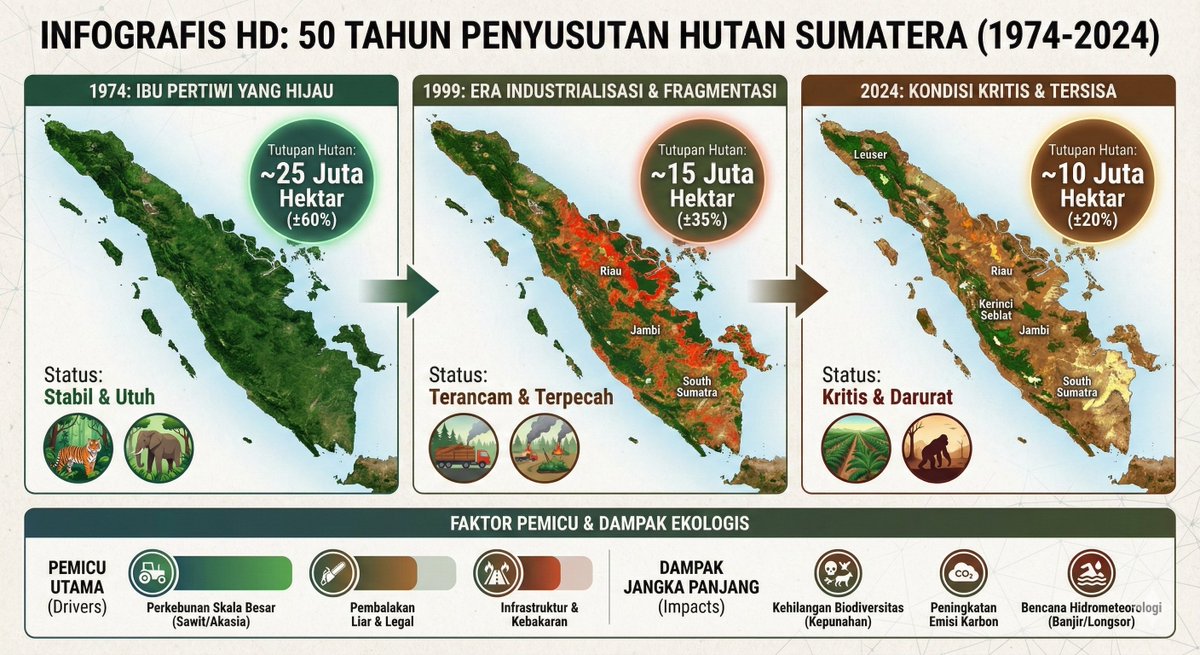
Tahukah Anda bahwa dalam 50 tahun terakhir, Sumatera telah melakukan trik sulap terbesar dalam sejarah peradaban kita, di mana jutaan hektare hutan rimbun diubah menjadi kebun monokultur dan tanah gersang—tanpa suara, tanpa jejak, dan sering kali dianggap legal berkat secarik kertas bernama izin. Akibatnya, harimau kehilangan rumahnya lebih cepat daripada kita kehilangan integritas dalam menjaga paru-paru dunia.
Penulis: ET Hadi Saputra, (12-12-2025)
Mari kita bicara santai sejenak. Anggap saja kita sedang duduk di kedai kopi, menyeruput robusta Lampung, sambil memandang peta hutan Sumatera—bukan peta wisata.
Jika Anda melihat infografis tutupan hutan Sumatera dari 1975 hingga 2025, Anda tidak sedang melihat data, melainkan obituari: surat kematian massal. Warnanya berubah drastis—from hijau tua menjadi kuning, cokelat, hingga botak plontos, mirip kepala pejabat yang kebanyakan mikir proyek.
Lima puluh tahun cukup singkat bagi umur bumi, tapi cukup lama bagi kita untuk menghabisi warisan jutaan tahun. Dulu Sumatera disebut "The Emerald of the Equator", Zamrud Khatulistiwa. Kini lebih pantas "The Palm Oil of the Equator".
Saya tertawa miris karena ironinya terasa pahit di lidah.
Secara hukum, kita punya segudang aturan tebal dan canggih: Undang-Undang Kehutanan, Undang-Undang Lingkungan Hidup, istilah seperti Sustainable Development, Green Economy, hingga Intergenerational Equity. Membacanya, mahasiswa hukum semester satu pasti mengira negara ini surga ekologis.
Faktanya? Nol besar.
Hukum tajam ke penebang liar yang cari nafkah, tapi tumpul—bahkan patah—saat berhadapan dengan korporasi pemegang HGU. Hutan lindung disulap statusnya lewat "alih fungsi lahan"—bahasa halus untuk pemusnahan fungsi alam.
Di mata hukum administrasi, perizinan adalah raja. Membabat ribuan hektare jadi prestasi ekonomi: pendapatan daerah naik, devisa naik. Tapi biaya sebenarnya—banjir Bengkulu, longsor Sumatera Barat, asap Riau—tidak pernah masuk neraca perusahaan sawit atau bubur kertas. Yang bayar? Rakyat kecil.
Pasal 33 UUD 1945 menyatakan bumi dan air dikuasai negara untuk kemakmuran rakyat—artinya dijaga, bukan diobral. Jika hutan habis dan rakyat kebanjiran, di mana kemakmurannya? Hanya untuk segelintir orang yang punya akses stempel basah di Jakarta?
Kita juga lupa hukum adat. Masyarakat adat menjaga hutan ratusan tahun sebelum negara berdiri, dengan kearifan lokal yang melarang tebang sembarangan. Kini dilindas ekskavator atas nama investasi. Hukum positif sombong, menganggap hukum adat kuno dan menghambat pembangunan. Padahal hutan adat masih utuh, sementara hutan negara gundul. Aneh, bukan?
Polanya menjijikkan: tebang hutan (cuan pertama), tanam sawit (cuan kedua), tinggalkan tanah rusak (bencana buat rakyat). Aktivis lingkungan yang protes dituduh anti-pembangunan.
Sarkasme terbesar: merayakan Hari Lingkungan Hidup dengan tanam seribu pohon di halaman kantor gubernur, sementara sejuta pohon ditebang di belakang.
Kita butuh revolusi hukum. Hukum tak boleh lagi jadi stempel legalisasi kerusakan. Pendekatan ultimum remedium dalam kasus lingkungan harus dibuang; pidana harus di depan untuk kerusakan masif: sita aset, miskinkan pelaku, pulihkan alam.
Berani? Saya ragu. Terlalu banyak kepentingan dan amplop di bawah meja.
Jadi, 50 tahun hilangnya hutan Sumatera bukan takdir, melainkan pembunuhan berencana—pelakunya keserakahan yang berselingkuh dengan kekuasaan, dinikahkan oleh hukum lemah syahwat.
Jika tren ini berlanjut, 50 tahun lagi anak cucu kita tak akan tahu Harimau Sumatera selain dari video YouTube lawas. Mereka tak akan rasakan sejuknya Bukit Barisan—hanya panas, debu, dan dongeng tentang pulau hijau yang dulu ada.
Cerita tragis karena kita terlalu sibuk menghitung laba sampai lupa cara bernapas.
#hutanSumatera #deforestasi #hukumlingkungan #bencanaekologis #kritis #ethadisaputra #majalahforumkeadilan #sumatra #lingkunganhidup #saveforest
A life-changing encounter in Sumatra: Rafflesia hasseltii grows in just a few remote, tiger-patrolled rainforests, accessible only under permit and seen by few. We trekked day and night to find it, and look what happened when we did:
🗣️ Kapten timnas Indonesia, Jay Idzes: “Aku mencoba utk menghormati semuanya… Tapi aku ingin mengatakan bahwa aku bangga dgn tim ini… Tim ini dibangun tdk hanya utk saat ini, tp utk masa depan hidup kita. Mereka tdk menghentikan kami. Kami punya proyek yang indah, tim yg indah,