If this doesn’t cause outrage @UNHumanRights I don’t know what does. We insist that an independent commission for human rights be appointed again for investigations into allegations of violations and abuses of international human rights law. @XimenaBorrazas Thank you!
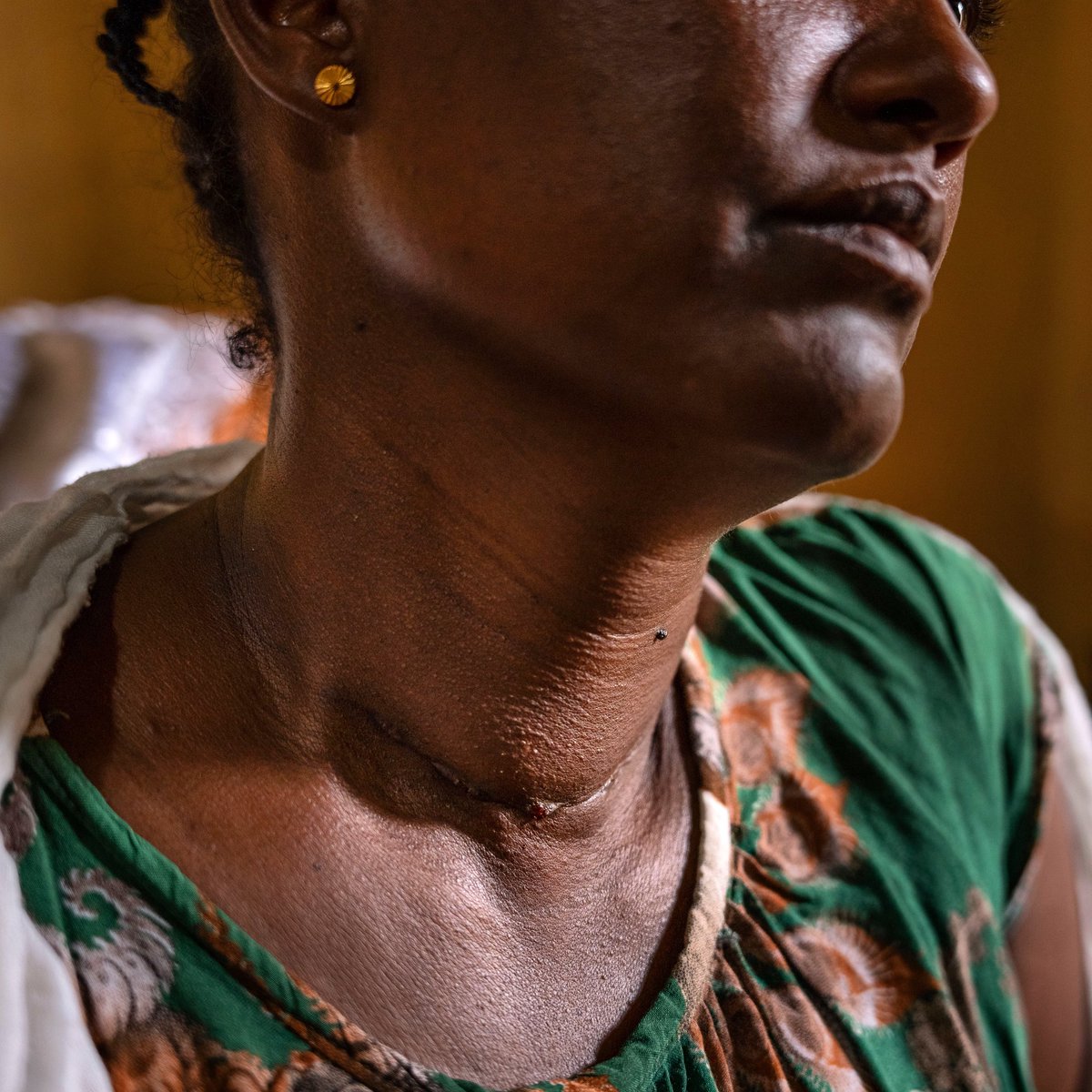
Such are the eternal scars of Tigray’s war; some make furrows in the skin and many others immense holes in the soul.
Azmera has two scars, those on her skin and those on her soul.
#Tigray@UN_Women@unwomenethiopia@WHO
https://t.co/YLskinfdvF
Jan Nyssen’s eyewitness account should be read as more than an environmental observation. It is a diagnosis of Tigray’s post-war survival architecture.
The political class may speak of negotiations, autonomy, security arrangements, and administrative control. But this piece reminds us of a harder truth: no political future can stand on collapsed water systems, exhausted soil, unreliable electricity, broken roads, weakened local governance, displaced populations, and landscapes carrying more pressure than they can absorb.
Mekelle receiving piped water only once a month is not merely a service-delivery problem. It is a governance indictment. Young men pushing dangerously overloaded handcarts to supply water to households are not just part of an informal economy. They are the visible evidence of institutional failure. Charcoal replacing reliable energy is not just market adaptation. It is ecological pressure translated into daily survival. Farmers ploughing through uncertainty are not romantic symbols of resilience. They are citizens forced to sustain life while politics fails to sustain society.
This is the most uncomfortable lesson of the op-ed: Tigray’s resilience is real, but resilience is not recovery.
A society may continue functioning while its foundations are being depleted. Informal systems may keep people alive, but they cannot permanently replace accountable institutions, planned reconstruction, ecological restoration, public investment, and responsible political leadership.
The unresolved displacement of IDPs is also not only a humanitarian wound. It is an ecological, economic, and political crisis. When people remain displaced, host areas face intensified pressure, abandoned lands remain underutilized, and the region’s productive geography is distorted. Any political agenda that ignores this reality is not strategic. It is performative.
Tigray’s ecological backbone is still carrying society, but it is carrying too much with too little institutional support.
This is where the debate about Tigray’s future must become more serious. Autonomy, reconstruction, recovery, and self-determination cannot be reduced to slogans. They require water that flows, soil that produces, electricity that functions, roads that connect communities, forests that regenerate, and institutions that protect rather than merely extract loyalty. The central question is no longer whether Tigrayans are resilient. They have already answered that with unbearable sacrifice.
The real question is whether Tigray’s political and institutional leadership has the imagination, discipline, and moral seriousness to transform survival into a livable future. Resilience should never be used to decorate ruin. Tigray needs ecological reconstruction, institutional reconstruction, and moral reconstruction together
“The way he [Million] was detained was quite scary,” a colleague, who requested anonymity, told CPJ. “Our original plan was to report from the ground, speak with voters, interview candidates, and cover political figures. I do not think that is happening now … We are working from home.”
“Ethiopia is not merely confronting isolated security incidents. It is experiencing a profound collapse of political legitimacy, social trust, and state authority. Internationally, the government presents itself as the indispensable force preventing national disintegration. Domestically, it governs amid — and often through — the fragmentation that sustains that narrative”. A well articulated piece that is worth reading!
‘#Ethiopia today is not only suffering from the absence of peace. It is living through the normalization of atrocity governance.’ https://t.co/9N2al3N8DG
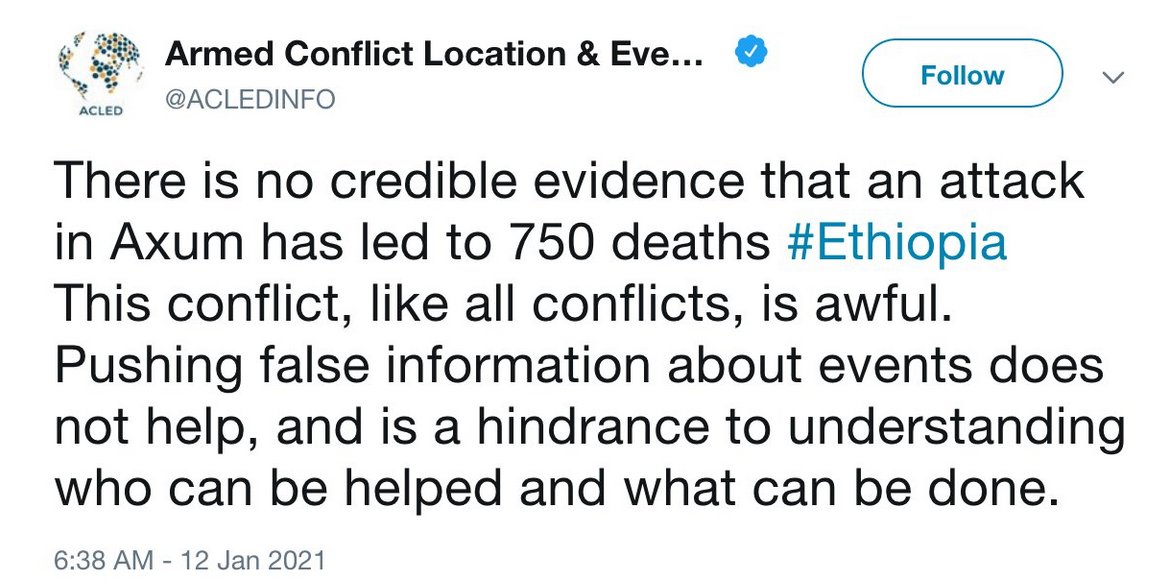
Speaking of misinformation:
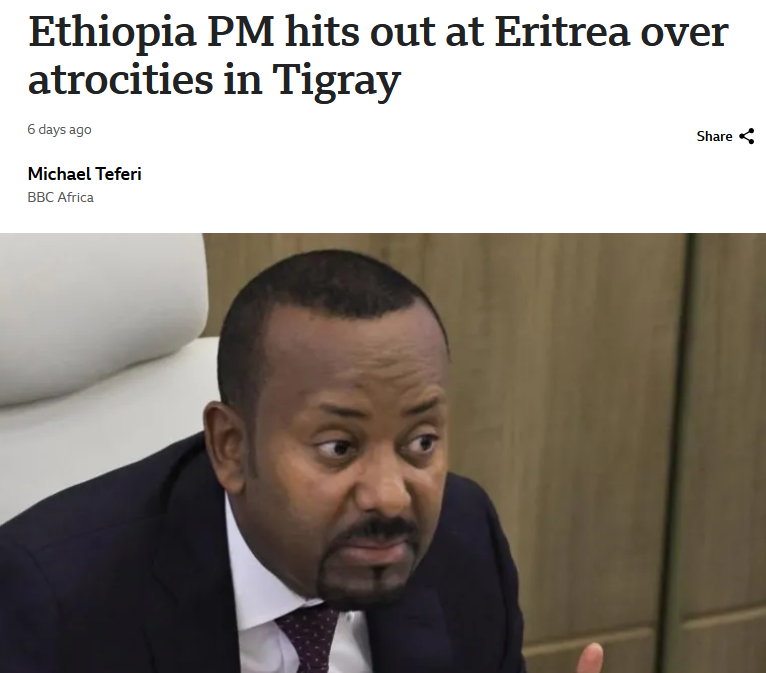
Abiy admitted for the first time that #Eritrean troops had massacred people in Aksum, #Tigray.
@ACLEDINFO has yet to issue an official apology to the people of Tigray, and retract the misinforming data it sold to governments and researchers.
Today marks 28 years since the deliberate twin aerial bombardment of Ayder Elementary School in Mekelle that claimed 48 lives. The attack involved cluster munitions and a second strike that hit after people had rushed to rescue the wounded. #AyderSchool
https://t.co/rRtT0bdyjv
“An organization that claims to provide neutral conflict data cannot behave like an interpreter of political guilt while hiding behind the prestige of data. Its leadership and institutional posture during the Tigray war already created serious credibility concerns among many who closely followed the conflict.”
@ACLEDINFO, https://t.co/2UYkdzjebP
ACLED’s latest analysis on Tigray should be read not only as conflict reporting, but as part of a longer and deeply troubling pattern.
During the Tigray war, ACLED’s Ethiopia-related publications repeatedly gave unusual weight to narratives that closely tracked the Ethiopian government’s framing of the conflict. In some of its wartime updates, government briefings, state media, and government-linked “fact check” materials were not merely treated as sources to be tested against other evidence. They were often reproduced in a way that helped normalize the federal government’s language of stabilization, law enforcement, unilateral ceasefire, and anti-TPLF security operations, even while Tigray was under siege, civilians were being massacred, ethnic Tigrayans were being arbitrarily detained, humanitarian access was obstructed, and Eritrean forces were committing atrocities.
That record matters. The latest ACLED piece repeats the same institutional weakness. Instead of presenting conflict data and allowing conflict experts, lawyers, humanitarian actors, and political analysts to reach careful conclusions, it moves from selective incidents to sweeping geopolitical claims. It presents assumptions as near-certainties. It portrays the TPLF’s attempt to reassert full control over Tigray as the central expanding threat in the Horn of Africa, while giving insufficient analytical weight to the federal government’s conduct, drone attacks, the collapse of the Pretoria framework, unresolved western Tigray, Eritrean interference, Amhara armed actors, forced recruitment, displacement, and the total absence of accountability.
Let me be clear. The TPLF’s reinstatement of the pre-war regional council is legally indefensible, politically reckless, and morally dangerous. It should be criticized without hesitation. But serious conflict analysis does not turn one actor’s wrongdoing into a convenient framework for minimizing the wider architecture of responsibility.
ACLED’s problem is not merely methodological. It is institutional. An organization that claims to provide neutral conflict data cannot behave like an interpreter of political guilt while hiding behind the prestige of data. Its leadership and institutional posture during the Tigray war already created serious credibility concerns among many who closely followed the conflict. This latest report does not repair that credibility problem. It deepens it.
Conflict data should illuminate reality. It should not launder half-truths into expert analysis.
#ACLED
#Tigray #Ethiopia #HornOfAfrica #ConflictData #HumanRights #Accountability #Peacebuilding #PretoriaAgreement #TransitionalJustice #ConflictAnalysis #AtrocityPrevention
#Tigray: A reported drone strike near Sheraro has stirred fresh fears among residents already anxious about rising tensions between the federal gov’t & the TPLF.
The incident comes as concerns grow over the risk of renewed conflict in Tigray.
Read more: https://t.co/bmP0OhILCa
#Ethiopia, https://t.co/yjvQeACYQu
Even as the regime in Addis Abeba attempts to overwhelm the public with the language of a “successful election,” the very observer missions it would normally invoke for legitimacy are now exposing serious inconsistencies at the heart of that claim.
The Reporter’s account of the AU and IGAD preliminary reports is deeply revealing. IGAD says 54 million Ethiopians registered to vote. The AU puts the figure at 50.5 million. A senior government communication official reportedly told Al Jazeera that 57 million voters went to the polls. The AU also notes that the NEBE had initially targeted 40 million voters. These are not minor clerical differences. They go to the credibility of the electoral process itself.
The contradictions do not stop there. IGAD says 42 political parties, including coalitions, participated. The AU says 47. The AU acknowledges that voting did not take place in Tigray and parts of Oromia and Amhara because of security and operational challenges. IGAD, however, reportedly highlights only Amhara’s security challenges. That discrepancy matters because it affects how the exclusion of entire populations is understood, minimized, or erased.
Even more troubling, the AU says special voting arrangements for members of the military, security services, and internally displaced persons are scheduled for June 8, while electoral officials have claimed that nearly all registered voters have already cast their ballots. The AU also cites insecurity as the reason 6,400 polling stations across 46 constituencies were inactive, limiting access to registration services for some communities.
This is the deeper story. Ethiopia is not merely dealing with post election complaints. It is dealing with a contested electoral record whose own numbers, exclusions, timelines, and observer narratives do not align.
An election cannot be called successful simply because the incumbent declares it so. When millions are excluded, polling stations remain inactive, conflict areas are partially erased from reporting, and official figures contradict observer data, the language of success becomes political theater.
This election does not prove democratic legitimacy. It exposes how electoral authoritarianism now works in Ethiopia: stage the vote, celebrate the outcome, overwhelm the public with propaganda, and hope no one asks whether the process itself can withstand basic scrutiny.
WATCH: #Addis_Standard journalist questions AU Election Observation Mission head Uhuru Kenyatta on #Tigray’s exclusion from Ethiopia’s 1 June general elections, concerns over media freedom, and the competitiveness of the polls.
Kenyatta said election board has indicated it is prepared to conduct elections in Tigray and other constituencies excluded from voting once security conditions permit.
He did not, however, directly address questions regarding the shrinking media freedom and regulatory actions taken against media outlets.
(Video: Addis Standard)
Sorry I haven’t been posting much.
Due to illegal occupation, 40% of Tigray is still under siege.
Due to the fuel blockade, 100% of Tigray is now being severely restricted from receiving medical care, education, and essential services.
There are still ~1m displaced.
Repatriated Tigray IDPs Displaced Again from Tselemti
Of the 56,000 IDPs repatriated to Tselemti, Laelay Tselemti and Mai Tsebri (northwestern #Tigray) in 2024—more than 21,000 have now been displaced again by ENDF‑backed ethnic Amhara militia in the latest wave of displacement.
#AbiyAhmed’s party may dominate #Ethiopia’s parliament once more – but every tightly managed victory narrows the space for peaceful dissent and widens the scope for insurgency. #ProsperityParty#PoliticalRisk
https://t.co/3KgTqS1LOB
A statement issued by the legal team of JAKENN Publishing PLC concerning the civil proceedings filed before the Federal High Court, Lideta Division, Administrative Affairs Bench, on May 7, 2026, challenging the administrative measures imposed by the Ethiopian Media Authority (EMA) against #Addis_Standard publication.
Orthodox Christians targeted again. Motive: “The Oromo Liberation Army (OLA), responding to the Shirka killings, accused what it described as “mercenaries” of targeting Orthodox Christian civilians in an effort to trigger inter-religious and inter-ethnic conflict.”
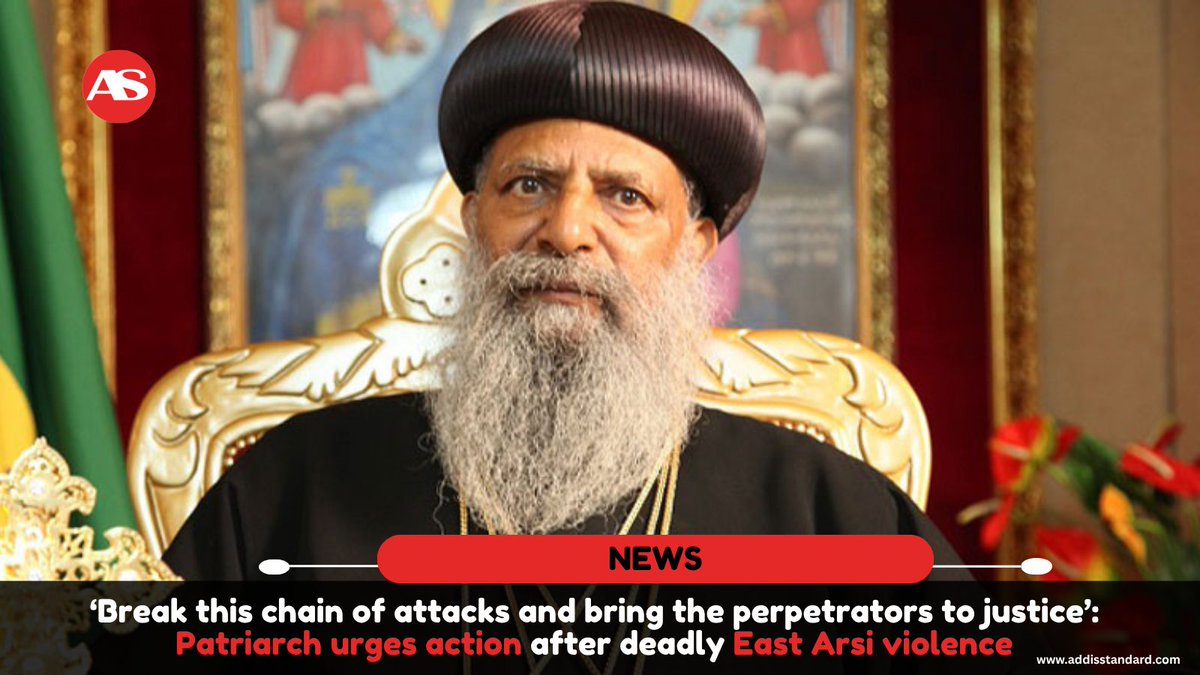
News: ‘Break this chain of attacks and bring the perpetrators to justice’: Patriarch urges action after deadly #East_Arsi violence
The Patriarch condemned the latest attacks in #Aseko, #Shirka, #Honkolo_Wabe, and #Munesa districts of the Arsi Diocese, describing them as a grave assault on both human life and religious freedom.
“Break this chain of attacks and bring the perpetrators to justice,” the Patriarch appealed to security officials and government authorities. “History will judge you by the price you pay for the safety of citizens during your tenure.”
https://t.co/QQmVaVB6Qh
The academic and commentator Ezekiel Gebissa on what the sham election in Ethiopia will mean for the country and the wider region. And on why the Western media, hitherto his cheerleaders, appear to be throwing him under the buss.
https://t.co/9U9EyXUJxs
https://t.co/mT8FYkeaUX
Hilina Berhanu Degefa and Emebet Getachew Abate capture Ethiopia’s ongoing election through a word they gathered from Ethiopians themselves: ቅንጦት, qintot, meaning “luxury” or “extravagance.” In the Ethiopian context today, that word is not merely linguistic. It is political testimony.
It expresses the holistic feeling of many Ethiopians who are being asked to treat elections as a normal democratic exercise while their daily lives are governed by fear, insecurity, inflation, displacement, militarized local authority, shrinking civic space, and the unresolved trauma of war.
For many citizens, the question is not whether they can vote. It is whether they can leave home and return safely. It is whether their children can eat. It is whether their community will be protected from violence. It is whether political participation will expose them to punishment, exclusion, or retaliation.
That is why qintot is such a powerful description. It names the cruel distance between procedural politics and lived reality. A state may organize calendars, debates, registrations, digital systems, party lists, and polling stations. But technical preparation cannot substitute for substantive democratic conditions.
An election conducted while large parts of society are trapped in survival cannot be celebrated as democracy simply because it follows administrative procedure. Numbers are not legitimacy. Ballots are not freedom when fear governs the voter before election day even arrives.
Ethiopia’s crisis is not the absence of electoral performance. It is the normalization of electoral ritual amid national suffering. The danger is that elections become a managed spectacle of continuity, while the deeper questions of peace, justice, accountability, inclusion, and genuine political competition are postponed again.
Democracy is not a luxury. But under Ethiopia’s current conditions, meaningful democratic participation has been made to feel like one.
That is the tragedy captured by qintot. And it should trouble anyone who still believes Ethiopia deserves more than politics organized around survival.
A group of holders of Ethiopia’s defaulted $1 billion eurobond will continue the process of suing the government after the latest round of restructuring negotiations fell through https://t.co/5ulIpxTQYJ
Deeply unfortunately muzzling of media in Ethiopia that will deny citizens and anyone outside the country of monitoring the conduct of polls or having much faith in the outcome.