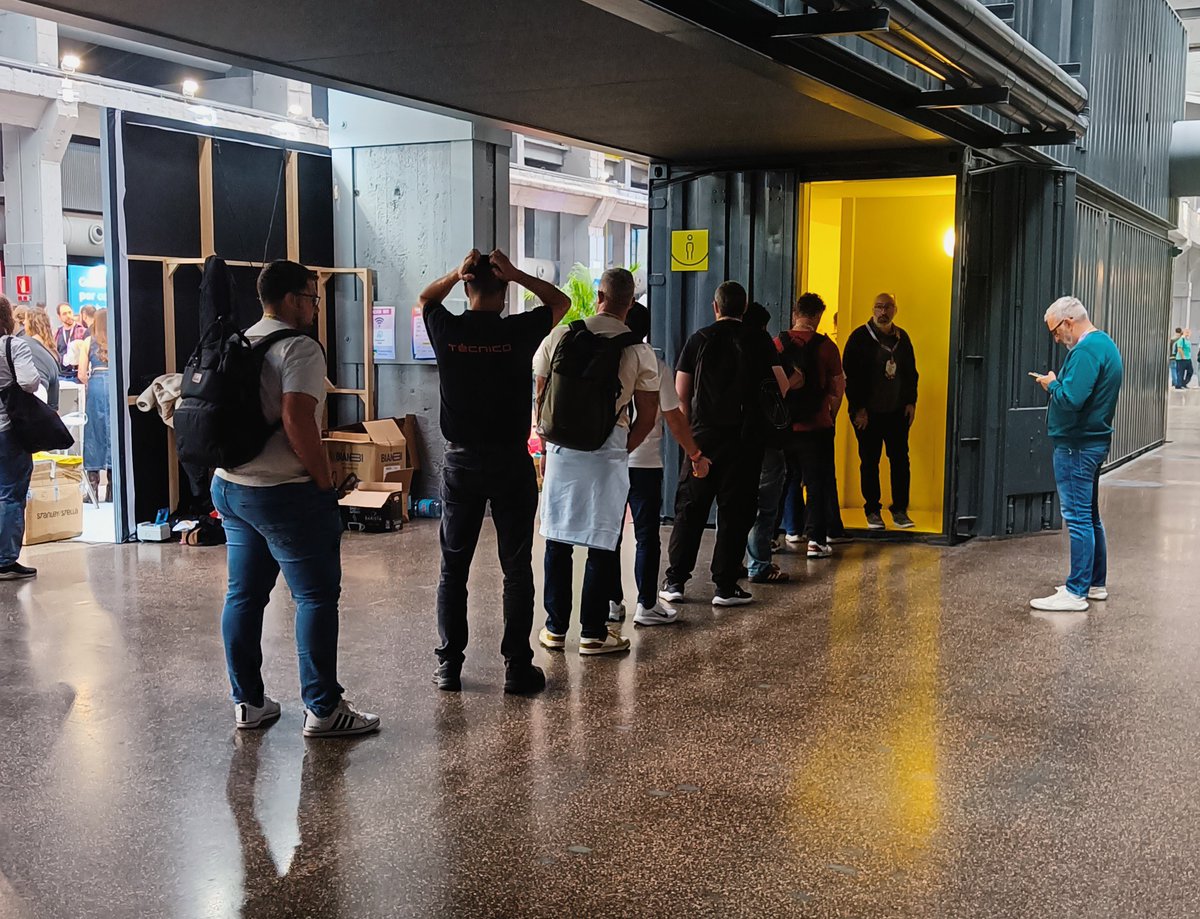
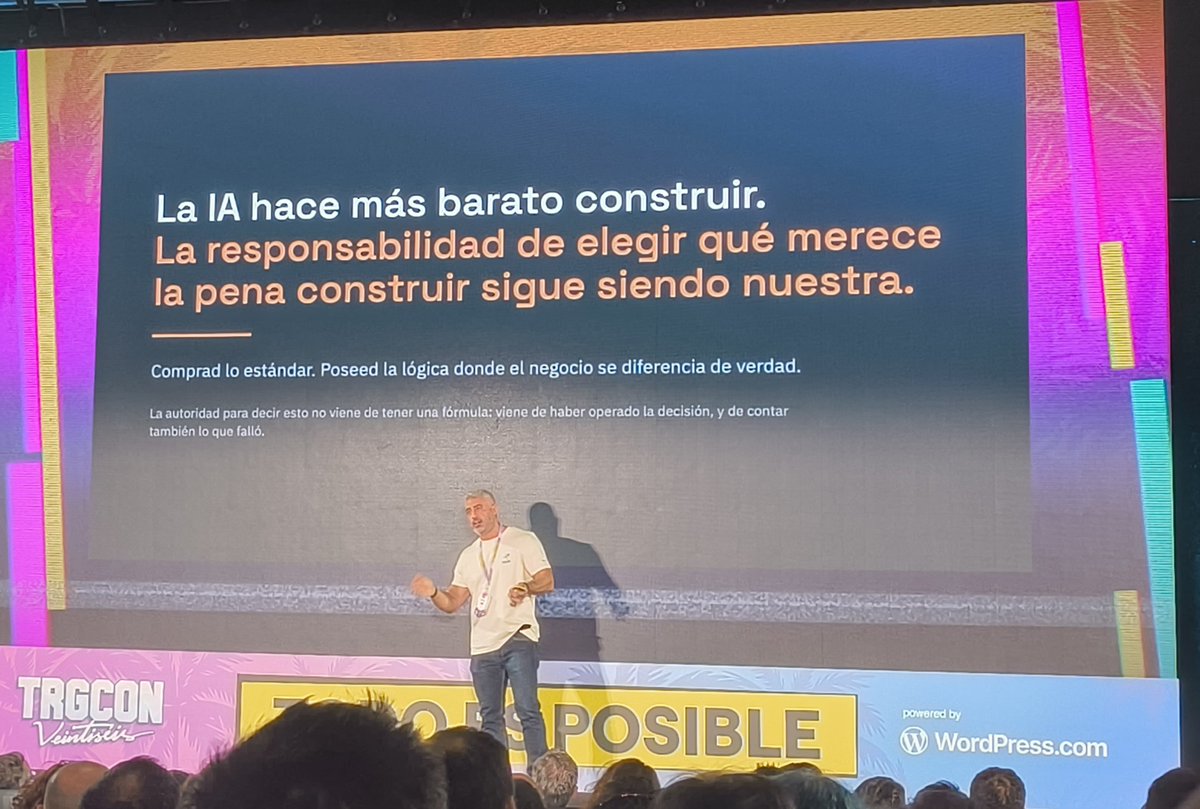
Ayer me regalé un par de horas para recordar, y reflexionar sobre lo vivido hace unos días en la #TRG26. Y lo hice a mi manera, escribiendo. Os dejo el resultado por aquí https://t.co/laYXe6kOof. Gracias una vez más a todos los tarugos @tarugoconf
yo si que os voy a contar un secreto que por lo visto no sabíais.
como tengáis la valentía de empezar a picar vuestras propias librerías en vez de usar soluciones que ya existen y que han sido testeadas durante muchos años por millones de personas, os falta campo para correr hijos de perra, os rajo en diagonal.
la vasta mayoría de vosotros no sabéis que coño estáis haciendo. se os considera programadores porque os suena de algo eso de apilar líneas de código y hace unos años, en la uni, conseguisteis instalaros en visual code. no por otra cosa.
de ninguna manera os pongáis a reinventar la rueda. es muy importante que entendáis que, estadísticamente hablando, sois ineptos. os debéis limitar a instalar las librerías que ya existen y usarlas porque cualquier otra cosa será un desastre en absolutamente todos los sentidos. cualquier librería que hagáis será más lenta, más inestable, más vulnerable, más tosca de usar y peor documentada. tendrá bugs que os matarán a pellizcos, tendrán edge cases que aparecerán en el peor momento, etc…
“no, pero es que es supply chain attacks…” jose manuel, escúchame, el supply chain attack se arregla poniendo un cooldown period de 2 semanas.
“ya, pero y aquella vez que casi cuelan un exploit en XZ…” josé manuel, escúchame, casos así ha habido 2 o 3 en lo que llevo yo en la industria (y llevo aquí desde antes de que tú nacieras), y siempre la comunidad los ha pescado ANTES de que llegasen a producción.
“ya, pero es que si es mi código podré arreglarlo sin esperar a nadie” josé manuel… te lo pido por favor… no te inventes situaciones imaginarias para justificar locuras. Las librerías más usadas tienen ejércitos enteros de peña que se organiza para parchear lo que haga falta, en tiempo récord, mientras tú estás babeando sobre la almohada y rascándote la nalga derecha en sueños.
No hagáis tonterías. El software ya de por sí es suficientemente vulnerable e inestable como para que vosotros os pongáis a inventar nuevas maneras de que todo sea peor.
no elaboro más
Espera que lo entienda. En vuestro propio blog dice que parte de vuestra instrucción era:
“malicious file download and execution by monitoring for curl processes downloading bash scripts to /tmp followed by bash execution”
Entonces el modelo fue a probar una URL de “oh sorpresa” su creador: Alibaba porque seguramente conoce más que bien porque nadie le especificó nada más para cumplir con su operación
Llámame raro pero es todo menos inesperado que esa prueba la haya intentado contra Alibaba. En lugar de no sé contra la web pública de algún gobierno, eso si sería inesperado…
🤦🏾♂️ madre mía los asusta viejas. Mañana ya veo a más de un AI bro diciendo que los chinos nos cuelan problemas en sus modelos y bla bla bla
No os preocupéis que ahora todos vamos a dejar de usar DeepSeek y vamos a poner a nuestro fundational frontier model made in Spain Alia a currar para todos!
PD: por favor, nótese la ironía de mi última frase 😬
#TRG26 vuelve una y otra vez a los principios de arquitectura y el go to basic del desarrollo, es un principio en todas las disciplinas, los principios teóricos, de diseño y estructurales son básicos y los pilares de cualquier desarrollo, la herramienta es el lápiz no más
Un mantra muy útil en la vida es "tu falta de previsión no es mi urgencia". Meter prisas en el último minuto, cuando no se ha hecho nada en mucho tiempo es una forma de manipular muy habitual de los que se ven con la soga al cuello y pretenden trasladar su inoperancia a los demás. Te ponen tiempos cortos y te exigen tragar con carros y carretas porque el tiempo apremia y hay que sacar algo, lo que sea. Y si pones límites o exiges los mismos estándares que se necesitarían con mejor previsión te acusan de torpedear el proyecto o no poner suficiente de tu parte. No hay que permitir este tipo de manipulación. "Tu falta de previsión no es mi urgencia". A fuego.
Dato no mata relato, pero a ver si al menos nosotros mismos dejamos de creernos eso de que tenemos más vacaciones que nadie... y que, además, no las perdonamos.
A 33-year-old woman at MIT wrote the code that ran inside the Apollo 11 lunar lander, and 20 seconds before Neil Armstrong touched the moon, her program made a decision the astronauts didn't know was happening that was the only reason the mission didn't crash.
Her name was Margaret Hamilton.
She led the team writing every line of code that would fly humans to the moon and back. The part almost nobody knows is that she had to fight to be allowed to do the work at all.
Code in 1965 was not treated as real work.
Rockets were serious. Circuits were serious. Writing code was something the men at NASA thought secretaries could do on the side. Hamilton was told this to her face more than once.
So she started calling what her team did "software engineering."
She used the phrase on purpose. In meetings. In memos. To force people to treat it as a discipline instead of a chore. Colleagues laughed at her the first few times she said it out loud.
That phrase is now the name of the biggest engineering profession on earth.
The story of what her code did on July 20, 1969 is the one every kid should be taught.
Neil Armstrong and Buzz Aldrin were 3 minutes from touching down when the computer inside the lunar module started flashing an alarm.
1202.
Then again. Then 1201. Five alarms in four minutes. The computer was telling the astronauts it could not finish everything it had been asked to do.
The computer they were flying with had less memory than a modern microwave.
Someone on the checklist had left a switch in the wrong position, and a radar the astronauts did not even need right then was flooding the computer with data. It was eating around 13% of the machine's brain at the exact moment every second mattered.
In almost any other system, that overload would have frozen the machine.
A frozen machine 30,000 feet above the moon means a crash. It means two dead astronauts and a third one orbiting alone above them, waiting for a signal that would never come.
Hamilton's code did something else.
She had built the software with a rule almost nobody in her field was using at the time. When the machine ran out of room, it would not treat every task as equally important. It would look at the list of jobs it had been asked to do, throw out the ones that could wait, and keep running only the ones keeping the crew alive.
The radar was the low priority job.
The landing was the highest.
So the computer did what she had told it to do. It dumped the radar. It kept flying. The alarm was not a failure. It was the machine reporting that it was handling the overload exactly the way she had designed it to.
Down in Houston, a 24-year-old engineer named Jack Garman recognized the alarm from a test his team had run months earlier. He shouted "Go" to the flight controller. The controller shouted it up to the crew. The landing kept going.
Armstrong touched the surface with 25 seconds of fuel left.
The part that gets lost in every retelling is why Hamilton had built that safety net in the first place.
NASA had not asked for it.
She had added it on her own, years earlier, because her 4-year-old daughter Lauren had once crashed the simulator by pressing a button during a test. The button was one the astronauts had been told they would never press.
Hamilton wanted the code to survive that button press anyway.
Her bosses told her it was a waste of time. Astronauts do not make mistakes.
She insisted. The safety net went in.
Two years later, on the way to the moon, an astronaut left a switch in the wrong position. The exact class of mistake she had been told would never happen.
There is a photograph of her from that period.
She is standing next to a stack of paper as tall as she is. Every page in that stack is the code her team wrote for the mission. She is smiling at the camera like she knows something the rest of the aerospace industry has not figured out yet.
In 2016, Barack Obama put the Presidential Medal of Freedom around her neck and said the astronauts did not have much time, but thankfully, they had Margaret Hamilton.
Every autopilot in every plane you have ever flown on uses a version of what she invented. Every pacemaker. Every self driving car. Every satellite in orbit.
The idea that a machine should know which job matters most and drop the rest when it runs out of room is now the foundation of almost every safety system on the planet.
She wrote it because a 4 year old crashed a simulator and nobody else thought it was worth fixing.
The men in the room laughed at her for calling it engineering.
Then her code was the only thing in the sky that did not fail.