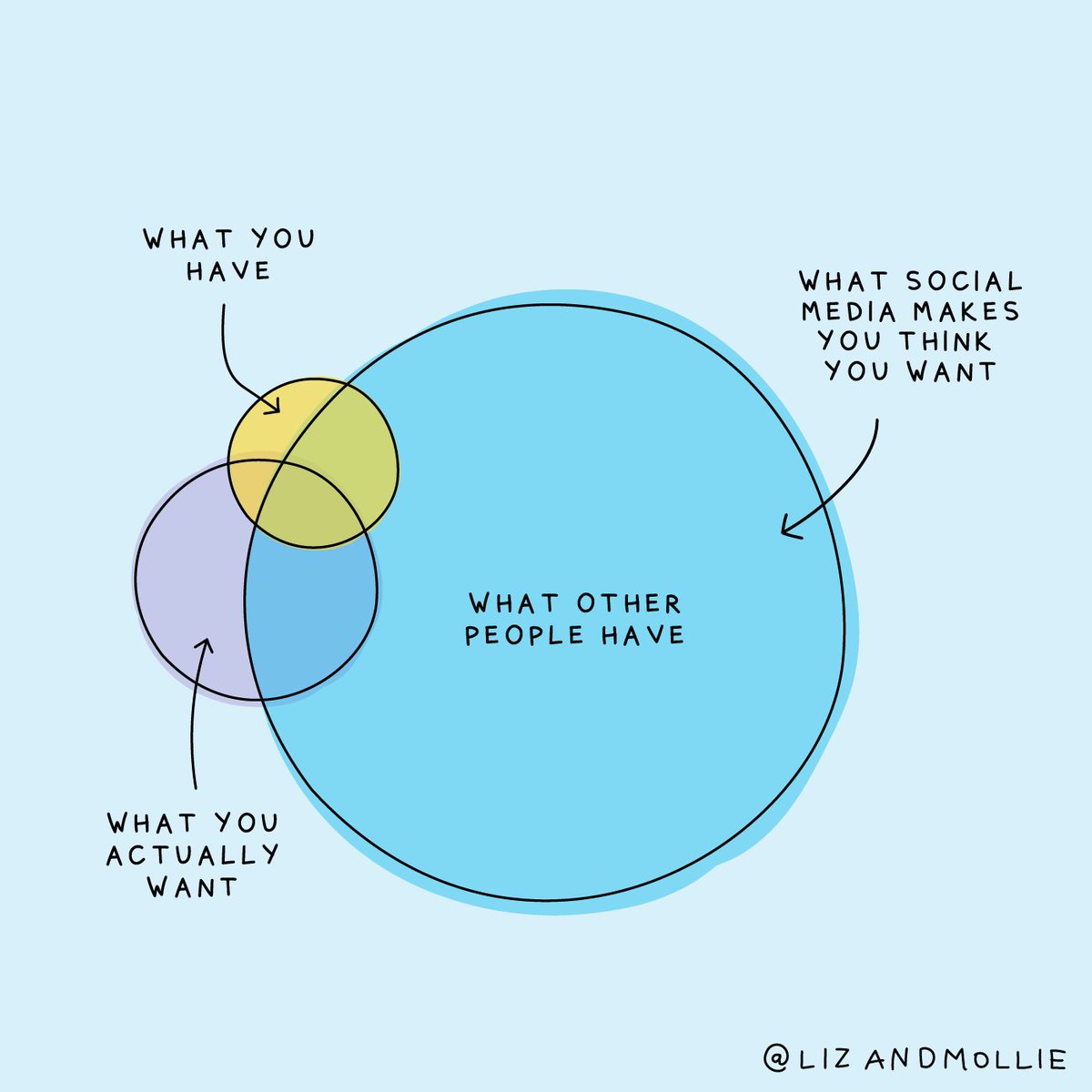
Comparison is not the thief of joy. Envy is.
Resenting others' success breeds misery and rivalry. Admiring their success brings motivation and learning.
We all compare ourselves to others. A key to growth and happiness is focusing our comparisons on people who inspire us.
You can create a revocable living trust (RLT) and be the trustee while you’re alive. Then you simply open a trust investment account at any major custodian (Fidelity, Schwab, etc.) and transfer shares/money from your current taxable investment account into the trust account.
The potential benefit is that funds held in the trust account wouldn’t have to go through the probate process.
You can manage your own RLT account like you would a taxable account titled in your name and avoid management fees.
The original post is terribly written. It claims Jobs use IRRevocable trusts to shield billions from estate tax. Although, that may be partially true, transferring assets to an irrevocable trust might be considered a completed gift, and therefore still subject to estate taxes and/or use his lifetime exemption. It’s way more nuanced than the OP suggests.
Lastly, there is an unlimited marital portability rule where his spouse could get his entire estate without tax…for now. This portability rule is in effect regardless of the assets being in a trust or not. Once she passes away, if the assets are large enough, there’s a chance the estate could be taxed.
Other Specialized Planning
68. Psychological and money advice for a recent divorcée
Not all financial decisions are as simple as "VOO and chill."
https://t.co/nQaqShrpOE
Hearing and seeing the "VTSAX and chill" or "Just buy VOO, you don't need an advisor" makes me laugh. Here is a back-of-the-napkin 60+ item list I put together in about 10 minutes of some of the ways we've helped clients (so far) in 2024.
Investment Planning
1. TIPs ladder construction and implementation for income in retirement
2. Account consolidation to simplify household financials
3. Optimizing large cash positions held in investment accounts (Roth IRA in some cases) at a previous advisor
4. Recommendation to not purchase an annuity due to client’s income, risk, and legacy preferences
5. Recommendation to purchase an annuity for a client with a “safety first” income preference
6. Reverse mortgage planning for a client with a large home equity value
7. “Rescuing” a client from a portfolio with 280+ positions at a previous advisor
8. Reallocated bonds into other accounts than Roth IRAs (aka Asset Location)
9. Implemented a 401(k) roll-in to isolate after-tax basis in a Traditional IRA for Roth conversion (tax efficiency strategy)
10. Employer stock sale to fund home building (tax planning and investment planning)
11. Navigating the payoff of a large margin loan opened by the client's previous advisor
Insurance Planning
61. Health insurance decisions (with employer, before Medicare, and enrolling in Medicare)
62. Facilitating the payout of life insurance death benefits
63. Analysis and recommendations for liability insurance and umbrella insurance
64. Analysis of perpetual homeowners insurance only available in Maryland
65. Long-term care insurance/plan funding
66. Disability insurance claim negotiation with insurance carrier
67. Purchase and/or surrender decisions for permanent life insurance
they're going to give total control to an advisor?
Nope, the goal is collaboration. Helping the client make the best possible decisions for their financial life. Managing their assets together. Win-win.
A new client said, "I spend too much time and energy on this [thinking about finances]. I would love to spend less energy on this."
They've been successful DIY investors up until this point. Now, they're retired and want to enjoy retirement.
Does that mean that...
Managing expectations is one of the biggest life hacks.
When it comes to investing and portfolio construction, it's one of the most important things.
If you can't handle a potential -40% decline in a 12-month period, you're not going to be a great investor in equities.
For some time now, S Corps have been growing in popularity among small business owners.
Why?
Mostly because of self employment tax savings
I’ve read numerous comments and threads across social media suggesting that all small business owners should be S Corps
Of course, it might not surprise you that an absolute recommendation toward a particular corporate structure is silly
Not every business should be an S Corp
For some, it can be a really great move
For others, it can be horrible
How do you decide?
Well… you need to understand more about them
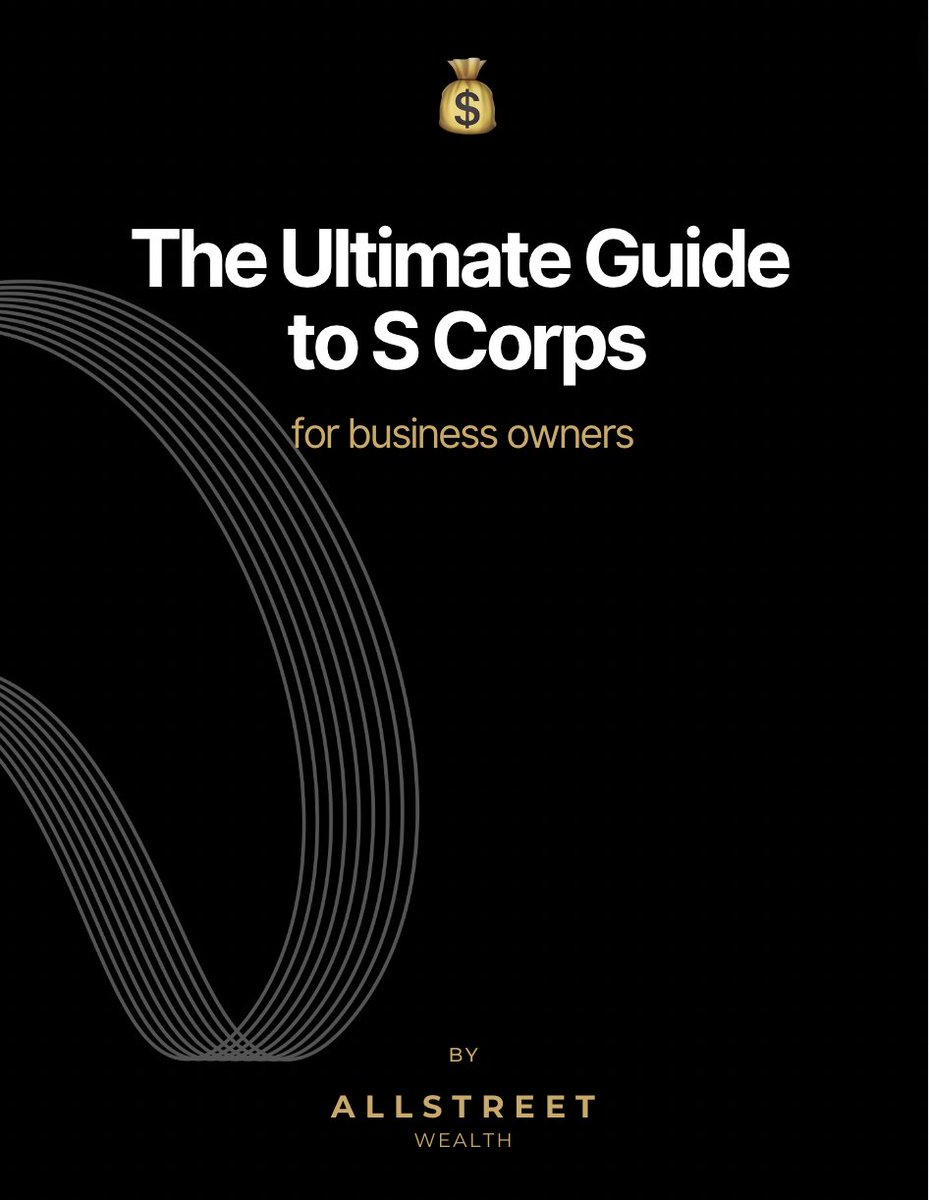
So I created the ultimate guide to S Corps for you
It is 19 pages long
It covers:
- The different types of entity structures
- How they are taxed
- The benefits of an S Corp
- How self employment taxes work
- The qualified business income deduction (QBID)
- PTET
- Accountable plans
- Tax planning moves to consider
- How S Corps can impact solo 401(k) contributions
- Downsides of them
- Why real estate typically should not go into S Corps
- How to set one up
- Selling your S Corp
- Etc.
If this interests you, just like and retweet this post and I will DM you the guide at the end of the day
These are things business owners need to be aware of and understand
This will also be the free download when you sign up for my newsletter
Jim Simons, one of the greatest investors of all time (that a lot of people have never heard of!), passed away last month. Just how good was he? He blows Buffett out of the water in terms of returns.
Simons had annual returns of 66% between 1988 to 2018.
His strategy?
Simons and his team used data--mountains of it. They used mathematics and data to take an emotionless approach to quantitative investing.
Another wild part is that Simons was quoted saying, "We're right 50.75% of the time...but we're 100% right 50.75% of the time. You can make..
Tax planning is one of the areas in which we provide the most value, *especially* in retirement.
- What accounts are best to draw from first?
- How do different withdrawal strategies impact your taxes this year and over your lifetime?
What are the top concerns for pre-retirees and those in retirement?
Notice that making investment decisions is only one piece of the puzzle.
#retirement





![dougLPP's tweet photo. A new client said, "I spend too much time and energy on this [thinking about finances]. I would love to spend less energy on this."
They've been successful DIY investors up until this point. Now, they're retired and want to enjoy retirement.
Does that mean that... https://t.co/ZxZZnpsNHi](https://pbs.twimg.com/media/GQC7aSTXgAE-ig5.jpg)