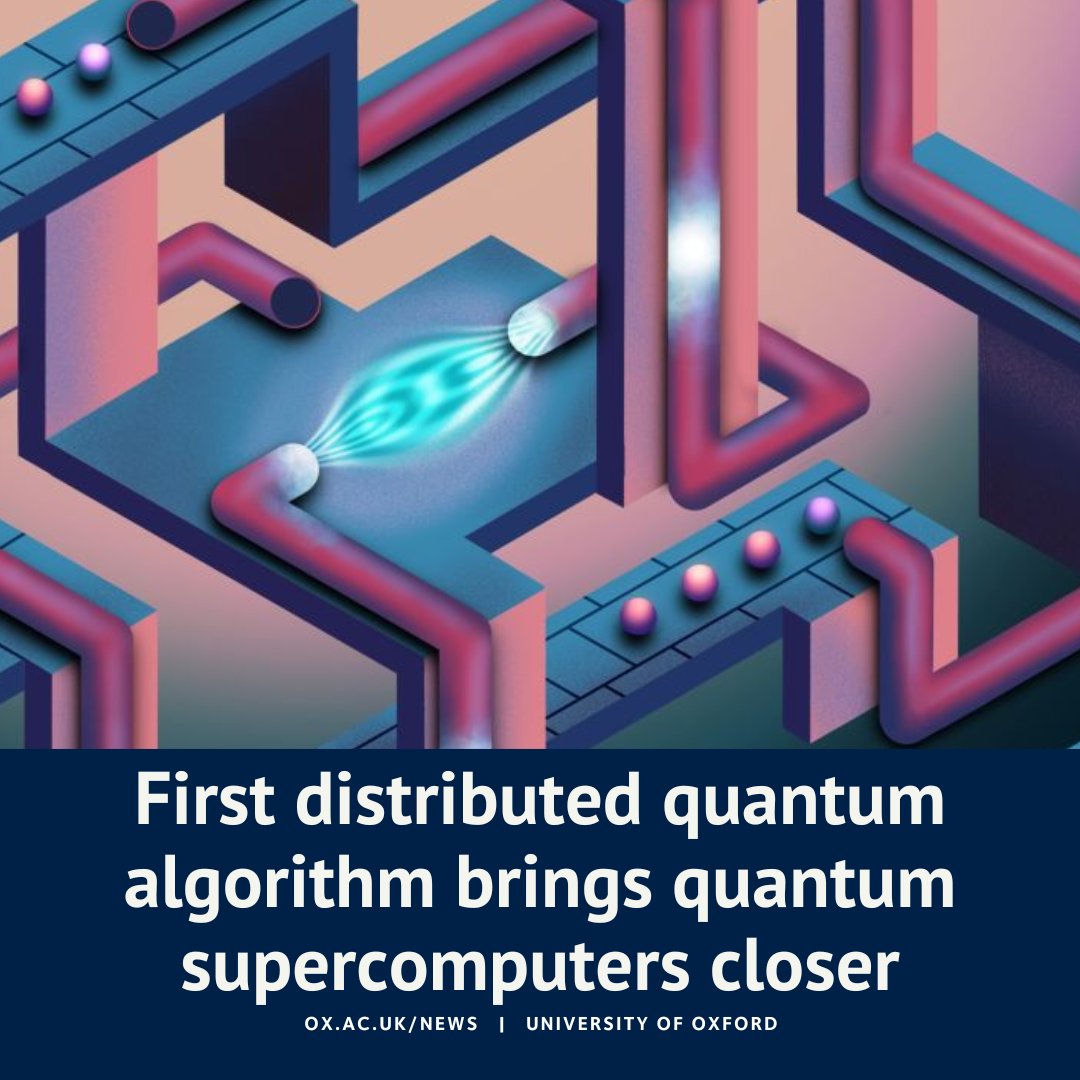
Using a photonic network interface, scientists from @oxfordphysics have successfully linked two separate quantum processors to form a single, fully connected quantum computer, paving the way to tackling computational challenges previously out of reach.
More info ⬇️
Researchers from @OxfordPhysics have achieved a #quantum milestone by linking two separate quantum processors into a single, fully connected system.
The breakthrough in distributed quantum computing paves the way for scalable quantum supercomputers...
⬇️ https://t.co/6Fb86qSlZt
Really excited to share our recent research in which we demonstrated distributed quantum computations using two trapped-ion processors connected by an optical link!
https://t.co/MYYa89sIRA
Yesterday was the first day of the QCS Hub Project Forum, where we bring together researchers from across the whole Hub to share their progress. Here you can see @dougal_main talking about his work on Ion Traps. #QuantumComputing
"Never in history have the issues surrounding privacy of data and code been more urgently debated than in the present era of cloud computing and artificial intelligence," says QCS Hub's Professor David Lucas. "As quantum computers become more capable, people will
seek to use them with complete security and privacy over networks, and our new results mark a step change in capability in this respect."
https://t.co/Wt7MCNupNq
In our new preprint we show how a trapped-ion quantum network node can be made more robust and versatile by adding a second atomic species. We demostrate that we can keep ion-photon entanglement alive for more than 10 seconds!
@OxfordPhysics@QCSHub
https://t.co/ifXGc6eGPA
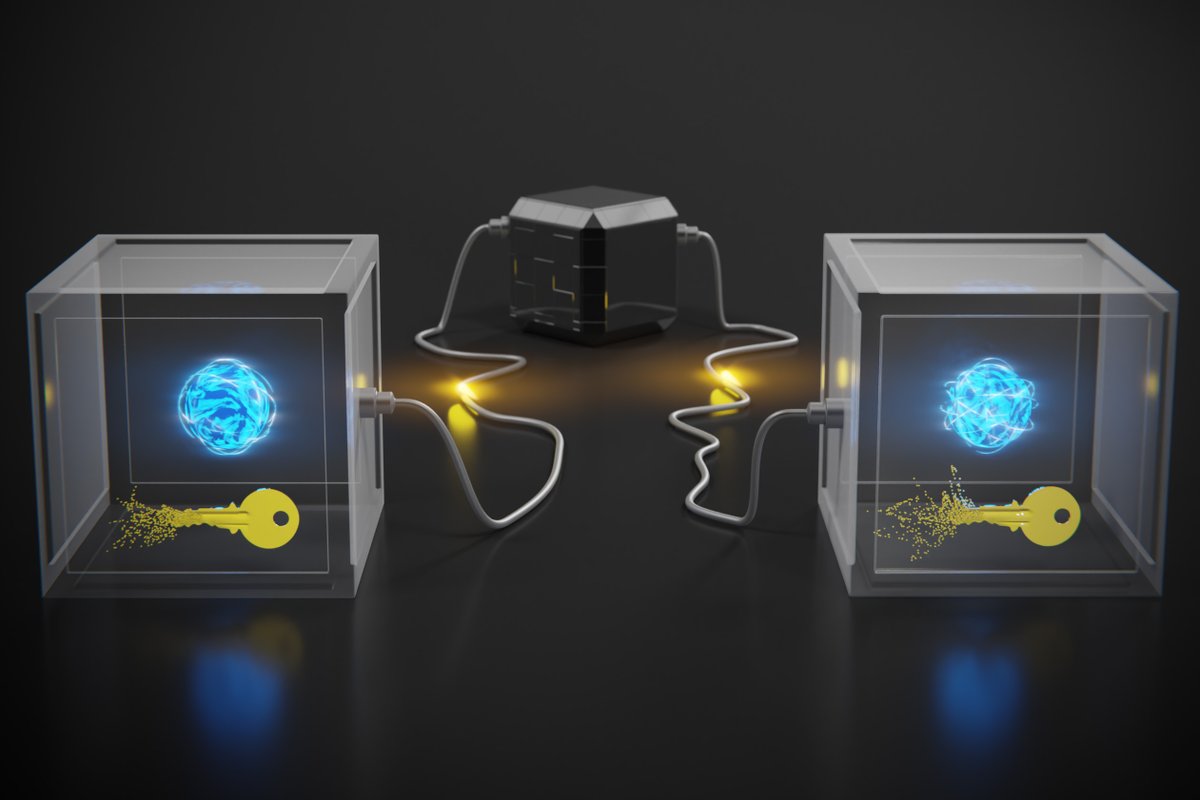
Got trust issues? (…regarding your quantum devices?)
Our demo of device-independent quantum key distribution (#diqkd) is now out in Nature: "Experimental quantum key distribution certified by Bell's theorem", https://t.co/G7Ql29ZFC2
("free" link: https://t.co/Jy1JCNV0HA)
1/4