In 2000, 3 days before Christmas, 3 LeT jihadis opened indiscriminate fire at the Red Fort and killed 2 soldiers of the Indian Army and 1 security guard.
Three days before Christmas.
By Christmas, one of them was in police custody. Paki Muhammad Arif, alias Ashfaq, was picked from an apartment more than 11 hours away by road. Along with a pistol and live rounds.
Much is said and written of police lethargy in this country but how often do you hear of such swift aprehension?
By March 2001, a chargesheet was already in with Arif and 21 other names.
Know when the trial began?
September.
Not for all 22, but only 11.
A Lashkar terrorist is caught with evidence and trial takes 7 months to even commence. When do you think the verdict could’ve come?
October 31.
2005.
Thankfully, the verdict is in favor of the State. Death penalty for Arif, Jail for his wife Rehmana Yusuf Farooqui (bitch is Indian, by the way).
So at least one jihadi is hanged. Finally!
Not so soon.
We have a “rule of law.” Jihadi goes to High Court.
Remember, more than 230 witnesses have been recorded in support of the verdict at the trial court. Of course the higher court would agree. It does. But takes two whole years.
Hang him now?
Nope. Supreme Court.
This one agrees with the verdict too. But takes...hold your breath...4 years to say so.
We’re in 2011 now. Second half. Anyway, Supreme Court says you should hand, so you should hang, no?
Nope. Review petition, curative petition, yada yada yada...by the time we’re in 2014, the whole legal paradigm has shifted. A foreign terror convict (not accused, convict) who should have been hanged...has been made the basis for a change in the very SOP of Indian judiciary. Allow me to explain:
Earlier review petitions were heard in a closed-door setting inside judges’ chambers. No oral arguments were allowed. The judges would simply read the written files and pass an order. This is called “hearing by circulation” because the case papers are literally “circulated” among the judges rather than argued orally.
In Mumahhad Arif’s 2014 hearing, the SC ordered that this be changed to “open court hearing” for death row inmates.
The whole process was reset. Typically, a review or curative petition is only allowed once, that too within 30 days of the verdict. This ruling practically rendered all past reviews in the case immaterial and allowed a fresh petition for an open court hearing.
The highest court of the land just offered the terrorist a lifeline.
The lifeline is grabbed.
A fresh review petition is filed. Heard. And dismissed once again. But now we’re closing 2022.
Hanging finally?
Nope.
There’s still a final ace left to be played: The President of India.
A mercy plea is filed with Ms. Murmu. She rejected the plea (thank goodness)...
TWO YEARS LATER.
So trial lost, HC lost, SC lost, two reviews lost, President lost...NOW can we hang him finally?
Nope. Now it’s back to SC with a curative plea.
Just for the plea to be heard, we go from 2024 to 2026.
Jan 21 this year the SC agreed to examine a fresh curative plea from Arif based on “evolving jurisprudence regarding the death penalty,” putting his execution on hold once again.
As of this tweet, the Pakistani jihadi who opened indiscriminate fire at random unsuspecting Indians at the heart of its capital...
Remains as far from the noose as he was two decades ago.
The story of Indian judiciary.
@Fintech03 Like most colonial orientalists, Prinsep heavily relied on unnamed Indian Pandits at the Asiatic Society. They did the labor of eye-copying raw inscriptions, cataloguing coins, and identifying phonetic links to modern Indian scripts.
Curiously the quadratic formula is known in Brazil as Bhaskaras formula. Turns out the Portuguese started translating Indian texts from 1519 and took it to Europe and the new world. Over the next 200 years, all manner of mathematical, medical and philosophical concepts boom in Europe, which for some reason are also in Indian texts.
Interestingly multiple scholars invent the same science around the same time unknown to each other like Calculus.
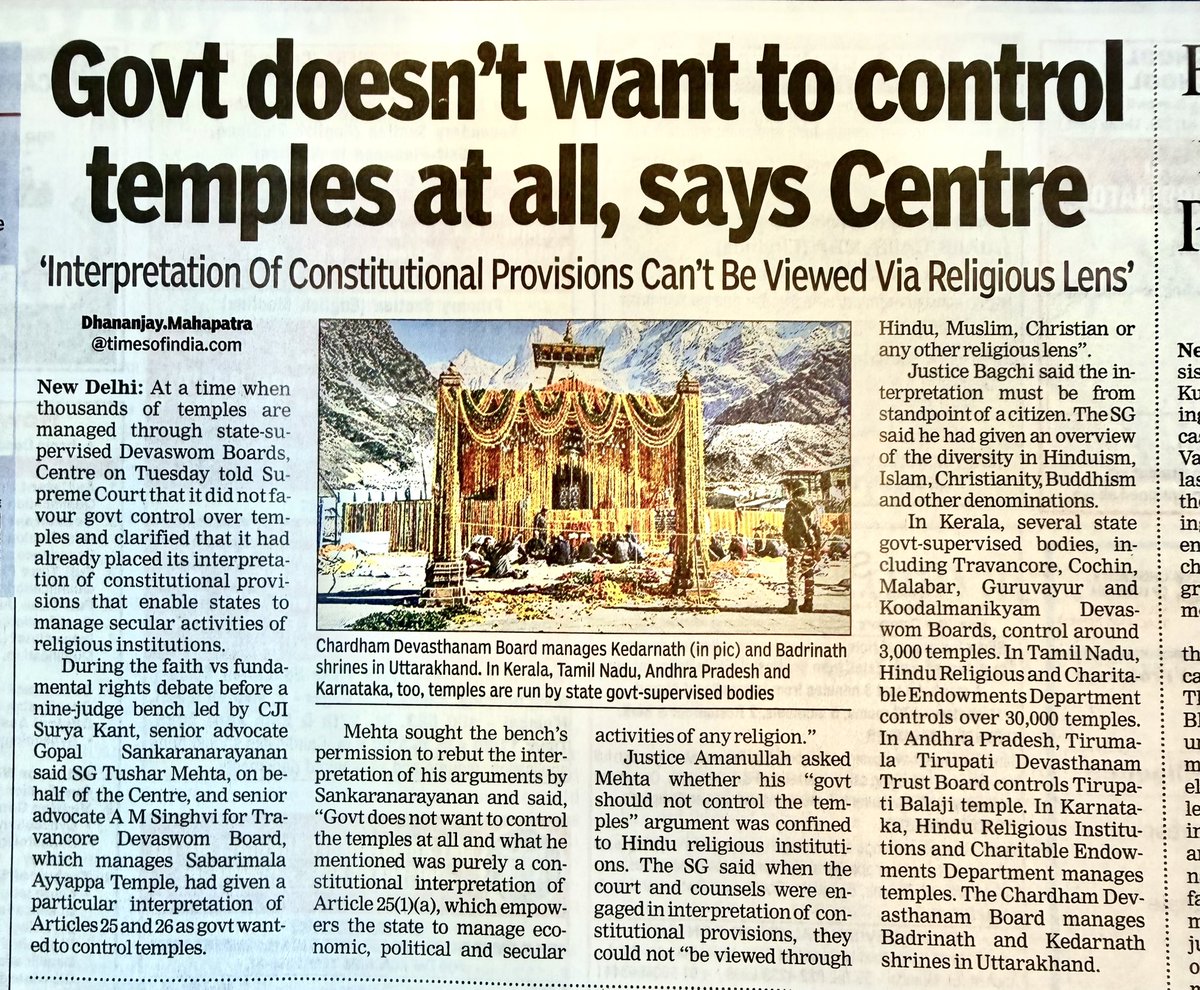
For the first time, an official stand of @narendramodi govt in Supreme Court - “Govt does not want to control temples at all”.
And for the first time, the Supreme Court has directly been told that it is not competent to decide on matters of belief and practices of religious denominations and should restrict itself to matters of constitution. Even the temple entry bogey has been called out.
A day of celebration for us, who have campaigned vigorously for this since the past decade. The battle will not be over, however, until every Hindu temple is freed from control of govt, politicians and babus.
Standing Without Belief
– The Sabarimala Review Series
Not everything ancient is outdated.
Not everything restricted is unjust.
#SabarimalaReview challenges us to ask:
Do we truly have the depth to understand what we are trying to change?
Do non-believers have the right to question the rituals of a faith without understanding or knowledge of it?
As said by Spiritual Sovereign H.H. Jainacharya YugbhushanSuriji Maharaj,
Matters of religion should be left to the followers of that religion.
Reflect before it’s too late.
#SaveReligion #JainacharyaOnSabarimala #RuleOfJustice #Sabarimala #Dharma
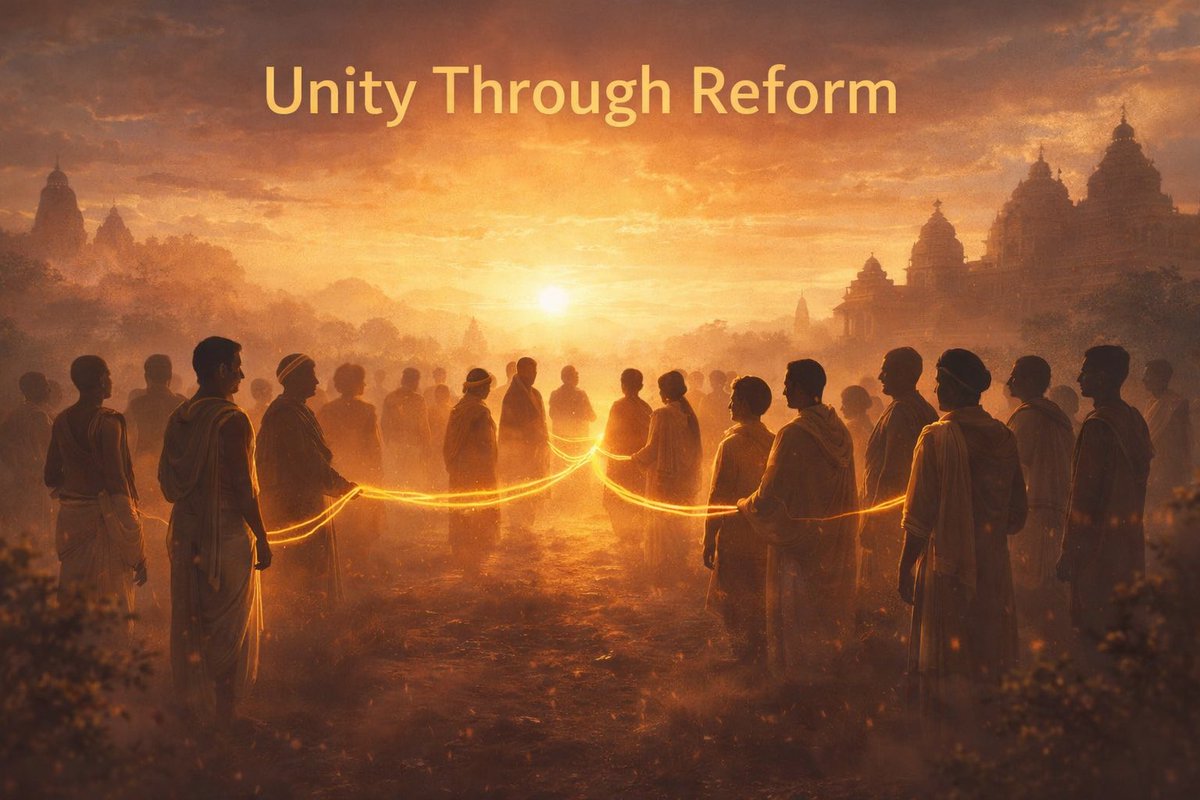
The “Unity Through Reform” Thread 🧵 – Igniting Hearts for a United Hindu Future
0/12
To our divided Hindu society: The rising anger among Brahmins and the intensifying friction with SC/ST/OBC communities is tearing us apart from within, breaking our collective spirit.
But history whispers a powerful truth – our greatest strength has always risen not from bitter conflicts, but from the courageous Brahmins who dared to challenge their own privileges, sacrificing everything to forge a more just, inclusive world for every soul.
This thread on the “Reformers Within” will move you, inspire you, and remind you: True dharma is unity in action. Let’s heal together. 👇
#HinduUnity #SocialReformers #Samarasata
“We weren’t born Muslim. Our roots were Yazidi, and we were made Muslim by force.”
Kurds break the silence. First Persians. Now Kurds.
The myth of ‘voluntary conversion’ is collapsing fast.
#GharWapsi isn’t propaganda. It’s history correcting itself.
Other examples include -
Deepa Āvali = दीपावली
Chitra Āvali = चित्रावली
Ranga Āvali = रंगावली
Patra Āvali = पत्रावली
Vansha Āvali = वंशावली
In Marathi the ल becomes ळ giving - दिवाळी, पत्रावळी, वंशावळी etc.
Can you add more words to this Āvali?
Aravali / अरवली ❌
ArĀvalli / अरावल्ली ❌
ArĀvali / अरावली ✅
Ara (अर) + Āvali (आवली) = ArĀvali (अरावली)
Ara (अर): means peak
Āvali / Ali (आवली / अली): means a "row," "range," "line," "series," or "continuous line".
Thus ArĀvali (अरावली) means a row or a chain of peaks
#WATCH | ‘Hindus in #Bangladesh Must Stay United, Indian Govt Must Take Cognisance’: Dr Mohan Bhagwat
On atrocities against Hindus in Bangladesh, RSS Sarsanghchalak Dr Mohan Bhagwat says,
“They are a minority there, and the situation is quite difficult… Hindus all over the world must help them, we must help them as much as we can, within our limits.
The only country for Hindus is Bharat. The Indian govt will have to take cognisance of this. They will have to do something. Some things are disclosed, some cannot be. Sometimes there are results, sometimes there aren’t. But something has to be done.”
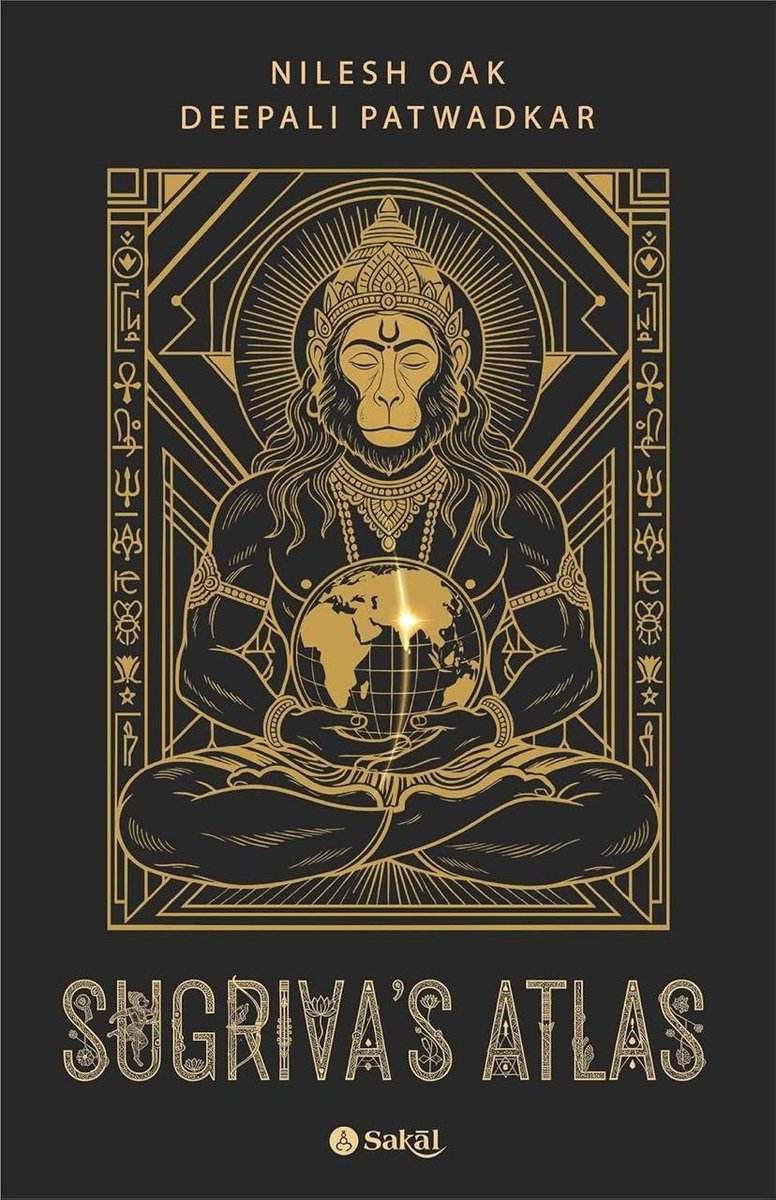
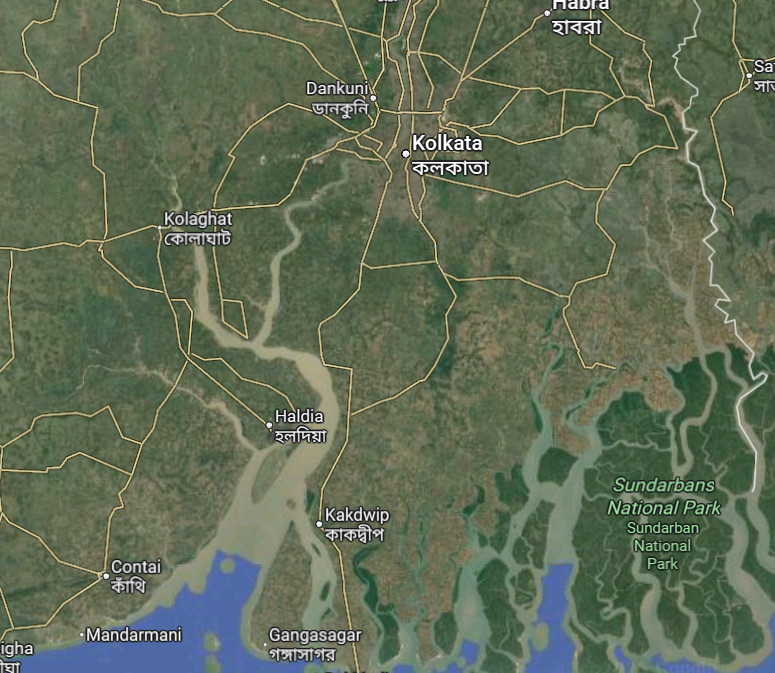
What is the connection between Kapil Muni, King Sagar, and travelling to Patala (South America) with the small island of Vanga Desha?
Find out, in Sugriva's Atlas @DPatwadkar@subbubooks@SakalPrakashan
https://t.co/OpBMBx4r6n
📙EDUCATION IN ANCIENT INDIA
A Child Learns Brahmi, 250 BC
The mounds along the Yamuna, near Haryana–UP border, have been yielding ancient clues. Among them a few terracotta plaques show kids learning to read and write Brahmi. This 🧵 begins with the first. Found near village Sugh.
📙WHERE IS SUGH?
- West bank of the Yamuna.
- Twenty-five km northwest of Saharanpur
- Fifty km northeast of Kurukshetra
- Sugh is likely Shrugna of Panini's Ashtadhyayi
📙DETAILS ABOUT THIS TERRACOTTA ITEM?
1⃣A boy squats on the ground. On his lap rests a takhti, a wooden writing board with a hole at the top for hanging (also called Paati, Palaka, लेखानपट्ट etc in Indian languages, still seen in modern era rural India).
2⃣Four lines of letters cover the takhti. Each line repeats the same letters.
3⃣These are the Brahmi vowels—the barakhadi:
𑀅 𑀆 𑀇 𑀈 𑀉 𑀊 𑀏 𑀐 𑀑 𑀒 𑀅𑀁 𑀅𑀂
अ आ इ ई उ ऊ ए ऐ ओ औ अँ अं
a ā i ī u ū e ai o au aṃ ah
4⃣The boy’s finger traces the letters. He is learning to read.
5⃣Some letters are worn; the right edge more so. Repeated lines and computers help recover the text.
6⃣Along the frame border are small symbols—śrīvatsa, lotus, etc. These match early Vaishnava art. This is likely a Hindu boy at his lessons.
7⃣Note the 12 letters per line. These are "Dvadashakshari" in Hindu traditions. Example devotionals such as ॐ नमो भगवते वासुदेवाय also 12 syllables.
8⃣This terracotta item was made in a mould. This makes it likely that the same mould was used to make many copies for wide distribution. This must have been popular item to produce in ancient India.
9⃣The shape of the letters belongs to the time of Ashoka. Paleographers date it between 300–200 BC. Thermoluminescence tests agree. When site was dug, coins found with and above this item date to 300–100 BC, corroborating the date.
📙WHAT DOES IT IMPLY?
1⃣By 250 BC, children in India were learning to read
2⃣Tools of learning do not spread overnight. Centuries are needed. A version of Brahmi existed and was popular long before Ashoka cut his edicts in stone.
3⃣Letters were being written on surfaces such as wood before 200 BC (beyond rock and brass)
4⃣The artisan carefully and accurately imprinted lines of Brahmi letters in the mould that made this terracotta piece. Implies artisan class was literate.
5⃣Many Indian kids still begin learning the alphabet with vowels equivalent, such as "अ आ इ ई उ ऊ", with their moms and grandmoms. Indian traditions have a very long history.
📙WHERE IS THIS, WHAT'S NEXT?
1⃣See this item in the National Museum, Delhi.
2⃣Almost all discoveries from Sugh remain unpublished. This ancient "kid learning" terracotta item has variants, all found near Yamuna, now in small museums in north India.
3⃣In a future 🧵, we shall meet an ancient terracotta piece that shows a girl writing Brahmi about 200 BC, now stored at Jhajjar Gurukul museum (Haryana).
Join us to launch the latest book of Nilesh Oak at
ORANGE CITY LITERATURE FESTIVAL – 7th Edition
🌍 BOOK LAUNCH: Sugriva’s Atlas
By Nilesh Oak & Deepali Patwadkar
Discover how Sugreeva’s instructions to the Vanara sena astonishingly map the Arctic Circle, polar daylight,aurora
NSS writes from southern India,
“Unexpected! It's crafted as a gripping tale. I reached the prologue. Looks like this actually needs a glossy illustrated colourful edition to take the world by storm!!!”
@DPatwadkar@kshitizfilms@MitraDesai@subbubooks@Sanjay_Dixit@SakalPrakashan
https://t.co/KTx4fKsTpf
Gods of Hindus: Destroying the Myths
This post is for those who mock Hindus because they don't understand Hinduism. Share it with them.
First of all, to understand Hinduism, you need to give up your point of view of religion and God. If you see Hinduism through an Abrahamic lens, you will not understand anything.
Let's start from the basics: there is a divine entity, who is called by many different names: Brahman (ब्रह्मन्), Purusha (पुरुष), Om (ओम्).
This Purusha is one, omnipresent, perfect, all-knowing, beyond the limitations of time and space, eternal, and possesses thousands of such qualities.
However, he is beyond our capability to perceive. We can't see, smell, touch, taste, or hear him. Only those with a pure mind can feel him in a deep meditative state.
So what about us common people? The universe around us is not separate from Brahman. We can observe his expression in the world around us.
We see his brilliance in the Sun, we see his power in the flashes of lightning, we see his perseverance in the flowing rivers. In the darkness of night, we feel his grace by looking at the stars, which remind us that he is always watching over us.
Even in animals, in a cow, we see an expression of his selflessness. She nourishes us; the sinless one harbors no hate against anyone. In the eyes of eagles, we see his determination.
In the teachings of Brahmins, we hear his speech. In the rule of Kshatriyas, we see his justice. In the work of a Vaishya, we see his zeal to make things better, and in the hard work of a Shudra, we see his efforts.
He is expressing himself everywhere, but only the wise ones see it, who are awake and aware.
What about those who can't even do that? They see great men and see his divinity expressing through them: a perfect human in Rama and his feats, his brilliant planning in the strategy of Krishna.
They say we have millions of Gods. No, we don't. We have one Brahman and a million expressions of the same divine entity. We see divinity in everything because the world around us is nothing separate from the ultimate divine entity सच्चिदानन्दस्वरूपः।