The feminization of the law prevents men from enforcing the moral code immediately and prevents police departments from preventing crimes because that, too, is now deemed a restriction of basic human rights. Trust in law enforcement needs to be restored so that laws can be enforced.
U.S. Forest Service law enforcement is now asking for the public’s help identifying a group of Indian nationals seen defacing Cathedral Rock in Sedona, Arizona, a sacred Native American site, with furious Americans demanding their immediate deportation.
@OCFireAuthority Have you consulted with the engineers at SpaceX? They have lots of experience with containment vessels, experiencing catastrophic failure from overpressurization.
I’ve mentioned something like this before, but, if any of my companies goes public, we will prioritize other longtime shareholders of my other companies, including Tesla.
Loyalty deserves loyalty.
@SawyerMerritt@SpaceX When I called, they said that it would be a random selection of who gets shares and how many. The representative that I spoke with didn’t have much more in the way of details.
We have nearly $300 million of client assets at Fidelity and $500 million with Charles Schwab.
We asked them about getting $SPCX shares for our clients and they said demand is insane and each client will be lucky if they get one share and there is no special carveout for $TSLA shareholders as I warned.
I hope the people we talked to were uninformed so we will try again, but this is about what I expected.
@StirlingForge Have the same thing happen with my model Y. I thought FSD had messed up until I saw the video. The person who almost hit me was on their phone.
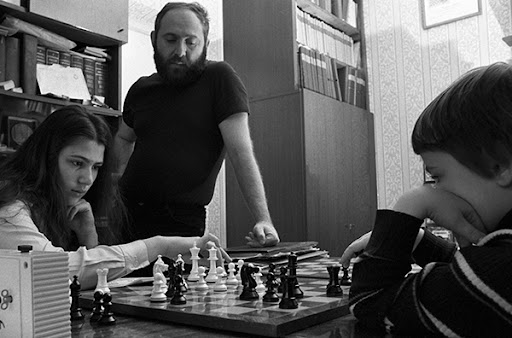
A Hungarian psychologist raised three daughters to prove that any child could become a chess grandmaster through early specialization. He succeeded. Two of them became grandmasters. One became the greatest female chess player who ever lived.
Then a sports scientist looked at the data and found something nobody wanted to hear.
His name is David Epstein. The book is called "Range."
The Polgar experiment is one of the most famous case studies in the history of deliberate practice. Laszlo Polgar wrote a book before his daughters were even born arguing that geniuses are made, not born. He homeschooled all three girls in chess from age four. By their teens, Susan, Sofia, and Judit were dominating tournaments against grown men. Judit became the youngest grandmaster in history at the time, breaking Bobby Fischer's record. The story became the gospel of early specialization. Pick a domain young, drill it hard, and you can manufacture excellence.
Epstein opens his book by telling that story honestly and then quietly demolishing the conclusion most people drew from it.
Chess works that way. Most things do not.
Here is the distinction that took him four years of research to articulate, and that almost nobody who quotes the 10,000 hour rule has ever read.
There are two kinds of environments in which humans develop expertise. Psychologists call them kind and wicked. A kind environment has clear rules, immediate feedback, and patterns that repeat reliably. Chess is the cleanest example. Every game ends with a winner and a loser. Every move is recorded. The board never changes shape. The pieces never invent new ways to move. A child who plays ten thousand games will see most of the patterns that exist in the game, and pattern recognition is exactly what chess mastery is built on.
A wicked environment is the opposite. Feedback is delayed or misleading. Rules shift. The patterns that worked yesterday may be exactly the wrong patterns to apply tomorrow. Most of the real world looks like this. Medicine is wicked. Investing is wicked. Building a company is wicked. Scientific research is wicked. Almost every job that involves a complex changing system with humans in it is wicked.
The Polgar sisters trained in the kindest environment any human can train in. Their success was real and the method was correct. The mistake was generalizing the method to fields where the underlying structure of the environment is completely different.
Epstein's research is what made the implication impossible to ignore.
He looked at the careers of elite athletes outside of chess and golf and found that the pattern was almost the inverse of what people assumed. The athletes who reached the very top of their sports were overwhelmingly people who had played multiple sports as children, specialized late, and often switched disciplines well into their teens. Roger Federer played squash, badminton, basketball, handball, tennis, table tennis, and soccer before tennis became his focus. The kids who specialized in tennis at age six and trained year-round for a decade mostly burned out, got injured, or topped out at lower levels of the sport.
The same pattern showed up everywhere he looked outside of kind environments. Inventors with the most patents had worked in multiple unrelated fields before their breakthrough work. Comic book creators with the longest careers had drawn for the most different genres before settling. Scientists who won Nobel Prizes were dramatically more likely than their peers to be serious amateur musicians, painters, sculptors, or writers.
The skill that mattered in wicked environments was not depth in one pattern. It was the ability to recognize when a pattern from one domain applied unexpectedly in another. That kind of thinking cannot be built by drilling a single subject. It can only be built by accumulating mental models from many subjects and learning to move between them.
The deeper finding is the one that should change how you think about your own career.
Specialists in wicked environments often get worse with experience, not better. Epstein cites studies of doctors, financial analysts, intelligence officers, and forecasters showing that years of experience in a narrow domain frequently produce more confident judgments without producing more accurate ones. The expert builds elaborate mental models that feel comprehensive and turn out to be increasingly disconnected from the actual structure of the problem. They stop noticing what does not fit their framework. They mistake fluency for understanding.
Generalists do better in wicked domains for a reason that sounds almost mystical until you understand the mechanism. They have less invested in any single mental model, so they abandon broken models faster. They are used to being a beginner, so they are not threatened by the discomfort of not knowing. They have seen enough different domains that they can usually find an analogy from one field that unlocks a problem in another. The technical name for this is analogical thinking, and the research on it is one of the most underrated bodies of work in cognitive science.
The single most useful sentence in the entire book is the one Epstein puts almost as a throwaway.
Match quality matters more than head start.
A person who tries six different fields in their twenties and finds the one that genuinely fits them will outperform a person who picked one field at fourteen and stuck to it on willpower alone. The lost years were not lost. They were the search process that produced the match. Every field they walked away from taught them something they later imported into the field they finally chose.
The reason this is so hard to accept is cultural, not empirical. We tell children to pick a path early. We reward the prodigy who knew at six. We treat the late bloomer as someone who failed to launch on time, when the data suggests they were running an entirely different and often more effective optimization process underneath.
The Polgar sisters were not wrong. The conclusion the world drew from them was.
If your environment is genuinely kind, specialize early and drill hard. If it is wicked, and almost every interesting human problem is, then the people who win are the ones who refused to specialize until they had seen enough to know what was actually worth specializing in.
You are not behind. You were running the right experiment all along.
Every one of these dots is an actual crash from the fleet. Real world speeds, collisions, and people. Not just the regulatory test cases.
The richness of this data is what enabled the result. With simulation we can replay the crashes and measure the forces on the human body model.
Then sweep through restraint deployment times to find that deploying earlier gives the time for the bag to be inflated optimally and seat belt pretension before the occupant has moved out of position.
But it takes time for crash accelerometers to be certain. Lowering that time threshold risks unwanted deployments.
Using vision gives the vehicle confidence to reduce that timing. The camera sees the impending impact and together with the sensors tell the restraint controller to reduce the filter and act sooner.
The Y Axis shift in Predicted Injury Severity is based on sensors in the human body models from rerunning the crash simulations with the faster detection threshold.
Such a reduction in injury severity across the spectrum is unheard of, let alone doing this via an update over the air.
I'm extremely proud of the analysis team's work and dedication. Going above and beyond to ask "we have the safest car on the road but can we make it even safer?" And then working with the vision team to build the predictions needed to make it happen. Rigorously tested in simulation and then in physical crash testing. Now deployed and improving lives.
I watch the video on loop and just imagine each dot, a person.
Sour candy can actually help halt a panic attack in its tracks.
Mental health experts explain that the extreme, shocking tartness serves as an instant grounding tool: the intense sensation yanks your focus away from racing thoughts and anchors it firmly in the here-and-now taste on your tongue.
This sudden shift can break the spiral of anxiety, while the chewing motion and flood of saliva trigger the body’s natural calming signals, giving you a quick sense of control when everything feels overwhelming.
It’s not a substitute for therapy or medication, but it’s a simple, portable sensory trick that many people find remarkably effective during acute panic.
Clinicians at Utah State University and elsewhere often recommend keeping a few pieces of very sour candy on hand as part of a grounding toolkit. That said, if panic attacks are frequent or severe, professional evaluation and treatment remain essential.
[Utah State University Extension. (2023). "Managing Anxiety with Grounding Techniques"]
The DOJ's deadline to charge Fauci for lying under oath about funding gain-of-function research in Wuhan is in 6 days. We can’t allow the statute of limitations to run out. He MUST be charged!
Agree? RT.





![Rainmaker1973's tweet photo. Sour candy can actually help halt a panic attack in its tracks.
Mental health experts explain that the extreme, shocking tartness serves as an instant grounding tool: the intense sensation yanks your focus away from racing thoughts and anchors it firmly in the here-and-now taste on your tongue.
This sudden shift can break the spiral of anxiety, while the chewing motion and flood of saliva trigger the body’s natural calming signals, giving you a quick sense of control when everything feels overwhelming.
It’s not a substitute for therapy or medication, but it’s a simple, portable sensory trick that many people find remarkably effective during acute panic.
Clinicians at Utah State University and elsewhere often recommend keeping a few pieces of very sour candy on hand as part of a grounding toolkit. That said, if panic attacks are frequent or severe, professional evaluation and treatment remain essential.
[Utah State University Extension. (2023). "Managing Anxiety with Grounding Techniques"]](https://pbs.twimg.com/media/HHtzh4BWsAgoTkg.png)




