"My students commented on how the bridge looked almost like a toy as it collapsed," says @BUCollegeofENG's @dpholmes, who discussed the #FrancisScottKeyBridge disaster with his students. He delves into their class discussion in the Q&A below ⬇️. @dougmost https://t.co/YWViY7SIVI
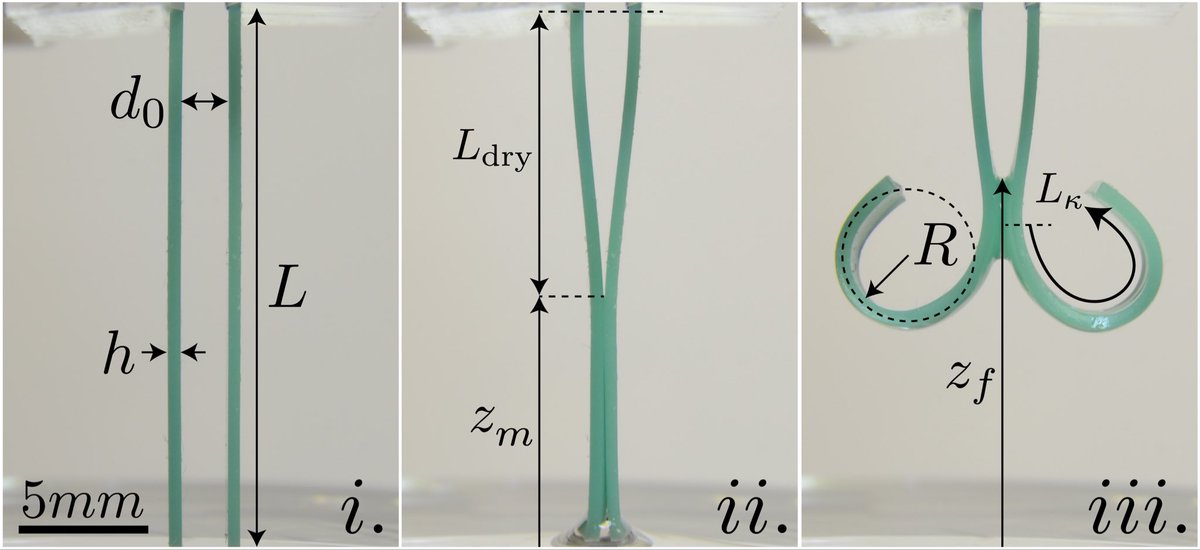
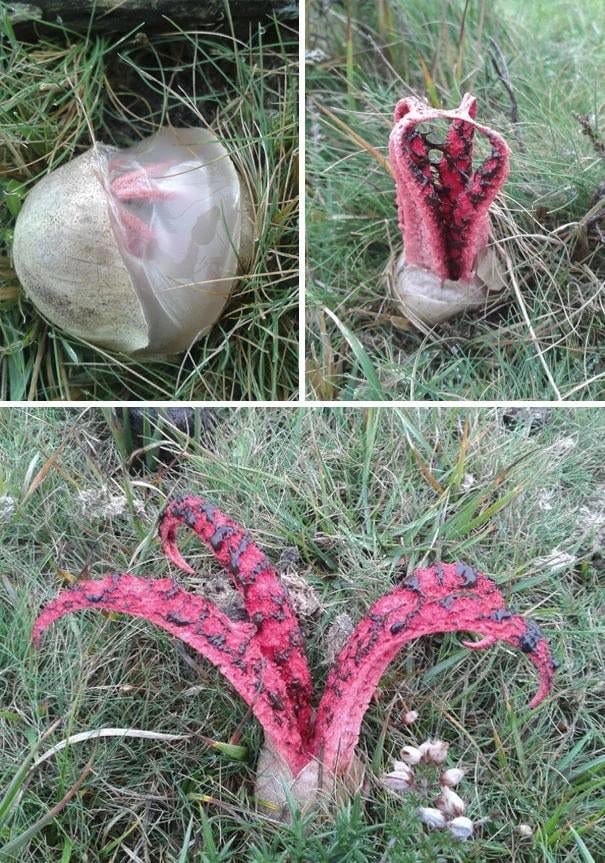
The opening of the the Devil’s Finger fungus looks analogous to some work we did with @LiquidsLab did a while back looking at bilayer bending from swelling vs capillary adhesion.
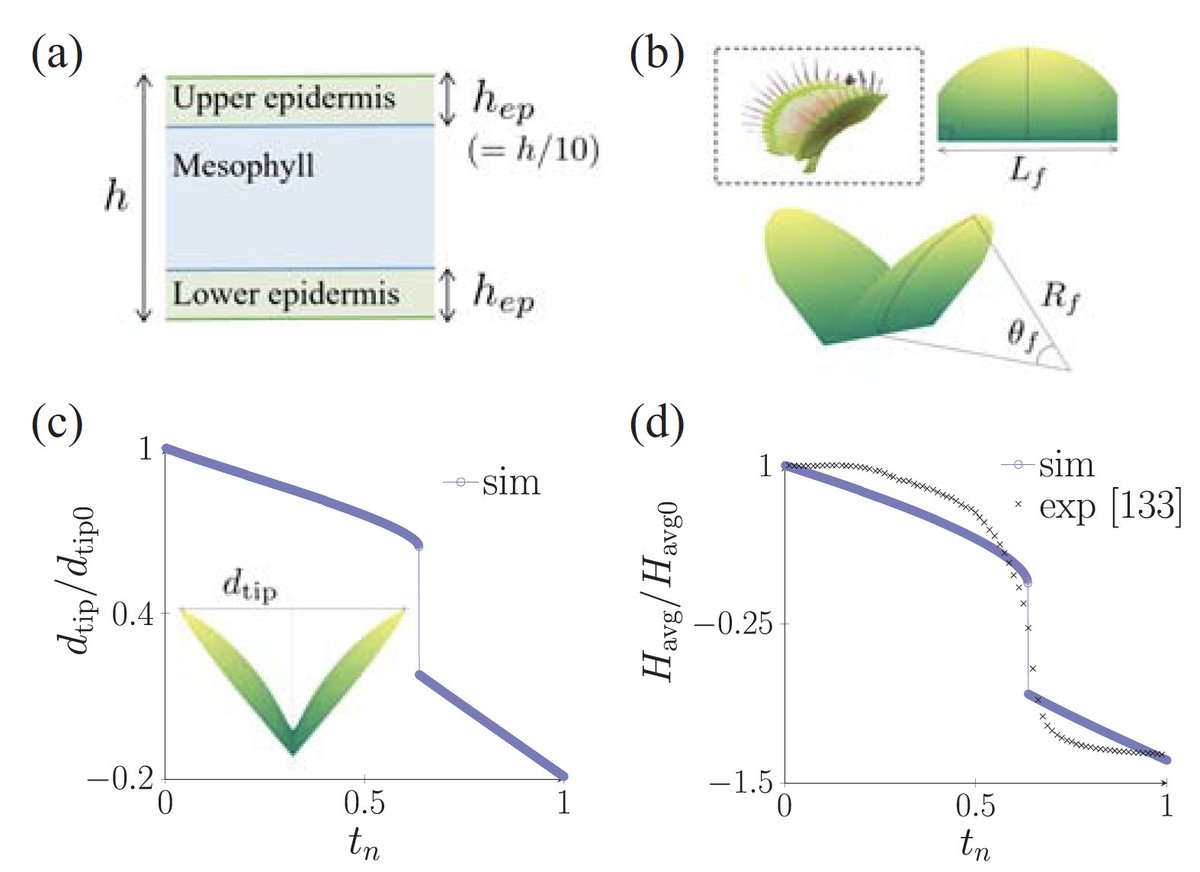
To demonstrate the strength of this model, we use to predict the shapes of wavy leaves (sect. 7.1), the snapping of a Venus flytrap (sect. 7.2), and the voltage-induced buckling of dielectric elastomers.
These predictions are made from simple experimental measures of strain.
We've been working for years to develop a general theory that describes how slender structures respond to non-mechanical stimuli (e.g. swelling; growth; electromagnetic fields).
Today we are delighted to present our:
"Stimuli-responsive shell theory"
https://t.co/CBWVaWKOKl
Natural stretch and natural curvature can be measured by considering how two orthogonal beams at each point stretch and bend.
These are the "natural" quantities because beams are not constrained by geometry.
Reading a novel, I feel personally attacked:
“Would you by any chance be familiar with certain notions concerning bifurcations in dissipative structures?”
“I most certainly would not. In fact if I had to be I hope I’d kill myself.”
- Denis Johnson (Already Dead)
@csantangelo314 @softmattrtheory @AlexanderRKlotz I only yesterday learned the trick to multiple by 9 using your fingers.
(put out your hands, going from left to right go to the digit you'd like to multiply by 9. bend that finger. the # of fingers to the left of it is the 10's digit, to the right the 1's digit.)
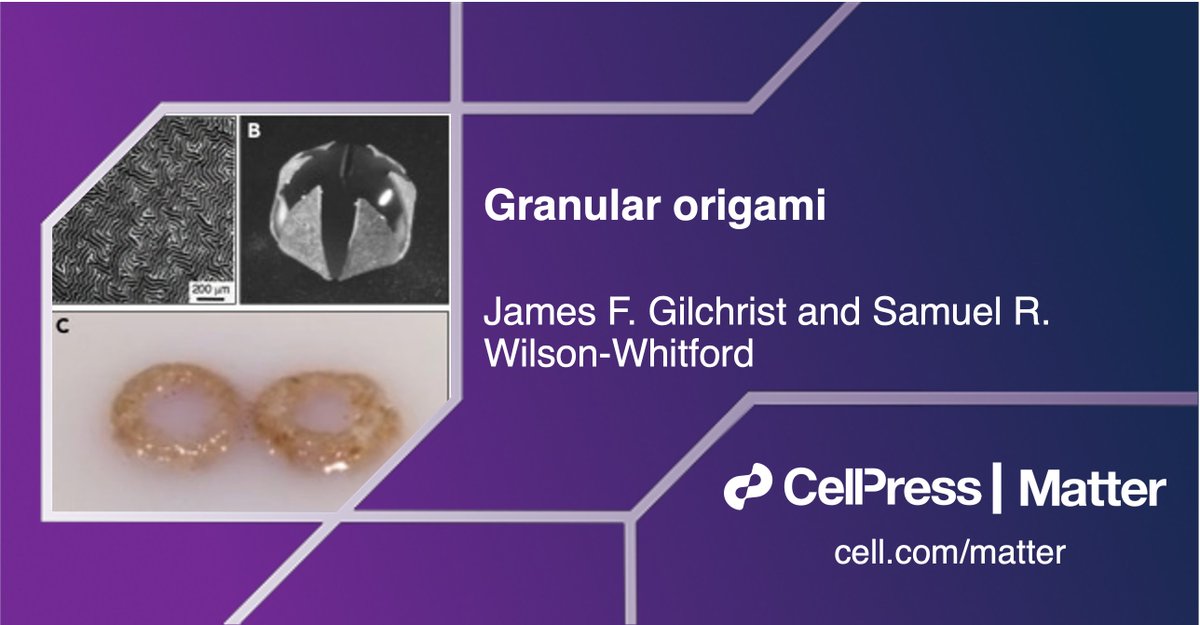
James F. Gilchrist and Samuel R. Wilson-Whitford highlighted the work of Arman Guerra and Douglas P. Holmes about elastogranular sheets in #MatterIssue46! @dpholmes, @BostonUniversity
Read more: https://t.co/MJimLIvr7l
@mengersponge@crollab I ended up using this paper as the (rough outline) of how to model origami structures - great paper!!
In class, we folded waterbomb bases (various n) and miura-ori. Then we did a few demos examining d-cones. Fun lecture!
I'd like to include a lecture in my Structural Mechanics course on origami.
These are 4th year MechE's. We will fold the miura and waterbomb base in class.
Origami Twitter: What core ideas/concepts in origami should students at this level be introduced to?
@zhigangsuo I wonder if we can be more creative in our mechanical reuse. I think mechanical metamaterials can play a role here. If structure and shape determine function, can we apply these ideas to materials that are difficult to recycle?