Introducing Roon for Doctors.
Medicine at its best is a profoundly collaborative craft — and we’ve built a new home online for exactly that kind of collaboration.
Doctors don’t fall in love with medicine through bullet points.
They fall in love with it through curiosity. Through debate. Through the thrill of reading something that changes how they think about a patient, a disease, or the practice of medicine itself.
We’re honored to welcome NEJM into the community and excited to build a new kind of home for medical learning — one that respects physicians’ time, but also protects the curiosity, rigor, and joy that brought so many of us into medicine in the first place.
We’re thrilled to welcome the New England Journal of Medicine (@NEJM) to Roon.
At the heart of this effort is a simple idea: Research should be social.
For generations, medical journals have shaped how physicians learn, debate, and practice. But the way doctors consume information has changed dramatically. We are all pressed for time. We are all inundated with summaries, alerts, podcasts, guidelines, newsletters, and now AI-generated answers.
Those tools are useful. But something important can get lost when medicine is learned by bullet point.
The best learning in medicine has always been communal.
A paper becomes more meaningful when a cardiologist, an internist, an oncologist, a surgeon, a trainee, and a public health expert can all bring their lens to it. A trial becomes more alive when doctors ask not just “what did it show?” but “how should this change care?” “who does this apply to?” “what are we missing?” and “how are others actually practicing?”
That’s what we’re building on Roon. A space where the literature can become a conversation. Where doctors can engage on their own time. Where specialty silos can break down. Where research is not just published, summarized, and forgotten, but discussed, challenged, contextualized, and carried into practice.
In the age of AI and infinite information, the scarce resource is not content. It is trusted interpretation, nuance and experience. It is the ability to learn from peers who are taking care of real patients in real systems with real constraints.
That's why we’re honored to have NEJM join Roon to help create a new digital home for research discovery.
Join NEJM on Roon and let’s all start learning together.
The ARTISTRY-1 and 2 studies of BIC/LEN were presented at CROI this year. One looked at BIC/LEN for PWH on "complex" regimens. The second study was blinded, comparing it to BIC/FTC/TAF. Both important.
I described the studies and what they mean for clinicians on ROON.
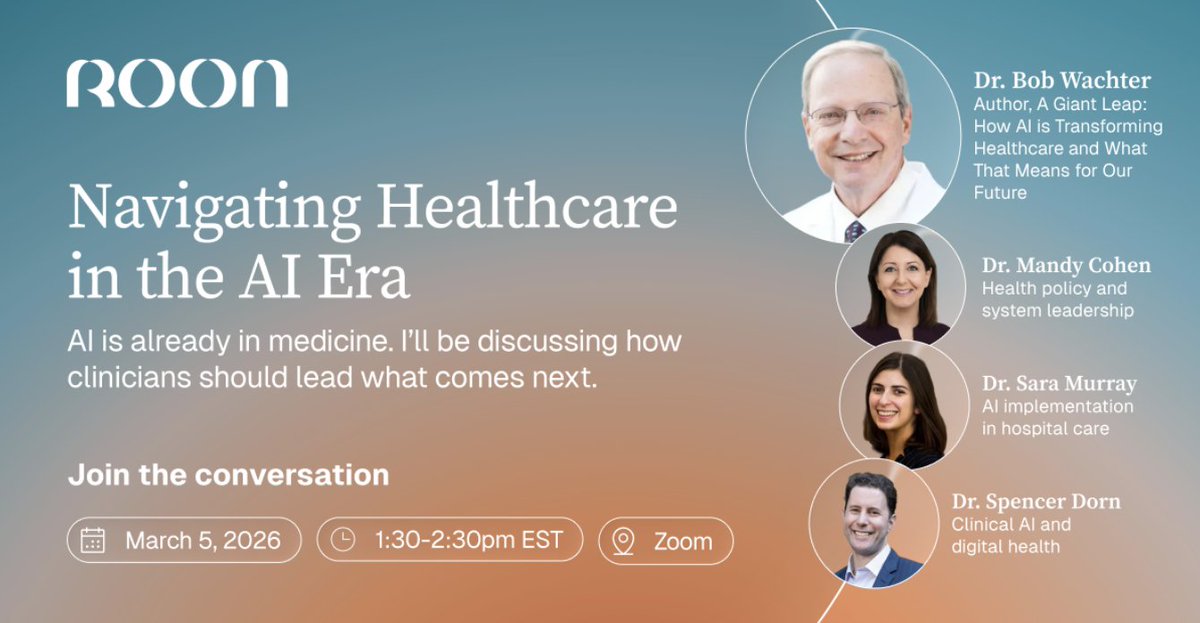
I’ll be joining a Zoom discussion hosted by Roon on March 5, 1:30-2:30 ET. We'll discuss how clinicians are using AI in actual practice and the implications. I'll be joined by 3 eminent colleagues: Mandy Cohen, Sara Murray, & Spencer Dorn. Register here: https://t.co/HgNov5T7n5
The Hyponatremia Intervention Trial finally was published this week in NEJM Evidence. This is the first large scale, multi-center, randomized, controlled trial on hyponatremia since Shrier published SALT 1 and 2 in 2006. I described the trial and my initial thoughts on it in a post today
on Roon.
Tikkun Olam (Hebrew for “repairing the world”) is a Jewish tenet that teaches we have a moral obligation to make the world better. We heal the the world through ethical action, justice, kindness, and community-building. It’s all of our responsibility to leave things more whole than we found them.
Right now, many of us are wandering through the post-#MedTwitter wilderness looking for the next place to rebuild what we lost — a space where nephrology and medicine can argue, teach, listen, and learn in public.
We have tried Mastadon, which has established itself as a viable destination for nerds, and nephrology would find itself at home is such a place, but we need to bring our less nerdy medical colleagues along to remake MedTwitter and they balked at the complexity. It really never achieved lift off with our people.
LinkedIn has recently seen increasing use by doctors, but the polished, corporate-Stepford energy makes real intellectual interaction…unlikely.
Threads had promise, but living inside Zuckerberg’s Orwellian panopticon made me long for something closer to an Enlightenment coffeehouse.
I like BlueSky but a year after NephJC moved to their from X the community remains stagnent. I think the original sin here is that Blue Sky emerged from resistance politics which makes it particularly distasteful to a lot of medicine. And for that reason it cannot be a viable MedTwitter replacement.
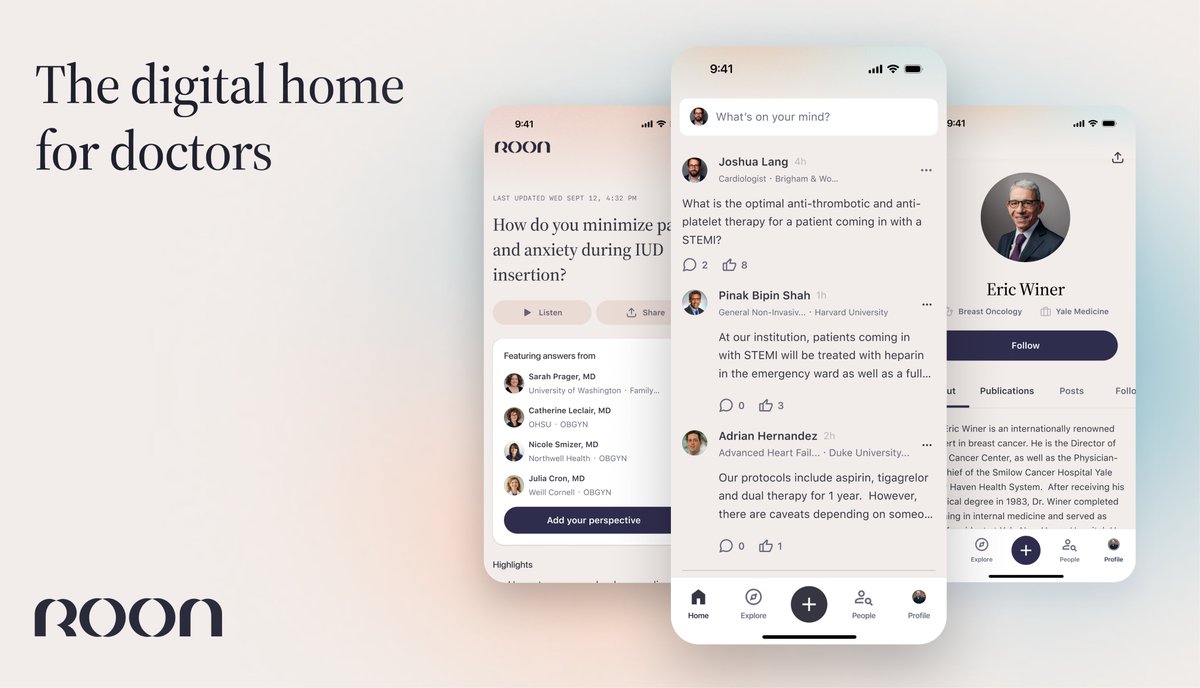
Which brings me to the newest kid on the block: Roon for Doctors. It’s so young it just qualified for its first DTaP vaccine. And that’s the opportunity.
Just as Tikkun Olam calls us to actively repair the world, a platform still under construction gives us the chance, and the responsibility, to shape it into the professional community we want.
• A place built first for physicians talking to physicians
• A place optimized for teaching, debate, and mutual support
• A place that values intellectual rigor more than pharmaceutical ad inventor
I’ve spoken with the founders. Their vision aligns with what many of us have been missing. But it won't work without you.
Come, join me* in building our future medical discussion platform.
* yeah yeah yeah, I know that today only American physicians are welcome, but the leadership at Roon assures me that the roadmap includes expanding the community to both physicians in other countries and other medical professionals. For now, sign up for the wait list
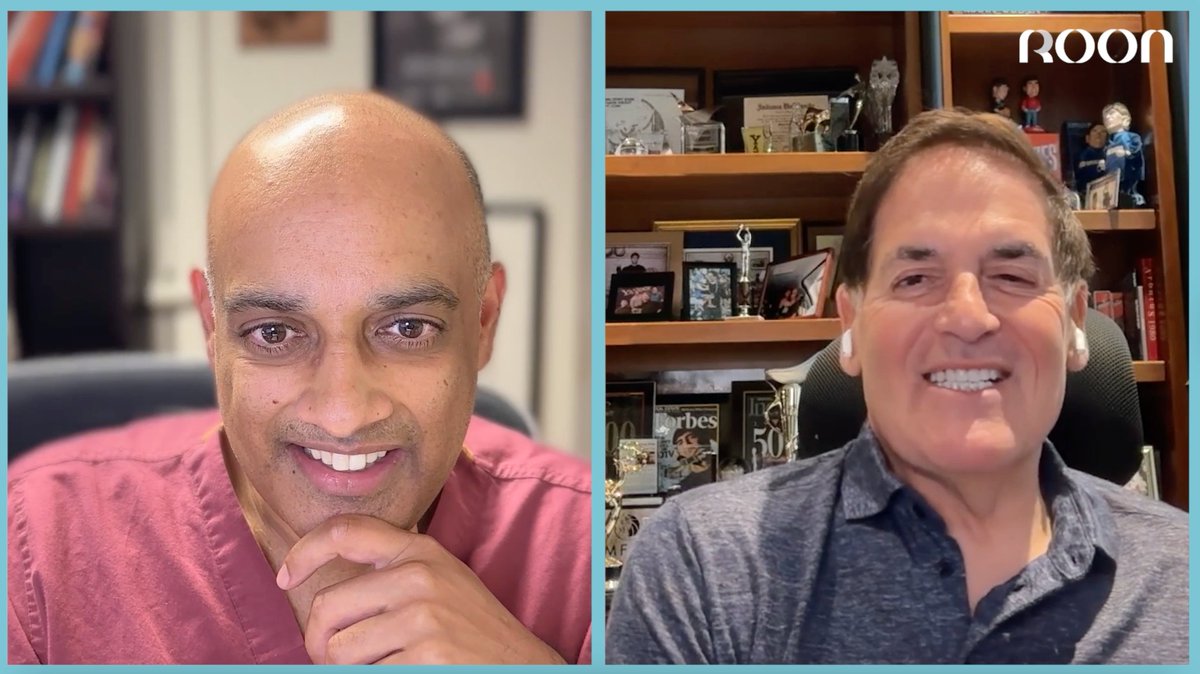
New Good Medicine with @mcuban ! 🇺🇸 Healthcare isn’t just expensive—it’s complex (often intentionally). What if complexity is the real barrier to affordability… because it hides where the money goes?
Mark’s message to doctors: you’re underpaid & overworked because of administrative waste. Healthcare econ is simple: cost, payment, risk. Fix PBMs, incentives, and the deductible “guarantee” mess—and the system gets simpler fast.