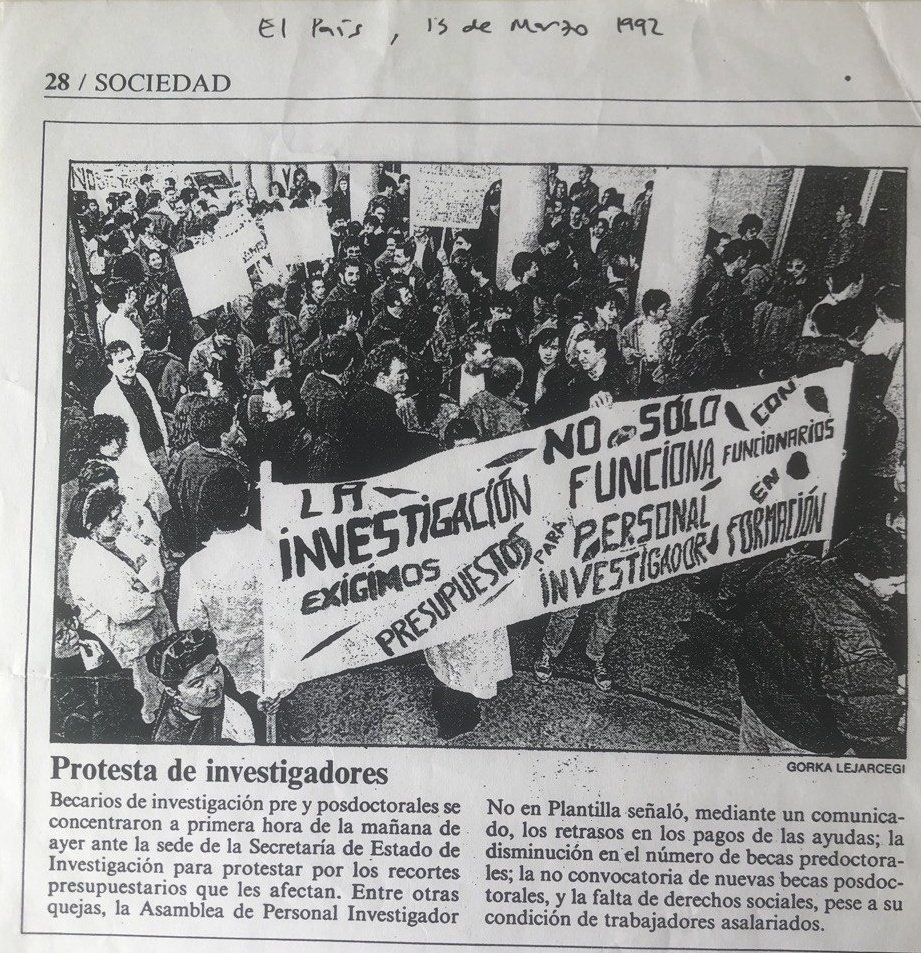
Los ex-becarios de investigación exigimos una solución legal para el reconocimiento del tiempo no cotizado a la Seguridad Social
Fuimos obligados a #TrabajarConBecasSinCotizar pues entonces no había otra opción, si querías dedicarte a la ciencia en España
@joseluisescriva
El Sistema d'Hondt es el que más genera, como se ha demostrado en las últimas elecciones. A ver si aprendéis de otros paises... @PSOE@ppopular@sumar@vox_es@Esquerra_ERC@JuntsXCat https://t.co/COptmFvvuw
@PicturesFoIder Obvious! It's called DECIMAL as opposed to the BINARY that computers use: If you divide by 10 the remainder is the last number of the sum: 7, then you count the number of tens: 1... 17d! In octal (base 8), if you divide by 8 the remainder is 1, the number of eights: 2, then 21o!
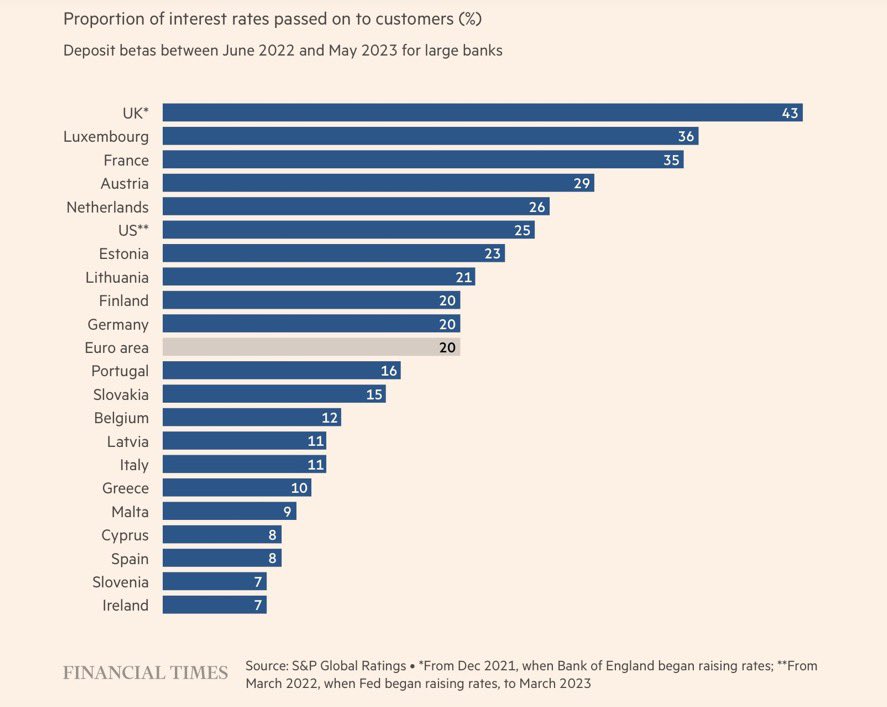
Los bancos españoles, entre los que menos han beneficiado a sus depositarios con las ganancias de las subidas de intereses. Muy, pero que muy lejos de la media de los países de la UE
DO interview your potential advisor if you apply for a PhD or postdoc.
This can save you years of pain, lost dreams and wasted time.
❗ Most students are focused on receiving the offer. But this is the biggest mistake one can make when looking for a position.
▫️
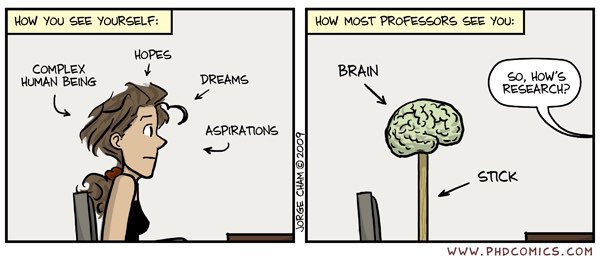
NOT every lab is friendly and has a good mentor in charge. In fact, most professors don’t know how to mentor (as mentorship is not prioritized in academia).
AFTER you get an offer, you can avoid possible problems during your PhD/postdoc through this:
1️⃣ Interview your advisor about the approaches and opinion on:
1. Research advising (how your advisor understands it and how it’s done in the group).
2. Mentoring and personal development during PhD/postdoc.
3. Collaboration - how they do it and what role students/postdocs play in it.
4. Development of your independence and confidence in research.
5. Your participation in conferences and workshops (how often and which types of conferences).
6. How they prepare research publications – authorship, quality, time per manuscript, contributions, etc.
.
2️⃣ Make sure you can talk to the current students one on one (online or in person):
1. Ask about the group culture and support from the advisor
2. Hear their opinion on publication practices and conferences
Ultimately, don’t leave until you understand how you can fit in this group.
.
3️⃣ Talk to alumni (at least 3-4 people):
1. Check out the advisor’s website and find a list of alumni.
2. Google the names of those who went into academia and industry (to hear both sides).
3. Reach out via email or LinkedIn, explain your intentions and politely ask for a quick call.
.
🔴 Why is it important?
Because your advisor is the ONE who can shape your professional skills, motivation and perception of science.
Because the right mentor FORGES your critical thinking and vision.
And a careful search of such an advisor is the starting point.
#AcademicTwitter #AcademicChatter #phdvoice
@RichardSSutton Maximise our rewards is not rational; it's selfish and greedy as CAPITALISM. A RATIONAL GOAL would be to SIMULTANEOUSLY SHARE A COMMON GOAL GLOBALLY. This is your INFINITY in rewards jargon! Beat that!!!!!!!!!!!!!!!!!!!!!!!!!!!!!!!!!!!!!!!!!!!!!!!!!!!!!!!!!!!!!!!
@RichardSSutton Maximise our rewards is not rational; it's selfish and greedy as CAPITALISM. A RATIONAL GOAL would be to SIMULTANEOUSLY SHARE A COMMON GOAL GLOBALLY. This is your INFINITY in rewards jargon! Beat that!!!!!!!!!!!!!!!!!!!!!!!!!!!!!!!!!!!!!!!!!!!!!!!!!!!!!!!!!!!!!!!
@RichardSSutton Ahem, “potential personhood” of a… glorified lookup table, supported by a ridiculously large, horribly resource-consuming linear system, entirely based on stolen data… sprinkled with a bunch of calls to random()…?!? Is that the “potential” you’re talking about? 🤦♂️
@RichardSSutton Disparaging #3 is tantamount to ignoring human evolutionary history. You may believe in modern perfectible humans, but on the savanna tribal cohesion was a key to success, and it is hard-coded in the human mind and our genetics.
When there are multiple Pareto-optimal solutions, shouldn't we consider ALL of THEM following the Inclusion-No Discrimination criteria? So, Decision making is per se DISCRIMINATIVE. Could we find a CONSENSUS OVER TIME that would consider ALL the Solutions? #AllOpinionsMatter