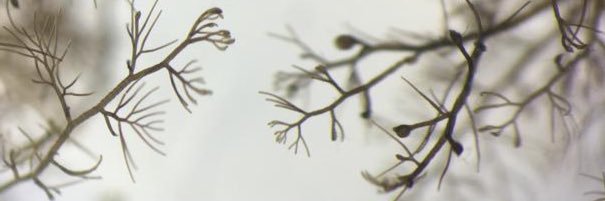
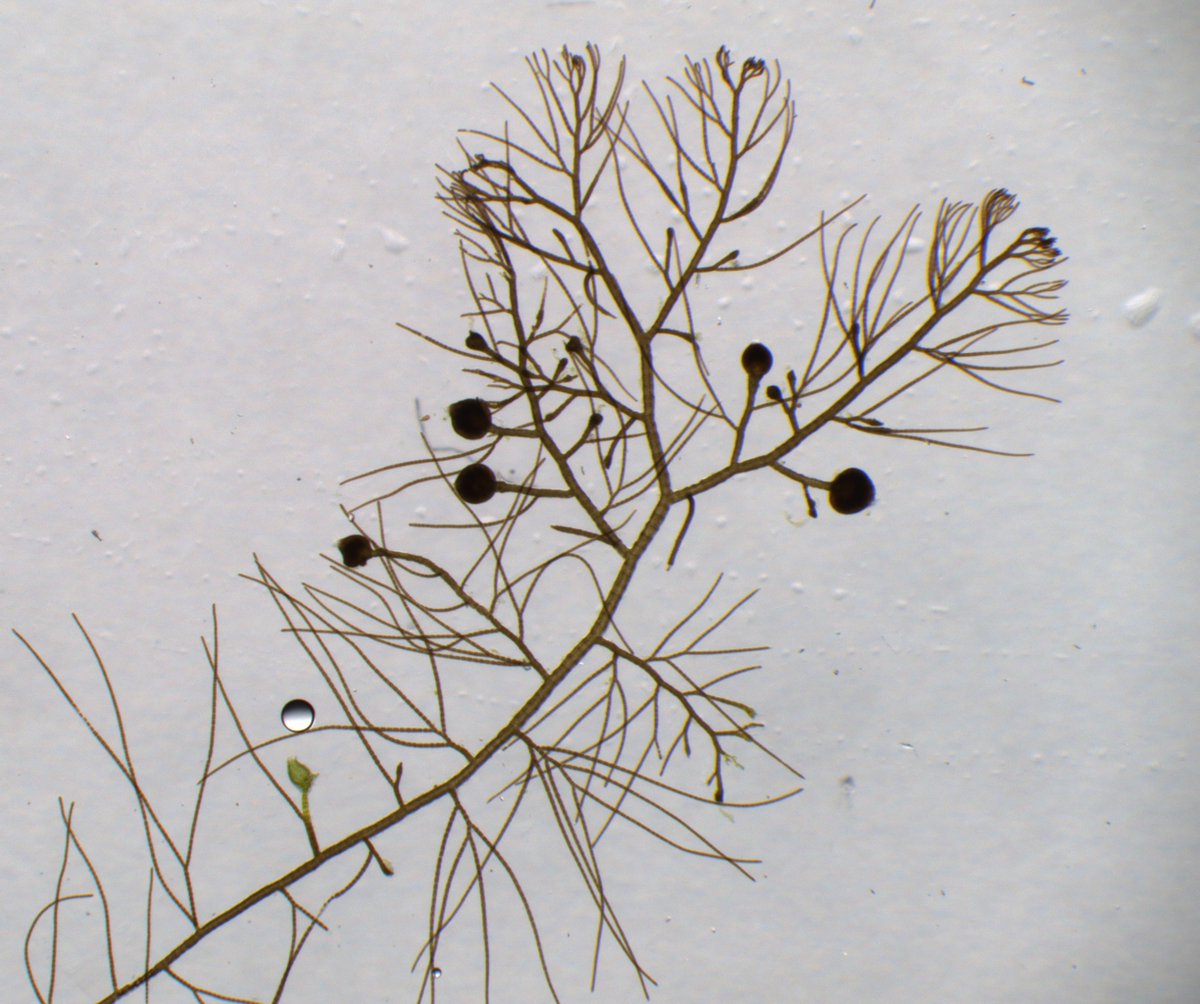
🚨Preprint 🚨 I'm really happy to finally share our exploits in red algae and introduce the wider community to Bostrychia, the new model system we have been developing to tackle the molecular biology of red algae. Isn't she a beauty? Thread below 🧵 1/8 https://t.co/Ggpu9amFIE
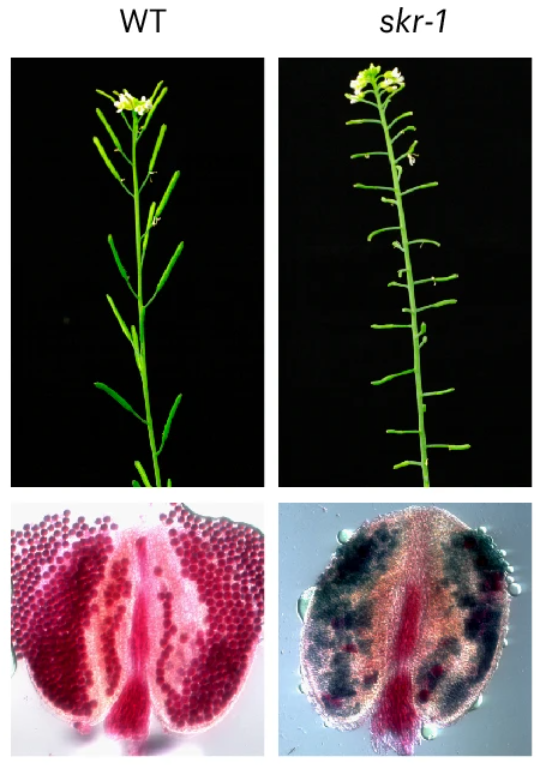
New Letter: "Sporophyte-directed gametogenesis in Arabidopsis" https://t.co/bELtoOV98j
In flowering plants the gametophyte develops within the sporophyte. Male gametophyte development in Arabidopsis is directed by the sporophyte through repression of gametogenesis genes.
Our new work @MolBioEvol
How old are viruses? Here we developed a host-calibrated dating method and inferred the evolutionary timescale of #giantvirus, which have large genomes and infect various eukaryotes, incl. animals, algae, and many others.
https://t.co/Yo9hkGZXbB
So needed: red algae is one of the first eukaryotic lineages to evolve #multicellularity, but genomic data is still scarce. Here a a chromosome-level genome assembly of Bostrychia moritziana is presented. The authors find a significant genome size expansion in Bostrychia compared to other red algae, largely driven by the proliferation of giant Plavaka DNA #transposons. Congrats @dr_borg@PetrollRomy and all authors! #redalgae
I would like to thank all the co-authors involved in this work @MPI_Bio Tuebingen, @rorycraig333 and other at the @UniMelb and @UCPH_Research. And a special mention to @PetrollRomy, the PhD student who has been the driving force behind this proud body of work. 8/8
🚨Preprint 🚨 I'm really happy to finally share our exploits in red algae and introduce the wider community to Bostrychia, the new model system we have been developing to tackle the molecular biology of red algae. Isn't she a beauty? Thread below 🧵 1/8 https://t.co/Ggpu9amFIE
The red algal transition to multicellularity is among the oldest across eukaryotes. Given the common evolutionary origin of red seaweeds and plants, we provide new insight into the evolution of complex multicellularity and highlight this fascinating but overlooked lineage. 7/8
@NickDesnoyer@hendersi Phycobilin proteins like phycoerythrin are part of phycobilisome complexes of red algal plastids. Not so simple to engineer in land plants I imagine as we don’t understand the machinery responsible to form phycobilisomes (yet).
🥳Happy 🥳to share the final version now officially published in @NatureComms
Repeat-based holocentromeres of the woodrush Luzula sylvatica reveal insights into the evolutionary transition to holocentricity
https://t.co/DfDodf6qsw
Awesome work from @YMata_Sucre and Marie Krátká
Our new Update in @PlantPhys discusses advances in our understanding of epigenetic, transcriptional, translational & posttranslational control of hypoxic gene expression in plants 🌱 @freddietheodou1@jnbserres
https://t.co/60w77EJrzP
Does the aggregation of complex multicellularity follow a universal developmental pattern across the eukaryotic tree of life?
Thrilled to announce that we found a convergently evolved transcriptomic hourglass pattern in brown algal development. @Nature
👉https://t.co/DvoyD8TH3n
New preprint! An atlas of conserved TF binding sites across flowering plants generated with multiplexed DAP-seq. When integrated with multi-species snRNA- and snATAC-seq reveals how TF activity shapes development and stress responses at the cellular level.https://t.co/fRvt1Jrg9I
1/ Our lab’s first preprint found a wonderful journal home! 🎉
Our paper explores the role of testis-specific transcription factors in Drosophila and reveals broad functional connections between tissue-specific paralog proteins.
📝: https://t.co/Qr09ScxueX
Happy to see the 2nd manuscript of my thesis on bioRxiv!
We explore the subdivision of the withanolide BGC in Physalis into two sub-clusters with tissue-specific expression linked to chromatin differences. https://t.co/rYuFeo4CTT