New paper out (and only 1 year in review)!
Anyone that has been around me for more than about 15 minutes knows a constant refrain, Appendiceal Cancer is NOT colon cancer. Totally different diseases. Evidence is sorely needed, so we put together a database comprised of 20 years of non-metastatic patients and have shown many of the assumptions we make aren't actually true. Traditional "poor" risk factors in colon? Not at all predictive in appendiceal adenocarcinoma. Molecular and histopath tell the tale. And adjuvant chemotherapy probably isn't useful outside of select cases...
Now in JAMA Surgery. 439 patients with stage I–III disease at MD Anderson (2000–2024), plus a stage II validation cohort from MSK.
Relapse after resection is uncommon: 9.4% overall. 6% in stage II, 19.5% in stage III.
Histology does most of the work. Relapse rates:
Goblet cell 3%
Mucinous 14%
Enteric-type 17.5%
Signet ring 29%
On multivariable analysis, the independent predictors were mucinous histology (HR 5.6), enteric-type histology (HR 6.6) and pT4 (HR 3.3).
Poor differentiation, perforation, LVI and PNI didn't predict relapse. Those are the features we use to call stage II colon "high risk".
Molecular: Most important factors for recurrence. TP53 (HR 6.93) and GNAS (HR 17.0) were worst actors. The numbers are small and the CIs wide. GNAS-mutant tumors are also the ones least sensitive to 5-FU.
Critically, adjuvant chemo, showed no RFS or OS benefit after adjustment. The stage II cohort at MSK showed the same thing. The "high-risk" subsets showed no benefit either.
So next time someone says to just treat appendiceal like colon cancer, send them the paper.
@jpshen_md@acpmpresearch@OncoAlert@TheGutOncLab@Onco_Nexus
https://t.co/MOkoWmAgbH
After resection of localized #AppendicealAdenocarcinoma, relapse risk was low overall and varied by histopathologic subtype and molecular features. Adjuvant #Chemotherapy was not associated with improved recurrence-free or overall survival. https://t.co/QFVYEiCnhf
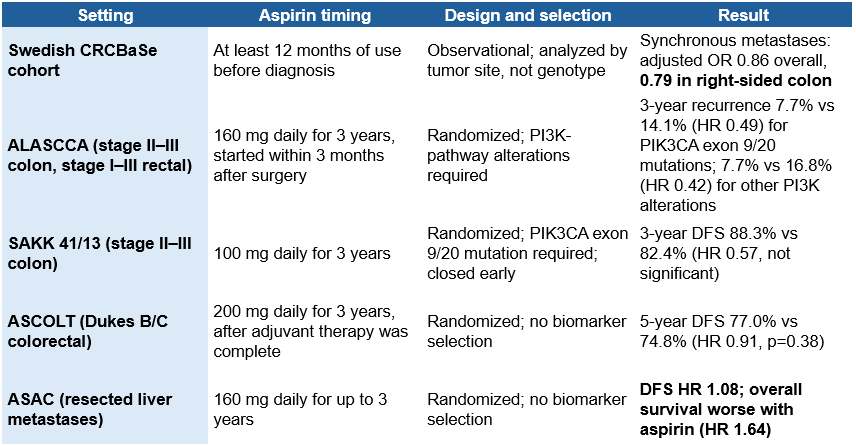
💊 Low-dose aspirin and metastases at CRC diagnosis (Br J Cancer)
👥 81,269 colorectal cancers, Swedish CRCBaSe registry
📉 Current users had lower odds of synchronous metastases (association was strongest in right-sided colon cancer)
📍 Right-sided colon: adjusted OR 0.79
➖ Left-sided colon: no association
⚠️ Observational; healthy-user bias possible
⚠️ no data on PIK3CA status
This is a stage-at-diagnosis signal, not a treatment result, and it should not be read as one.
Before jumping to conclusions:
👉Please Remember ASAC, covered here on September 24. It gave aspirin after resection of colorectal liver metastases and found no benefit, so aspirin as an anti-metastatic drug in established disease remains unproven.
👉 Observational aspirin data also carry healthy-user bias. People on daily cardiovascular aspirin see doctors more often and may be diagnosed earlier.
What this Swedish cohort adds is the sidedness: the association lives almost entirely in right-sided colon cancer, which is biologically a different disease.
#CRC #ColorectalCancer #Aspirin #GIOnc
https://t.co/VALw5sZsd1
LenCabo vs LITESPARK-011 | Two RCC Trials, One Comparator
Two randomized trials exploring lenvatinib-based combinations versus cabozantinib in previously treated advanced RCC.
🔹 LenCabo | Phase II (n=90)
- Lenvatinib + everolimus vs cabozantinib
- Median PFS: 15.7 vs 10.2 months
- HR 0.51 | ORR 52.6% vs 38.6%
🔹 LITESPARK-011 | Phase III (n=747)
- Lenvatinib + belzutifan vs cabozantinib
- Median PFS: 14.8 vs 10.8 months
- HR 0.74 | ORR 53.1% vs 40.2%
- No statistically significant OS benefit.
🎯 Clinical Take-Home: Both combinations demonstrate encouraging PFS activity. LITESPARK-011 provides phase III evidence, while LenCabo remains phase II evidence.
⚠️ Cross-trial comparisons cannot establish superiority between these combinations.
📚 Annals of Oncology, 2026
#MVOnco #KidneyCancer #RCC #LenCabo #LITESPARK011 #Belzutifan #Lenvatinib #MedicalOncology
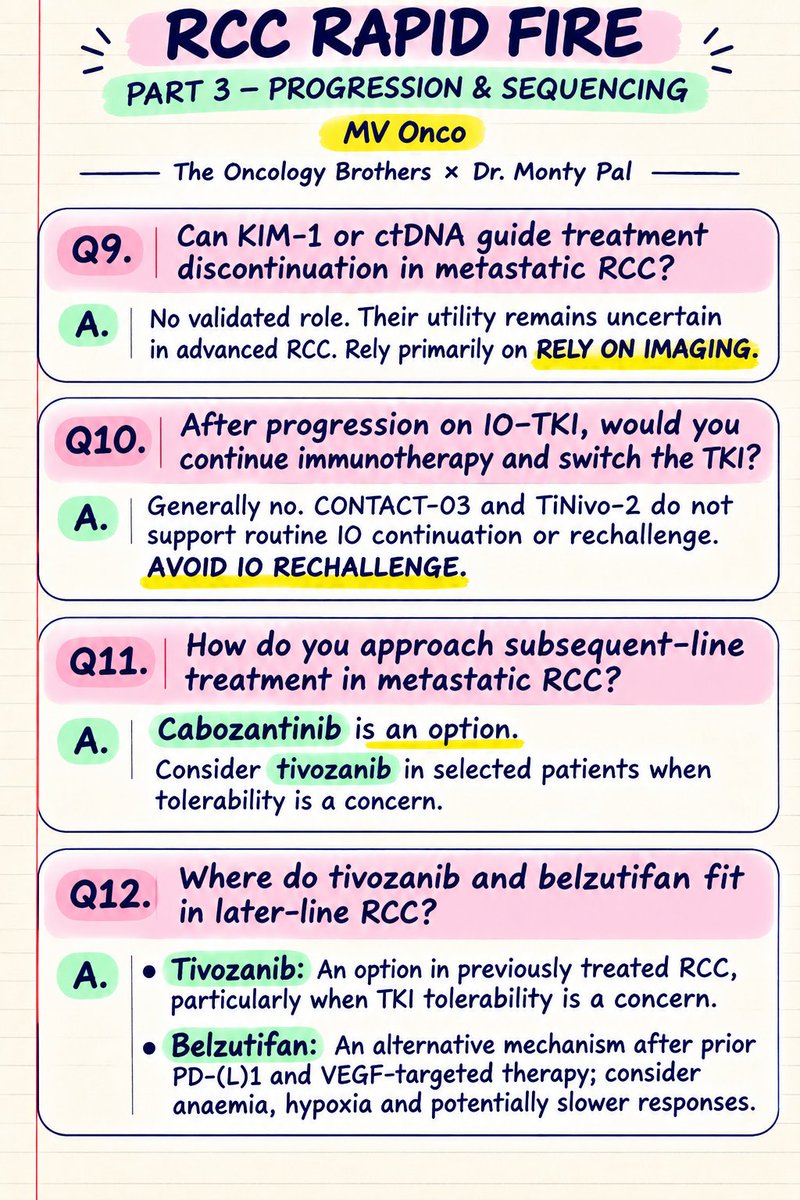
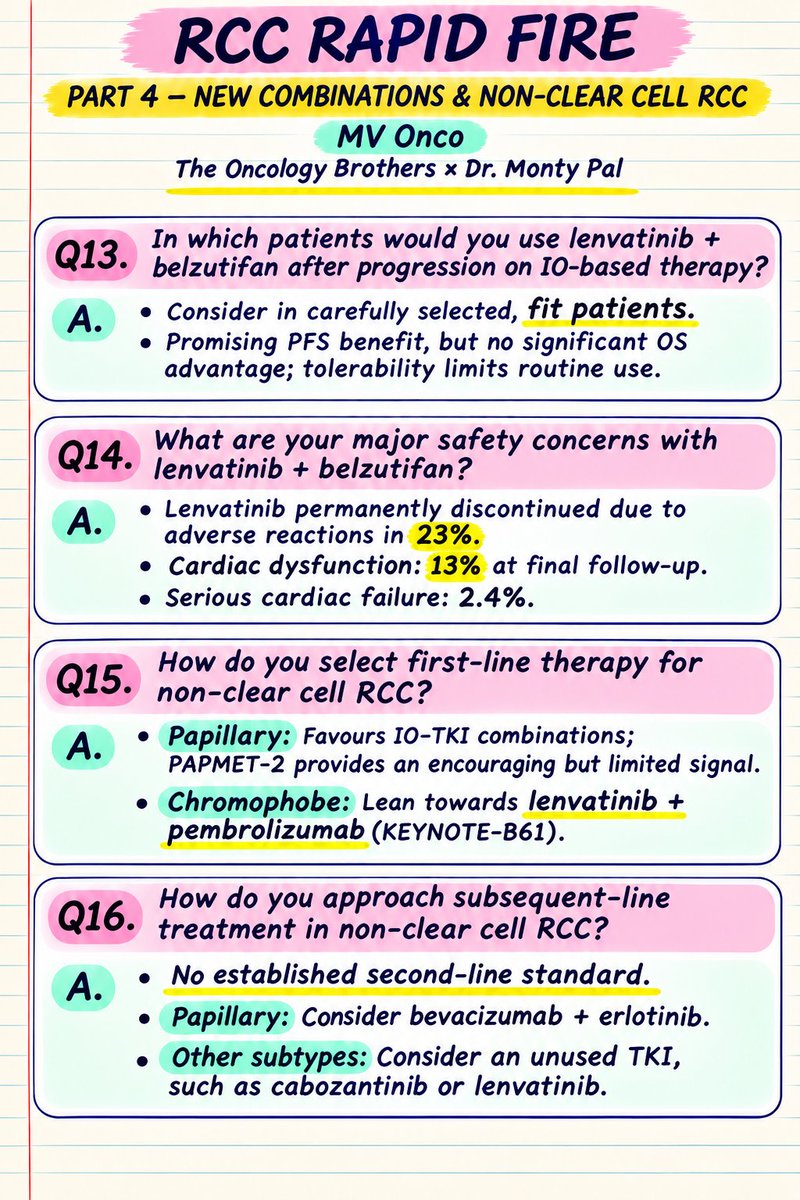
RCC RAPID FIRE | 16 Clinical Questions Across 4 Parts
🎙️ Credits: The Oncology Brothers — Dr. Rohit Gosain & Dr. Rahul Gosain — and Dr. Sumanta “Monty” Pal (City of Hope) for an insightful rapid-fire discussion on renal cell carcinoma.
Drawing from their excellent discussion, MV Onco presents 16 practical clinical questions and answers across four infographic parts:
🔹 Part 1 | Q1–5: Adjuvant RCC
Pembrolizumab, M1 NED, belzutifan combinations, ctDNA and toxicity management.
🔹 Part 2 | Q6–8: First-Line Metastatic RCC
IO–IO vs IO–TKI, sarcomatoid RCC and treatment discontinuation.
🔹 Part 3 | Q9–12: Progression & Sequencing
Biomarkers, IO rechallenge, cabozantinib, tivozanib and belzutifan.
🔹 Part 4 | Q13–16: Emerging Combinations & Non-Clear Cell RCC
Lenvatinib–belzutifan, safety considerations, papillary and chromophobe RCC.
From adjuvant decisions to later-line sequencing — 16 questions addressing everyday RCC practice.
📚 Original discussion and reference:
RCC Management in Localized & Metastatic Disease with Dr. Monty Pal – Rapid-Fire Rounds
The Oncology Brothers | November 5, 2026
🔗 https://t.co/bycAs6haTR
Infographic summary: MV Onco
#RCC #KidneyCancer #MedicalOncology #OncologyBrothers #MVOnco
LITESPARK-011 | Better PFS, But No Proven OS Benefit!
Phase III | Annals of Oncology 2026
747 patients with advanced ccRCC after immunotherapy: Belzutifan + lenvatinib vs cabozantinib.
📊 Key Results
- PFS: 14.8 vs 10.8 months (HR 0.74)
- OS: 33.7 vs 28.6 months (HR 0.85) — NOT statistically significant.
- ORR: 53.1% vs 40.2%
- Complete response: 6.7% vs 1.3%
- Response duration: 22.0 vs 11.9 months
⚠️ Safety: Substantial toxicity, particularly anemia, hypoxia and cardiac dysfunction.
🎯 Take-Home: Belzutifan + lenvatinib improves disease control and response durability after IO, but without a statistically established survival advantage and with important toxicity trade-offs.
📚 Heng DYC et al. Annals of Oncology, 2026.
#LITESPARK011 #RCC #KidneyCancer #Belzutifan #Oncology #MVOnco
These developments are transformational in their potential, signaling an emerging paradigm shift in PDAC. Profound responses are emerging not only with frontline combinations, but also with RAS inhibitor monotherapies in later lines of treatment, expanding the possibilities for earlier intervention and rational therapeutic combinations.
Complete responses are emerging across treatment lines and approaches. Daraxonrasib + GnP has demonstrated 5 confirmed CRs in frontline metastatic PDAC, daraxonrasib monotherapy 1 CR in 2nd L disease, and VS-7375 monotherapy 2 reported CRs in 4th and 3rd L treatment. One appeared approximately three months into treatment, the other around six months, despite multiple prior lines of therapy.
Dr. Park's point about longer follow-up is well taken, particularly for establishing durability. With 18.3 months of median follow-up and five confirmed CRs in the daraxonrasib + GnP cohort, a patient-level swimmer plot illustrating response onset, evolution and persistence would be particularly informative.
A swimmer plot isn't reserved for extraordinary responses. It's a tool for understanding how treatment activity evolves.
Unless I missed it? 🤣
@SyedAAhmad5@CentralParkWMD@DavidHongMD@KRASKickers@letswinpc@Dr_R_Kurzrock@PanCAN@DaveARicks
PRIME-HCC | Neoadjuvant Dual Immunotherapy in Resectable HCC
Can just two doses of nivolumab, combined with ipilimumab, produce meaningful pathological responses before liver surgery?
🔹 Phase Ib | 33 patients | Resectable HCC
🔹 91% underwent surgery (30/33)
🔹 22% complete pathological response (6/27)
🔹 33% major pathological response (9/27)
🔹 71% 2-year event-free survival
🔹 Postoperative ctDNA: 2-year RFS was 82% when undetectable vs 29% when detectable (p=0.049; exploratory, n=18).
🔹 Grade 3 treatment-related AEs: 9%
Clinical takeaway: Encouraging pathological responses and surgical feasibility, with a potentially useful ctDNA signal. However, this small, single-arm study is hypothesis-generating, not practice-changing.
📖 D’Alessio et al. Lancet Oncology, 2026.
#PRIMEHCC #HCC #LiverCancer #Immunotherapy #Oncology #ClinicalTrials
Phase 3 TROFUSE-015: Sac-TMT, a TROP2-directed ADC, improved OS in 3L+ gastroesophageal adenocarcinoma, but did not meet PFS. Looking forward to the full data presentation and further discussion! https://t.co/5KXIxqUBjf
Rectal cancer with synchronous liver metastases: one operation or two? 🤔
1872 patients, French national target trial emulation
Combined versus staged resection of synchronous rectal cancer liver metastases: national target trial emulation
➡️ https://t.co/Ye6oFYIZa0
Combined and staged strategies were associated with comparable morbidity and long-term survival
Surgical sequencing should be individualized within multidisciplinary decision-making
Work by Francesco Marchegiani , Alix Dhote , Alexandra Nassar , Vincent Mallet , Anna Pellat , Heithem Jeddou , Ugo Marchese , Romain Coriat , David Fuks , Karim Boudjema , Emilie Lanoy , Sandrine Katsahian , Stylianos Tzedakis
#SoMe4Surgery #MedTwitter #SurgEd #Surgery @RCPSGTrainees @aecirujanos@SEIQuirurgica@iss_sic #MedicalTechniques @BJSAcademy@young_bjs@BJSOpen@evanscolorectal@robhinchliffe1@bplwijn@MalinASund@nfmkok@TejedorPat@paulo_sutt@PVaughanShaw@JJEarnshaw@juliomayol@ksoreide #ColorectalSurgery #ColorectalCancer #LiverSurgery #HPBSurgery #some4hpb
The pace of the (K)RAS renaissance is extraordinary. What seemed beyond therapeutic reach only a few years ago is increasingly becoming a clinical reality, bringing genuine hope to patients and families facing some of the most difficult cancers.
Yet there is a fascinating paradox. Pan-RAS inhibition seeks to overcome the boundaries of individual RAS mutations, but the clinical responses emerging across those very mutations can be strikingly different. Broad molecular reach does not necessarily produce equally broad benefit. The target may be shared, while the biology governing response remains distinctly individual.
Recent examinations of FDA AEMS reports, alongside patient experiences, have brought the gap between therapeutic expectations and clinical realities into sharper focus. Patients may reach promising therapies only after successive treatments have diminished their physical reserves. Beyond carefully selected clinical trials lies a far broader and more medically diverse population. Patients encounter remarkable response rates and stories of people regaining strength, making plans, and returning to ordinary life. Understandably, they begin to imagine what similar treatment might mean for them. Some experience those benefits, while others face very different outcomes. The distinction is not between access and restriction, but between access and informed expectations, supported by evidence that better represents real-world patients. Difficult outcomes should strengthen the urgency to generate better evidence, accelerate development, and expand therapeutic options, not narrow them.
The ENA 2026 updates from Revolution Medicines and Erasca offer encouraging progress from two distinct clinical settings, each illuminating a different dimension of that challenge.
In first-line metastatic pancreatic cancer, daraxonrasib combined with gemcitabine/nab-paclitaxel achieved a 60.7% confirmed response rate among 61 patients, including five complete responses. Median progression-free survival reached 12.8 months, with 76.6% overall survival at one year.
Progression-free survival was 82.8% at six months and 51.7% at twelve months. These findings demonstrate substantial disease control, while the continuing accumulation of progression or death highlights the importance of longer-term durability. The challenge extends beyond inducing tumor regression to sustaining its benefit over time.
Treatment burden is equally relevant. Grade 3 or higher treatment-related adverse events occurred in 75% of patients, with frequent interruptions and dose reductions across the regimen. Despite these modifications, mean dose intensities remained 83% for daraxonrasib, 80% for gemcitabine, and 75% for nab-paclitaxel. The physical demands of treatment remain inseparable from its benefits.
All 61 treated patients were included in the efficacy analysis, including those without postbaseline assessments. Eligibility nevertheless required ECOG performance status 0–1 and adequate organ function, highlighting the distance that can exist between trial populations and patients encountered in everyday practice.
Erasca's AURORAS-1 update addresses another difficult reality: patients whose cancer has already progressed through previous treatments.
ERAS-0015 monotherapy achieved a 44% confirmed response rate (11/25) in pancreatic cancer, with 84% of patients having received at least two prior treatment lines. The mutation-specific results bring the pan-RAS paradox into focus: responses reached 62.5% in KRAS G12D (5/8), 80% in G12V (4/5), and 18.2% in G12R (2/11).
Although these are small cohorts, the differences invite deeper investigation into mutation-specific signaling, tumor context, and adaptive biology as larger populations and longer follow-up become available.
The September 1, 2026 data cutoff adds an interesting methodological dimension. The efficacy cohort required at least eight weeks from first dose before cutoff, while subsequent response confirmations were incorporated without expanding the reported 25-patient denominator. Complete accounting of patients treated at 32 mg would offer a fuller picture of response maturity and the broader treated population.
Tolerability offers encouragement. Median relative dose intensity was 100% across 122 patients receiving 16–32 mg. At 32 mg, treatment-related interruptions occurred in 13%, reductions in 16.7%, and no treatment-related discontinuations were reported among 54 patients. The previously reported fatal pneumonitis event at 24 mg remains relevant to the evolving safety profile.
Activity also extended to previously treated KRAS G12X lung cancer, with a 50% confirmed response rate (12/24), and biliary tract cancer, with 40% (4/10) across 8–32 mg. Early combination development with gemcitabine/nab-paclitaxel has shown no dose-limiting toxicities through 16 mg, with combination efficacy and longer-term tolerability still to be established.
These updates illuminate different challenges within the same therapeutic renaissance. One examines the durability and treatment burden of a first-line combination; the other explores later-line monotherapy activity, heterogeneous responses, and future combination possibilities. Both reinforce the importance of activity, tolerability, and combinability working together.
For patients, these are not isolated clinical endpoints. Cancer treatment is a continuous journey in which every response, adverse event, delay, and progression can influence what remains possible.
The (K)RAS renaissance is expanding what medicine can target. Its greatest achievement will be measured not simply by how many mutations can be addressed, but by how many patients can benefit, how long that benefit can be sustained, and how much life and possibility remain available to them afterward.
@Aiims1742@VivekSubbiah@Dr_R_Kurzrock @kras
High-risk prostate cancer on RT plus 2 yrs of ADT: 2 yrs of enzalutamide did no better than 6 months of an older NSAA. ENZARAD, n=802, 92-mo follow-up.
🎯 8-yr MFS: 74% enza vs 72% NSAA, HR 0.88, p=0.34
⏳ 8-yr OS: 83% enza vs 80% NSAA, HR 0.87
📊 Planned pelvic nodal RT subgroup, n=324: MFS HR 0.47 favoring enza
🔍 Nodal RT was required for cN1, optional for cN0, so it wasn't randomized.
Negative overall. Read with STAMPEDE and DASL-HiCaP, my take is N1 disease needs intensification.
👉 https://t.co/1QzWyrL5X1
#ProstateCA #GUonc
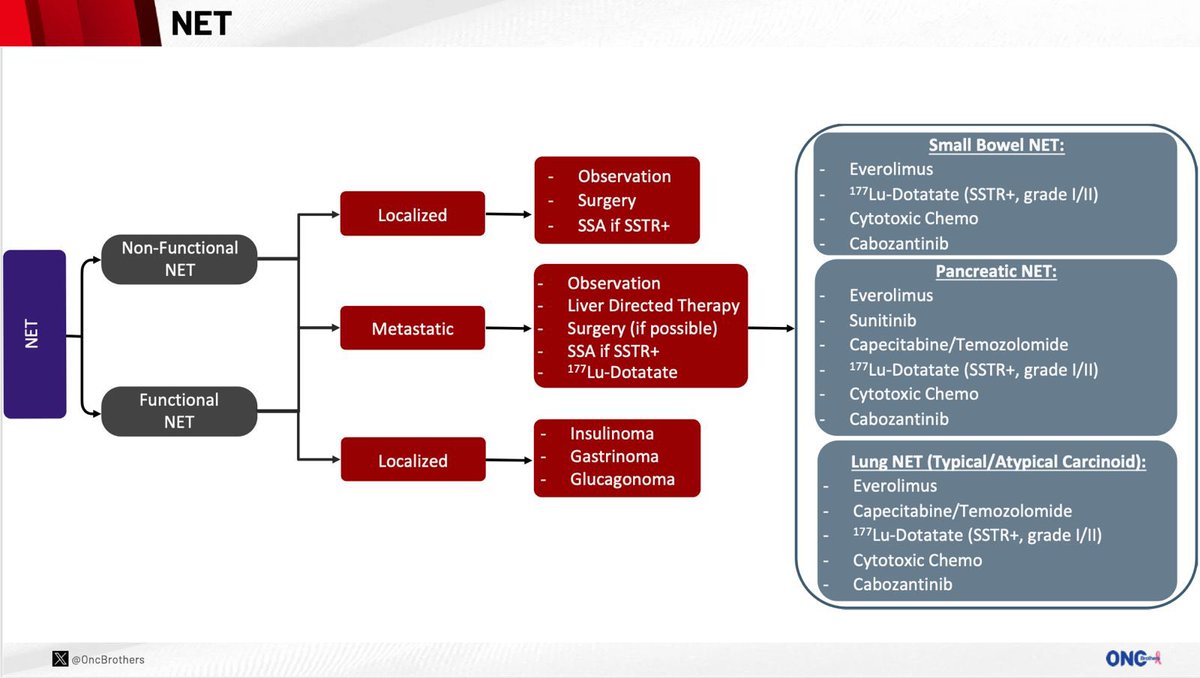
This is the treatment algorithm we have used during our 🗣️ with @PamelaKunzMD for Neuroendocrine Tumor!
Here are some of the options but it does not appreciate the heterogeneity we see with this tumor which changes how we treat/manage this (not so rare) cancer!
#OncTwitter
The Evolving Role of Radiotherapy in Gastric Cancer
From routine postoperative chemoradiation to selective, evidence-guided use.
🔹 INT-0116: Established postoperative CRT benefit, but only 10% underwent D2 surgery.
🔹 ARTIST / ARTIST-2 / CRITICS: Questioned the incremental benefit of postoperative RT.
🔹 TOPGEAR: Improved pCR without OS benefit.
🔹 CRITICS-II (2026): Encouraging preoperative CRT signal; phase II, hypothesis-generating.
🔹 SOX-RT (2026): No significant DFS (HR 0.98) or OS (HR 0.86) benefit after D2 R0 resection.
The message: Radiotherapy is not obsolete—its role is becoming more selective.
📚 INT-0116 | ARTIST-2 | CRITICS | TOPGEAR | CRITICS-II | SOX-RT (JAMA Netw Open 2026)
#GastricCancer #Radiotherapy #GIOncology #MVOnco
@OncoDaily@OncoAlert@larvol
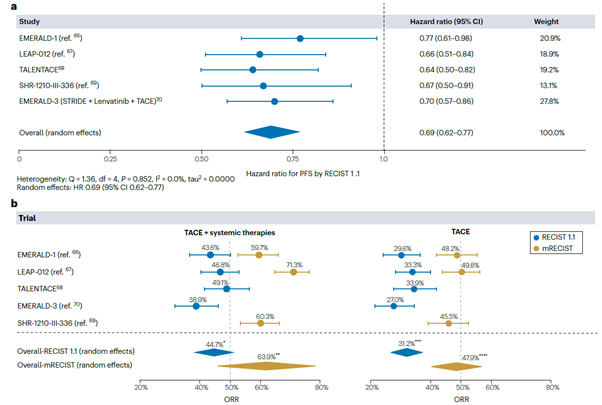
🧩 #Locoregional therapy + immunotherapy in #HCC: slower progression, no survival gain yet. @NatRevClinOncol#LiverX
👉 #TACE + #immunotherapy (5 phase III trials): pooled PFS HR 0.69, no OS gain yet
👉 #TARE/#SBRT + immunotherapy: promising (e.g., portal vein tumor thrombosis), but early
👉 Response assessment: mRECIST preferred, with imaging at >3 mo
👉 Future trials: PFS gains need an OS signal (HR ≤0.80 or ≥3 mo)
DOI: https://t.co/ThpTBVp6QD
@ILCAnews@myESMO@EASLnews
Resectable dMMR/MSI-H Gastric Cancer
From chemotherapy-free treatment to organ preservation.
🔹 Historical data: No clear survival benefit from chemotherapy in MSI-H disease.
🔹 NEONIPIGA: 59% pCR with nivolumab + ipilimumab.
🔹 INFINITY: 60% pCR with durvalumab + tremelimumab.
🔹 Organ preservation: INFINITY cohort 2 achieved 13/17 clinical complete responses; 1 local regrowth.
⚠️ Surgery remains standard; organ preservation is investigational.
The next frontier: Can we safely omit both chemotherapy and gastrectomy?
📚 NEONIPIGA: JCO 2023 | INFINITY: Ann Oncol 2025
#GastricCancer #dMMR #MSIHigh #Immunotherapy #MVOnco
@OncoDaily@OncoAlert@larvol