The secrets pond mud holds, capturing a record of air quality just waiting for me &
@RedRiverCroft
to dig up! These long-term histories are so important in understanding how exposure to air pollution has changed over the decades.
@UniofExeter https://t.co/cC21GAbxbz
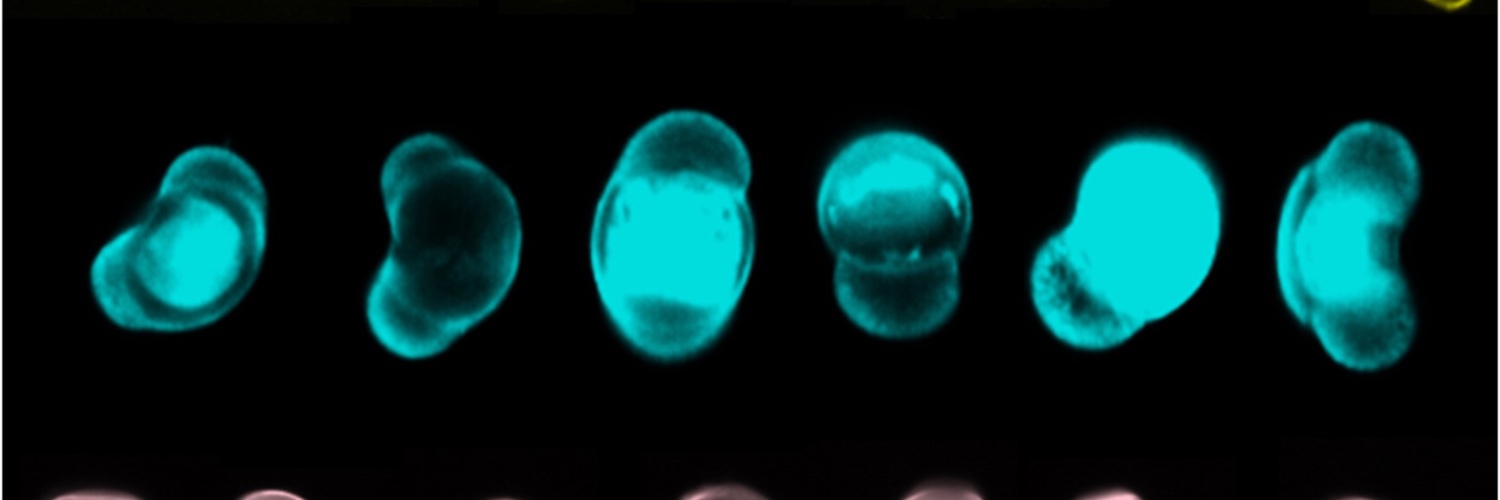
So happy to be at #CYTO2024 today! I'll be at my poster from 6-7 pm that showcases how the ImageStream @CytekBio can be pivoted for tracking coccoliths, pollen, microplastics, dormant bacteria and algae in a range of environmental samples. #CYTO24
This study supports what we've proposed for yrs - transgenerational exposure to diff types of #airpollution impacts health of those directly exposed AND their offspring. Our recent paper shows how Airpoll types have changed over last 150yrs. @DrAnnPower
https://t.co/jEmk9ujS6Z
@mwt2008@DrGaryFuller@UniofExeter SEM of the pond mud from other sites also confirms the presence of fine < 1 micron magnetic spheres - tiny melted orbs produced from fossil fuel combusted at high temperature.
@mwt2008@DrGaryFuller@UniofExeter Trends in heavy metals such as lead at this pod site also correlate with historical aircraft take offs and landing records at this pond site.
A chance encounter with @ZackPolanski at a festival performing as @pocodrom and a long natter with him about air pollution led to this article by @DrGaryFuller on my research using ponds to understand long-term urban air pollution.
People often ask how I find topics to write about.
Tip offs via Twitter, talking to scientists & at seminars, but mainly I read a lot of science.
This story on ponds was different, a comment by @ZackPolanski at the @airqualitynews conference. He met @drannpower at a festival.
Air pollution histories revealed by ponds in Merseyside. Our work, instigated by @RedRiverCroft, shows a shift in recent air pollution to fine particulates that may be crucial in understanding health impacts. @UniofExeter@UoEBiosciences@UofE_Research https://t.co/BEDOeQZ4kk
The secrets pond mud holds, capturing a record of air quality just waiting for me &
@RedRiverCroft
to dig up! These long-term histories are so important in understanding how exposure to air pollution has changed over the decades.
@UniofExeter https://t.co/cC21GAbxbz
A post-1980’s increase in PM2.5 is hugely significant for health. PM2.5 is a known carcinogen. Due to their small size, PM2.5 can be easily delivered to the lung as well as other organs in the body (including the placenta).