6/6 These 18 offer valuable insights into the medical knowledge associated with Serfoji II's patronage.
The Sarasvati Mahal Library's efforts to preserve and publish these texts deserve recognition and further historical, philological, and scientific research.
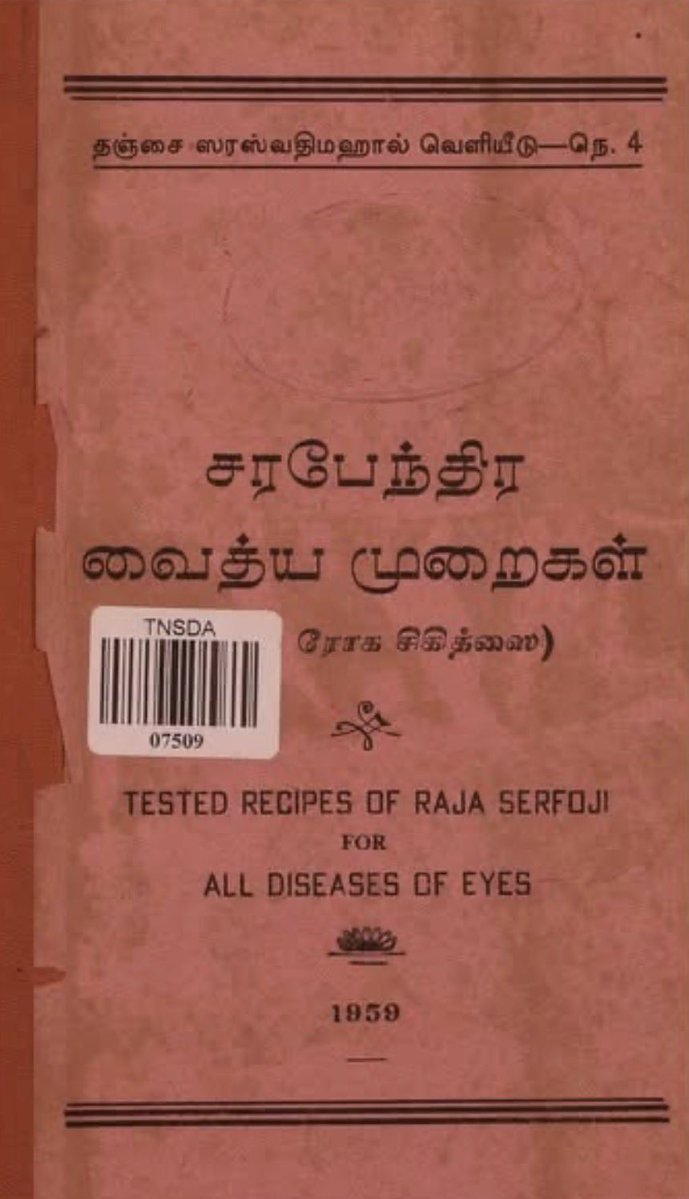
1/6 Fascinating ophthalmic records! Beyond these, the Thanjavur Maharaja Serfoji’s Sarasvati Mahal Library has published a remarkable collection of Tamil medical treatises titled Carapēntirar Nūlkaḷ.
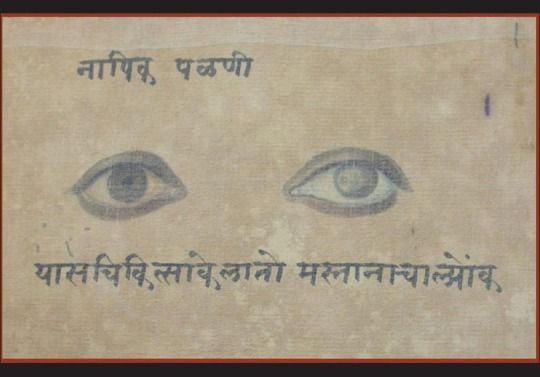
A Maratha king's court in Thanjavur kept painted records of diseased eyes, including a corneal ulcer drawn before and after treatment.
The king was Serfoji II, a Bhonsle who ruled from 1798 to 1832. He ran a hospital called Dhanvantari Mahal, where Siddha, Ayurveda and Unani medicines were made.
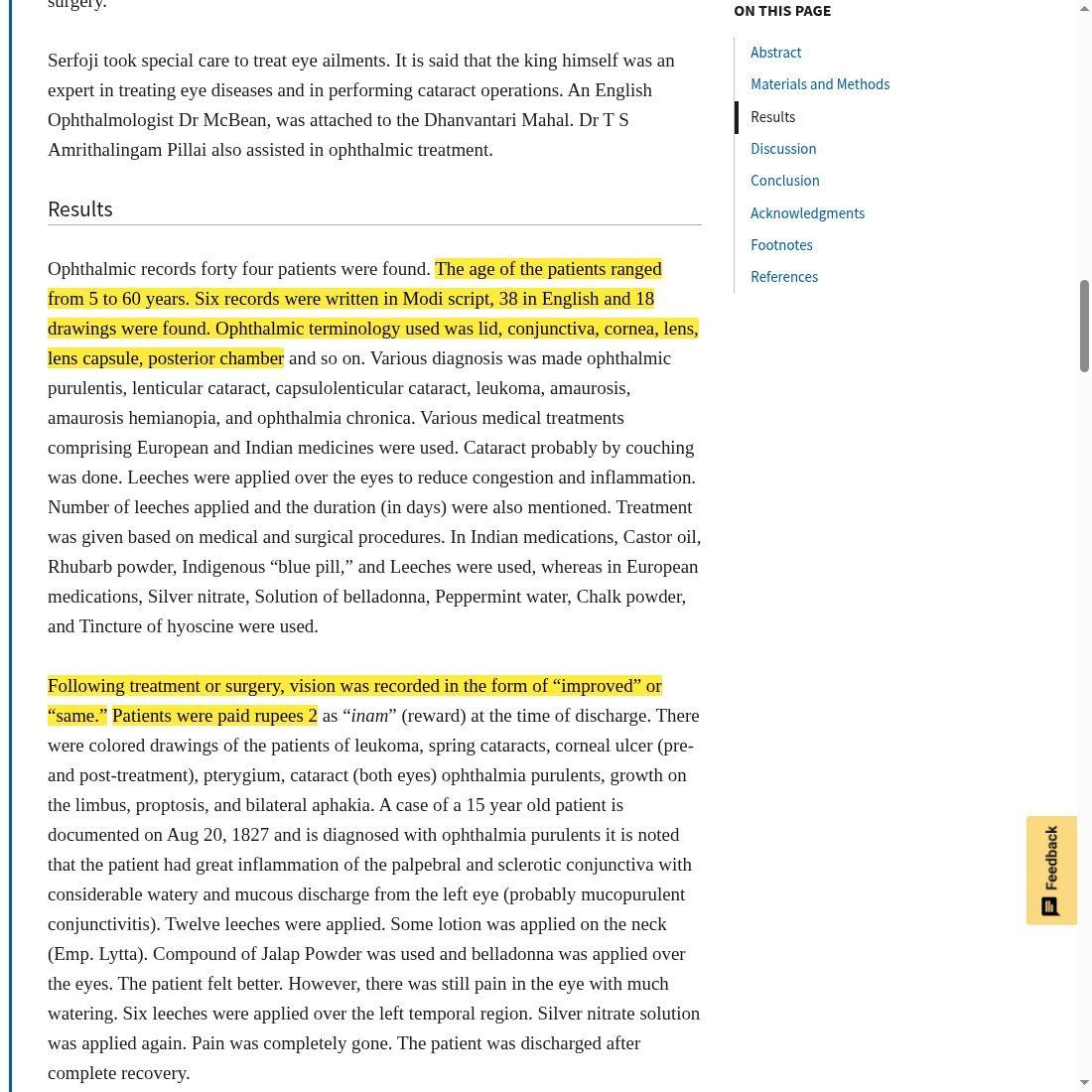
In March 2004, a team from Sankara Nethralaya in Chennai went through the eye records in the Sarasvati Mahal Library, Thanjavur. They reported 44 patient case sheets, 6 in Modi script and 38 in English, plus 18 drawings.
Patients were between 5 and 60 years old. The English sheets use the words of an eye clinic: lid, conjunctiva, cornea, lens, lens capsule, posterior chamber.
One entry is dated 9 September 1827. A 4 year old man had a cataract 6 months old. A needle was passed into his eye and the cloudy lens pressed down below the pupil. Part of the outer layer came loose and stayed in the pupil. The sheet notes much pain, then the treatment given, then the lens slowly absorbing and the man improving.
Diagnosis, treatment, a complication and the result are all on 1 record, and some cases have a painted picture of the eye as well. Outcomes were written as "improved" or "same", and patients were paid Rs 2 when they left.
The authors think the operation was probably couching. They also say Serfoji is "said" to have been skilled at cataract surgery, but the sheets don't show who held the needle.
Sources: J. Biswas, V. Badrinath, S.S. Badrinath, "Ophthalmic contributions of Raja Serfoji II (1798-1832)", Indian Journal of Ophthalmology 60(4):297-300, 2012.
Photo 1: A painted pair of eyes with handwritten annotations. The source identifies the condition as leucoma, a white opacity of the cornea.
Photo 2: The paper's record counts: 44 patient records, six in Modi script, 38 in English and 18 drawings. The March 2004 library visit is also highlighted.
Photo 3: Patient ages, anatomical terminology, recorded vision outcomes of "improved" or "same", and the Rs 2 inam on discharge.
Photo 4: The dated case in the post: 9 September 1827, a 45-year-old cataract patient. The highlighted passage describes the procedure and the lens fragment remaining in the pupil. The following lines record pain, treatment and improvement.
Image Source: Biswas, Badrinath & Badrinath, Indian Journal of Ophthalmology 60:297-300 (2012), Sarasvati Mahal Library collection. CC BY-NC-SA 3.0.
Further along my journey, near Andro village, I observed the traditional preparation of Yu through the fermentation and distillation of local rice using multi-tiered assemblies. Traditionally, Yu is used for medicinal and ritual purposes.
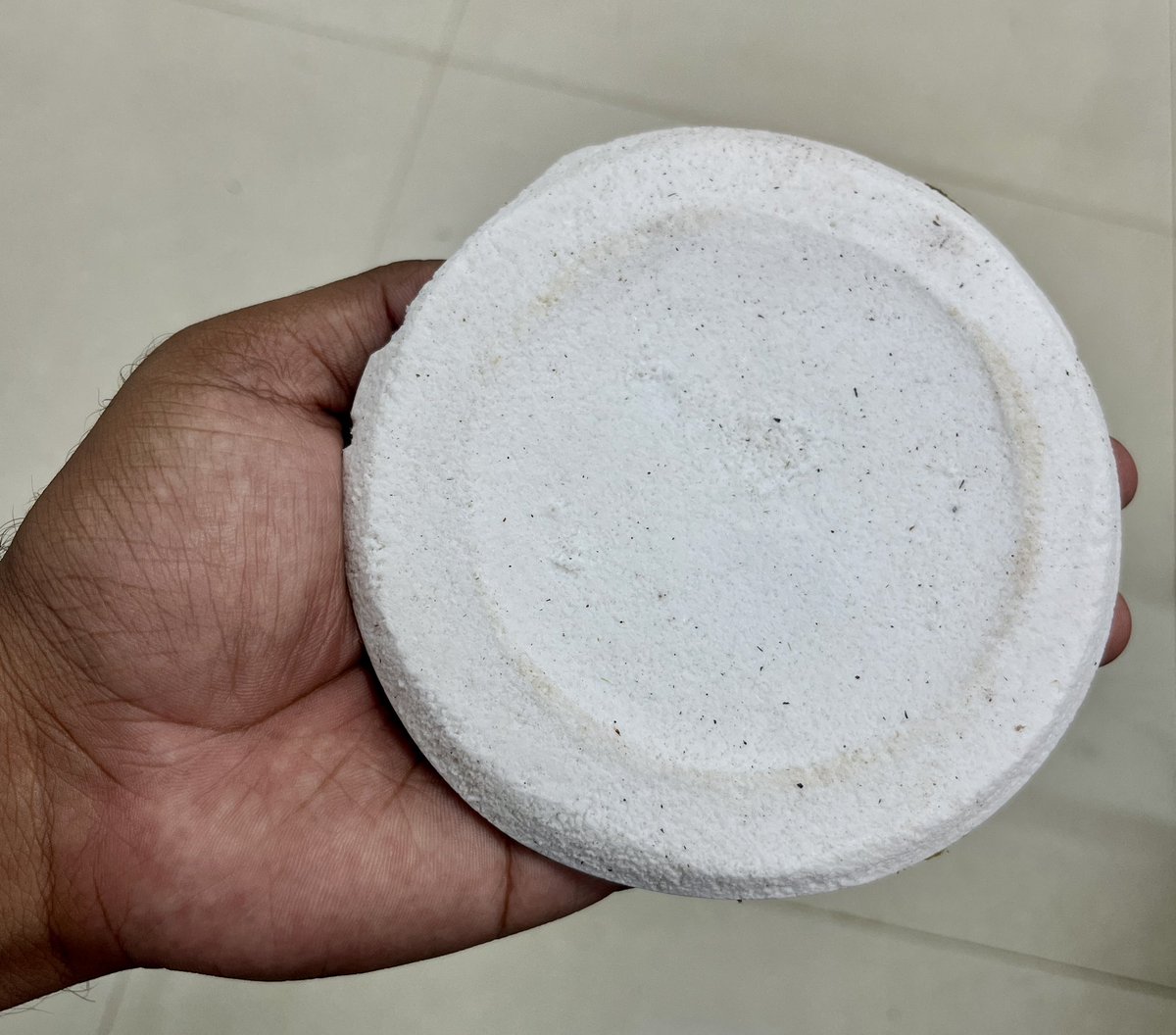
During my recent trip to Northeast India, Manipur, I explored indigenous practices reflecting the region’s rich heritage. At Ningel village, I witnessed traditional salt production from natural brine wells, known as Ningel Thumpak. #manipur#northeastindia
The preparation of Thumpak (Meitei Thum) involves turning the brine into flat salt discs through thermal evaporation, representing a centuries-old Meitei tradition preserved not merely for taste but also for ritual, culture, and identity.
@myogioffice A thought-provoking address by respected @vraman16 Sir. The need for Indian Knowledge Systems (IKS) to populate both School (and Higher Education) therefore, is urgent.
Step into interdisciplinary research in AYUSH, it’s a great opportunity to build and strengthen our Indo-traditional knowledge systems. This is an era to bridge traditional wisdom with modern research and innovation.
BAMS graduates can now explore opportunities through the **GATE examination**—opening pathways to higher education, research, biomedical sciences, and healthcare innovation at *IITs, IISc*
A powerful step toward **bridging Ayurveda with modern science!**
#BAMS#GATE#Ayurveda
Bhārata Gāthā & Bhārata Kathā, a two-day dialogue on Shri Ravindra Sharma “Guruji” and the Indian civilisational perspective on technology, ecology, society, culture, art, economics and ways of living.
8–9 Sept 2026, @IITBHU_Varanasi@IKS_Media
Happy Teachers’ Day, @vraman16 Sir! Your guidance, support and wisdom, especially your core mantra, “Use your Common Sense,” continue to steer our research journey everyday.
I’m truly blessed to be part of your group, Sir🙏🏻
#teachersday
My sincere and heartfelt gratitude to my mentor and Ph.D. supervisor, @vraman16 Sir, for his constant guidance, encouragement, and invaluable support throughout this research journey. 🙏 3/3
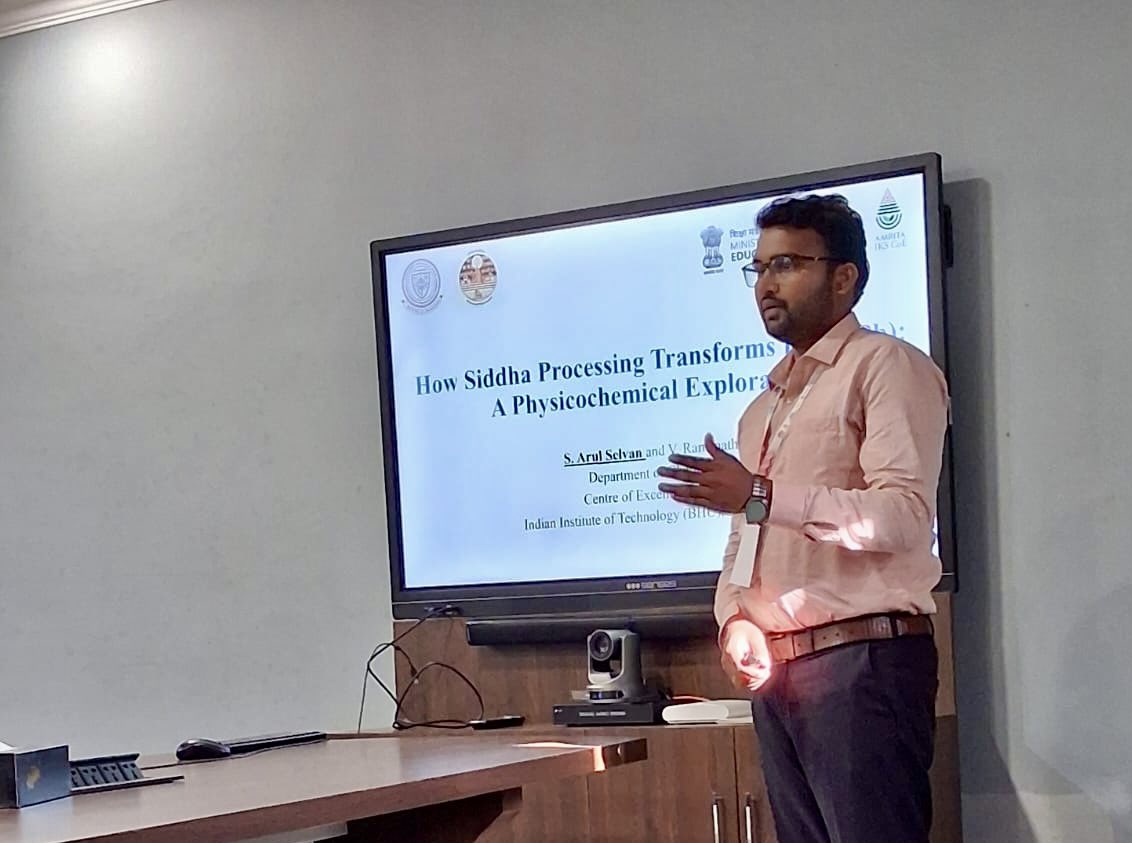
Delighted to share that I secured 3rd place in the oral presentation at the International Conference on bhāratīya Knowledge Frameworks (ICBKF 2026), held at @AMRITAedu , Amritapuri Campus. @IKS_Media@EduMinOfIndia@moayush 1/3
My research explored how Siddha processing transforms lead (Pb), through a physicochemical perspective, contributing to the scientific exploration of traditional Siddha knowledge systems and the emerging field of Siddha medicinal chemistry. 2/3