Our brains are large compared with other animals, so it is tempting to assume there was an evolutionary advantage to them – but that may not be true at all https://t.co/tCWrRk2amh
Alzheimer's will be curable by the 2030s
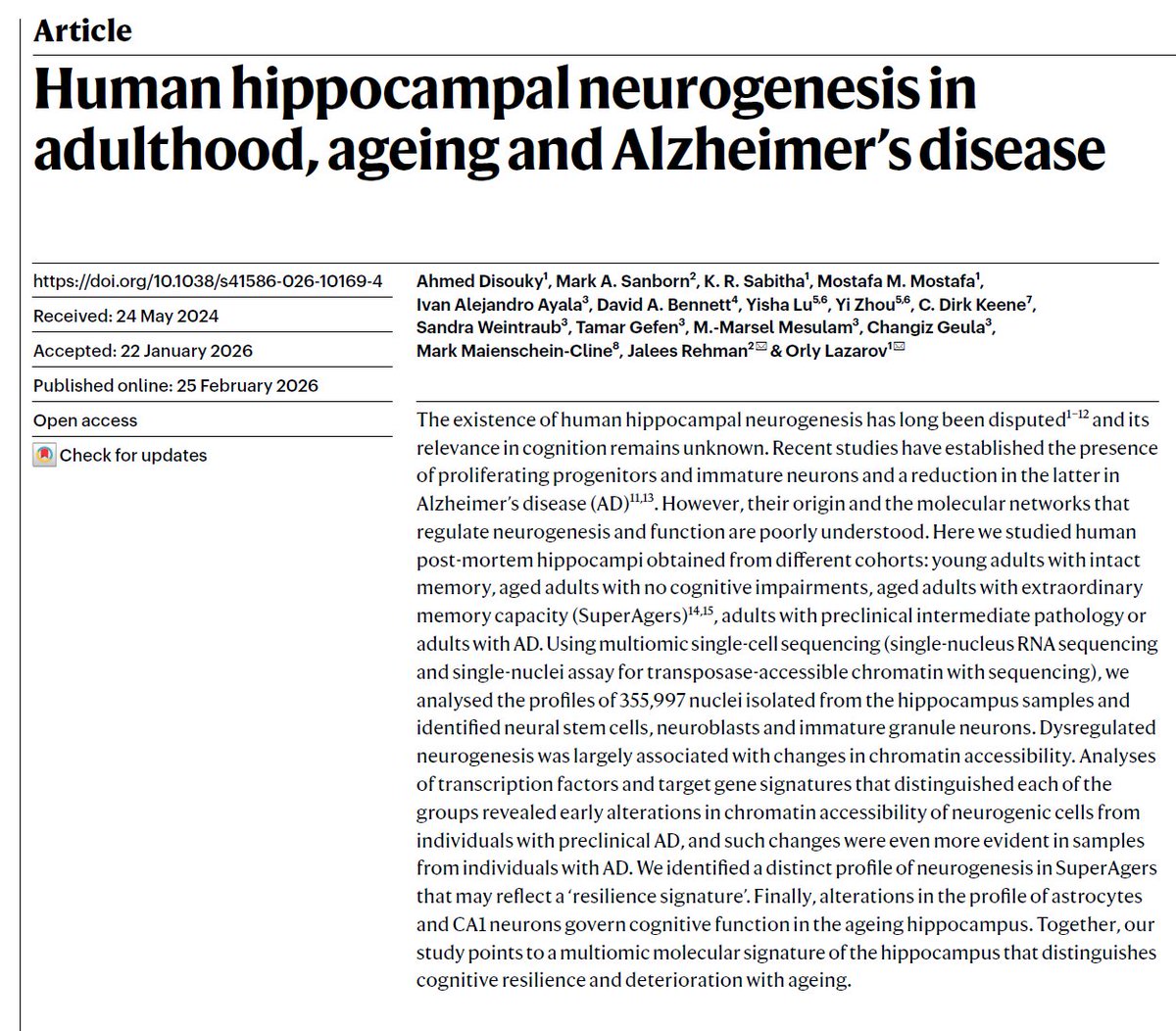
Scientists Discover Why Some Brains Resist Alzheimer's
Scientists have uncovered a natural defense mechanism that may explain why some people remain mentally sharp despite having the brain changes associated with Alzheimer's disease.
Researchers identified a rare population of immature neurons in the hippocampus that survive the toxic effects of Alzheimer's instead of dying. These cells activate powerful survival and stress response programs, helping preserve the brain's memory circuits.
Around 30% of older adults with Alzheimer's pathology never develop dementia symptoms, suggesting that the brain's own resilience may play a much bigger role than previously thought.
Your tattoo isn’t just decorative ink: it’s a permanent trigger that keeps your immune system locked in a lifelong cycle of chronic inflammation.
As soon as the ink is injected into your skin, your body recognizes the pigment particles as foreign invaders. Immune cells called macrophages immediately swarm the area and attempt to swallow them up. But because they can’t actually break down the ink, the macrophages eventually die, releasing the pigment back into the surrounding tissue — only for a new wave of macrophages to arrive and repeat the process.
This endless cycle is what keeps the tattoo permanently visible, while also maintaining a state of ongoing, low-level inflammation in the skin.
Over time, some of these ink particles migrate through the lymphatic system and accumulate in the lymph nodes, placing constant stress on the body’s defense mechanisms. Emerging research suggests this internal ink buildup may interfere with normal immune function, potentially reducing the effectiveness of certain vaccines, including mRNA types. Additionally, many tattoo inks contain heavy metals like nickel and cobalt. Combined with the chronic inflammation, this has been linked to a modestly elevated risk of lymphoma and skin cancer.
While tattoos remain a powerful form of self-expression, they represent a complex, decades-long biological conflict between your immune system and foreign substances embedded in your skin.
[Nielsen, C., Jerkeman, M., & Jöud, A. S. (2024). Tattoos as a risk factor for systemic lymphoma: A population-based case-control study. eClinicalMedicine]
A recent research demonstrates that birdwatching can literally rewire the human brain through neuroplasticity, producing measurable structural and functional changes that enhance perception, attention, and cognitive performance—potentially even helping to buffer against age-related decline.
While birdwatching has long been celebrated for its calming, restorative qualities, emerging neuroscientific findings reveal it delivers far deeper benefits. A 2026 study used diffusion-weighted and functional MRI to compare the brains of 29 expert birdwatchers (ages 24–75) with 29 matched novices (ages 22–79). Experts showed greater tissue density—indicating more compact, efficient neural organization—in regions tied to attention, perception, working memory, spatial awareness, and object recognition.
These structural adaptations enabled experts to identify birds, including unfamiliar or non-local species, with significantly higher speed and accuracy. During identification tasks, experts displayed increased activity in key areas such as the bilateral prefrontal cortex, bilateral intraparietal sulcus, and right occipitotemporal cortex—regions critical for visuospatial attention, object categorization, and memory.
This mirrors brain remodeling observed in other expertise domains, like multilingualism or professional musicianship, where prolonged practice fine-tunes visual and auditory processing. By repeatedly attending to subtle cues in plumage, songs, flight patterns, and behavior, birdwatchers drive cortical reorganization. Notably, these expertise-linked changes persisted across the adult lifespan, with older experts exhibiting brain features in relevant regions more akin to those of younger individuals—suggesting the development of cognitive reserve that may protect against aging effects.
[Wing, E. A., et al. (2026). The tuned cortex: Convergent expertise-related structural and functional remodeling across the adult lifespan. Journal of Neuroscience. Advance online publication. DOI: 10.1523/JNEUROSCI.1307-25.2026]
🧬 DNA Robots Inside Your Body — Real Science or Future Fantasy?
Imagine tiny “robots” made from DNA moving through your body, finding disease, and delivering medicine exactly where it’s needed. Scientists are actually developing these DNA nanorobots, and early lab tests show they can be programmed to recognize specific cells and release drugs in a controlled way.
Some designs may even help detect viruses or target cancer cells more precisely than traditional medicine. It sounds futuristic—but it is real science in development.
However, these DNA robots are not in human use yet. They are still in early research stages and mostly tested in labs or animals. Scientists are still working on safety, control, and stability before they can be used in hospitals.
So yes—it’s real science, but still a future possibility, not a current treatment.
Source: DNA nanorobots for targeted drug delivery and disease detection. ScienceDaily.
Recently, biologists built the most advanced artificial cell to date. “It’s a big step forward to this holy grail of making a living thing out of dead components,” said systems chemist Sijbren Otto. https://t.co/l1HwtdlS89
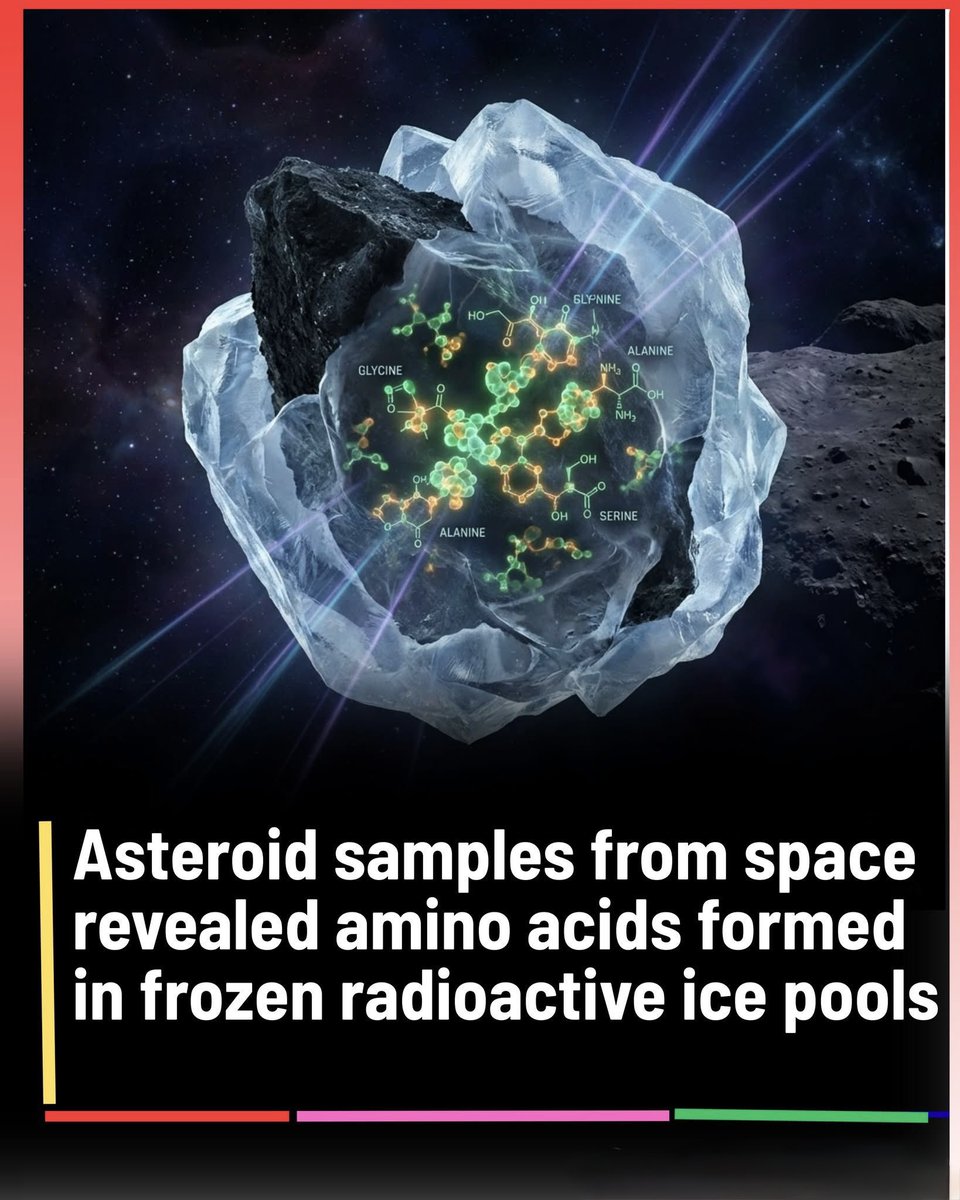
🚨 Researchers Just Found Life’s Building Blocks Hidden Inside Frozen Space Ice
Researchers have revealed something that sounds like science fiction.
When NASA’s OSIRIS-REx brought back dust from the asteroid Bennu, scientists discovered amino acids, the basic building blocks of life.
But here’s the twist.
Evidence suggests some of these molecules may have formed in freezing ice exposed to radiation in deep space… not in warm oceans, not on Earth, but inside icy space rocks billions of years ago. Picture it: silent, drifting ice in the darkness of space, slowly altered by cosmic radiation , quietly creating the ingredients for life.
This doesn’t mean life was on the asteroid.
But it does mean the chemistry that helps create life might begin in the coldest, harshest corners of the universe.
And that changes everything.
Emerging evidence suggests that the cell’s powerhouses do more than supply energy to the brain. Mitochondria may help synapses communicate, shape memory and even influence behavior.
By @GiorgiaWithAnI
https://t.co/voph23uPus
"Neuronal axons have traditionally been considered to be the primary mediators of functional connectivity among brain regions. However, the role of astrocyte-mediated communication has been largely underappreciated."
A new study reveals "a mode of communication between distant brain regions that is mediated by plastic networks of gap junction-coupled astrocytes".
#Science #Biology #Neuroscience #Brain
⏯️Astrocytes connect specific brain regions through plastic networks
https://t.co/P0CdMGo4LW
/
What makes something alive? We simply don't know, but synthetic biologists are a step closer to providing an answer thanks to SpudCell, the most sophisticated attempt at creating an artificial life form yet https://t.co/v5E4eiHmtz
Recent work by evolutionary geneticists suggests that aging is not an inevitable biological program but rather a consequence of the declining force of natural selection after reproduction, allowing harmful late-life mutations and aging pathways to persist. By combining evolutionary theory with modern genomics and aging biomarkers, researchers believe these conserved pathways can be targeted therapeutically to compress morbidity, extend healthspan, and potentially reverse some of the biological consequences of aging.
https://t.co/UEe6gkL0n8
"They independently start forming these ovarian structures without any natural human cells in the culture, and without forcing the cells artificially into these shapes. We find this remarkable to observe."
This is my favourite part from the @Conception article. Maybe we try too hard to micromanage biology...
The cancer-Alzheimer's paradox, an inverse correlation, with an unexplained mechanism
"The risk of Alzheimer’s disease in patients with cancer is significantly reduced, and the risk of cancer in patients with Alzheimer’s disease is halved."
https://t.co/JOI0agYsWq


![Rainmaker1973's tweet photo. Your tattoo isn’t just decorative ink: it’s a permanent trigger that keeps your immune system locked in a lifelong cycle of chronic inflammation.
As soon as the ink is injected into your skin, your body recognizes the pigment particles as foreign invaders. Immune cells called macrophages immediately swarm the area and attempt to swallow them up. But because they can’t actually break down the ink, the macrophages eventually die, releasing the pigment back into the surrounding tissue — only for a new wave of macrophages to arrive and repeat the process.
This endless cycle is what keeps the tattoo permanently visible, while also maintaining a state of ongoing, low-level inflammation in the skin.
Over time, some of these ink particles migrate through the lymphatic system and accumulate in the lymph nodes, placing constant stress on the body’s defense mechanisms. Emerging research suggests this internal ink buildup may interfere with normal immune function, potentially reducing the effectiveness of certain vaccines, including mRNA types. Additionally, many tattoo inks contain heavy metals like nickel and cobalt. Combined with the chronic inflammation, this has been linked to a modestly elevated risk of lymphoma and skin cancer.
While tattoos remain a powerful form of self-expression, they represent a complex, decades-long biological conflict between your immune system and foreign substances embedded in your skin.
[Nielsen, C., Jerkeman, M., & Jöud, A. S. (2024). Tattoos as a risk factor for systemic lymphoma: A population-based case-control study. eClinicalMedicine]](https://pbs.twimg.com/media/HMcwu39WYAASLfq.jpg)
![Rainmaker1973's tweet photo. A recent research demonstrates that birdwatching can literally rewire the human brain through neuroplasticity, producing measurable structural and functional changes that enhance perception, attention, and cognitive performance—potentially even helping to buffer against age-related decline.
While birdwatching has long been celebrated for its calming, restorative qualities, emerging neuroscientific findings reveal it delivers far deeper benefits. A 2026 study used diffusion-weighted and functional MRI to compare the brains of 29 expert birdwatchers (ages 24–75) with 29 matched novices (ages 22–79). Experts showed greater tissue density—indicating more compact, efficient neural organization—in regions tied to attention, perception, working memory, spatial awareness, and object recognition.
These structural adaptations enabled experts to identify birds, including unfamiliar or non-local species, with significantly higher speed and accuracy. During identification tasks, experts displayed increased activity in key areas such as the bilateral prefrontal cortex, bilateral intraparietal sulcus, and right occipitotemporal cortex—regions critical for visuospatial attention, object categorization, and memory.
This mirrors brain remodeling observed in other expertise domains, like multilingualism or professional musicianship, where prolonged practice fine-tunes visual and auditory processing. By repeatedly attending to subtle cues in plumage, songs, flight patterns, and behavior, birdwatchers drive cortical reorganization. Notably, these expertise-linked changes persisted across the adult lifespan, with older experts exhibiting brain features in relevant regions more akin to those of younger individuals—suggesting the development of cognitive reserve that may protect against aging effects.
[Wing, E. A., et al. (2026). The tuned cortex: Convergent expertise-related structural and functional remodeling across the adult lifespan. Journal of Neuroscience. Advance online publication. DOI: 10.1523/JNEUROSCI.1307-25.2026]](https://pbs.twimg.com/media/HMYcuI-WAAAF7yC.jpg)