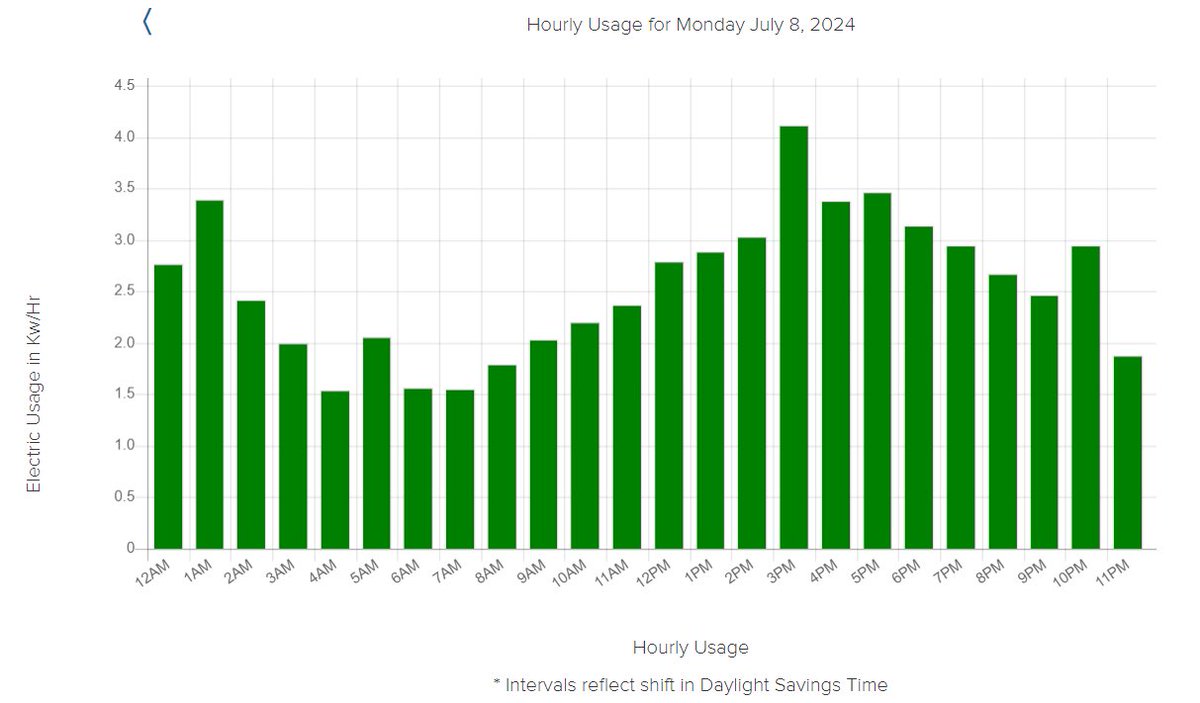
It's from the center point smart meters. The https://t.co/aVcJijP04U is showing the same. Now they added a tag and mentioned it was an estimation. It was shocking at first to discover the power usage even after the outage. I will not allow them to overcharge us for this, given the pain they have already caused us.
Got a power outage since early Monday Morning like million else in Houston. However, my meter refused to stop running as if the power never went out.
Check your meter and see if it is running During the outage!
#Beryl#houston#outage#Centerpoint
📢New from Dai et al.
📰DeepFace: Deep learning-based framework to contextualize orofacial cleft-related variants during human embryonic craniofacial development
https://t.co/SH8XNpwbt2
First video of LK-99 Full Levitation, aka flux-pinning
This video was just posted to the Chinese video-sharing site BiliBili and claims to be a highly pure synthesized sample of LK-99.
What is the physical phenomenon behind this and what does it mean?
Levitation of superconducting materials is a phenomenon unique to what is called Type-II superconductors, and is an effect whereby magnetic field lines becomes 'trapped' as it passes through the material, providing the force needed to levitate. These are the popular images and videos of cryogenically-cooled discs floating above a magnet frequently seen online and in the pinned post on my profile.
You can think of this like strands of hair being caught in gum - the gum is suspended in mid-air by adhering strongly to the hair as the hair passes through it. The hair in this case is magnetic field lines and the gum is the Type-II superconductor. Just like hair comes in individual strands, or in other words hair is 'quantized' or 'discrete', so is the flux trapped at the 'pinning centers' quantized in what are called 'magnetic vortices' - the quantization of pinned flux lines is a key property and distinguishing characteristic of Type-II superconductors (although technically can occur in Type-I superconductors if the material thickness is smaller than the London penetration depth, which is indeed very small - specifics for the physics nerds out there).
Flux-pinning is entirely unique to superconductors and is also wholly distinct from the Meissner effect. It is not a property of diamagnets or diamagnetism.
At @TRIUMFLab I contributed to flux-pinning studies in Niobium crystal superconducting radio-frequency cavities used for particle acceleration. In that application, trapped flux poses an issue by increasing the remnant surface resistivity of the cavity, which has the effect of decreasing its effective quality factor or Q-factor, which is a measurement of a resonators efficiency. SRF cavities typically have Q-factors of 10E10 and trapped flux at pinning centers reduces the maximum effective accelerating electric field used to drive charged particle bunches close to the speed of light.
Flux pinning is thought to arise in some Type-II superconductors by small imperfections in the crystal, also called volume defects, that enable flux to penetrate the material. In SRF cavities an issue that arises is any magnetic field that is passing through the material, e.g. by the Earth's background field, can become pinned or trapped inside the cavity as it transitions into a superconducting state. See some attached plots in the comments from a study showing how the surface resistivity of SRF cavities increases the more there is a background field as the cavity transitions into superconducting state.
This is the first video I am aware of that claims to show the flux-pinned levitation of a LK-99 sample. If this is in fact what is happening, then it is a very unique and promising finding of this new materials properties and potential for future study.
If this is real then it is truly ground-breaking
Very excited to share our recent work that built a single-cell multiomic atlas of the developing mouse secondary palate using @10xGenomics multiome platform, which profiles snRNA-seq & snATAC-seq simultaneously from the same cells. Check our preprint https://t.co/Sv19uF1Jqj.
The #ICIBM2022 Call for Abstracts/Travel award applications is now live! Information: https://t.co/I6Og6AZ5Og
Time to register for #ICIBM2022 - International Conference on Intelligent Biology and Medicine (@ICIBM
2022) August 7-9, 2022, Philadelphia, PA, USA
#Bioinformatics
The #ICIBM2022 Call for Abstracts/Travel award applications is now live! Information: https://t.co/I6Og6AZ5Og
Time to register for #ICIBM2022 - International Conference on Intelligent Biology and Medicine (@ICIBM 2022) August 7-9, 2022, Philadelphia, PA, USA
#BioInformatics
Proud to share our latest work to explore the cellular context of genes #WebCSEA https://t.co/h3AcFlDa7x and https://t.co/JP1ohPlj1P Have fun to play it like the gene functional analysis.