🔔After attending kando's session with Kazumasa Sato, #JASMY CEO earlier this year, I suggested to Mr. Kimura Katsuhiko that he organize an interview with #Jasmy's dad Kunitake Ando.
That wish has now been fulfilled 🙏, and the meeting is scheduled for
🗓️May 19th from 6 : 30 PM to 7 : 30 PM local time.
You will find the link below to access the
live stream at that day:
https://t.co/3duBvCfm4I
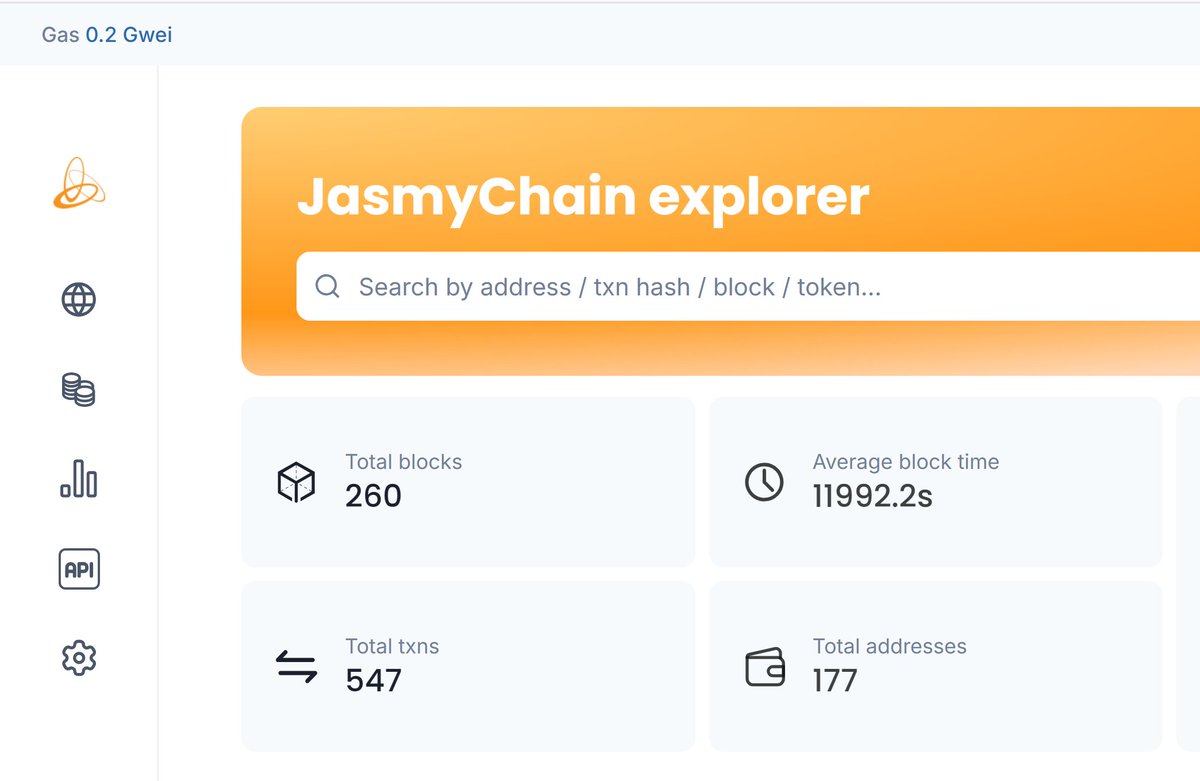
The explorer shows an average block time of 11992.2s, but this is mainly due to how Orb Stack works and how the explorer calculates the metric.
On OP Stack chains (e.g., Base), the network can keep producing empty blocks even with no transactions, so “avg block time” looks steady.
Orb Stack doesn’t produce empty blocks in the same always-on way, so the explorer effectively shows the average time until a transaction happens and a block is produced.
This does not mean the chain is halted—low activity can simply make the displayed average block time look very high.
Try it yourself: create a token on MemePad and swap it with JASMY — swaps go through smoothly without noticeable network delay.
🔭 Coin of the Day: $JASMY @JasmyMGT🔥
Introducing #JasmyCoin, Japan's first legally compliant crypto to empower users with control over their personal data in the IoT.
It incorporates technologies like SKC for identity verification and SG for device authentication. Powered by #JASMY.
Today’s trending coin, $JASMY, was launched in 2021 and has seen a +231.41% growth from ATL and has a total supply of 50 billion. 🪙
The top 4 IOT tokens by market cap.
The #1 performing coin among top 100 cryptos by market cap on CoinpediaMarkets today. The price rallied 20.32% to $0.009103 in the past 24 hours. 📈
The current market cap of JasmyCoin is $452.45M, surpassing major coins including $FARTCOIN and $SYRUP, and climbing from the #120 to the #100 spot globally. 🚀
Don’t miss out more updates: https://t.co/6LnFwENh1m
JANCTION’s jointly operated GPU verification nodes that support our proprietary Layer-1 are now fully live.
We’ll further strengthen network reliability through distributed deployment.
Node Sale now open:
https://t.co/apNCXvGe4I
#JANCTION#NodeSale#GPU#Blockchain#JCT
#50weeksIR (3/50)
@JANCTION_Global
https://t.co/0Kzv5pxo4n
Here is a very concrete example of what we experience today even before being able to browse a website. "consent." (GDPR law requires 🇪🇺)This is precisely the fight and the paradigm shift that #JASMY aspires to.
“We and our 340 vendors use cookies and similar technologies to store and/or access information on your device and process your personal data (such as your unique identifiers and browsing data) for the purposes of personalized advertising, measuring advertising performance, audience measurement, and service development, including through the use of precise geolocation data and identification by analyzing your device.”
In this model, your data is collected, cross-referenced, analyzed, and monetized by a large number of actors you do not know, without real control on your part. Consent is largely formal, buried in complexity, and the value created by your data never comes back to you. You are the source of the value, but not the economic beneficiary.
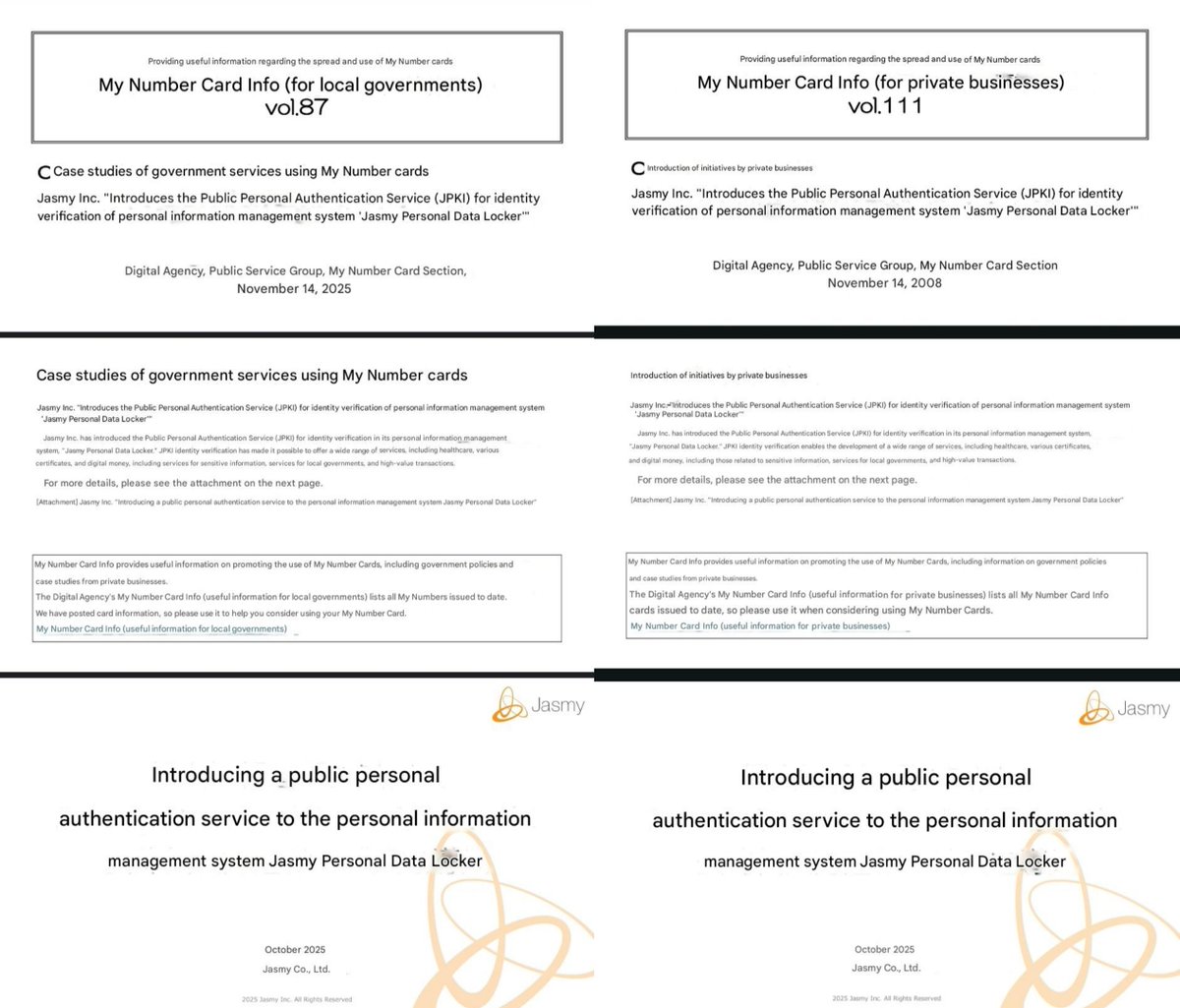
The Digital Agency of Japan has published two complementary bulletins one for local governments and the other for private companies citing #JASMY as an example of integrating the public authentication service JPKI, accessible via the MyNumber card, as an identity verification method for its personal data management solution via the PDL.
The integration of JPKI means that the PDL can now legally prove the existence and identity of a user, enabling access to use cases that require certified identity and the handling of highly sensitive data. The goal is to reduce costs and compliance burdens for businesses, decrease the risks associated with centralized data storage, and limit the legal liabilities normally imposed by data protection laws.
Within the PDL, the #JASMY ecosystem is designed to support various functions without requiring clients to deploy their own server infrastructure. The key components highlighted include identity management (with proof of existence via JPKI), the recording and storage of histories and logs (to trace actions and state changes), the issuance of certificates and digital rights (using mechanisms such as NFTs, SBTs, or other tokens for membership cards and credentials), as well as a local payment system, the DD Payment System, compatible with local currencies and digital vouchers.
The addition of MyNumber card authentication extends these capabilities to services that require verified identity and the handling of sensitive information: health data (exam results, allergies, genomic information), official certificates (diplomas, attestations, administrative documents), municipal services (residence certificates, disaster reports, social assistance files), skills profiles and professional histories, as well as financial services involving high-value electronic money or transfers requiring legally compliant KYC verification.
The Digital Agency emphasizes that without JPKI, the platform’s use was limited to services that did not require legal identification, online gaming, machine focused IoT logs, management of assets not tied to a human identity. With JPKI, the platform becomes compatible with public and regulated uses, opening the door to partnerships with local governments, healthcare institutions, educational organizations, banks, and insurance companies.
Jasmy is therefore finally recognized at the national level, positioning itself as a digital infrastructure with a sufficient level of trust to handle sensitive data within the country’s ecosystem. The documents addressed to local governments highlight the value for municipalities in exploring and adopting PDL solutions certified through MyNumber to modernize administrative services, improve the security of exchanges, and reduce operational and compliance costs.
The documents addressed to the private sector explain that companies can benefit from a model in which they design customer services without owning the data management infrastructure themselves, relying on the PDL to access user data with consent and legal proof of identity. This facilitates the creation of financial services, digital health solutions, certificate issuance systems, and other offerings that depend on certified identity.
The Agency also outlines the institutional guarantees provided by Jasmy, including its recognized certifications PrivacyMark, ISO/IEC 27001 as well as its registered activities related to the development and operation of blockchain platforms and IoT solutions. These elements are important for administrations or companies seeking to rely on a provider capable of meeting security and compliance requirements.
Jasmy is entering a new phase as we prepare to launch the mainnet of our L2 chain, built on our DID technology “PDL,” which enables verified data, devices, and user-owned assets to generate real value.
Within this vision, JANCTION is one of our most important partners.
By enabling GPUs, PCs, and other device resources to function as authenticated, revenue-generating assets, JANCTION is bringing practical use cases to life on top of the Jasmy infrastructure.
Jasmy stands together with JANCTION.
Our projects reinforce each other and will continue to grow through mutual interaction as we build the next generation of decentralized digital infrastructure.
Multiple MVPs are already running natively on Jasmy, and this is only the beginning.
Jasmy provides the trusted foundational layer; JANCTION expands the possibilities built upon it.
Please stay tuned for what comes next.
@JANCTION_Global@JanctionMGT_JP@JANCTION_LINK
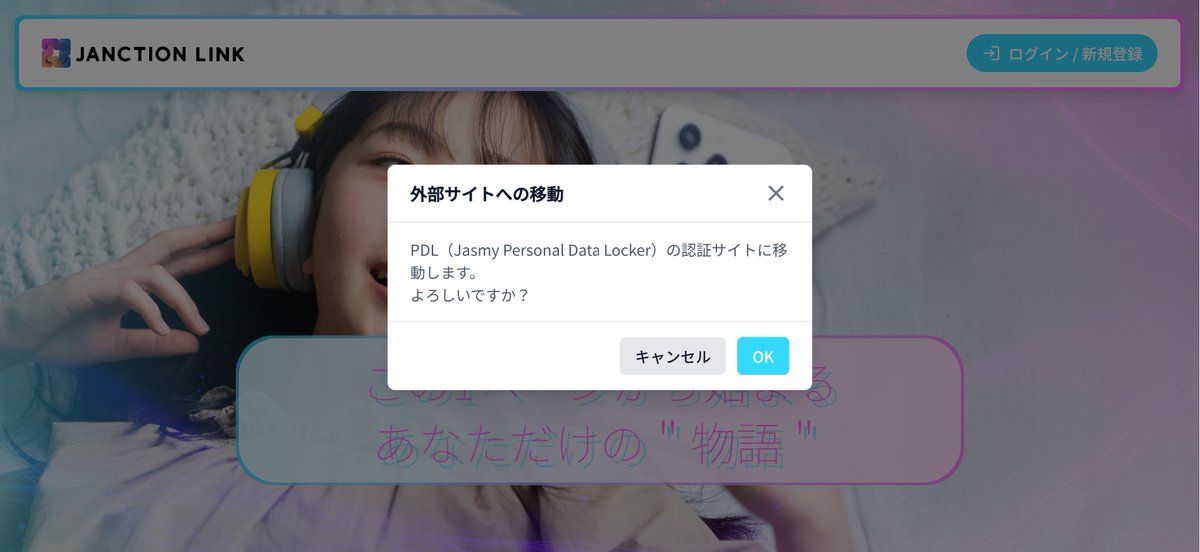
#JANCTION LINK is now live.
Login is powered by #Jasmy’s Personal Data Locker (PDL).
Guided by Create→Deliver→Preserve, Jasmy will build a secure environment to safely preserve creators’ works.
https://t.co/grHylS1vMI
PR: https://t.co/PEnmOxOA5f
#Jasmy#JANCTION#JANCTIONLINK #CreatorTools #Web3
#Jasmy is pleased to announce the first phase of its blockchain-based platform development. This initiative leverages the synergistic effects of the Jasmy Platform—including Jasmy's online storage-based personal information management and usage system, Jasmy Personal Data Locker (PDL)—combined with #Panasonic Advanced Technology's extensive IoT expertise, experience, and advanced technological development capabilities.
https://t.co/dFQxY6xlyO
In the age of decentralized compute, most infrastructure plays are focused on raw power — sourcing GPUs, spinning up nodes, routing workloads. But power without coordination is chaos.
Janction solves the missing layer in decentralized intelligence.
Not by becoming yet another chain — but by orchestrating how AI agents are deployed, executed, and rewarded across heterogeneous compute environments.
Welcome to Janction: a modular execution layer for multi-agent systems, optimized for DePIN and AI.
Not a Blockchain. Not a Compute Network. A Brain.
Janction isn’t trying to be the next Solana or any other compute protocol.
Instead, it acts as the logic layer that coordinates modular AI pipelines across existing compute, storage, and data networks. Janction is the cognitive fabric that routes, optimizes, and settles agent-based execution in real time.
Imagine an AI workload:
· ingesting signals from off-chain feeds
· spinning up parallel agents for inference and analysis
· calling decentralized compute across multiple providers
· settling rewards and slashing based on performance
· doing all this trustlessly, verifiably, and without human intervention
That’s the Janction runtime at work.
The Modular Execution Kernel (MEK)
At the heart of Janction is the Modular Execution Kernel (MEK) — a fully on-chain, agent-native runtime environment.
Each MEK is like a sovereign agent — capable of ingesting task inputs, interacting with off-chain compute networks, and outputting results that are then validated and recorded on-chain.
Unlike traditional smart contracts, MEKs are designed to be:
· Composable: Agents can call other agents, forming emergent multi-agent systems
· Portable: Agents aren’t tied to any single blockchain or DePIN provider
· Autonomous: They execute, evaluate, and evolve based on signals, incentives, and policy
In short, MEKs are the execution primitive for decentralized AI.
The Metagraph: Verifiable Coordination
Execution alone isn’t enough. You need coordination.
Janction introduces the Metagraph — an on-chain graph of agent tasks, compute resources, and outcomes.
The Metagraph enables:
· Transparent settlement for compute providers and agents
· Reputation scoring based on verifiable task performance
· Dynamic routing of workloads based on latency, cost, and reliability
Think of it like a neural network for DePIN. Each node is an agent. Each edge is an execution path. The system learns, adapts, and optimizes over time.
Why It Matters
Most DePINs are struggling with one thing: monetization beyond raw resources.
Janction gives them intelligence. It plugs into DePIN networks and turns idle compute into verifiable AI execution environments — no trust required.
For AI builders, Janction provides the abstraction needed to go multi-chain, multi-agent, and modular from day one.
For the ecosystem, it unlocks a vision of modular, decentralized intelligence — where agents coordinate across compute, data, and chains, without a centralized orchestrator in sight.
The Bottom Line
The monolithic AI stack is dead.
The future is agent-native, decentralized, and modular.
Janction isn’t just a runtime — it’s a coordination revolution.
Agents are the new apps.
Janction is where they come to life.