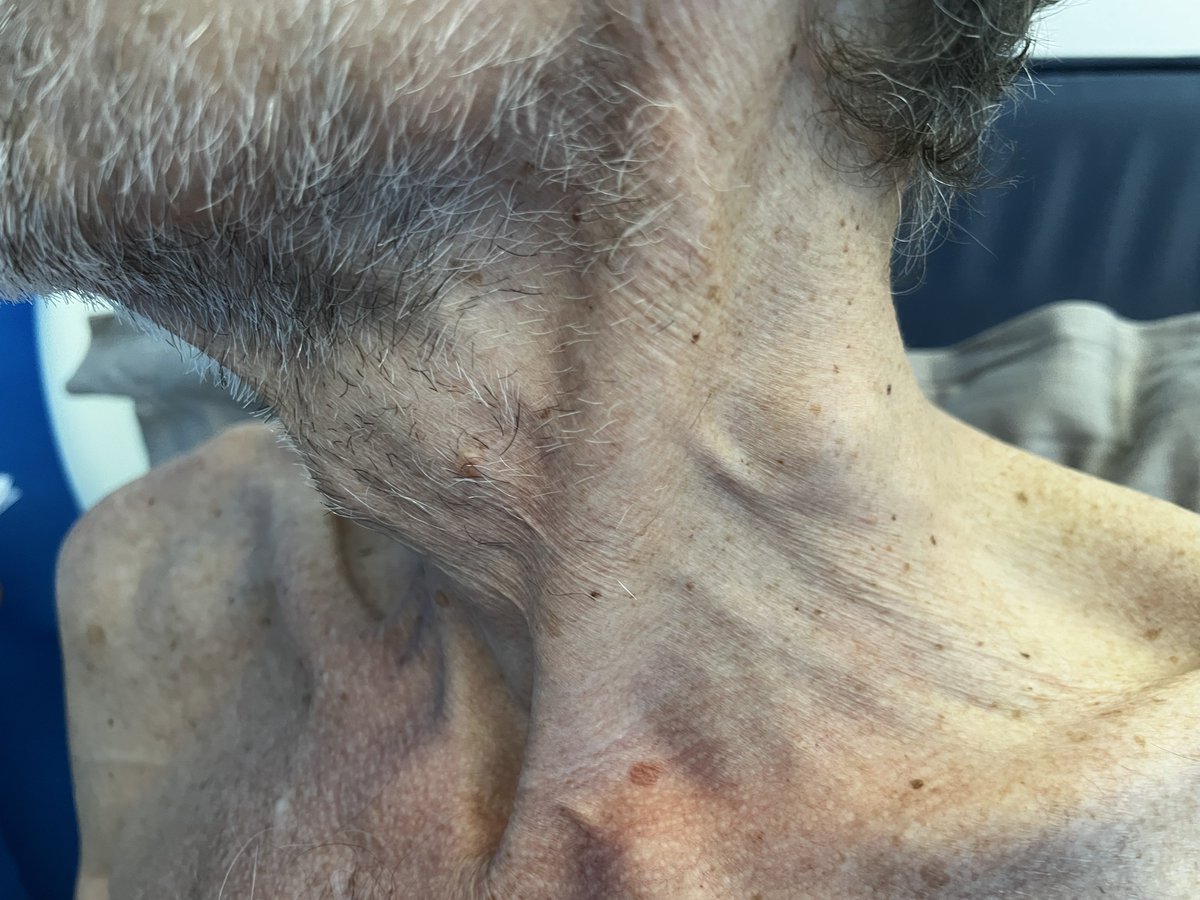
It's due to a temporary change in local muscle dynamics and venous drainage. Botox works by inhibiting acetylcholine release at the neuromuscular junction, leading to paralysis of targeted facial muscles, particularly the frontalis in the forehead. When the frontalis muscle relaxes, the surrounding tissue loses its usual tone and support, which can unmask or cause superficial veins to dilate and become more visible, especially in individuals with thin skin or preexisting venous prominence. Also, altered facial expression patterns may shift venous return pathways, causing pooling or increased pressure in superficial veins. In rare cases, if injection technique inadvertently irritates or compresses nearby vasculature, it can transiently alter blood flow and contribute to the prominence. This effect is typically benign and cosmetic, often improving as the muscles adapt or with subsequent treatment adjustments.
With an orbital floor fracture in peds, vagus nerve stimulation can occur via stimulation of V1, causing the oculocardiac reflex - this produces bradycardia, vomiting, syncope, and even asystole. Be ready with atropine and epinephrine!
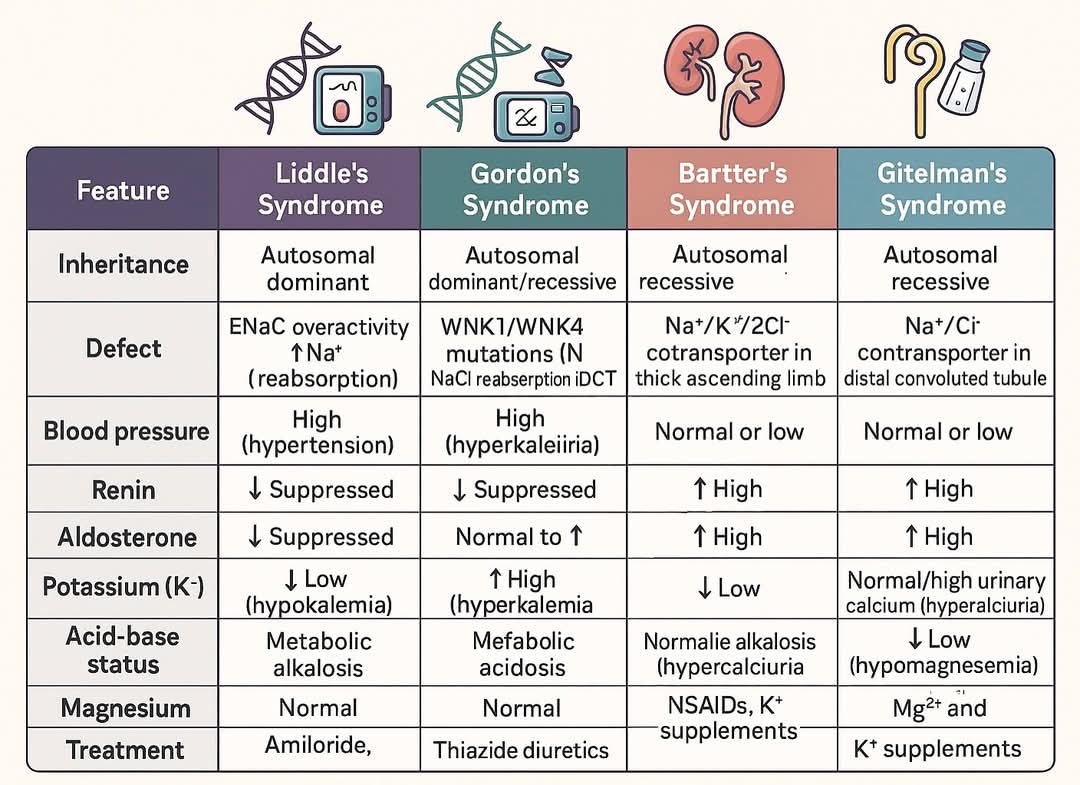
The image presents a table comparing four renal tubular disorders: Liddle's syndrome, Gordon's syndrome, Bartter's syndrome, and Gitelman's syndrome.
https://t.co/iWk9p8gkJV
Based on the image, the lesion on the child's nose appears to be cutaneous leishmaniasis — a parasitic skin infection transmitted by the bite of an infected sandfly. It typically presents as a slowly enlarging sore that can ulcerate, crust over, and become inflamed, as seen here.
Likely Diagnosis: Cutaneous Leishmaniasis (also known as "Oriental sore")
Related City Name: The disease is commonly associated with Aleppo, Syria, which is why it's sometimes colloquially called: "Aleppo boil" or "Habat Halab" (حبّة حلب) in Arabic.
It’s endemic in parts of the Middle East.
===
I'm genuinely glad that I'm not a physician — I deeply respect those in the field, but I must admit that certain diseases, especially dermatological ones, can be quite unsettling to me.
I'm simply an analyst who knows how to leverage tools and information to arrive at the closest possible diagnosis. My strengths lie in analytical reasoning, grounded in mathematics and computer science, where I'm more accustomed to tackling abstract, complex problems rather than clinical ones.
So while I may not be diagnosing patients, I do know how to dissect a problem, follow the logic, and identify patterns — whether in code, equations, or symptoms.
👉Gingival hyperplasia (overgrowth of gum tissue) is associated with several conditions and medications.
👉Common causes include:
👉Medications:
1. Phenytoin – anticonvulsant (most classic cause)
2. Cyclosporine – immunosuppressant used in transplant patients
3. Calcium channel blockers – especially nifedipine, amlodipine, and verapamil
👉Systemic Conditions:
1. Leukemia – especially acute monocytic leukemia
2. Pregnancy – due to hormonal changes
3. Puberty – hormonal fluctuations can cause gingival enlargement
4. Vitamin C deficiency (Scurvy) – leads to swollen, bleeding gums
5. Poor oral hygiene – leads to plaque-induced gingival inflammation and overgrowth
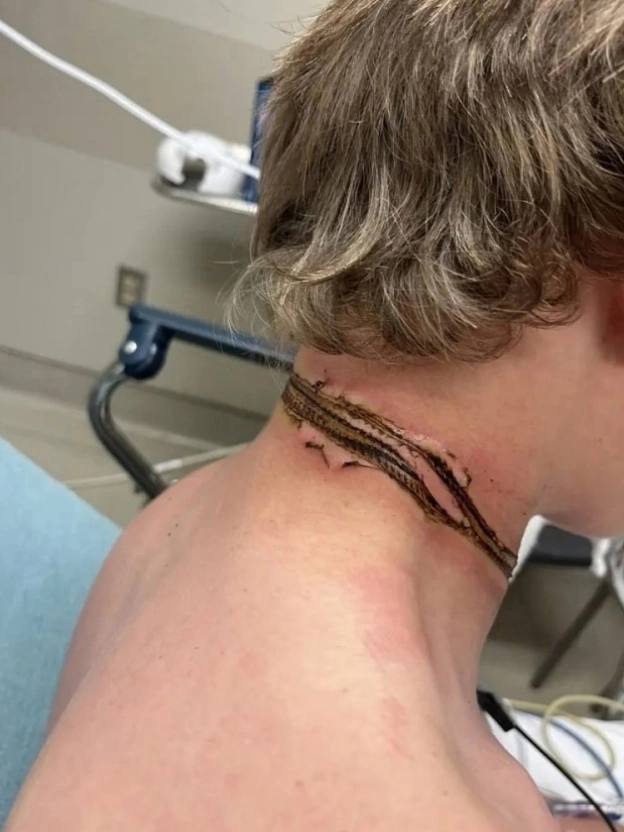
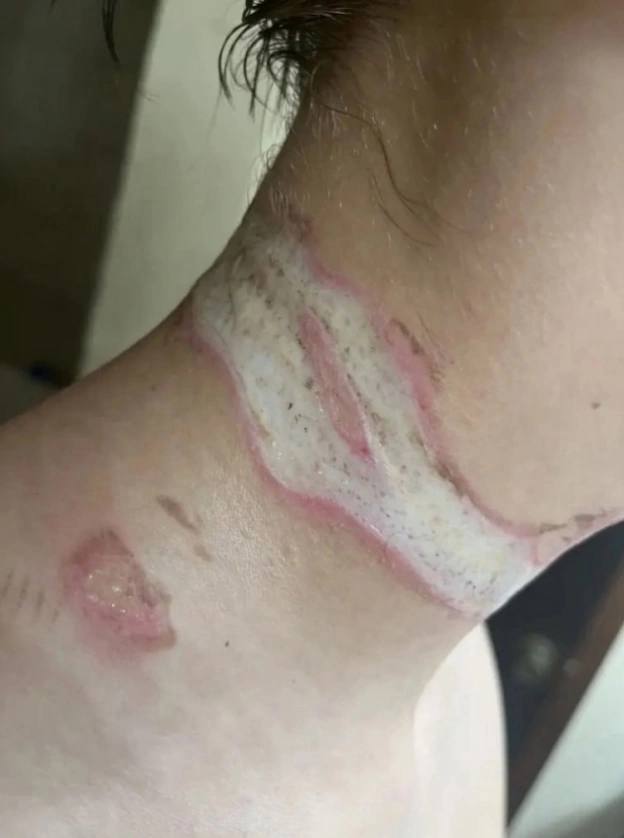
An incident occurred in the States: sixteen-year-old Reis Ogdal, having left his smartphone charging on his bed, fell asleep. During his sleep, while moving, he accidentally touched the charger's wire with a chain, which resulted in an electric shock. Fortunately, the young man survived.
In order to prevent accidents, it is recommended to refrain from using chargers not only in damp rooms, such as the bathroom, but also in the bedroom, in particular, directly in the bed.
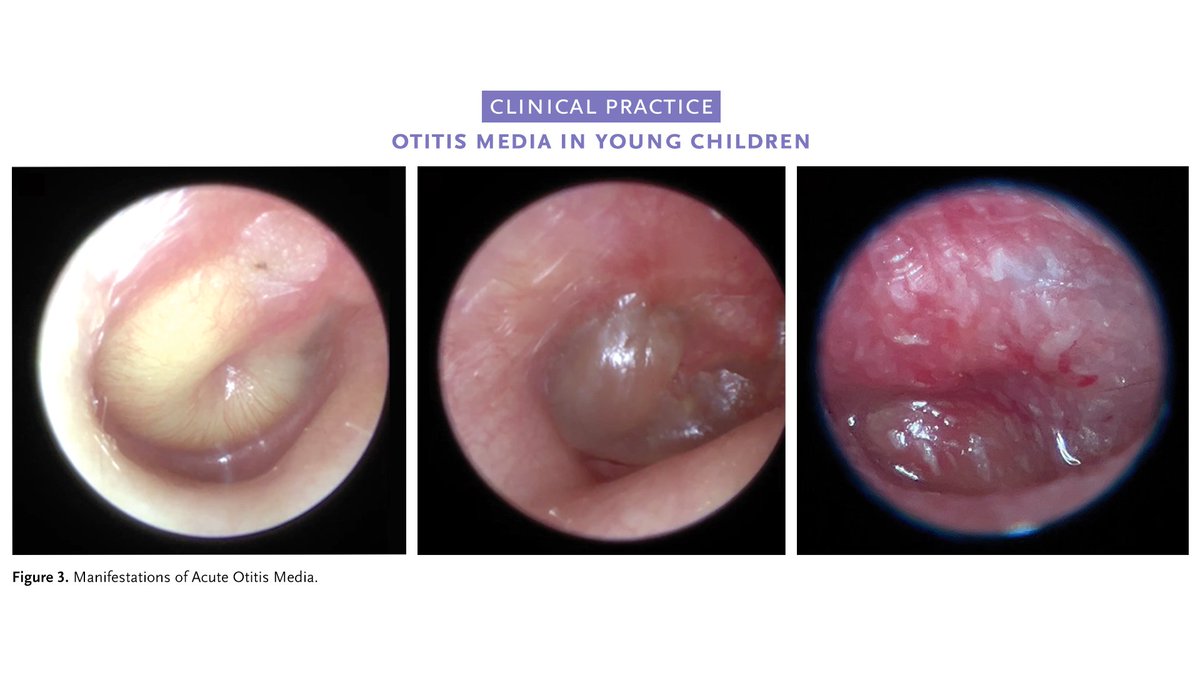
Acute otitis media occurs almost exclusively after a viral upper respiratory tract infection. Children with mild or moderate symptoms can be treated with antibiotics or closely observed.
Learn more in the Clinical Practice article “Otitis Media in Young Children” by Nader Shaikh, MD, MPH, from @PittHealthSci and @childrenspgh: https://t.co/aQ49ucNhdd
The redistribution of blood flow. During digestion, a significant amount of blood is diverted to the stomach and intestines to support the digestive process - a phenomenon called "postprandial hyperemia." When you start running, your body simultaneously demands increased blood flow to the working muscles and diaphragm, creating a competition for blood supply. This can lead to temporary ischemia (oxygen shortage) or cramping of the diaphragm, especially near the phrenic nerve, which supplies both the diaphragm and some abdominal regions. Also, the jostling of a heavy stomach can tug on ligaments connecting internal organs (like the gastrophrenic ligament), irritating nerve endings and further contributing to that sharp, stabbing sensation.