Professor of Child Psychology & UKRI FLF @ExeterMed. Adventurous play. Child anxiety. Psychologist and parent, passionate about children's emotional well-being.
Published today our paper about why adventurous play might decrease children's risk for anxiety. This forms the basis for my @UKRI_News#UKRIFLF Grateful to @kathrynlester1 for being a fantastic co-author. Please share @mbrussoni@EllenBSandseter@timrgill https://t.co/m0Jcq3wTs7
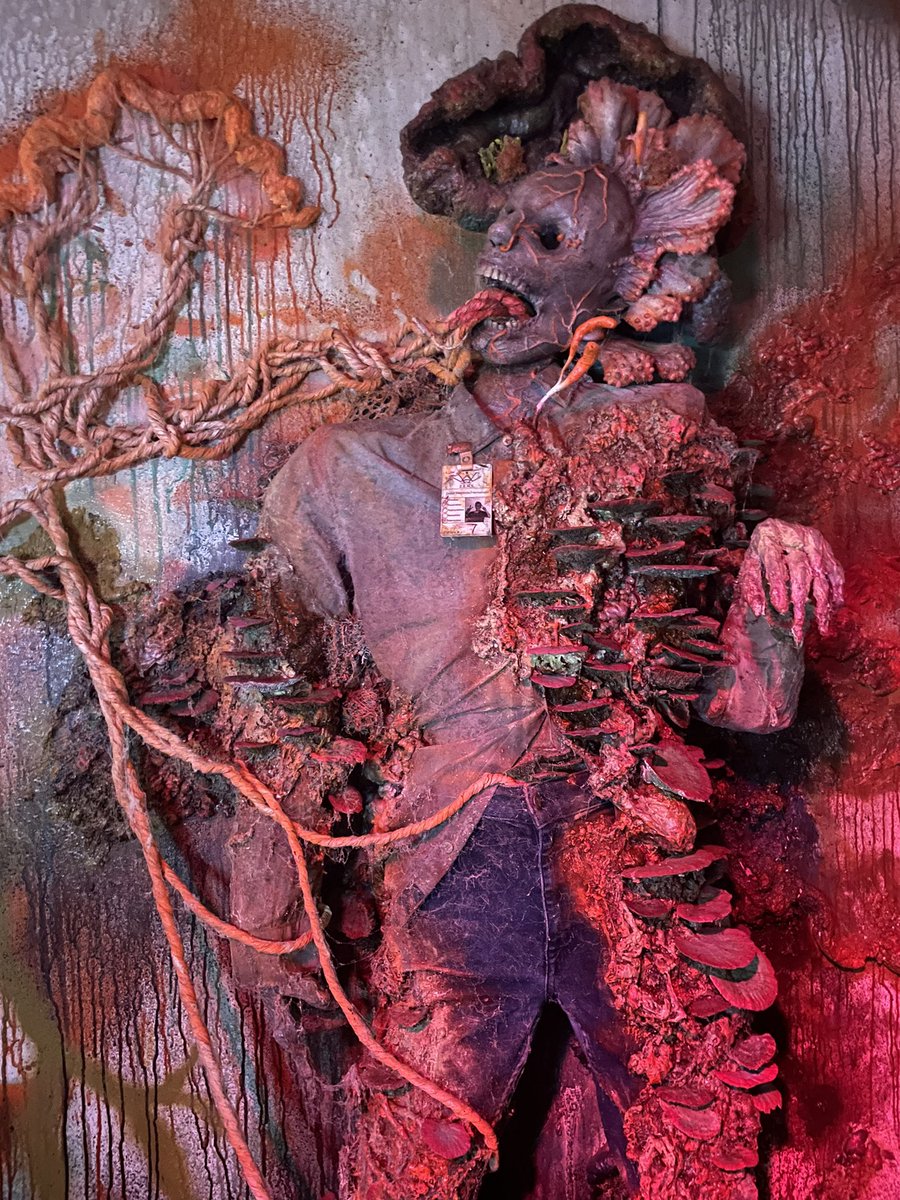
So grateful to the brilliant team @RecFearLab for hosting me last week. Not many academic visits include an evening at a ‘haunted house’ and waking up with fake blood in my hair 😂
I left feeling excited about continued collaboration and my next visit!
‘Girls play outside less than boys even at two years old, UK survey reveals’ - @Guardian
https://t.co/nh4yd3YtKi
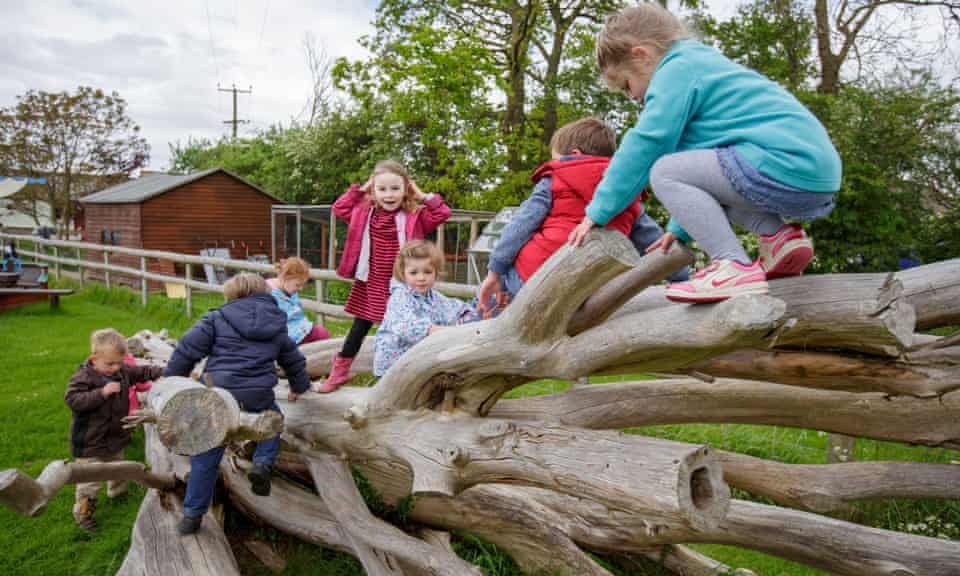
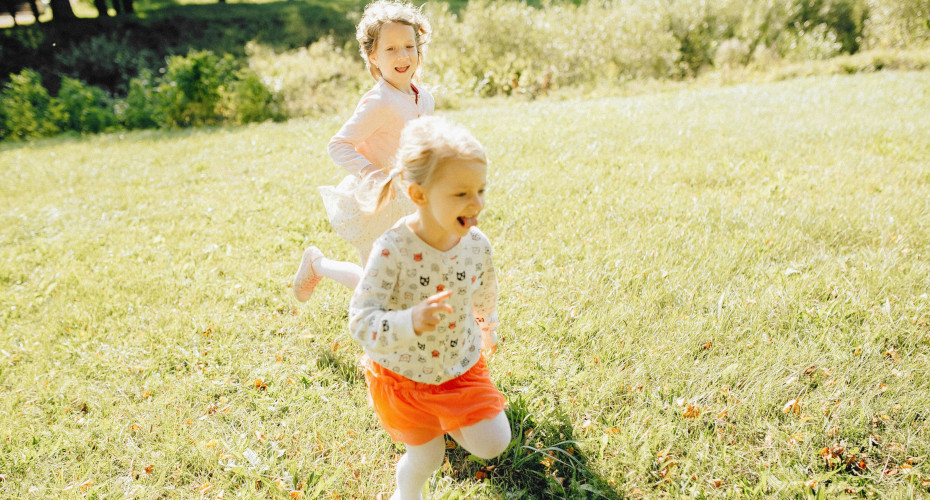
Girls play outside in nature less than boys even at the age of two, according to the first national survey of play among preschool-age children in Britain.
“The results highlight inequalities in play even in the youngest age group, which may exacerbate existing inequalities in health”
The research, which was carried out by a team from the universities of Exeter and Cambridge, surveyed more than 1,100 parents and carers of children aged two, three and four in England, Scotland and Wales.
They were asked about the time children spent playing in a range of locations including at home, in a garden, on the street, in a playground or out in green space. Researchers then calculated the amount of time allowed for play overall, play outdoors and ‘adventurous’ play time.
They found that preschool children spent approximately four hours a day at play, of which one hour and 45 minutes was spent playing outdoors, mainly in back gardens at home. Away from home, children played in playgrounds and green spaces, with the most adventurous play usually associated with indoor play centres.
An 2012 study focusing on children’s play aged five to 11 revealed a generational decline in children’s freedom to play out unsupervised. It also found that children who spent more time playing outdoors had fewer symptoms of anxiety and depression.
@DrHelenDodd, professor of child psychology at the @UniofExeter, conducted that survey and co-led a subsequent sister study focusing on preschool children.
“When children play in nature, they’re more likely to be active, to play in an adventurous way like climbing trees, and to connect with and learn about nature,” she said. “Problems may arise if children have not had enough opportunity to play adventurously and to learn about managing feelings of uncertainty and anxiety in a playful way.”
🏫🚸🌿🍁🍂🪵 🚲 🛴 🛹🛼 🛝 🏃🏼♂️🏃🏼♀️🏃🏾👩🦽🚴🏿🚏🚶🏻🤸🏾♂️🤸🏼♂️🌳🏘️
#PlaySufficiency #FreePlay #Play #PhysicalLiteracy #PhysicalActivity #ActiveTravel #PlayStreet #SchoolStreets #StreetPlay #HomeZones #Parks #FreerangeUrbanNeighbourhoods #FUN
#Playces #Splace #Playgrounds #KnowBallGames #UNCRC #Article31
"It's concerning that at age two, we're already seeing these differences... girls may already be at a disadvantage very early in life."
New research co-led by @DrHelenDodd has found by aged 2, girls are already playing outside less than boys.
Read more: https://t.co/t4T8wscUNQ
Really excited that @Anna_M_Price and I from @ChYMe_Exe will be working on this with @UniofExeter colleagues and building new collabs with @UniofBath. Look forward to getting started!
Keynote speakers are confirmed for Child in the City 2024 Seminar #KeepOnMoving, from 3-4 December in Rotterdam. It will explore themes around access to physical movement & outdoor play in cities. Book by 19 October for our 'early bird price'. https://t.co/Vljvm8R4kK
The Curriculum and Assessment Review, led by Professor Becky Francis, is seeking evidence from across the education sector, including teachers, parents, children and employers.
Your experience and insight will help to shape the future of education for our young peopleThe Curriculum and Assessment Review, led by Professor Becky Francis, is seeking evidence from across the education sector, including teachers, parents, children and employers.
Your experience and insight will help to shape the future of education for our young peopleThe Curriculum and Assessment Review, led by Professor Becky Francis, is seeking evidence from across the education sector, including teachers, parents, children and employers.
Your experience and insight will help to shape the future of education for our young peopleThe Curriculum and Assessment Review, led by Professor Becky Francis, is seeking evidence from across the education sector, including teachers, parents, children and employers.
Your experience and insight will help to shape the future of education for our young peopleThe Curriculum and Assessment Review, led by Professor Becky Francis, is seeking evidence from across the education sector, including teachers, parents, children and employers.
Your experience and insight will help to shape the future of education for our young people.
Power is fleeting. Respect is lasting.
Reputation is not a function of wealth, fancy titles, or prestigious memberships. It's a matter of what we contribute and how we treat others.
Admiration is earned through actions, not positions. The best way to be valued is to add value.
https://t.co/l6YaBz236P
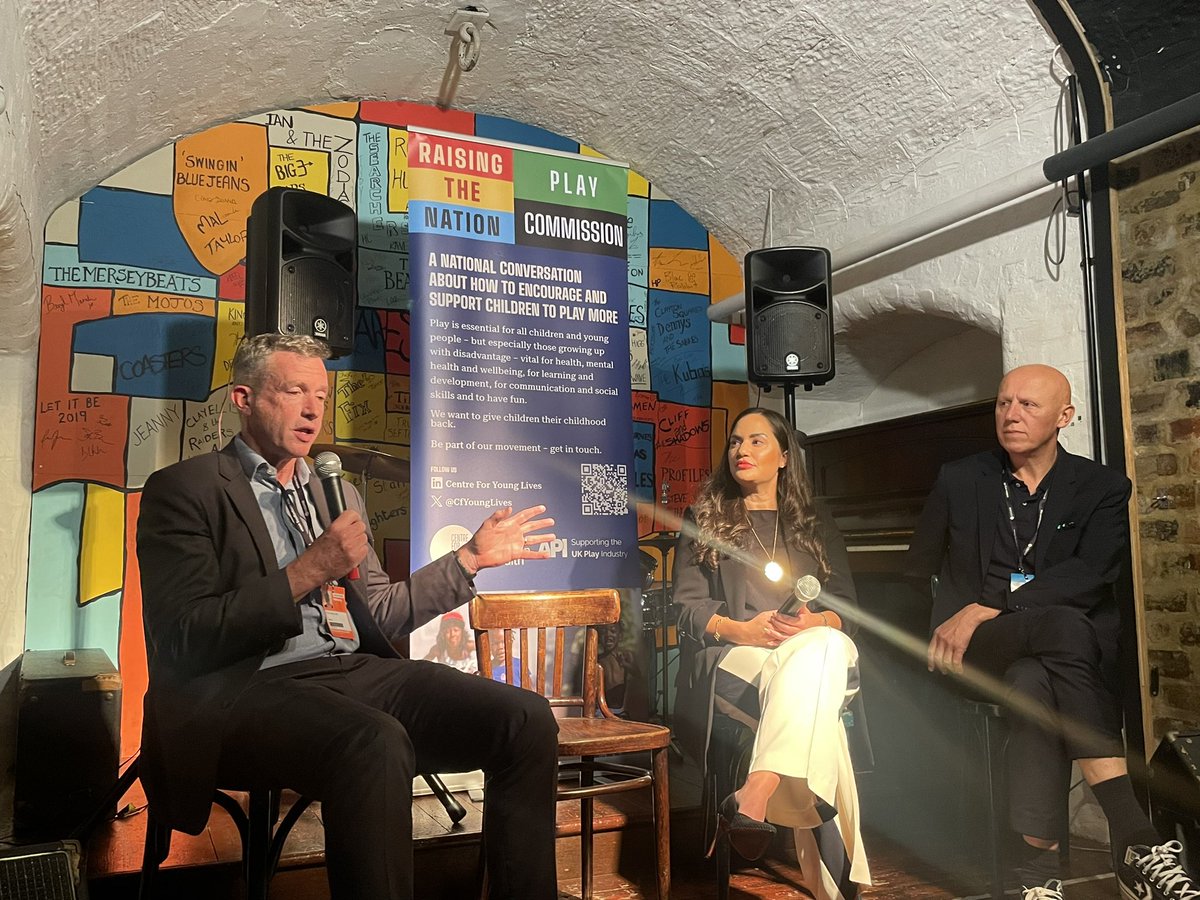
@bphillipsonMP@JanetDaby Next up at our Building a Bright Future reception is a panel on play and the creative arts with @Paul_Lindley@RachelCBoyle1@MarcusDavey_.
We need great teacher training, support for the arts, and a play strategy to unleash the potential of play & creative arts say speakers.
We're extending the deadline for our #PlayCommission call for evidence.
You can now submit your views until 31st October 2024, we'd love to hear from you!
Find out more: https://t.co/yoPIbVlH03
Inclement weather is CONSISTENTLY reported as the number one barrier for outdoor play & learning, but it doesn’t have to be! Learn from teachers across Canada how to overcome this perceived barrier 👇
A whole lot of teachable moments do not involve a teacher -- or an adult at all.
Childhood curiosity is natural, if we take a step back and give kids the time and space to wonder and wander.
Why Children Need Risk, Fear, & Excitement in Play – And why adults’ fears put them at risk.
From this article by @mbrussoni :
"Every successive generation of children since the 1970s has seen their outdoor play and freedom shrink."
More here: 👇
https://t.co/gAv57JW5dM