🗓️Save the date - 28-29 August 2025
🔥🔥🔥#EFOA2025 🔥🔥🔥
The first symposium on Enteric Fistula and Open Abdomen will be held in Copenhagen next Summer.
An amazing faculty is forming and registration is open with a special discount. GO REGISTER
https://t.co/U6bkuCO23E
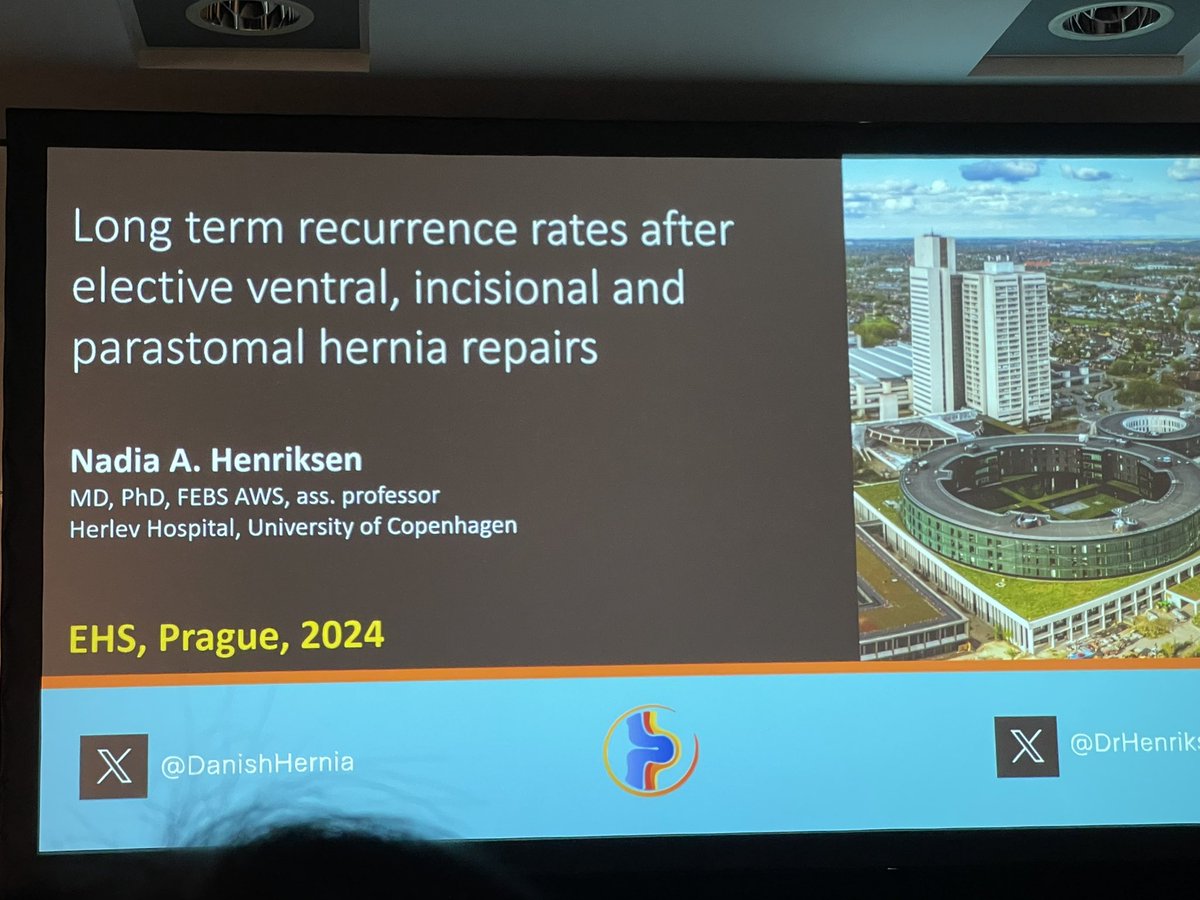
Prospective nationwide analysis of long-term recurrence rates after elective ventral, incisional and parastomal hernia repairs
➡️https://t.co/Gg9OVB6zBo
The risk of operation for recurrence after a primary ventral or incisional hernia repair is continuously rising, even after 15 years of follow-up. The cumulative incidence of operation for recurrence was lowest after umbilical hernia repair followed by incisional and port-site hernias. Parastomal hernia repairs had 2–4 times higher long-term risk compared with all other types of ventral hernias. This equates to almost every second patient undergoing a parastomal hernia repair undergoing a further operation for recurrence.
These nationwide data suggest that longer term follow-up for patients is important as recurrence rates keep on rising. Notably, only patients operated for recurrence were included in the present study and the true recurrence rate is likely to be much higher.
👏👏👏@DrHenriksen, @doc_helgstrand
#SoMe4Surgery #MedTwitter #SurgEd #Surgery @me4_so@BJSAcademy@BJSurgery@young_bjs@juliomayol@JJEarnshaw @OUPMedicine @eurohernias #hernia
📣Think just in!📣
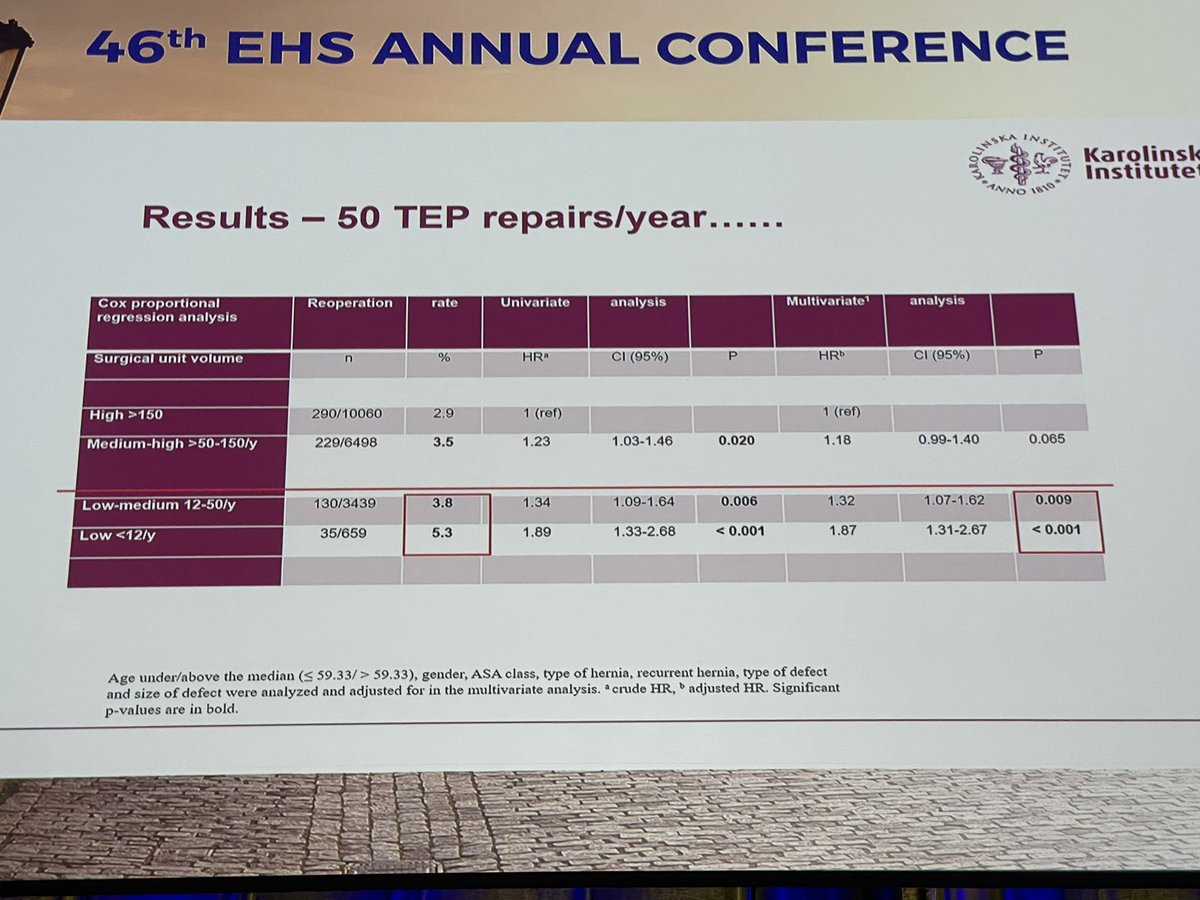
Swedish Registry of over 20K TEP repairs shows those surgeons performing less than 50 per year have significantly worse outcomes for their patients.
As presented by Dr Maria MelkeMichel
@eurohernias#EHS2024Prague
🤓🤓🤓
So excited to see updated @DanishHernia database long term data (since 2007) of ventral hernias as presented by @DrHenriksen
N=50K
15-yr hernia recurrence rates:
Umbilical 10%
Epigastric 14%
Incisional 18%
Parastomal 40%
Risk factors:
- tissue based repair without mesh
- complication within 90 days
NB: this only takes into account those who had surgery for their recurrence.
#EHS2024Prague @eurohernias
@keithsurgeon@BJSurgery@eurohernias@BritishHernia Process is analogous to # healing in bones. At some point you have to put force through it for osteoblasts / clasts to allow remodelling. If you don't put weight through it the # never heals properly & is weak. Food for thought about how we advise on heavy lifting post op!
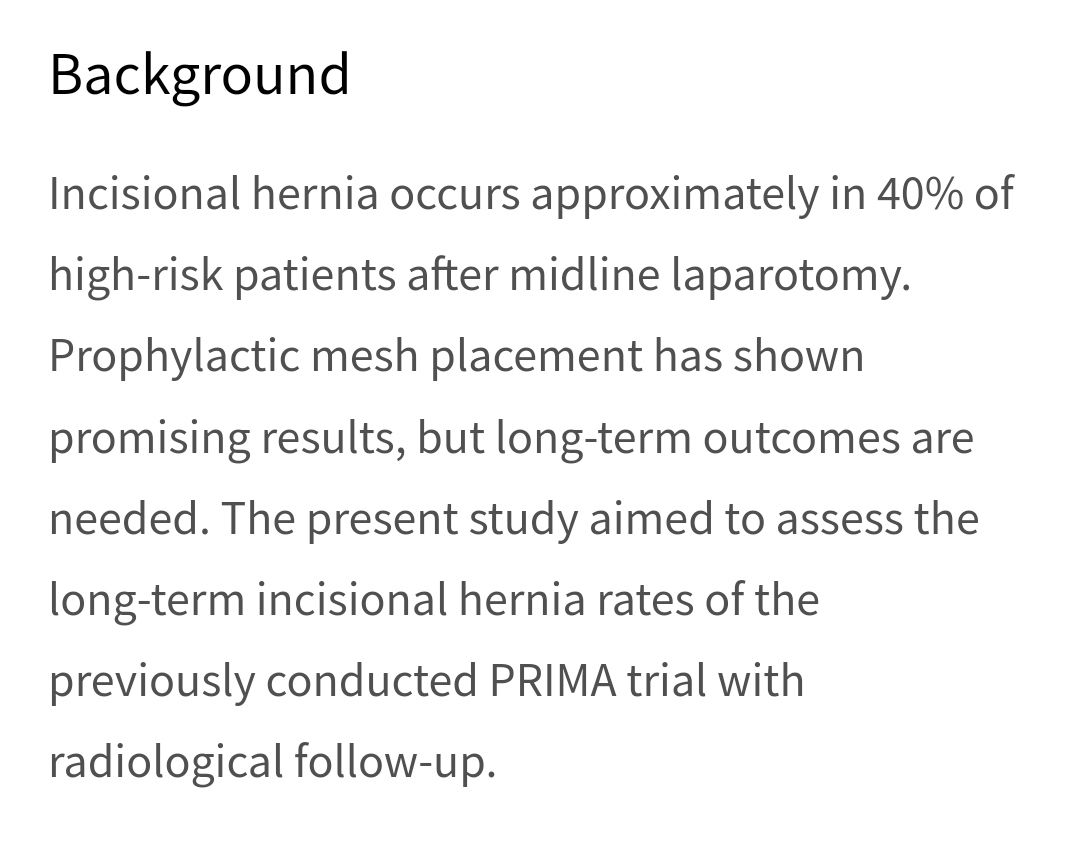
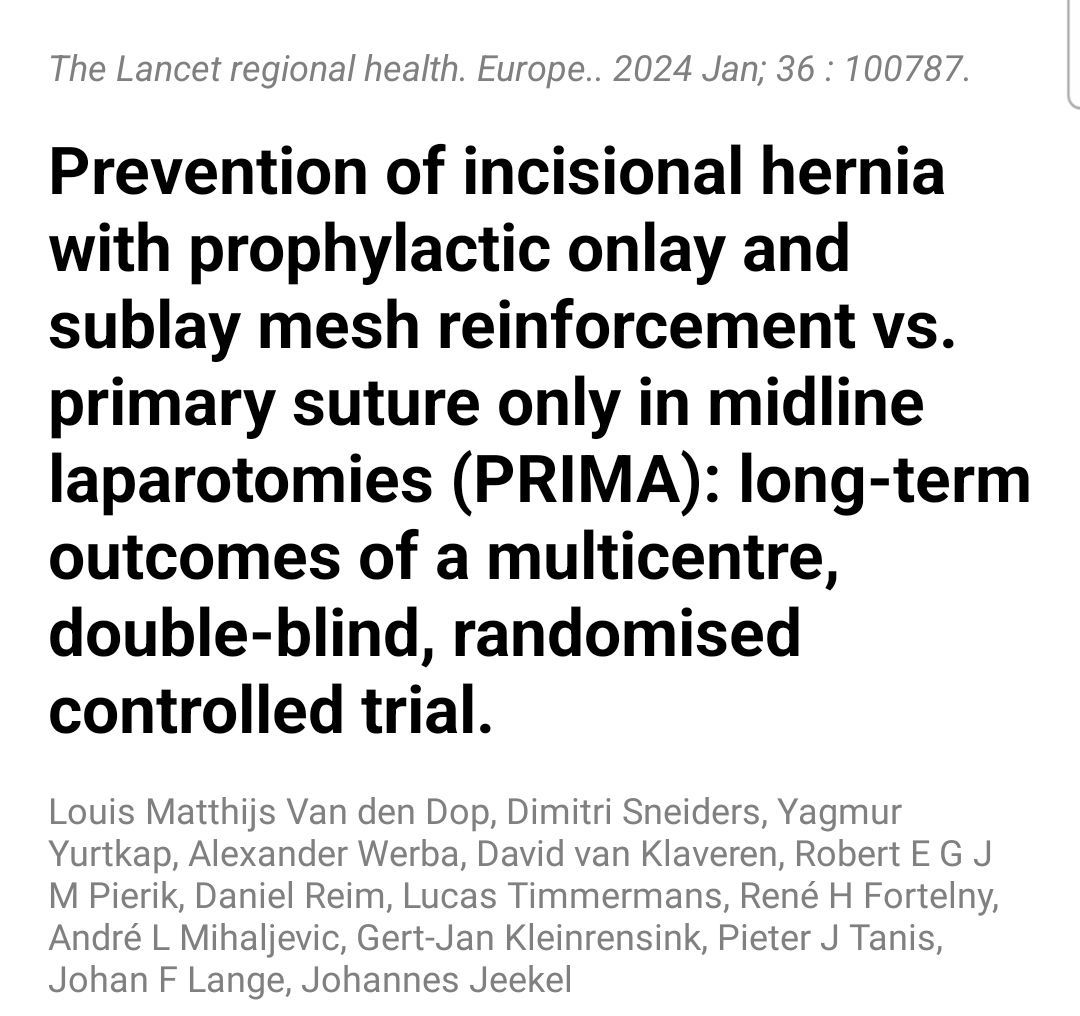
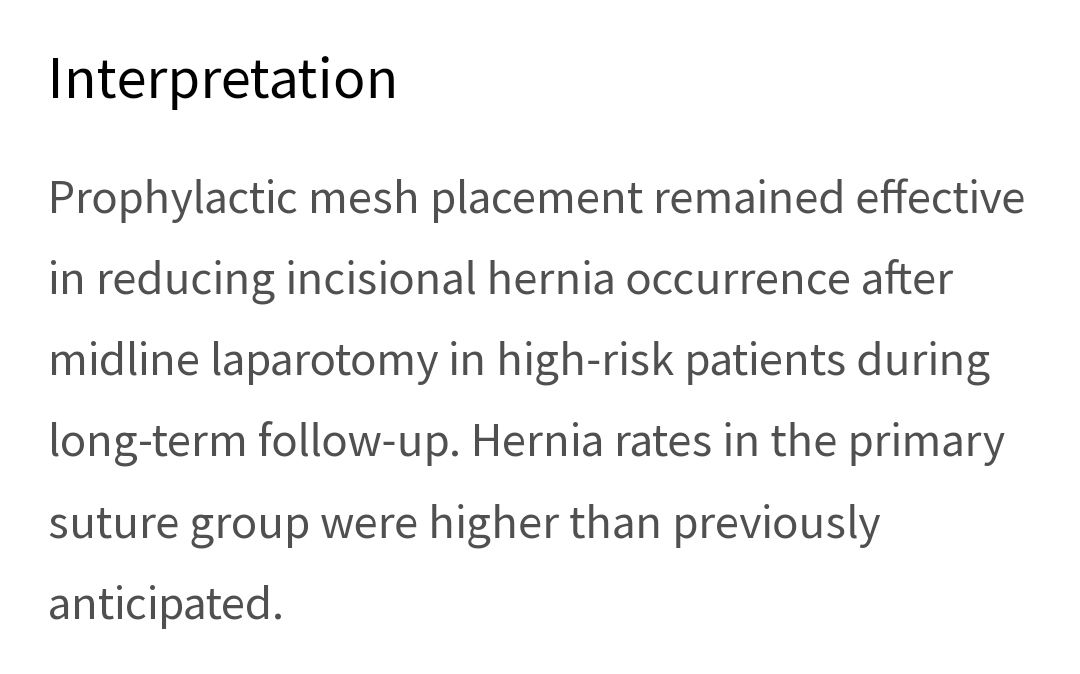
https://t.co/oAj1x3jEb7 Prevention of #IncisionalHernia with prophylactic onlay and sublay mesh reinforcement vs. primary suture only in midline laparotomies (PRIMA): long-term outcomes of a multicentre, double-blind, #RCT.
#HerniaPrevention#HerniaSurgery#AWSurgery
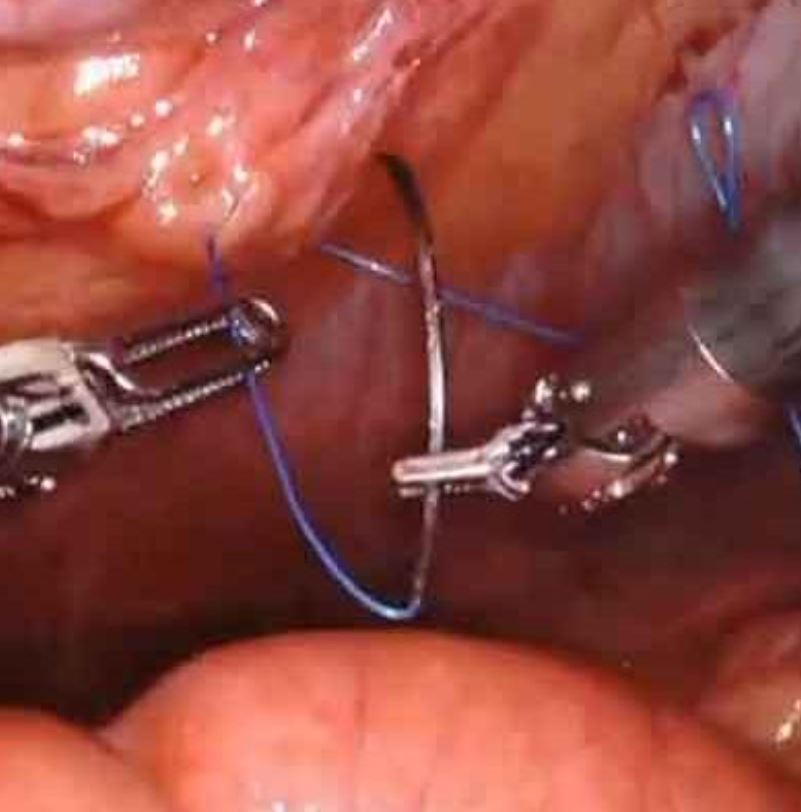
Prolene sutures are often used to anchor prosthetic mesh during inguinal or ventral hernia repair.
I can't say I fully understand this one (why not PDS?), as the mesh incorporates anyway, but perhaps part of the thought is that the mesh is often polypropylene anyway.