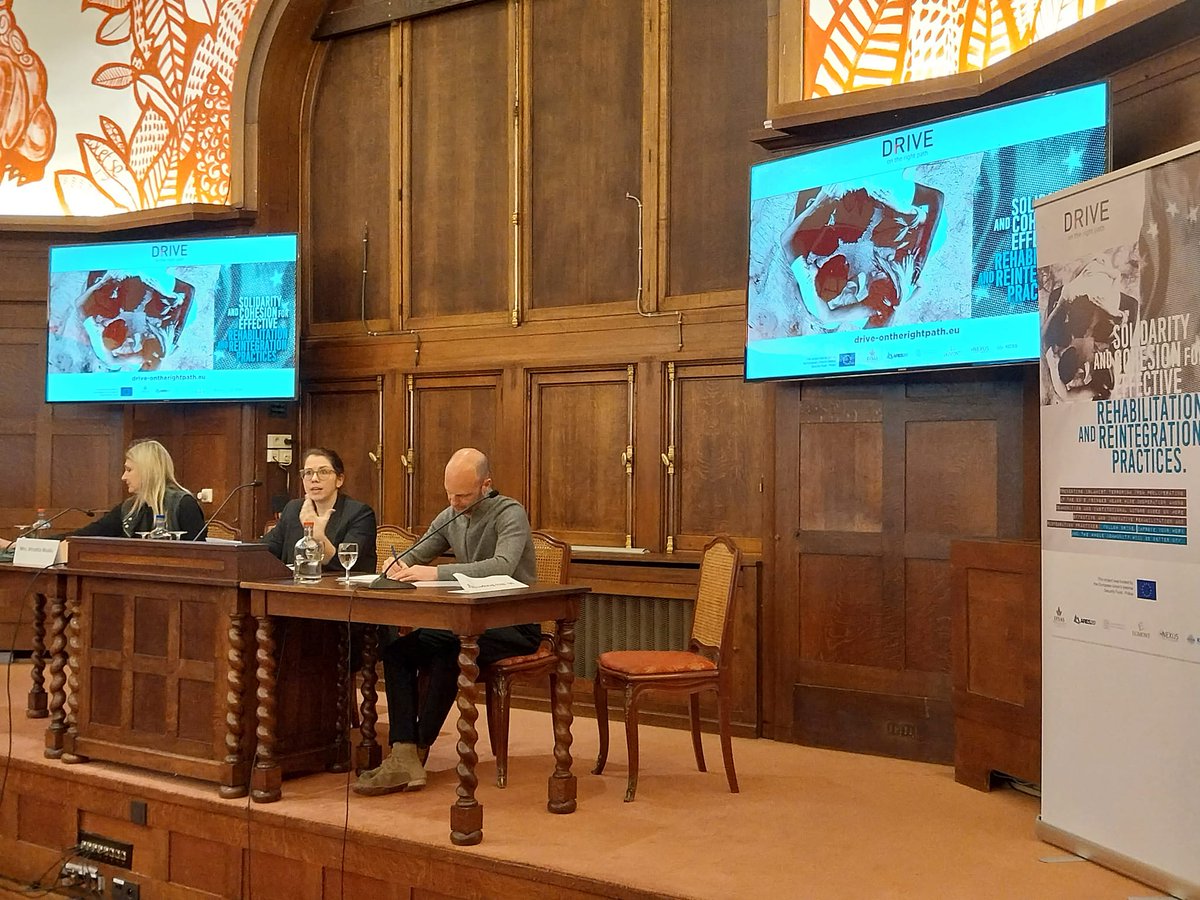
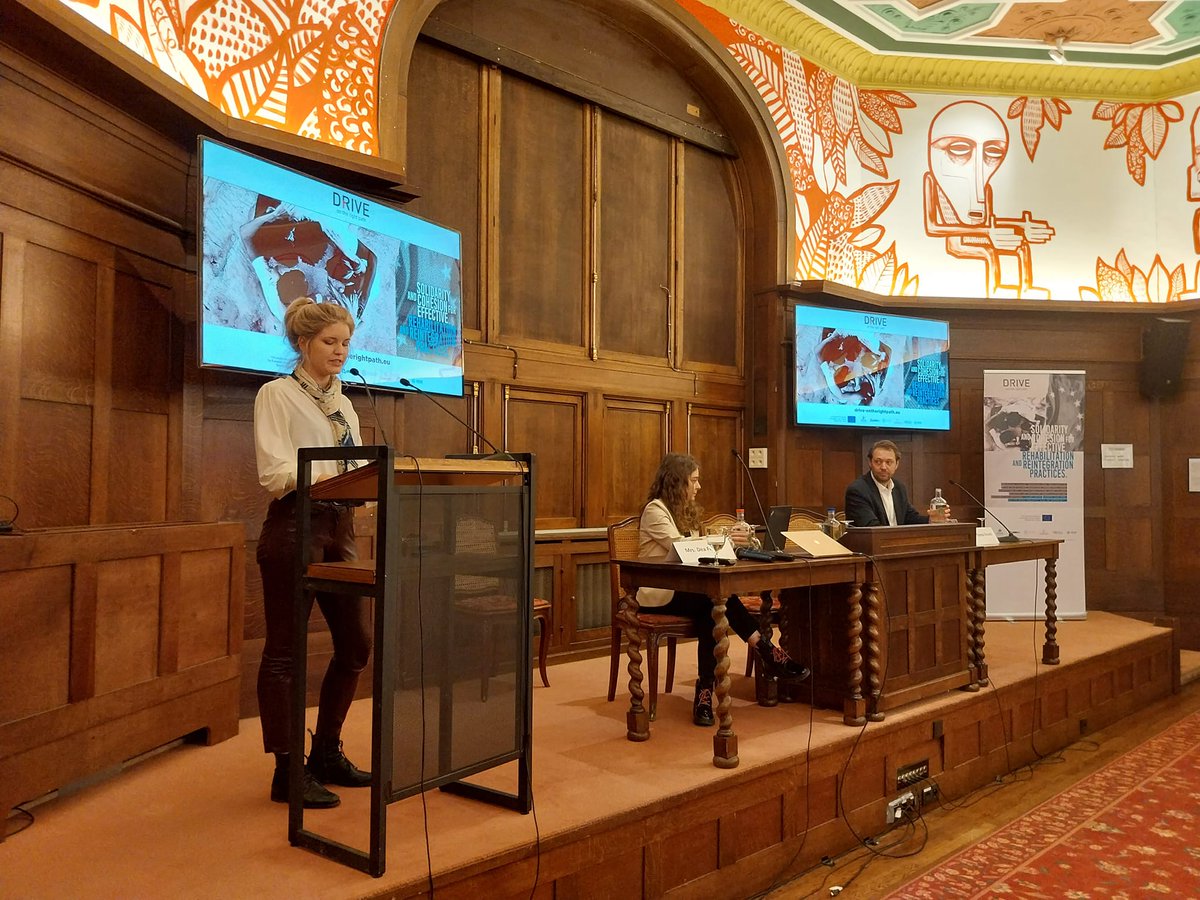
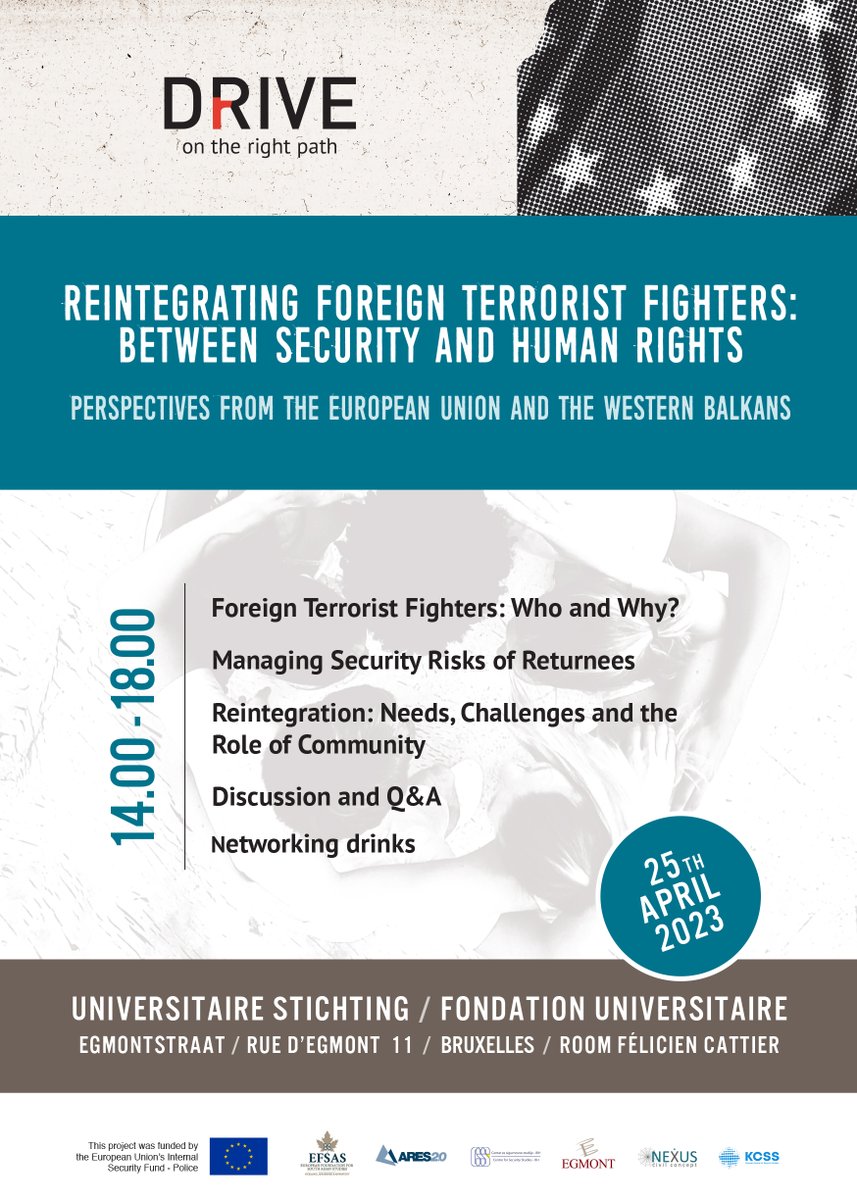
The final conference of Drive project started. Three panels to discuss reintegration of foreign terrorist fighters and the European and Western Balkans DRR policies between security and human rights point of view.
We are thankful for our participants and speakers for their active participation, sharing knowledge and experience with the goal of improving the work of key stakeholders in reintegration of returnees!
#BiH#EU#reintegration#rehabilitation#returnees#FTFs#security
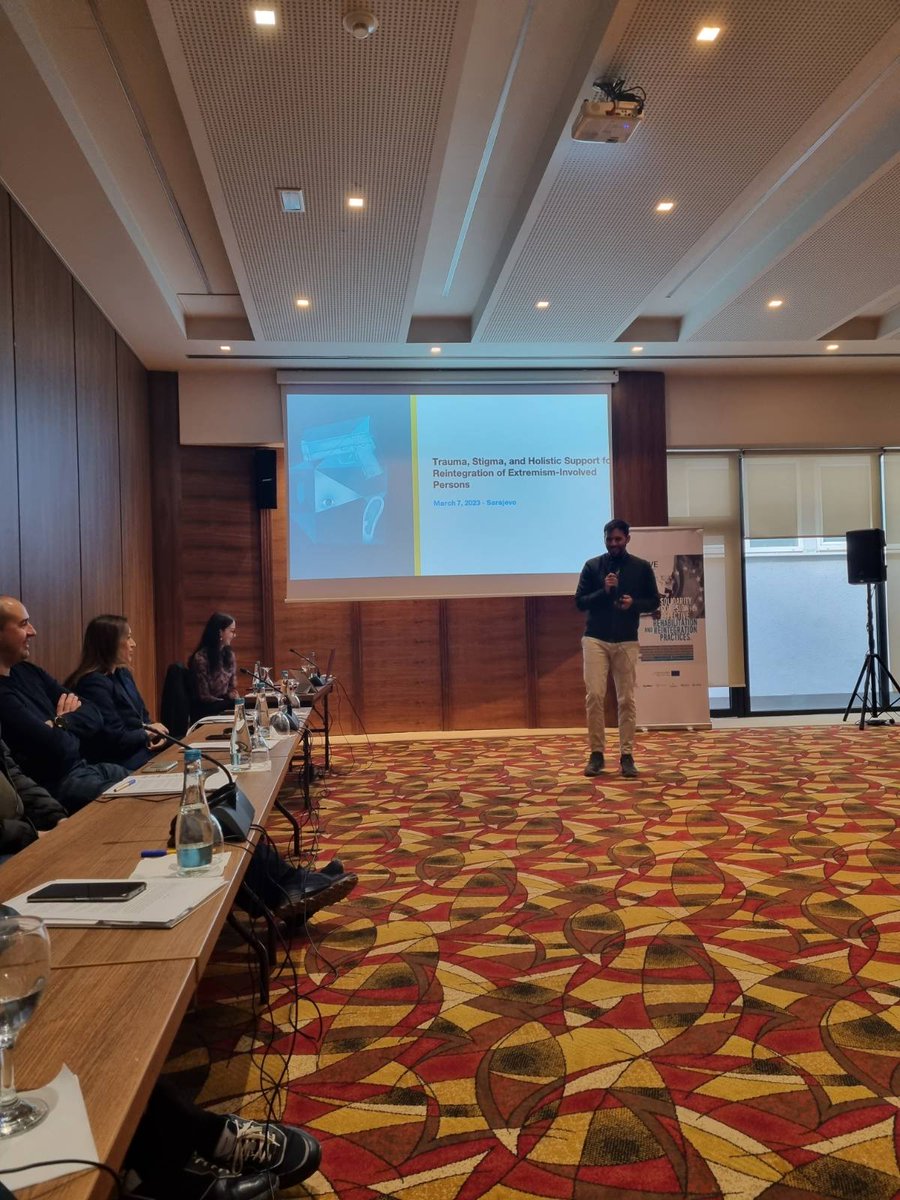
➡️6 to 8 March in Sarajevo, @CSS_BiH held DRIVE training. DRIVE is funded by the EU, and coordinated by @EFSAS_AMS.
Training "Strengthening institutional capacities in the reintegration of returnees from foreign battlefields" gathered representatives of social services in BiH.
⬇️
Further, manager at the Social Protection Services of Hadzici Municipality, Mrs. Hasanovic, shared her experience in work with returnees. In the end, university professor, Mr. Armin Krzalic, presented the research and experience in research done so far in this field.
DRIVE project animates video to promote holistic & inter-institutional collaboration in complex tasks of disengagement, rehab & reintegration. #DRIVEproject#collaboration#reintegration
https://t.co/9S0UWor891
It is reported as being used very widely, for the general population of inmates and inmates with mental illnesses, focusing on those with a history of violence and the potential presence of mental illness.
Find out more here https://t.co/6htyTbuWAL
#security#riskassessment
The use of risk assessment procedures and tools for inmates, ex-offenders, violent extremists, and terrorists does not go far back in history. In fact, HCR20 (Historical, clinical risk management) was developed in the 1990s as one of the first risk assessment tools.
⬇️
📢We’re pleased to bring you the third episode in the #FightingTerror 🎙️podcast miniseries, “Eye on 4R Network”
Guests @Sofia_Koller & Georgios Sotiriadis discuss P/CVE + rehabilitation & reintegration in Germany.
🎧Listen below https://t.co/eo1wnhjmKk
In October, @FightExtremism hosted a webinar, “Back From Raqqa – The Prosecution of Returnees In Germany And France”.
Anne-Clémentine Larroque (Anti-Terrorist Investigation Unit, Judicial Court of Paris) gave a presentation on the cases in France▶️👇 https://t.co/zMbeUPnG5d
When it comes to risk assessments, some issues (could) occur even with some specific tools existing. For example, the exact method of analysis/assessment does not explicitly appear in relevant laws.
If you want to find out more, visit the link https://t.co/6htyTbvuqj
Still, even SPJ-based instruments have some issues, since they are more time and resource-consuming and require a certain institutional capacity.
If you want to know more, visit the link https://t.co/6htyTbuWAL
DRIVE is a EU funded project that aims at mitigating threats related to foreign fighters through the improvement of Disengagement, Rehabilitation & Reintegration practices: a path that involves local communities and public actors.
website: https://t.co/3AxRPYhhxq
On the other hand, other country reports show how the development and usage of risk assessment tools are present to a lesser extent if they are present at all.
If you want to know more about risk assessment procedures and tools, visit the link ➡️https://t.co/6htyTbuWAL