Groundbreaking for North America: The USA now has its first ISAK Level 4 Criterion! A major step forward for sports science, nutrition, performance, and training professionals. Congrats Kelley 🦾
https://t.co/b1DvLizwkY
WIth the FitTrace app for DEXA body compsition you can interactively track changes in: total body composition, segmental body composition, VAT, and Android/Gynoid ratio.
#dexascan#dexa#dxa#bodycomposition
🚨 Exciting news for Alzheimer’s research! 🧠 A pilot study shows creatine monohydrate (CrM) is feasible for AD patients, boosting brain creatine by 11% and improving cognition in just 8 weeks! 🌟 Promising step toward future treatments! #Alzheimers https://t.co/STDyFEHbiJ
@bryan_johnson So many of us in the industry and personally love to objectify everything! Why? Because it allows us to make changes and interpret the impact of those changes. Anyone who thinks otherwise (regardless of performance type, ie. business, mental, sports, etc) doesn’t understand #’s
Who is doing independent audits of these programs, focusing on player health and safety and best ROI for each program? Tax payers in states with public universities need to ask their legislators if anyone is actually accountable. Changes can be made with the right people! 👇
Note in description of webinar that is tomorrow says 30 mega programs make $ but over 90% of D1 universities lose millions on sports. Something the @NSCA@IUSCA should be concerned with is nil and revenue sharing! How does it impact the s&c field as most s&c coaches are not paid well at all and have poor job security. Should the current system be blown up and regional sport science centers created similar to what the UFC does?
Join us at the 22nd ISSN Annual Conference, happening June 23–25 in Delray Beach, Florida! ☀️🌴
📌 Show off your data 📌 Share your research 📌 Make your mark!
@ExphysPhD@darrencandow@dougkalmanphdrd@DrCreatine
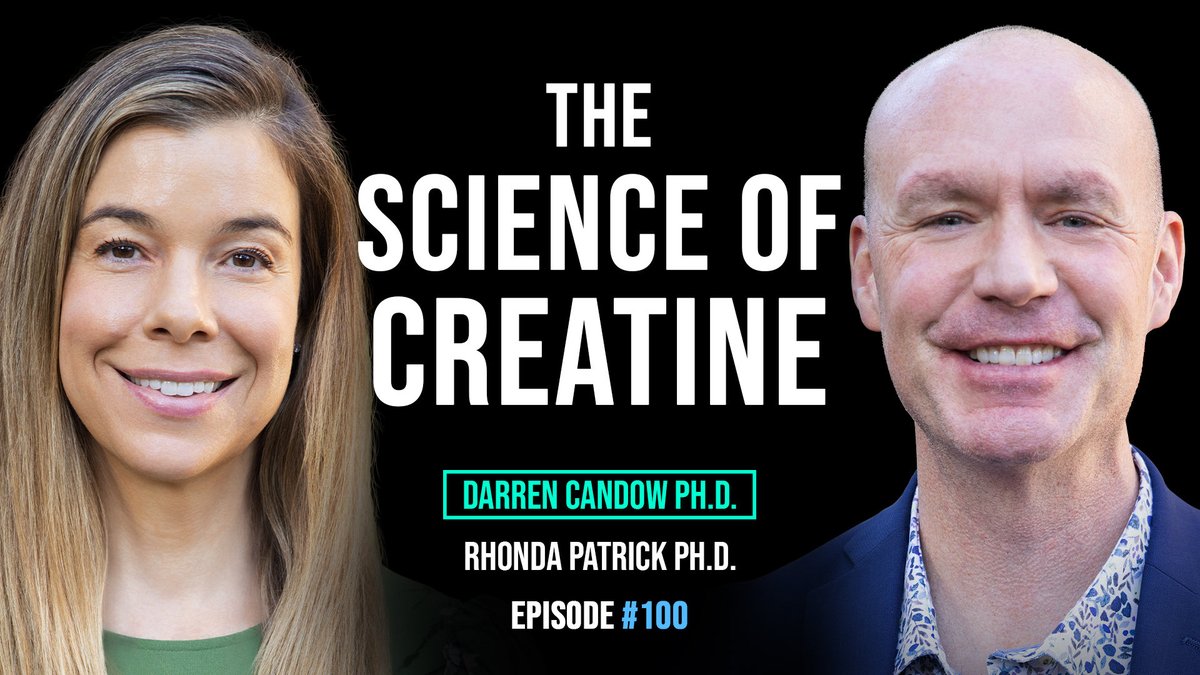
Creatine supplementation is not only safe for kids, it might be essential
In fact, research confirms it can significantly enhance brain development, bone health, muscle growth—and even agility, coordination, and balance
These benefits likely stem from improved motor unit recruitment and muscle activation
The optimal dose?
0.1 g/kg body weight (about 3 grams daily for a 65-pound child)
🚨 New study on cupping therapy for runners! 🏃♂️ RCT shows no significant benefits in muscle pain, fatigue, perceived recovery, or jump height vs. sham treatment. 🤔 Time to rethink cupping for post-run recovery? #Running#Recovery#CuppingTherapy
https://t.co/FDd4E4hsTD
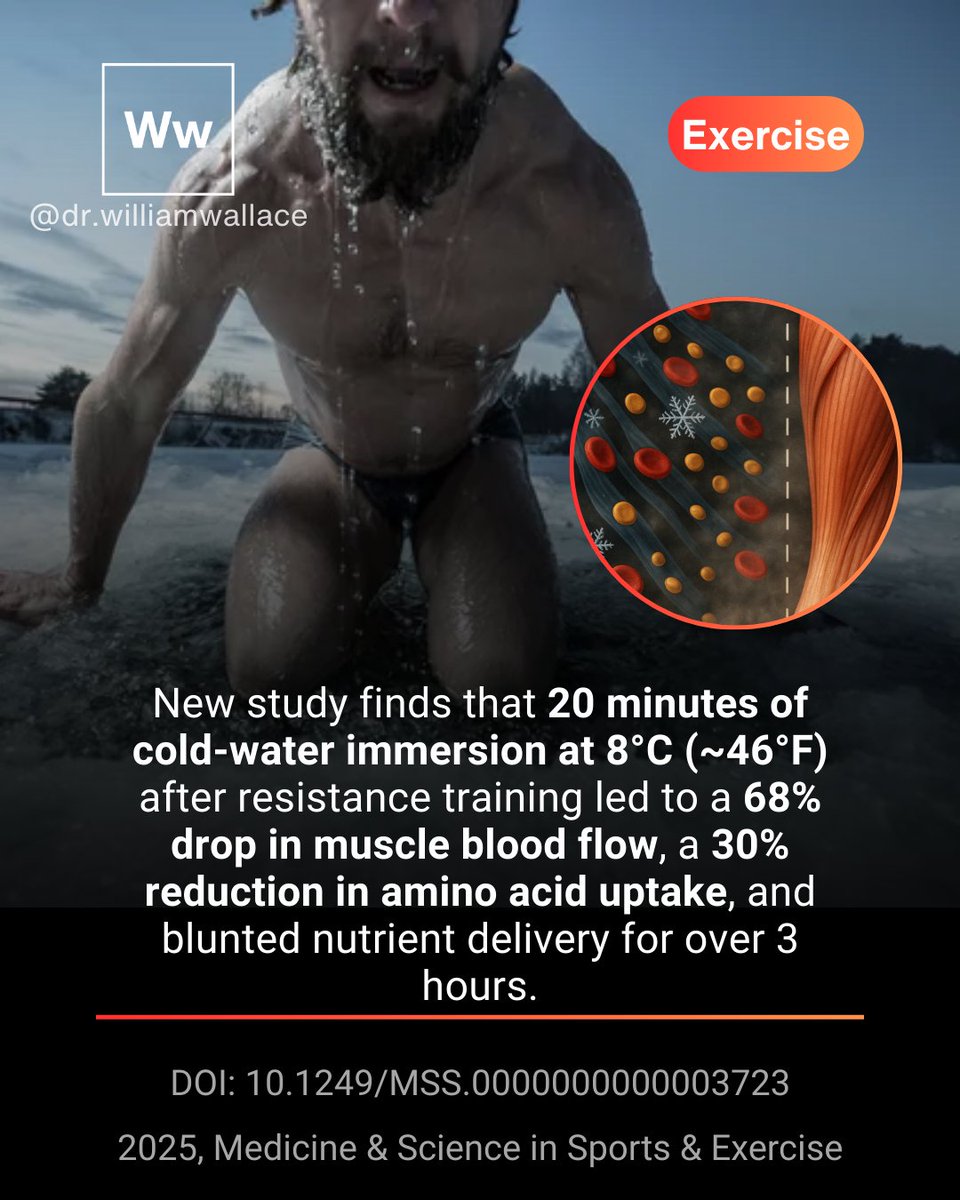
A newly published study (DOI: 10.1249/MSS.0000000000003723) has found that post-exercise cold-water immersion significantly reduced muscle perfusion and amino acid uptake, impairing nutrient delivery and potentially blunting anabolic signaling (which has been shown to this point - with this study not only adding to that data, but providing more mechanistic nuance).
Note on protocol intensity:
The cooling protocol (8°C for 20 minutes) represents a stronger and colder exposure than typical real-world recovery routines, which usually involve 10–15°C water for 10–15 minutes. As such, this study likely reflects a worst-case scenario for cold-induced interference with recovery.
The study, published in Medicine & Science in Sports & Exercise Looked at how acute cold exposure following resistance training influences skeletal muscle blood flow and amino acid kinetics in healthy young men.
Study Design:
-Ten male participants completed two resistance training sessions followed by either cold-water immersion (20 min at 8°C) or passive recovery.
-Blood flow to the vastus lateralis (quadriceps) muscle and amino acid uptake were assessed using Doppler ultrasound and stable isotope tracer methodology.
-A standardized protein-containing beverage (20 g amino acids + 45 g carbohydrate) was consumed post-exercise, and nutrient delivery was monitored for 4 hours.
Findings:
- Blood flow: cold immersion reduced skeletal muscle blood flow by 68% vs control.
- Amino acid uptake: Amino acid incorporation into muscle was ~30% lower at 4 hours post-exercise.
- Nutrient delivery: Cold exposure blunted nutrient delivery for over 3 hours following recovery drink ingestion.
Limitations:
- Small sample size (n = 10), limited to young, healthy males.
- This was an acute intervention. Long-term effects on muscle hypertrophy were not assessed.
- Cooling may still provide short-term analgesic or anti-inflammatory benefits in other contexts.
Fantastic week here is Lisbon, thank you Lisbon University (https://t.co/FZ2yVmKzzU) for the great presentation and discussion Monday by doctoral student Filipe Jesus under Dr. Analiza Silva, a great person and epic researcher and educator in Body Composition and Human Perf.
https://t.co/ygInNkl3pr
In summary, the robust body of evidence supports the safety and multifaceted benefits of creatine supplementation across all age groups. We urge lobbyists, policymakers, and health agencies to consult with leading creatine scientists, and to consider the full spectrum of scientific data before implementing restrictions that would have adverse public health and performance implications.
@dougkalmanphdrd@ExphysPhD
If you are at all interested in seeing how contemporary skill acquisition ideas are applied in practice, then I implore you to attend this event. The early bird special runs until the end of the month.
The #1 separator I see with High Schoolers?
Weekly reminder after training HS players this weekend..
Size. Strength. Explosiveness.
It’s not just skill — it’s physicality.
Eat more. Out-eat your high metabolism.
(Yes, I used that excuse too.)
@Jeukendrup@bert695 Great seeing this research continue! Did the Celsius energy drink company conduct this research 20 years ago? I know I have seen some of the data. 😏
Perfect extreme example for understanding frame size. What is the optimum playing weight for Desmond? What data do you need to have to make an informed decision that is best for the athlete and his performance and health? Can you do this with a DXA alone? https://t.co/amFbx0D3GV