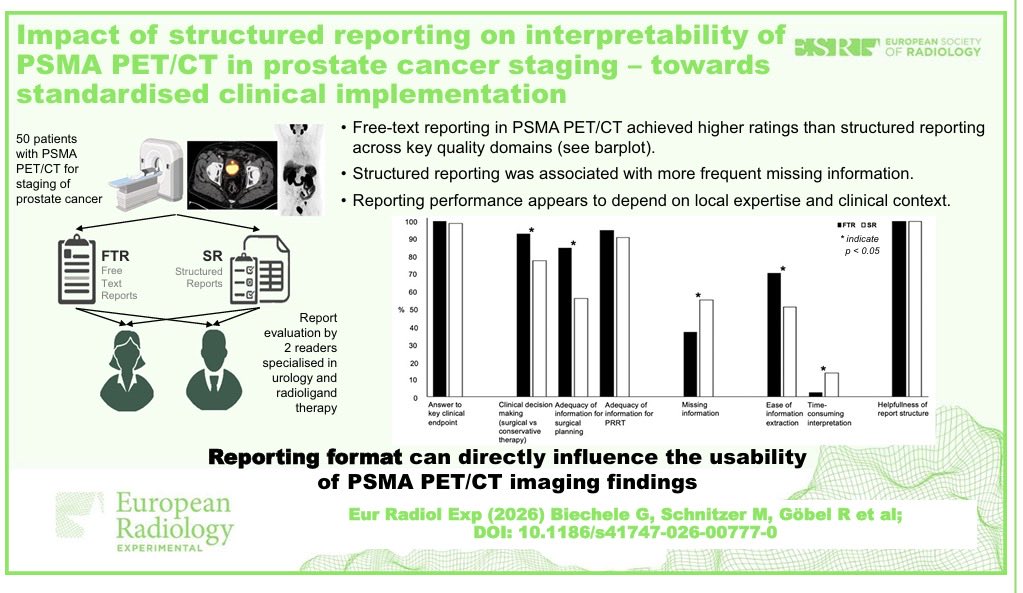
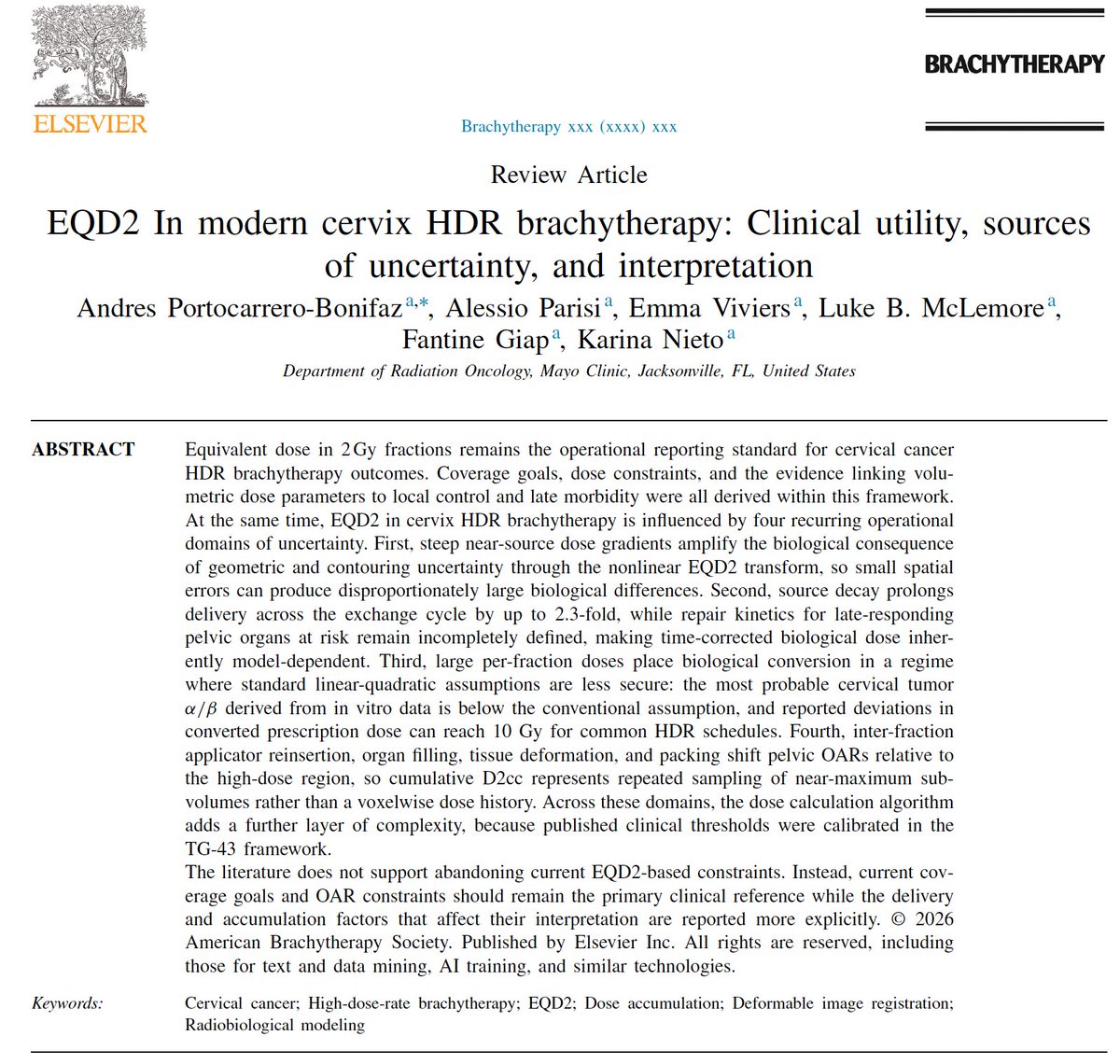
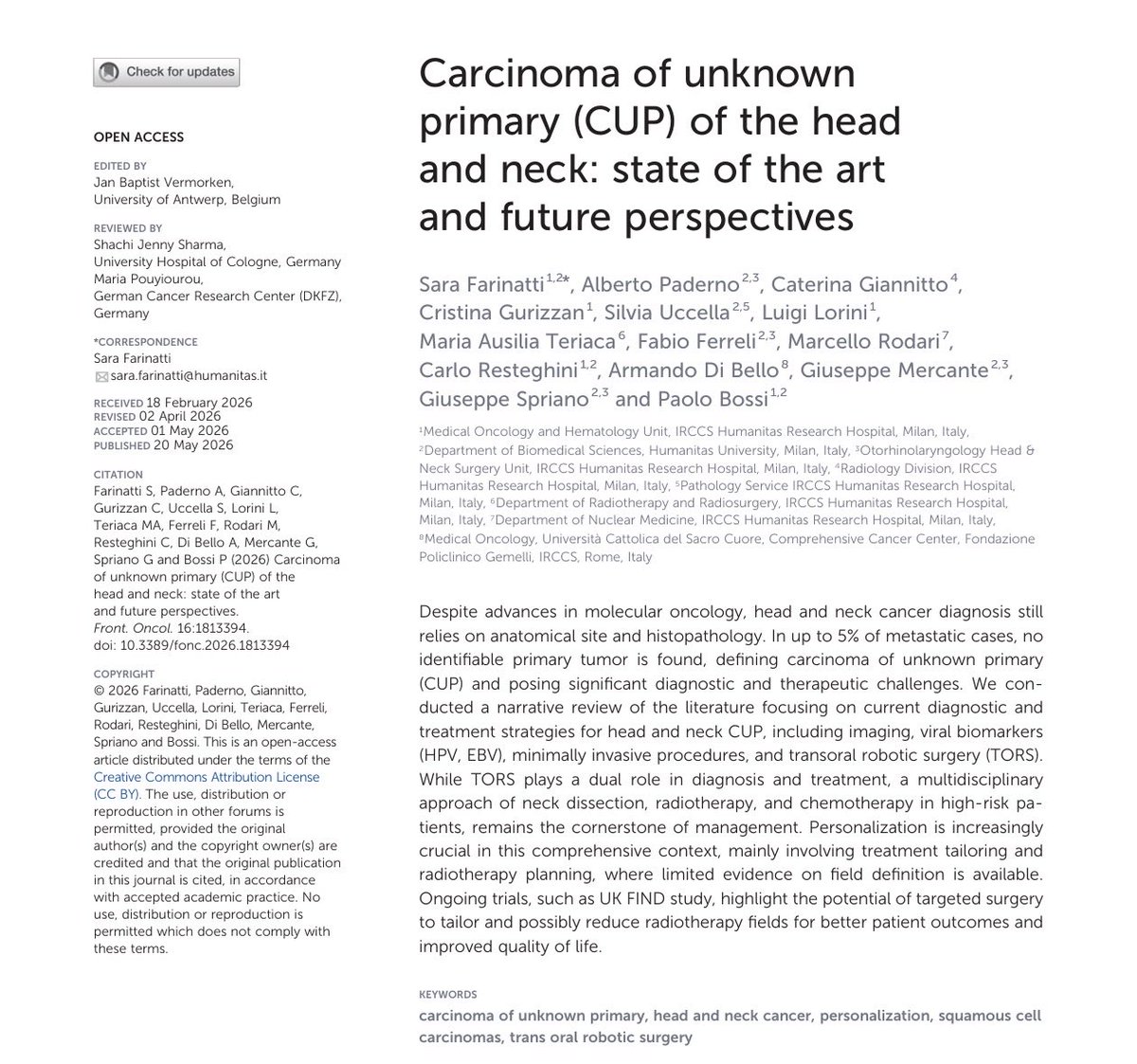
Impact of structured reporting on interpretability of PSMA PET/CT in prostate cancer staging—towards standardised clinical implementation.
https://t.co/4GhuzhtNMm
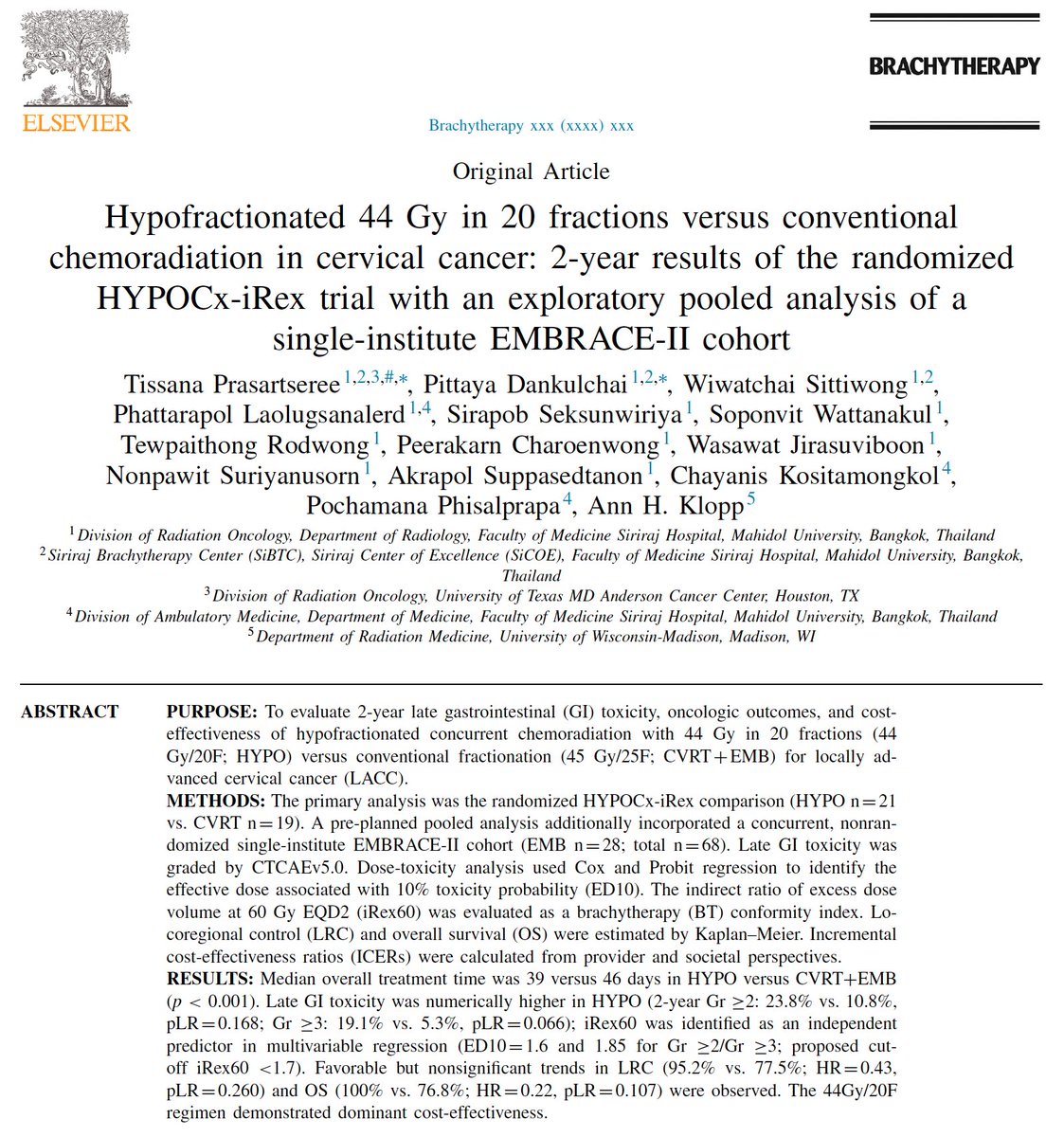
Hypofractionated 44 Gy in 20 fractions versus conventional chemoradiation in cervical cancer: 2-year results of the randomized HYPOCx-iRex trial with an exploratory pooled analysis of a single-institute EMBRACE-II cohort
https://t.co/JyuL0EDyZm
LINACS: a living systematic review of the safety of concurrent stereotactic radiotherapy and novel systemic therapies by the ESTRO/EORTC OligoCare Consortium.
https://t.co/oXUZer1kUj
@RO_GreenJournal
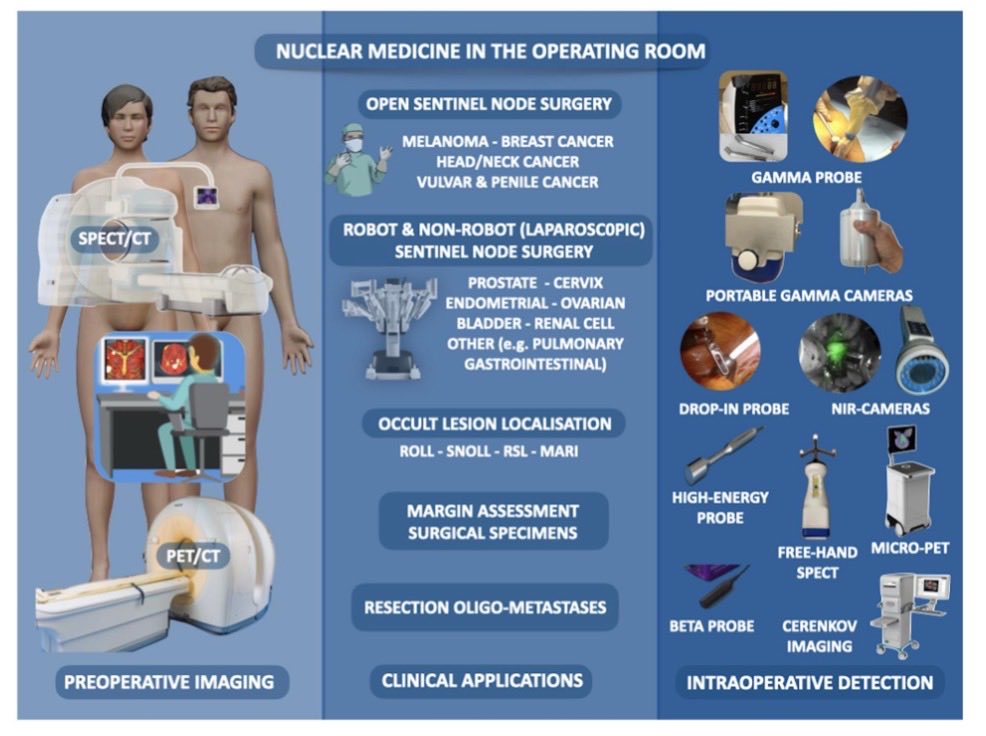
Implications for clinical practice in diagnostic imaging, interventional radiology and diagnostic nuclear medicine, second edition.
https://t.co/GI2utTilHr
⏱️ En oncología, el tiempo también forma parte del tratamiento.
Detectar un cáncer tempranamente representa una gran oportunidad, pero su beneficio puede disminuir si existen retrasos innecesarios en la confirmación diagnóstica, la estadificación o el inicio de la terapia.
Durante la espera, algunos tumores pueden crecer, progresar o perder una ventana terapéutica favorable. Por eso es fundamental:
🔹 Agilizar los estudios diagnósticos.
🔹 Realizar una evaluación multidisciplinaria oportuna.
🔹 Respetar los tiempos oncológicos.
🔹 Garantizar acceso temprano a cirugía, radioterapia y tratamientos sistémicos.
🔹 Evitar demoras administrativas o asistenciales prevenibles.
Cada cáncer tiene un comportamiento diferente y requiere una planificación individualizada. Sin embargo, actuar con coordinación, calidad y oportunidad puede contribuir a mejorar el control de la enfermedad, la supervivencia y la calidad de vida.
Diagnosticar a tiempo es esencial. Tratar a tiempo puede marcar la diferencia.
Bibliografía: Dixon L.K et al. Curative-Intent Radiotherapy in the Era of Earlier Lung Cancer Diagnosis: Insights from the National Lung Cancer Audit. Clinical Oncology 58 (2026) 104309.
Chemoradiotherapy versus short-course radiotherapy for response-adapted organ preservation in early-stage and intermediate-stage rectal cancer (STAR-TREC).
https://t.co/QXttpOhBFg
Comparative efficacy of stereotactic body radiotherapy and percutaneous radiofrequency ablation for oligometastatic liver disease—radiation oncologists’ perspective and practice guideline
https://t.co/ZMpOOWNfBt
How to focal boost in prostate cancer radiotherapy: ESTRO clinical practice
consensus recommendations
https://t.co/AfmfOhDxpr
@RO_GreenJournal@ElsevierConnect
EAU-EANM-ESTRO-ESUR-ISUP-SIOG Guidelines on Prostate Cancer-2026 Update. Part I
https://t.co/M2JsBqwAU7
EAU-EANM-ESTRO-ESUR-ISUP-SIOG Guidelines on Prostate Cancer. Part II-2026 Update
https://t.co/JNfephHD5E