The most dangerous virus right now isn’t biological.
It’s the belief that expertise itself is oppression.
So when science tries to reduce suffering or prevent deaths, people call it tyranny.
A society that treats public health as the enemy stops protecting itself from reality.
Google will soon unleash a wealth of new artificial intelligence-powered tools and systems, including an AI assistant that will help users by proactively performing tasks on their behalf.
Read more: https://t.co/Ld2RIzHQEH
Toru Miyazaki gave 11 cats with advanced kidney disease an experimental injection. 15 others didn’t get it. A year later, 9 of the 11 treated cats were alive. Only 3 of the 15 untreated cats survived. He just filed for approval, and the drug fixes a defect only cats have.
Most cats die from one thing: their kidneys fail. By age 10, 4 in 10 cats already have chronic kidney disease, and by age 15, the rate doubles to 8 in 10. Once diagnosed, a cat has about 2 years left.
The reason kidney disease hits cats so hard is a broken protein in their blood. All mammals carry a protein that helps the kidneys clean out waste. In humans and dogs, the protein floats freely and goes to work when the kidneys are in trouble. In cats, it stays stuck to another protein and can’t get loose. So the waste piles up, and the kidneys eventually give out.
Miyazaki originally found the protein in 1999, back when he was at the University of Tokyo. He figured out the cat-specific glitch in 2015. The paper he published in the Veterinary Journal in February laid out the trial. The injection is a working version of the missing protein. His company, the Institute for AIM Medicine, filed the approval paperwork with Japan’s Ministry of Agriculture on April 24, 2026. If the review clears, the drug goes on sale in spring 2027.
The 30-year lifespan figure in the tweet is Miyazaki’s own projection of what cats could reach without kidney disease. The trial only ran a year, and the average cat today lives 15. Most die from the same disease this injection treats.
The research almost died in 2020. After running out of funding during COVID, Miyazaki went public. Cat owners across Japan responded by sending in 300 million yen, around 2 million dollars total. He resigned from the University of Tokyo and worked on the drug full time. The treatment in front of regulators today exists because cat lovers refused to let the research die.
Work-life balance sounds reasonable. It isn't.
The moment you talk about balancing work against your life, you've already conceded something: That your work isn't part of your life. That it's a cost you pay to get to the time that actually matters. That's not a balance problem; that's a meaning problem.
Now: this isn't about grinding harder. Workaholism is real. So is workism—where work becomes your whole personality, a substitute for genuine human depth. Neither of those is the goal. The goal is integration.
Balance treats work and life as opposing forces to keep in check. Integration treats them as parts of a whole that make each other better. One asks: how much of my life should work take? The other: Does my work belong in my life?
During the Great Resignation, an entire generation quit their jobs. The conversation was almost entirely about balance: protecting life from work. By the end of 2022, a lot of those same people were struggling. The Great Resignation became the Great Regret. Not because quitting is wrong, but because balance without meaning just moves the emptiness somewhere else.
When work belongs in your life, the hours stop feeling like extraction. You're not drained by it: you're fed by it—even on hard days. And what you do outside work—relationships, rest, spiritual life—stops being “recovery from work” and becomes simply the rest of a full life. And it makes the work better, too.
If work feels like something you endure so your real life can happen somewhere else, no amount of boundary-setting fixes that. You can leave at five o'clock every day and still feel hollowed out. The boundary protects the time… but it doesn't fill it.
You're not looking for a better ratio. You're looking for a life where the question of ratio barely comes up—because what you do and who you are have stopped feeling like separate things.
Stop balancing work against your life. Start building a life your work belongs to.
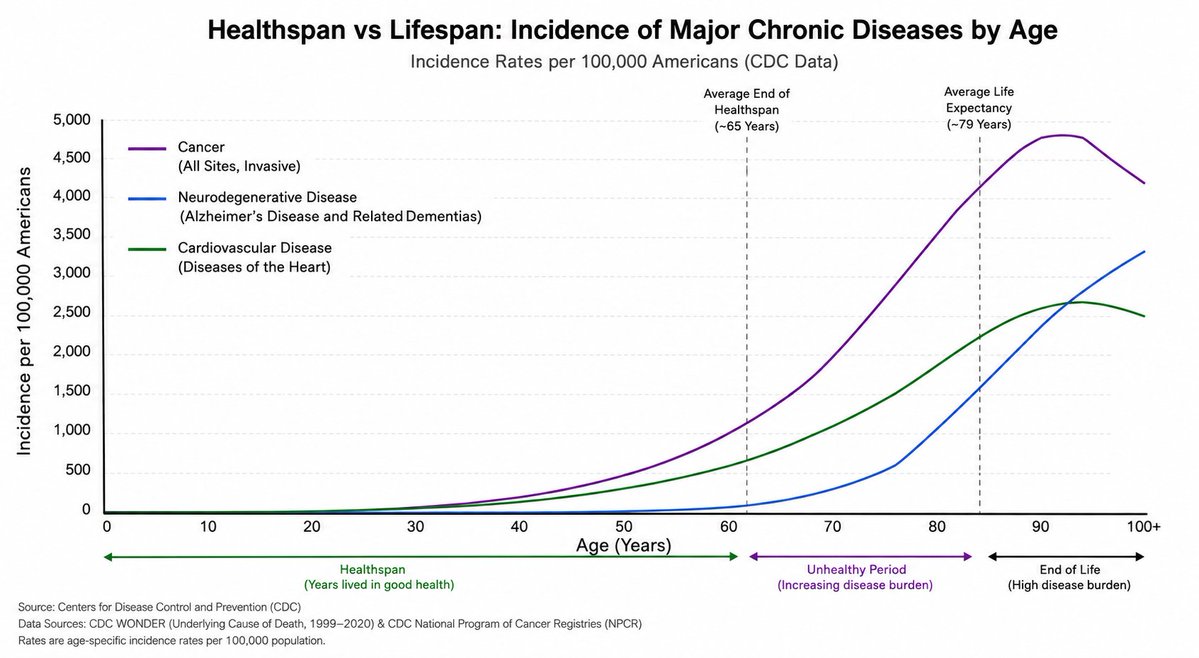
Why is there such obsession with extending lifespan when the bigger issue is that average healthspan is 65 years and there are no data (except in super-centenarians) that longer lifespan = longer healthspan (known as compression of morbidity)?
The older I get, the more I believe happiness lives in the ordinary. Pets. Plants. A quiet morning coffee. Blue sky. Cotton clouds. Birds singing. The gentle breeze through the trees. A clean, cosy house. Good food. Good hearted simple poeple. So much of life’s beauty is quiet, gentle, and already here. And somehow, one of the sweetest feelings is knowing I get to wake up and meet it all again tomorrow.
Life is too short to worry about little things. Have fun. Fall in love. Regret nothing, and don't let people bring you down. Study, think, create, and grow. Teach yourself and teach others.
VE BÜYÜK MÜJDE ✨🙋♀️
Siz Boğalar için bu yılki en büyük gökyüzü hediyesi kuşkusuz Uranüs’ün vedası olacak.
Yaklaşık 8 senedir hayatınızı altüst eden,beklenmedik kırılımlar yaşatan,yön değişimleriyle sizi konfor alanınızdan zorla çıkaran
o beklenmedik sürprizler ve radikal değişimler döngüsü birkaç gün içinde sona eriyor.
Uranüs 26 Nisan’da burcunuzu terk etmeye hazırlanırken
arkasında çok daha güçlü,
çok daha özgür ve yenilenmiş bir "siz" bırakıyor.
Kaos,yerini kalıcı bir huzura bırakmaya hazır ✨
What a privilege to be tired from work you once begged the universe for. what a privilege to feel overwhelmed by growth you used to dream about. what a privilege to be challenged by a life you created on purpose. What a privilege to outgrow things you used to settle for.
🦔A researcher invented a fake eye condition called bixonimania, uploaded two obviously fraudulent papers about it to an academic server, and watched major AI systems present it as real medicine within weeks.
The fake papers thanked Starfleet Academy, cited funding from the Professor Sideshow Bob Foundation and the University of Fellowship of the Ring, and stated mid-paper that the entire thing was made up. Google's Gemini told users it was caused by blue light. Perplexity cited its prevalence at one in 90,000 people.
ChatGPT advised users whether their symptoms matched. The fake research was then cited in a peer-reviewed journal that only retracted it after Nature contacted the publisher.
My Take
The researcher made the papers as obviously fake as possible on purpose. The AI systems didn't catch it. Neither did the human researchers who cited it in real journals, which means people are feeding AI-generated references into their work without reading what they're actually citing.
I've covered the FDA using AI for drug review, the NYC hospital CEO ready to replace radiologists, and ChatGPT Health launching this year. All of that is happening in the same environment where a condition funded by a Simpsons character and endorsed by the crew of the Enterprise was being presented as emerging medical consensus. The people making these deployment decisions seem to believe the pipeline from research to AI to patient is more supervised than it actually is. This experiment suggests it isn't supervised much at all.
Hedgie🤗
https://t.co/8Kg8FOrgHW
💉🩺Rapid sequence intubation in 2026: we are no longer “protecting the airway.”
We are managing physiology under extreme stress.
The latest evidence challenges one of the oldest dogmas in critical care.
RSI was designed to prevent aspiration.
But today, the real enemy is often hypoxemia and cardiovascular collapse.
1. Aspiration is no longer the central problem
For decades, RSI was built around one fear: aspiration.
But emerging data suggest:
RSI may not significantly reduce aspiration
It may increase hypoxemia and hemodynamic instability
The paradigm is shifting:
👉 From aspiration avoidance → to physiologic optimization
2. First-pass success is everything
Every additional attempt increases:
Hypoxia
Hemodynamic collapse
Mortality
Modern RSI is built around one goal:
Get it right the first time.
That means:
Videolaryngoscopy first-line
Stylet routinely
Team choreography, not improvisation
3. Preoxygenation is now a therapeutic intervention
Not just a step—a determinant of survival
NIV > face mask
HFNO as adjunct
Semi-upright positioning
And one key shift:
👉 Gentle ventilation is no longer taboo
Done correctly, it reduces hypoxemia without increasing aspiration risk.
4. Hemodynamics matter more than ever
Up to 40–50% of patients experience peri-intubation instability.
The modern approach:
Avoid propofol in unstable patients
Favor etomidate or ketamine
Consider prophylactic vasopressors
Fluid loading?
Not routinely beneficial.
5. Cricoid pressure: from dogma to doubt
No clear benefit in preventing aspiration
May worsen laryngoscopy and ventilation
Current thinking:
👉 Use selectively, or not at all
6. RSI is no longer a rigid protocol
It is now:
Patient-specific
Physiology-driven
Team-dependent
With tools like:
Gastric ultrasound
POCUS-guided decisions
Structured airway protocols
7. The real determinant of success: human factors
Preparation, communication, and coordination matter as much as drugs.
Because in critical care:
The airway is not just anatomy.
It is a moment of systemic vulnerability.
🤓Final message
RSI has evolved:
From speed → to precision
From protocol → to physiology
From individual skill → to team performance
And ultimately:
The goal is no longer just to intubate.
It is to intubate without killing the patient.
📃Reference
Boulos NM et al. Anaesth Crit Care Pain Med. 2026. https://t.co/KWUfUtAMyP
Nobody tells you this: Emotional control is the ultimate sign of growth. The ability to remain unshaken by the little collisions and inconveniences of life. To avoid assigning false narratives to everyday slights. That’s when you take control of your own life.
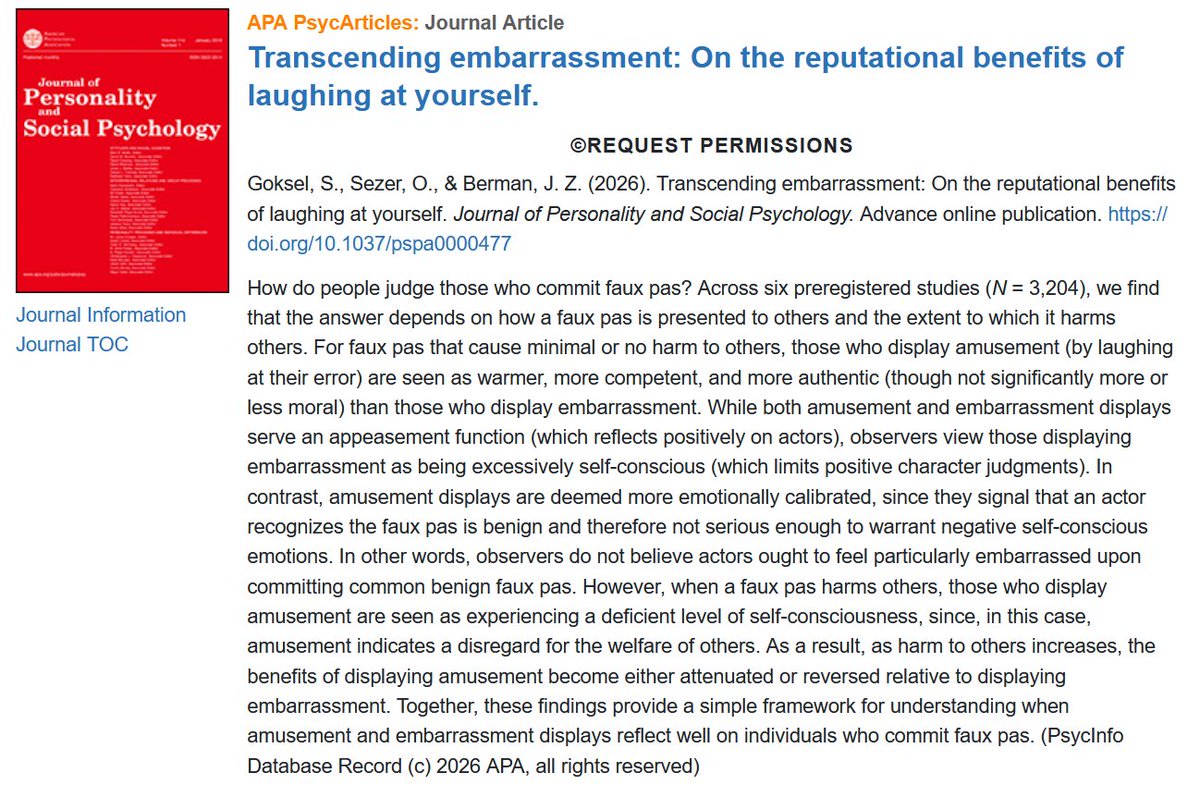
A sign of emotional intelligence is the ability to laugh at yourself.
6 studies: After making small mistakes, people are seen as warmer and more capable if they're amused instead of embarrassed.
Taking your responsibilities seriously but your ego lightly is a core life skill.
COACHES: When you’re on your deathbed you’re going to be surrounded by people, not trophies.
Winning is important.
It will never stop being important.
But how you treat people along the way will always be more important.
-Kevin Vest #ChampsInLife