Trump understood Iran would eventually breach the MOU.
✅️ That’s why the deal was fully conditional:
✅️ He bought time for Iranian crude to pile up at sea due to lack of buyers.
✅️ He gave Iraq, Saudi Arabia, the UAE, and Oman time to deepen alternatives to Hormuz and secure supply.
✅️ He strengthened U.S. domestic energy security.
✅️ He waited for OPEC+ output increases to make Iran weaker and Hormuz less central.
The US never trusted or gave strength to Iran. It was a strategic move to solidify alternatives and Gulf nation options.
Many will not recognize it, but it is a solid strategy.
Uber: car? It’s 3 minutes away
Me: click
Uber: did I say 3? I meant 11 minutes
Me: cancel
Uber: cancel? That’s $10 charge
Me: don’t cancel
Uber: yeah thought so. But now it’s 14 minutes, idiot
Been fun to watch Uber launch as awesome and become atrocious.
For fifty years, one of biggest idea in preventive medicine was addition. Find the missing nutrient, put it in a capsule, and add years to people's lives. It was a beautiful hypothesis. Fruit and vegetable eaters got fewer cancers and less heart disease, the antioxidants in those foods looked protective, so the logic wrote itself. Isolate the compound, give it at high dose, and bottle the benefit.
We ran that experiment. Not once, but across the largest trials medicine has ever mounted. And the additive era did not just fail to deliver. In several of its marquee trials, it did harm.
Beta-carotene was supposed to prevent lung cancer. In male smokers it raised lung cancer incidence by roughly a fifth and raised overall mortality, and the confirmatory trial was stopped early once the same signal appeared. Vitamin E was the great hope for prostate cancer. One large trial suggested it lowered the risk. The next large trial found it raised the risk.
Folic acid and B vitamins were going to prevent heart attacks by lowering homocysteine. They lowered the homocysteine beautifully and prevented nothing. The two most recent big bets, vitamin D and fish oil, came back null for their primary endpoints.
Fifty years, enormous money, and the durable finding is not that we located the right thing to add. It is that addition itself was the error. The number moved. The outcome did not.
This is why I keep coming back to an old idea called via negativa. You improve a system more reliably by removing what harms it than by adding what might help. In health, subtraction usually beats addition, and it is not close.
Look at what actually governs your next thirty years. It is mostly things you remove or never take on. The cigarettes not smoked. The excess weight not carried. The blood pressure not left untreated for a decade. None of it fits in a capsule and none of it makes for an exciting podcast, which is exactly why it stays underpriced.
To be clear, this is not an argument for doing less or testing less. We test aggressively, because you cannot subtract intelligently without knowing what is actually there. The work is interpretation, then removal. The supplement earning a place on the shelf and nowhere else. The regimen inherited from a previous doctor that no longer survives scrutiny.
The additive era spent half a century and billions of dollars proving a point it never meant to prove. Stop asking what to add. Start asking what to take away. Subtraction has one advantage the supplement aisle can never offer. It never needs a reversal.
To the Americans:
I've travelled all over the world. I've familiarized myself with many places, and met many people. And I'm a Canadian, although I’m privileged to reside once again in the States.
And here's something I've noticed, and it’s a key element of America's continuing greatness:
You bloody Americans value success, and you believe in its existence.
This is something that doesn't really happen anywhere else in the world. Even in other free democracies—the United Kingdom; Finland, Sweden, and Norway; Australia, New Zealand and Canada; Germany, France, and the Netherlands (great countries all)—a counterproductive cynicism too often reigns.
Success is equated with exploitation.
Ambition is looked upon with contempt.
This happens sometimes in the United States too—particularly among the miserable progressives, who confuse their resentment, ingratitude and unearned skepticism with wisdom.
But in your great country, by and large, striving is admired and success celebrated.
This means that more people strive and succeed in the US than anywhere else. And it's increasingly obvious. You remain stunningly more innovative and productive than any people anywhere else on the planet.
And so I say, as all should who are fortunate enough to live in the western world, let alone America:
Thank God for the United States.
Thank God for the wisdom of its founders.
Thank God for its faith in the free market and in the natural rights of man.
Happy birthday, you damn Yankees and Southerners.
Long may your admirable country dominate the world.
Long may your freedom and hope provide an example to those suffering everywhere at the hands of their malevolent states.
May your two and a half centuries of unparallelled success be just the beginning.
Your country is the light of the world, and the city on the hill.
Thank God for the USA.
Happy 250th.
Dr. Jordan B. Peterson
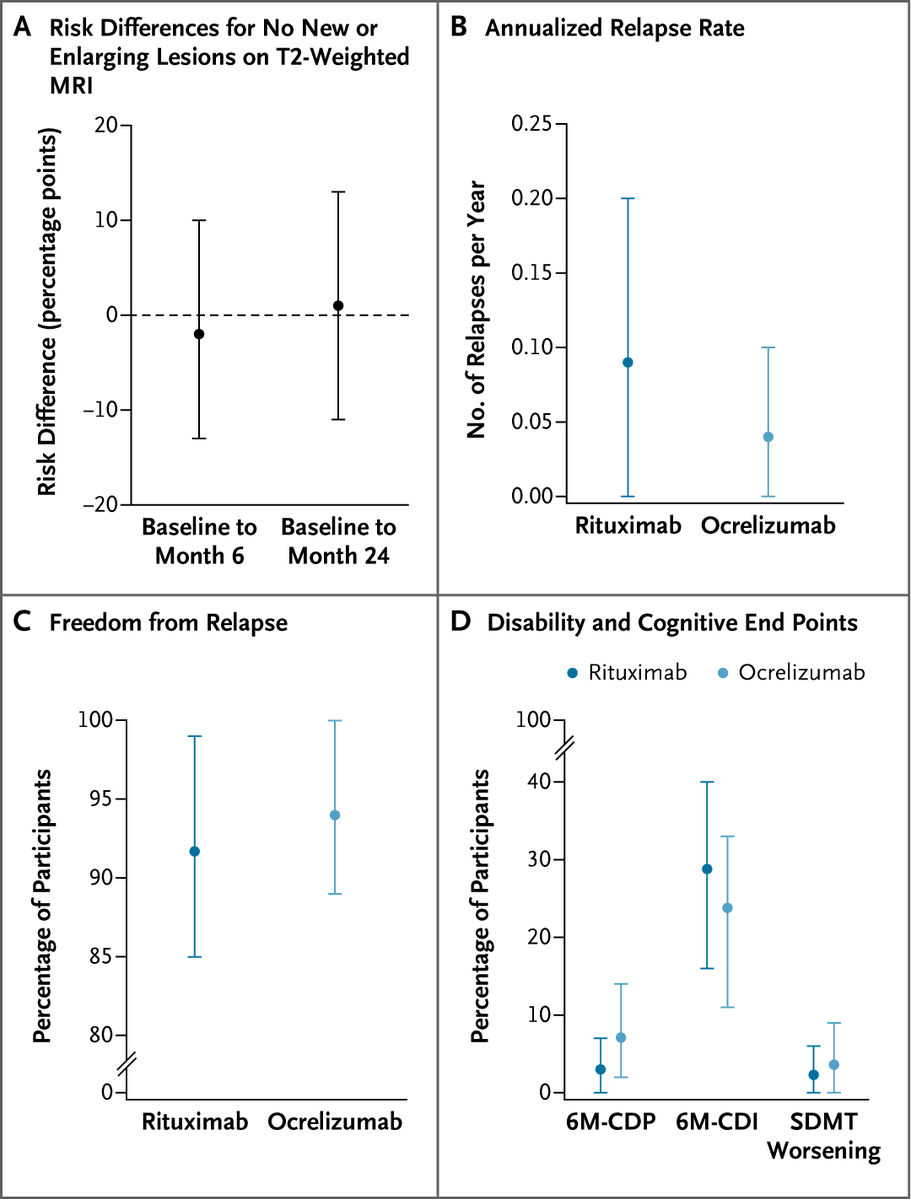
Rituximab vs. ocrevus for multiple sclerosis. This randomized trial (n=218, 30 month follow up) showed they are about equal in preventing relapses, disability, MRI outcomes, and side effects. https://t.co/JnA9PhoINw
I recently had a chat with a friend who's in the middle of his neurosurgery residency. Here's how it went:
Me: So how’s things going with neurosurgery? Must be pretty stressful right?
Him: Well… you’d think so, but it’s actually not too bad.
Me: What do you mean? Don’t you have to work insanely long hours?
Him: Well yeah… like over the past few weeks, I’ve had to stay behind for hours after the end of each shift to deal with emergencies. But hey ho, that’s just what you sign up for right?
Me: Haha yeah, but most of the doctors I know love to complain about their lives… you seem pretty chipper about it in comparison :)
Him: You know… I’ll be honest, sometimes I’m tempted to complain about stuff… but then I remind myself of something.
Me: What’s that?
Him: I worked really really hard to get into neurosurgery speciality training. I remind myself that the problems I have now that I’m inside it, are EXACTLY the problems I DREAMED for a few years ago when I was working to get in. While I was grinding away on my CV and doing interview practice, I was literally dreaming of the day where I’d get to deal with a neurosurgical emergency and potentially save someone’s life. So now that that’s happening for real, what’s there to complain about?
--
Note to self: next time you catch yourself complaining about something, pause and ask: "Is this a problem that a younger version of me was once dreaming about?"
What I appreciate from OpenAI is their focus on healthcare as a top priority.
They created HealthBench. They gave ChatGPT Pro away for *free* for all clinicians. and they are connecting directly with real world applications (see this post here).