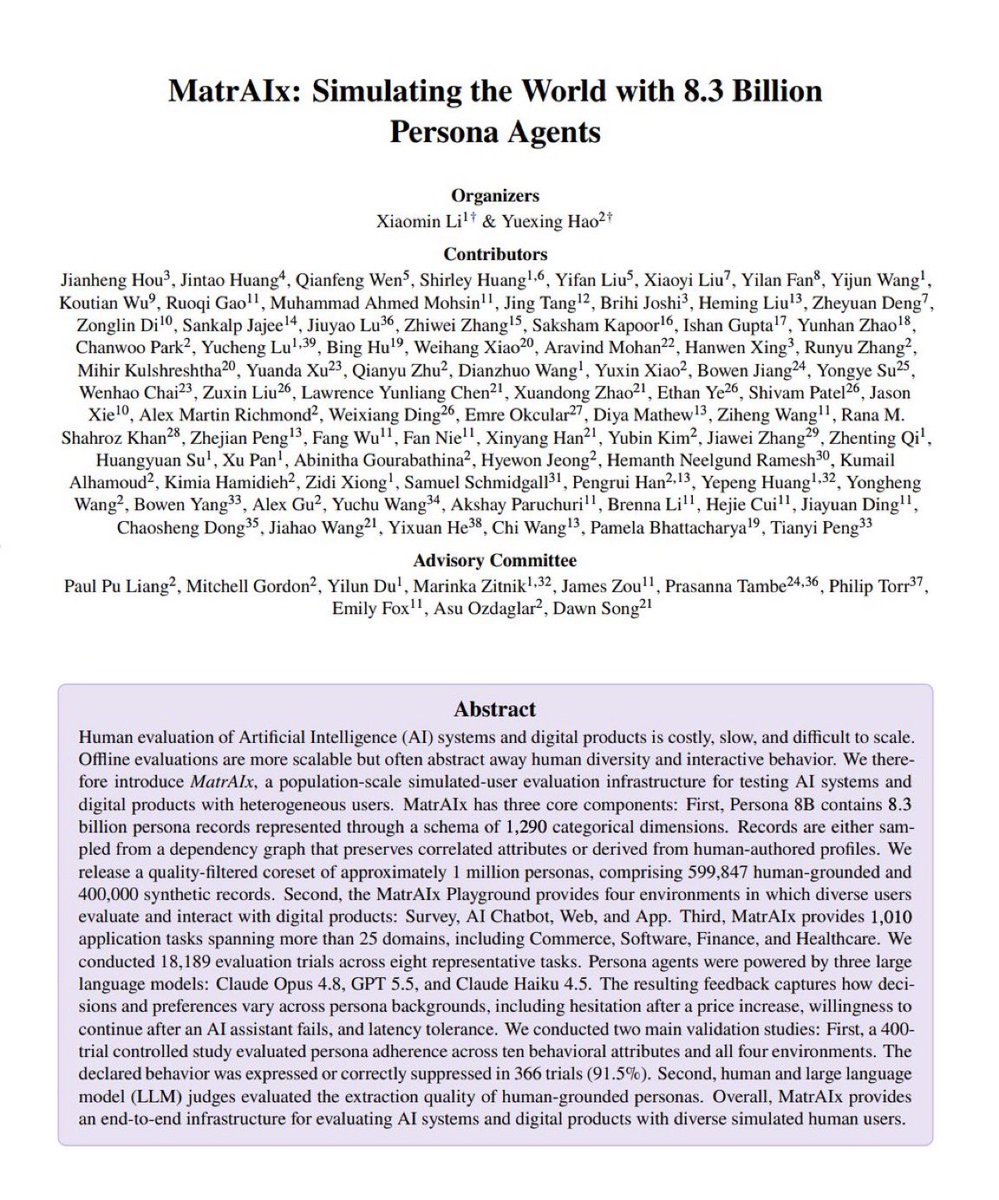
Harvard ve MIT, Dünya nüfusuna denk 8.3 milyar sanal insan yarattı. Dünya nüfusunun dijital ikizi de diyebiliriz buna.
Adı: MatrAIx. Her birinin 1.290 farklı özelliği var: yaş, psikoloji, harcama alışkanlığı, teknik bilgisi, hatta “fiyat artınca ne kadar tereddüt eder” seviyesinde detay. Tabi bu bilgiler bizim sanal dünyaya bir şekilde sunduğumuz bilgilerden derlenmiş.
Nitekim sanal insanlar GPT ve Claude gibi modellerin içine giydirilince, anketlerde, sohbetlerde, web sitelerinde ve uygulamalarda neredeyse gerçek gibi davranıyorlar. Testlerde kişilik tutarlılığı %91.5.
Artık bir meseleyi muhtemelen sanal dünyadaki bu bireylere yani matrixteki izdüşümlerimize yaşatıp istedikleri sonucu alırlarsa gerçek dünyada hayata geçirecekler. Pazar araştırması firmalarını, odak gruplarını, haftalar süren anketleri beklemeden… Tek bir sunucuda, bir gecede.
Bu, pazarlamanın, ürün geliştirmenin ve davranışsal bilimin kurallarını sessizce değiştiren bir kilometre taşı.
Dünya nüfusunun dijital ikizi ya da woodo bebeği artık ellerinde.
𝗟𝗮𝘁𝗲𝗻𝗰𝘆 𝘃𝘀 𝗧𝗵𝗿𝗼𝘂𝗴𝗵𝗽𝘂𝘁 𝘃𝘀 𝗕𝗮𝗻𝗱𝘄𝗶𝗱𝘁𝗵: 𝗪𝗵𝗮𝘁'𝘀 𝘁𝗵𝗲 𝗗𝗶𝗳𝗳𝗲𝗿𝗲𝗻𝗰𝗲?
"The network is slow, let's buy more bandwidth." We hear from time to time, but it rarely fixes anything. The three terms measure different things, and confusing them up leads to the wrong fix.
Here is what each one means:
𝟭. 𝗕𝗮𝗻𝗱𝘄𝗶𝗱𝘁𝗵 𝗶𝘀 𝘁𝗵𝗲 𝗰𝗲𝗶𝗹𝗶𝗻𝗴
The maximum amount of data the link can carry. A 100 Mbps connection means the pipe can move 100 megabits per second under ideal conditions. It says nothing about what we actually get (this part is important).
𝟮. 𝗧𝗵𝗿𝗼𝘂𝗴𝗵𝗽𝘂𝘁 𝗶𝘀 𝗿𝗲𝗮𝗹𝗶𝘁𝘆
Data successfully delivered per second. On that same 100 Mbps link, real throughput comes out at 62 Mbps. Packet loss, congestion, protocol overhead, and retransmissions takes the difference. This is the number that matters when we move large amounts of data.
𝟯. 𝗟𝗮𝘁𝗲𝗻𝗰𝘆 𝗶𝘀 𝘁𝗵𝗲 𝘄𝗮𝗶𝘁
How long one packet takes to get from sender to receiver. Part of it is physics, distance and the speed of light. The rest is routing hops and queues under load. A geostationary satellite link can have huge bandwidth and still feel sluggish because every round trip takes 600ms.
𝟰. 𝗪𝗵𝘆 𝘁𝗵𝗲 𝗱𝗶𝘀𝘁𝗶𝗻𝗰𝘁𝗶𝗼𝗻 𝗺𝗮𝘁𝘁𝗲𝗿𝘀
Different workloads care about different metrics. Gaming and trading need low latency, backups and streaming need throughput, and bandwidth matters only when the pipe itself is the limit. When users say an app feels slow, the first job is finding which of the three is the bottleneck.
𝟱. 𝗛𝗼𝘄 𝘁𝗵𝗲𝘆 𝗶𝗻𝘁𝗲𝗿𝗮𝗰𝘁
High latency also caps throughput. TCP waits for acknowledgments, so on a high-latency link the sender sits idle instead of pushing data. This is why a transatlantic transfer on a 1 Gbps link can be slow at a fraction of capacity.
Quick check: ping tells us latency, iperf tells us throughput, and the provider contract tells us bandwidth.
Which one do you measure first when debugging a slow system?
Subí 10 papers a NotebookLM.
Me devolvió el análisis que me habría costado una semana.
Le pedí esto:
El prompt exacto:
"Actúa como mi asistente de investigación. Para cada paper, identifica: la pregunta de investigación, el marco teórico, las fortalezas y debilidades metodológicas, la contribución al campo y las limitaciones. Después, compáralos entre sí mostrando contradicciones, lagunas metodológicas y teóricas. Dame una tabla de evaluación crítica y una síntesis escrita."
Resultado: un análisis que normalmente toma días, listo en minutos.
Pero hay un segundo prompt que pocos conocen.
Este organiza toda la literatura por temas y cronología:
"Actúa como mi asistente de mapeo bibliográfico. Extrae de cada paper: año, problema central, teoría usada, métodos y hallazgos. Crea una línea de tiempo mostrando cómo ha evolucionado la investigación. Luego agrupa los papers por temas y escribe una síntesis narrativa que explique qué tendencias emergen y qué huecos quedan por investigar."
Dos prompts.
Una herramienta gratuita.
El trabajo de una semana convertido en una tarde.
La clave: sube papers de calidad. Si la fuente es mala, el análisis también lo será.
¿Usas NotebookLM en tu flujo de trabajo? ¿O tienes otra herramienta para investigación académica?
@gvanrossum Flight code for the rockets and Starlink satellites is written in C and C++.
Python is used where runtime performance is less important than rapid iteration and ease of use.
@hopmodell Teşekkürler 🙏 Hic sorma parasiyla da yaptiramiyorsun bazen. Dun bizim yakindaki pideciden yemek soyledim o bile getirmedi "yogunluk" varmis. Sevgililer gununu pidecide kutlayan yurdum ciftleri sagolsun shshsh
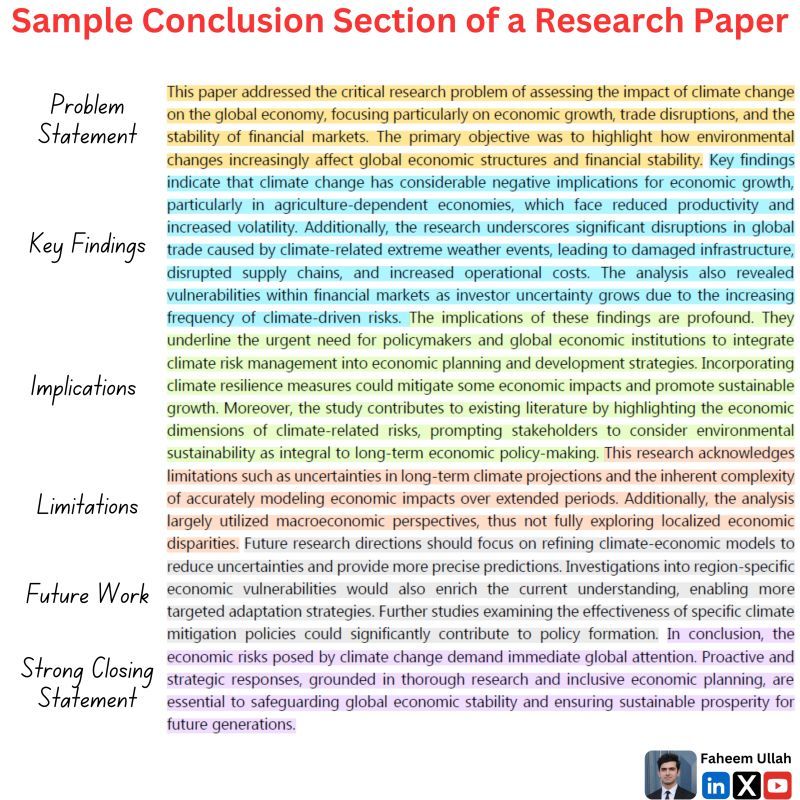
PhD Students - Here is an example of a good conclusion
A good conclusion should have the following 6 parts
1. Problem statement
2. Key findings of the paper
3. Implications of the study
4. Limitations of the study
5. Future work based on the study
6. Strong closing statement
PhD Students - Here is an example of a good abstract.
A good abstract should have the following 6 parts.
1. Importance of your study
2. Gap in the existing literature
3. Objective of your study
4. Method used to conduct the study
5. Key findings of your study
6. Implications of your study
Google Scholar Labs, akademik dünyada kartları yeniden dağıtıyor!
Artık alanyazın taramalarınız sadece kelime bazlı değil, yapay zeka destekli olacak.
Yani iğneyle kuyu kazma devri bitiyor; araştırma yapmak hiç olmadığı kadar hızlı ve akıllı hale geliyor.
Bekleme listesine dahil olmayı unutmayın!
https://t.co/TH0SvMVQ9l