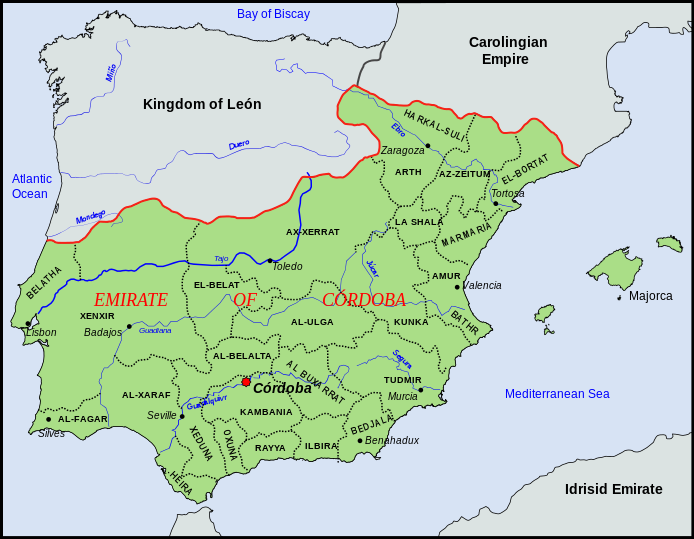
Like Zoroastrianism and the Greek religion, Hinduism was for long a massive, unwieldy set of often contradictory traditions that were defined by ancient scriptures as much as they were by popular worship. In fact, Hinduism didn’t really start to take shape as a defined, coherent religion until the rise of Buddhism in the Fourth and Third century BC set up a rival that opposed key Hinduist notions and its caste arrangements.
This forced a reckoning that, over the following centuries, produced core Hindu beliefs that are supposed to be shared by all followers of the religion; and from these followed the consideration of India as a world-in-itself, so that rulers in the monarchical states in the sub-continent started to describe themselves with terms such as “chakravartin”, “Samrat” and “sarvabhauma,” meaning “universal ruler,” one who aimed at establishing his rule over all of Jambudvipa – the ancient name for Greater India first used by Ashoka in the Third century BC[1].
Hindu beliefs are based on the concept that praiseworthy deeds in this world lead to rebirth in a higher caste, while low actions against the caste system itself lead to rebirth as dogs, boars or, even worse, untouchable people[2] or even slaves in the house of a lender when one defaults on a loan: notions that are first explicitly described in the relatively late so-called Upanishads books composed – on the basis of older oral sources[3] – from the Second century BC and well into the Second millennium AD[4].
https://t.co/UbbnC7ovdb
I grew up in 1980s Spain with Spanish cleaners, laborers and helpers. That Western people won't do those jobs regardless of the wage offered is an untenable idea.
Napoleon was quite the Nayib Bukele:
The scourge of brigandage, whether politicized or not, also continued unabated into the early Consulate. In fact, an infusion of royalist leaders turned an already chaotic mix of endemic lawlessness and local hatreds into a crescendo of banditry. With criminal courts in transition and regular military courts no longer involved, the First Consul sought new means to redress the situation. Bonaparte adopted an explicit policy of ruthless intimidation that would tip the balance of fear in the regime’s favour. In the spring of 1800, he ordered the formation of three military commissions in regions where politicized brigandage had been stubbornly intractable: the upper Rhone Valley, the foothills above Nice, and western Brittany. Although tightly limited in geographic scope, these commissions displayed scant respect for due process. The flying columns of troops that attended each commission showed a special disregard for legality. They arbitrarily arrested scores of people, including whole families, pillaged farmhouses, brutalized recalcitrant officials and threatened to kill anyone who aided the bandits. Dozens of supposed brigands were shot while ‘trying to escape’ or simply as an object lesson to locals. The brigands showed no less determination. When the local commander refused to release a brigand leader from the jail at Valréas (north of Avignon), members of his band shot the commander and three fellow officers to death, then celebrated by dragging their naked and mutilated corpses through the streets. The ruthlessness of these regionalized conflicts is well illustrated by the struggle against the barbets north of Nice. The local armed forces there shot 136 men, including 65 of the 70 people tried by the military commission created in June 1800.31
First Consul Bonaparte’s willingness to use whatever means were necessary became especially obvious in the wake of the failed attempt to blow him up in the rue Nicaise on 24 December 1800. This provoked what might be called the ‘Consular Terror’. The national outcry over the attempt to assassinate Bonaparte encouraged him to exploit the public mood and take draconian action. He promptly ordered a crackdown on former Jacobin radicals and sans-culottes, more than a hundred of whom were arrested and deported without trial to Guyana. The Senate issued the deportation order, cynically claiming that it was a measure to conserve the constitution, thereby implicating the entire regime in this political proscription.
(From The Oxford Handbook of the French Revolution)
Reading Slavoj Zizek’s old book “Tarrying with the negative” (1993), I came across this delightful anecdote about a Yugoslavian cut of Ben Hur, the American movie about early Christian Romans:
What we must bear in mind here is the ultimate contingency of this act of “positing the presuppositions.” In ex-Yugoslavia, the Communist censorship was neither too harsh nor too permissive. For example, films with direct religious content were allowed, but not if their subject was Christian: we saw de Mille Ten Commandments, but there were problems with Wyler’s Ben Hur. The censor resolved his dilemma (how to obliterate Christian references in this “tale of Christ” and yet preserve the story’s narrative consistency?) in a very imaginative way: he cut out of the first two-thirds the few scattered oblique references to Christ, while simply cutting off the entire last third where Christ plays the central role. The film thus ends immediately after the famous horse-race scene in which Ben Hur wins over Massala, his evil Roman archenemy: Massala, all in blood, wounded to death, spoils Ben Hur’s triumph by letting him know that his sister and mother, allegedly dead, are still alive, yet confined to a colony of lepers, crippled beyond recognition. Ben Hur returns to the race ground, now silent and empty, and confronts the worthlessness of his triumph — the end of the film. The censor’s achievement is here truly breathtaking: although undoubtedly he had not the slightest notion of the tragic existentialist vision, he made out of a rather insipid Christian propaganda piece an existential drama about the ultimate nullity of our accomplishments, about how in the hour of our greatest triumph we are utterly alone. And how did he pull it off? He added nothing: he brought about the effect of “depth,” of a profound existential vision, by simply mutilating the work, by depriving it of its crucial parts.
It never ceases to amaze me the way German people and culture were stripped off Eastern Europe. This is “A Time of Gifts” by Patrick Leigh Fermor, a pre WW2 travelogue:
In a little while I got to an enormous bridge. Its great frame, the masts and trees and old buildings congregated at the further bridgehead and the steep ascending city above them had been visible for miles. It was the old city of Pressburg, re-baptized with the Slav name of Bratislava when it became part of the new Czechoslovak Republic. The climbing roofs were dominated by a hill and the symmetry of the huge gaunt castle and the height of its corner-towers gave it the look of an upside-down table.
I reached the middle of the bridge at the same moment as a chain of barges and leaned over to watch them nose their way upstream through the flotsam. The ice-fragments were beginning to get furry at the edges. Colliding with them softly, the vessels disappeared under the bridge one by one and emerged the other side in the wake of a sturdy tug. It flew the Yugoslav colours and the name Beograd was painted along the sooty bows in Cyrillic and Latin characters. The long-drawn-out wail of the siren gave way to the coughing staccato of the engine. The funnel puffed out a non-stop sequence of smoke balloons that lingered on the still air as the procession grew smaller in the distance, in a slowly-dissolving dotted line. The barges toiled against the current, sunk to their gunwales under a tarpaulined cargo. But in a day or two—I thought with sudden envy—they would be stealing into the Wachau and waking the two-noted echo of Dürnstein.
* * *
Listening to the unfamiliar hubbub of Slovak and Magyar the other side, I realized I was at last in a country where the indigenous sounds meant nothing at all; it was a relief to hear some German as well. I managed to find my way to the Bank where my friend Hans Ziegler held minor sway and ask if the Herr Doktor was in his office; and that evening I was safe under a roof which was to be my haven for days.
Hans and I had made friends in Vienna. He was nine years older than I. His family lived in Prague and, like many Austrians at the break-up of the Empire, they had found themselves citizens of the new-born Republic, tied there beyond uprooting by old commitments; in this case, by a family bank. Hans helped to run the branch of an associate establishment in Bratislava—or Pressburg, as he still firmly called it, just as ex-Hungarians stubbornly clung to Pozony[1]—and felt rather cut off from life. Vienna was his true home. Apart from this, England was his favourite. He had many friends there and happy memories of college lawns and country sojourns. His fondness for architecture coincided with my early fumblings in the same direction; and it was from him, I am certain, that I first heard the great names of Fischer von Erlach and Hildebrandt and the Asam family. “Come and stay on your way to Hungary and cheer me up,” he had said. “I get so bored there.”
To my uncritical eye Bratislava didn’t seem too bad.
This would be pretty helpful for European economies, but who cares. The war in the Ukraine is a better bet for the European Union.
For decades, there was no ready-made way to insult and disparage Eurosceptics while offering excuses for the EU’s abysmal economic performance and the disasters it has caused; now, anyone who doesn’t fall perfectly into line can simply be labeled a “Putin-stooge” or “pro-Russian.”
This works out well for the Brussels oligarchy, the Davos crowd, and the national political elites -- whom they keep in their pocket with handouts and cushy positions. Then there are those nostalgic for board games, who fancy themselves once again conquering territories and maneuvering troops across the steppes to finally defeat the Russian ogre.
@jg_dominguez La idea es que cambie en uno, cinco, 10 años. La superstición democrática de que pones a un señor en La Moncloa y tiene 100 días para arreglar el mundo debería ser enterrada para siempre.
No wonder many thought the Jacksonians’ flagrant use of patronage was a throwback to the old monarchical techniques of the eighteenth century; this is partly why Jackson’s opponents called him “King Andrew” and formed the Whig party. Although the Jacksonians’ justifications of patronage were sometimes similar to those of the past, its use was different—different not only from that of monarchy but from that of republicanism as well.
The Jacksonian officeholders were not socially visible and respectable men. Historians and sociologists have worked hard to show that the social status of the Jacksonian officeholders was not dramatically different from that of earlier administrations. But not only have these studies focused on the administrative elites of the government, ignoring the federal officeholders in the localities, but they have often applied very crude measures of social status and social background. “Occupation” is virtually no measure at all: there were lawyers and there were lawyers; an enormous social gulf, perceptible to contemporaries if not to us, separated a Harvard-educated attorney from an apprenticed lawyer who had never been to college.
Many of the Jacksonian officeholders were new sorts of democratic men. Even Amos Kendall, a member of Jackson’s “kitchen cabinet” and author of Jackson’s Bank veto message, was thought by some to lack “the polished conversation the graceful manner & high tone” of a real gentleman; he did “not look like a Gentleman.” In fact, Jackson chose what he called “plain businessmen” for his official cabinet. “He has surrounded himself with men of narrow minds, some of them hardly gentlemen,” complained the governor of Virginia.
Not that all Jacksonians were without wealth and power. Some were Federalist converts who found solace in the Jacksonian attack on corruption and the Jacksonian desire to restore order and virtue. Others were ambitious entrepreneurial go-getters, wealthy but unestablished and ungenteel. But many others were like the humble grocer in Frankfort, Kentucky, who became a postmaster—truly obscure men without social position in their localities; in fact, their appointment to a post office or a land office was usually the source of any social influence they might have.
(From The Radicalism of the American Revolution by Gordon S. Wood)
Patrick Leigh Fermor describing pre-WW2 Gypsies in a A Time of Gifts:
‘I met nobody till I came on some Gypsy boys who spend their time hunting weasels, stoats, rats, field-mice and other humble fauna. The way they go about this is very unsporting. They find their holes in the banks, pour a bucket of water in the highest one and the animals come scuttling half-drowned out of exits lower down and the boys catch them and wring their necks. When I passed them they waved bunches of dismal and draggled little corpses at me, wanting me to buy some, as they eat them and expect you to do the same—they eat anything. Baron Pips told me that when his farm people bury a horse that has died of old age or disease, Gypsies are sure to dig it up and eat it in the middle of the night...’
Hinduism, the final evolution of Vedic ideology, is a wonderfully complex form of ethnic separation: a finely-defined gradation of social standing, almost exactly corresponding to one's skin tone, a solid edifice of prejudice unmatched in human history.
The word “varna” occurs frequently in the Rig Veda and usually means “light” or “color,” which goes to show that ancient Aryans weren’t much concerned with hiding the basis of their caste system. However, the earliest reference to the division of society into four strata occurs in the Purusha-sukta, a hymn in Book 10 of the Rig Veda Samhita, a later book.
Varna rules were particularly strict regarding women, seen as the container from which perfectly upper-class men were supposed to emerge: marriages of high varna men with lower varna women were frowned upon but explicitly accepted in the Dharmashastra, to the point that early Vedic texts accept sons of Ksatriya mothers, from Brahmin fathers, as fully Brahmin; the opposite case was seen as extremely contaminant, and very much prohibited.
https://t.co/utwFbWHYkt
Clarice Lispector remains a fascinating figure for literary critics simply because she was hot and a Jewish refugee from Ukraine (born in 1920, after her mother was gang-raped by Russian soldiers in 1920 and infected with syphilis, even though biographers like Benjamin Moser say her mother got pregnant of her from her father, as a folk medicine cure for syphilis), and died relatively young of cancer at 56.
Take Stephanie LaCava, writing a review of Lispector’s complete stories in LARB, in 2015. She has extremely little to say about the stories themselves, but a lot about Lispector’s looks: “her work is defined by contrast — the knowable and unknowable — so too is, surprisingly (or not, considering that she is a woman), her personal life. Or rather, so too is her appearance, and its (apparent) incompatibility with her work. Lispector likened herself to a sphinx, and she was indeed tricky, not least of all in her physical presentation. When she rose to prominence at the age of 23 with the publication of Near to the Wild Heart, people were taken aback by her glamorous, movie-star attire: a little sweater top, a fitted skirt, wrap-around sunglasses, a cigarette in her nail-polished hand. In one of my favorite pictures, she is sitting on the beach with her son Pedro, looking more like a swimsuit model than one of the 20th century’s greatest writers. Being famous for her striking beauty did not make her popular, which mattered to a woman whose talent was proportional to her sensitivity. In his biography,
Moser reveals that editors considered her difficult to work with, which may have contributed to the trouble she had getting published during her years living in Washington with her diplomat husband. Her presence was so captivating that even her friends (and there were few true ones) agreed her intensity sucked up their energy. She was rebellious, cavalier, so different from the diplomatic wives that surrounded her throughout much of her adult life. Moser cites a letter Lispector wrote to her friends back in Rio: “I’ve never heard so much serious and irremediable nonsense as over the month of this trip / People full of certainties and judgments, whose empty lives are filled up with social pleasures and daintiness.” At the age of 39, this scene would prove too much — or too little; Moser explains that Lispector divorced her husband and returned to Brazil as a single parent of two sons. To bring in money for her family, she began working as a fashion journalist, both under her own name and under pseudonyms. For Pond’s beauty products, she was Helen Palmer; for a Rio paper, she was a ghostwriter for the starlet Ilka Soares. She produced slapdash translations of writers like Edgar Allan Poe. Through these gigs, she continued to write fiction. In a way, the rituals and customs necessary to maintaining an attractive appearance were Lispector’s way of holding on to a reality she often felt slipping through her fingers. She had to present something solid to the visible world, even as all of her mental energy was occupied by less tenable matters.
Throughout her work, as Moser notes in his biography, there are moments when makeup and beauty figure as the real, the solid, in the category of knowable. These seeming superficialities are actually conduits or tools, masking — protecting — the unknowable soul; they are links to sanity. Lispector’s particular brilliance as a woman and as a writer is here: she refuses to accept that her talents might seem incongruous against the backdrop of her appearance.” A search for Google images of Lispector produces the huge amount of pics one expects from a woman who knows she looks good. Miranda France wrote in the TLS 4.9.15, reviewing Moser's edition of her stories: “Lispector did look extraordinary, a bit like Scarlett Johansson with over-ambitious cheekbones. Some detractors use that as a reason to dismiss her; what is more surprising is that her fans make such a virtue of it.”
Biographies of the spouses of history’s great women are few and far between. This must change.
There is only one biography about Dennis Thatcher — married to Margaret for decades — and that is only because their daughter Carol decided to write it. Amidst the jungle of books about Virginia Woolf, there is one about her husband, Leonard, a writer of moderate distinction.
This is because no one seriously believes that Dennis or Leonard exerted a decisive influence on their wives, nor does anyone make such an argument. Curiously, the opposite happens frequently: the spouses — or even mistresses — of history’s great men receive extraordinary attention. Which, frankly, strikes me as somewhat sexist. Balance is needed.
Kick a stone, and out pops a biography of Josephine, Napoleon’s first wife. She was a woman who, incidentally, failed in the primary role her husband assigned to her (leading Napoleon to divorce her and marry a princess who bore him an heir) and who had zero proven influence on Napoleon’s main undertaking: killing vast numbers of people for his own glory and that of France.
Zelda Fitzgerald, F. Scott’s wife, is a curious case. If you are fed up with the myriad articles, books, and films in which she features as a protagonist —despite her obvious lack of talent — you had best hide under the bed: there are still two semi-dead biopic projects about Zelda in the works (one starring Scarlett Johansson, the other Jennifer Lawrence). Their prospects haven’t been improved by the fact that the Amazon series titled Z: the Beginning of Everything, based on a 2013 novel, tanked spectacularly a decade ago.
Pick up any popular biography of Einstein, and Mileva Marić is never far away. Books, essays, documentaries and podcasts endlessly debate whether she contributed to his early mathematical work. But take Katherine Johnson of “Hidden Figures” Hollywood fame: her husband James Goble, a World War II veteran who could tell as tale or two, is almost entirely unknown.
https://t.co/gbFtdpeaBM
This from “The Radicalism of the American Revolution” by Gordon S. Wood explains so much. Copying @robkhenderson.
“The very clarity of gentlemen’s social superiority over the rest of society could at times permit what later generations would regard as an unbecoming familiarity between different social ranks. Gentlemen mingled affably with their inferiors at sporting events and other popular entertainments and rubbed shoulders in taverns and streets more easily than would be the case a half century later. Only a hierarchical society that knew its distinctions well could have placed so much value on a gentleman’s capacity for condescension—that voluntary humiliation, that willing descent from superiority to equal terms with inferiors. Rufus Putnam, a young Massachusetts enlisted man serving with the provincial forces attached to the British army in northern New York during the Seven Years’ War, thought that Brigadier General George Augustus, Viscount Howe, possessed such a perfect ability to condescend that “every soldier in the army had a personal attachment to him.” Howe, who was second-in-command in the 1758 expedition against Fort Ticonderoga, frequently came among the men, said Putnam, “and his manner was so easy and fermiller, that you loost all that constraint or diffidence we feele when addressed by our Superiours, whose manners are forbiding.”
Gentlemen drank with their inferiors, joked with them, and sometimes teased them, as with children. Southern gentry planters called their neighboring freeholders by their first names, but expected to be called “Mr.” or “Your Honor” in return. Gentlemen often took the vulgarities of their inferiors for granted and felt little threatened by them. Sometimes they scarcely thought about those far beneath them. What is extraordinary about the Itinerarium of Dr. Alexander Hamilton—that remarkably detailed report of a four-month trip northward in 1744 by a learned and observant Maryland physician—was Hamilton’s ignoring of the presence or activities of his Negro servant, who accompanied him throughout. The more confident gentlemen were of their superiority, the more familiar they might be. Thus William Byrd could blithely eat the corn pone served to slaves while a boatwright looked on in disgust.”
How the loss of esotericism created leftism. This is from Arthur Melzer's "Philosophy Between the Lines: The Lost History of Esoteric Writing" (2014):
"The rise of historicism, Strauss argues, derives not only from the decline of esoteric reading but also and more fundamentally from the decline of esoteric writing. If the classics were right regarding the essential incompatibility of theory and praxis, then the reduction or removal of the esoteric shield that protects society and philosophy from each other must eventually do harm to both...
The traditional attempt of classical esotericism to keep theory and praxis apart, to shelter political life from the corrosive effects of philosophic reason, was discarded. It was replaced by its opposite: the Enlightenment project to disseminate philosophic or scientific knowledge in the hope of progressively bringing the world of practice into conformity with reason… This led to a dangerous universalism, political doctrinairism, and ideological imperialism epitomized by the French Revolution (and, later, the Communist Revolution); it uprooted peoples from their ancient traditions and local customs; it fostered alienation, skepticism, materialism, and the decay of traditional mores. The great Enlightenment effort to make men more rooted and at home on earth was, in many respects, having precisely the opposite of its intended effect. Concerning the danger that undiluted rationalism poses to politics, they might simply have accepted that conflict and returned to the classical solution of esotericism. Instead, they moved forward toward historicism because, for all their passionate and seemingly total opposition to modernity, they remained modern thinkers in the decisive respect: they were still at war with the “kingdom of darkness”… In Strauss’s telling, the long, tortured history of modern philosophy is largely the story of the conflict between reason and social life unleashed by the gradual abandonment of esoteric writing. The more that philosophic rationalism, liberated by the Enlightenment, moved aggressively into the open, the more it posed dangers to healthy moral and political life and thus the more it generated a hostility toward reason. This led to persecution from the nonphilosophers but to something far worse from the philosophers—to la trahison des clercs, the flight from reason, the politicization of philosophy, the rise of philosophic antirationalism…
In its commitment to being practical and politically effective—and in its resulting need to overcome skepticism and arrive at settled, certain answers—modern rationalism embraces a kind of hyperfoundationalism: it hopes once and for all to lay down solid, even indubitable, foundations and on this basis to build up a great and ever-increasing edifice of reliable knowledge. In a word, it seeks to make philosophy progressive , like the technical arts. “This idea [of progress] implies that the most elementary questions can be settled once and for all so that future generations can dispense with their further discussion, but can erect on the foundations once laid an ever-growing structure. In this way, the foundations are covered up.”