Ten years after the death of Ellen Meiksins Wood, I wrote a short piece revisiting her method of social history of political theory — reading ideas under the historical pressures of social property relations and class struggle. @histmat
https://t.co/yzIDYG7fuL
Now that Pandora’s box is open, the party-vote representation of smaller parties risks becoming collateral in electorate-level deals. Over the next electoral cycles, this could progressively consolidate the system, leaving only a handful of smaller parties whose survival depends on negotiated electorate arrangements.
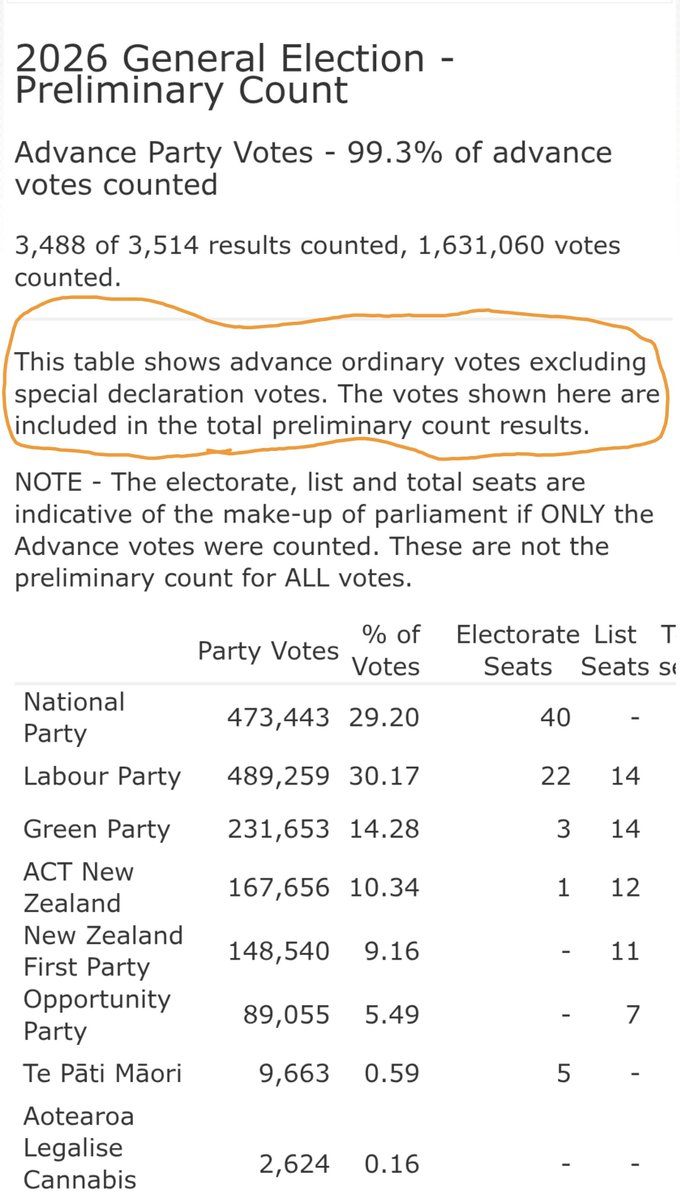
My take on NZ 2026: MMP in is de facto over! In the future elections, electorate contests will become exercises in strategic vote-splitting. Smaller parties will have to trade electorates for party votes, turning proportional representation into a game of territorial bargaining.
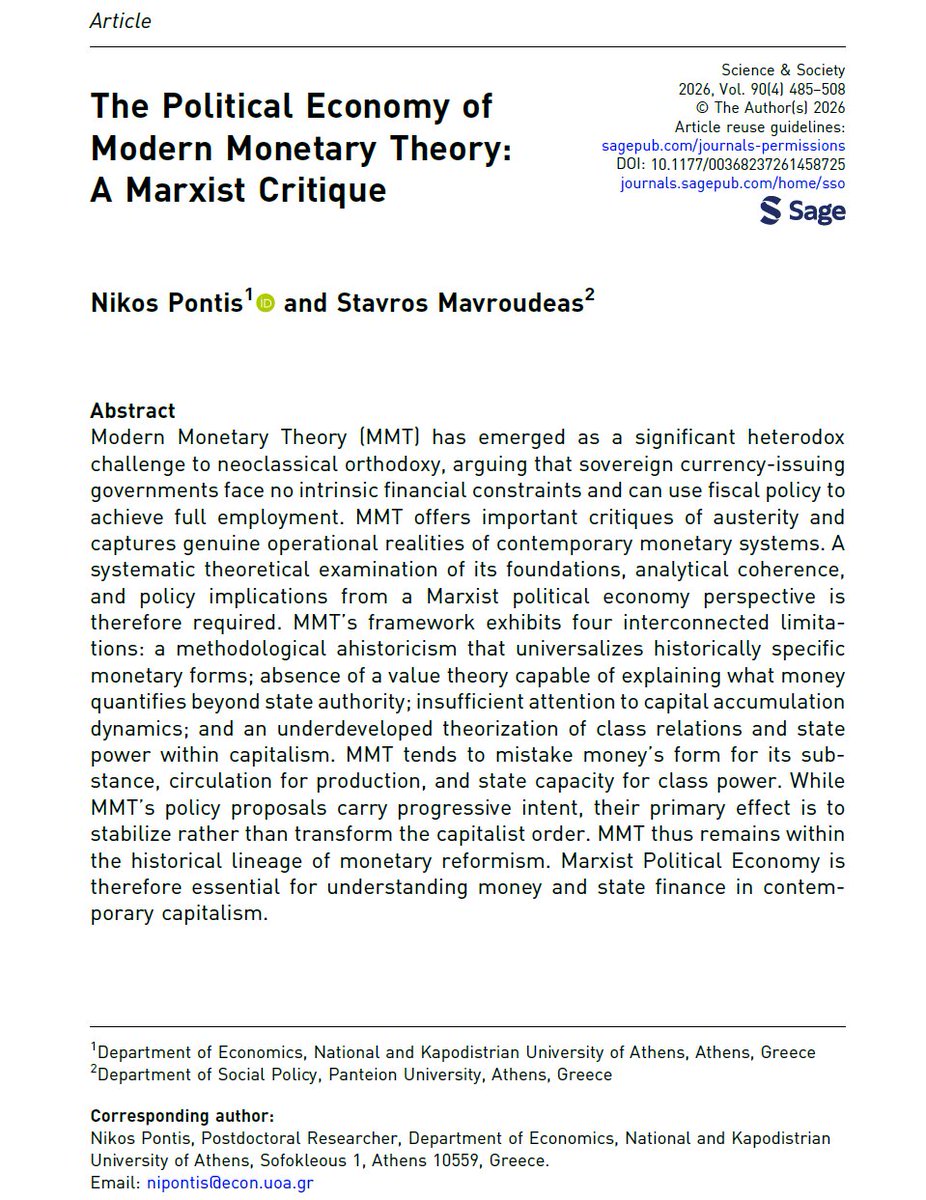
MMT correctly exposes the myths of neoliberal austerity, but mistakes monetary sovereignty for social power. Without a theory of value, exploitation and capital accumulation, it can explain how the state creates money, but not the limits imposed by capitalist social relations.
@ponekeben I think the number (300k) comes from the total of advanced votes (1.9m) - amount of counted votes from those advanced votes today (1.6m). EC will confirm how many special votes were cast today and overseas votes as well, in addition to that approx 300 k votes.
@henrycooke I think the number (300k) comes from the total of advanced votes (1.9m) - amount of counted votes from those advanced votes today (1.6m). EC will confirm how many special votes were cast today and overseas votes as well in addition to that approx 300 k votes.
When the Napoleonic Wars pulled men off English farms, farmers turned to machines. Wartime labor shortages sped the adoption of laborsaving technology, especially where skilled mechanics were common, say researchers at @UZH_en, @HSGStGallen, & @UofGlasgow. https://t.co/E9rJIXGDr9
The issue isn't a candidate acting alone. It's that parties reach constituencies through brokers—community leaders, notables, spokespeople—rather than organising people directly. They could have campaigned at the grassroots. But chose mediation, then disowned the mediator.
I wrote a short, probably too dense note on The Blueprint by Beggs, Burgis and Sunkara. A much-needed attempt, and even writing this note made me think about these issues in more depth.
Olan Biten: Some Thoughts on "The Blueprint" https://t.co/o2MTULcAo5
My timeline this week is full of Dem-soc candidates + their policies—yet no coherent theory or strategy. They ignore history of socialist planning: price controls, nationalisation, central planning, development plans. But this intentional overlooking blocks any real change.
Each Dem-soc agenda either intentionally ignores past socialist experiences or accepts them as failures. The only proposal they actually present operates within the market—nothing to ontologically challenge it. That's not radical.
6/If the specificity of capitalism lies in market dependence—the condition in which producers and appropriators alike must enter the market to reproduce themselves—then a socialism that retains this dependence retains the imperatives it generates.The question dividing these three positions concerns which functions of economic life require planning, and where the break from market coordination must fall.
1/Chibber's argument for market socialism turns on a conflation. The market appears as a neutral instrument of coordination, separable from the social relations in which it operates. A market is a social relation. Where production is organized for exchange, the product becomes a commodity, and the producer—cooperative, state enterprise, or private firm—is subjected to the law of value. Ownership changes; the discipline of market dependence persists.