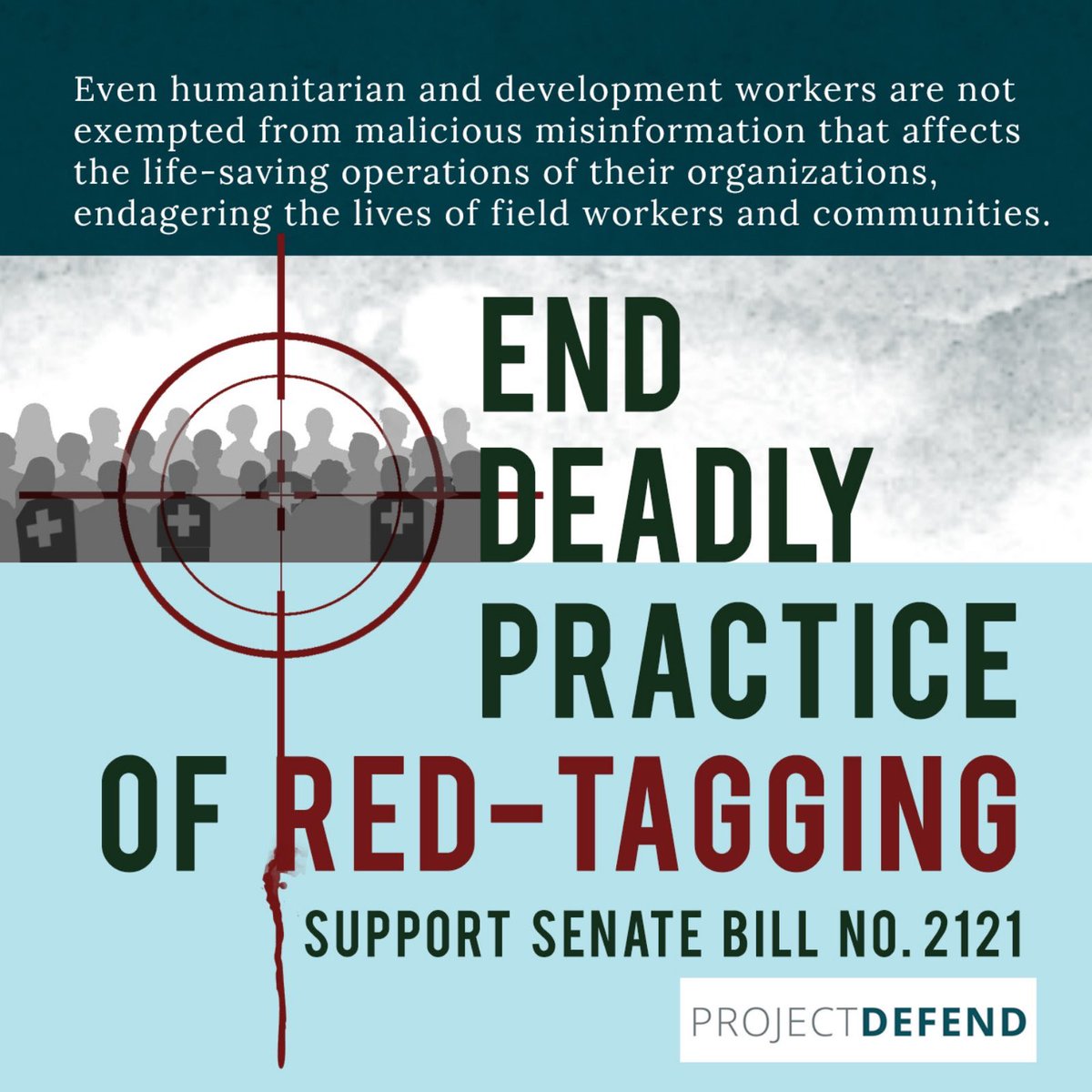
End the deadly practice of red-tagging and vilification of humanitarian and development workers. Support Senate Bill 2121 or the “Act Defining and Penalizing Red-tagging.”
#EndRedTagging
@lianbuan@jairojourno Colmenares said the problem is that there are no predicate crimes in the anti-terror law. This has always been the crux of the issue – terrorism is vaguely defined in the anti-terror law because it doesn't establish predicate crimes like murder, etc. | via @lianbuan#ATAOrals
Today marks Day 4 of the Supreme Court’s oral arguments on the Anti-Terrorism Act of 2020, a controversial law that has ignited much controversy because of its contentious provisions and ‘overbroad’ definition of terrorism.
Now interpellating Atty. Molo, Justice Lopez argues that the void for vagueness rule does not apply to criminal law. To counter this, Molo presents the views of eminent constitutionalist Justice Vicente Mendoza.
@lianbuan@jairojourno Lopez's grilling is on this – is the anti-terror law void for being vague? Lopez is saying void for vagueness should be treated as an as applied case, meaning someone needs to be charged.
Molo: No, you have Imbong case, RH Law. Threat to religious freedom. | @lianbuan#ATAOrals
Ikumpara natin ang BIll of Rights sa ATL na 'hinala' lamang ang kailangan. Sinisiguro ng Bill of Rights na kinikilala ang taglay nating universal rights, ano man ang ating katayuan sa buhay. Lahat tayo ay may karapatan sa 'due process' ayon sa mga batas ng ating bansa. #KONSTI101
Para sa ating #KONSTI101 ngayon araw, suriin po natin ang #BillofRights o Katipunan ng mga Karapatan. Sa paanong paraan kaya tayo pinoprotektahan nito laban sa kawalan ng proseso o "arbitrary" arrest at detention na batay lamang sa "assumption" ng mga may kapangyarihan?
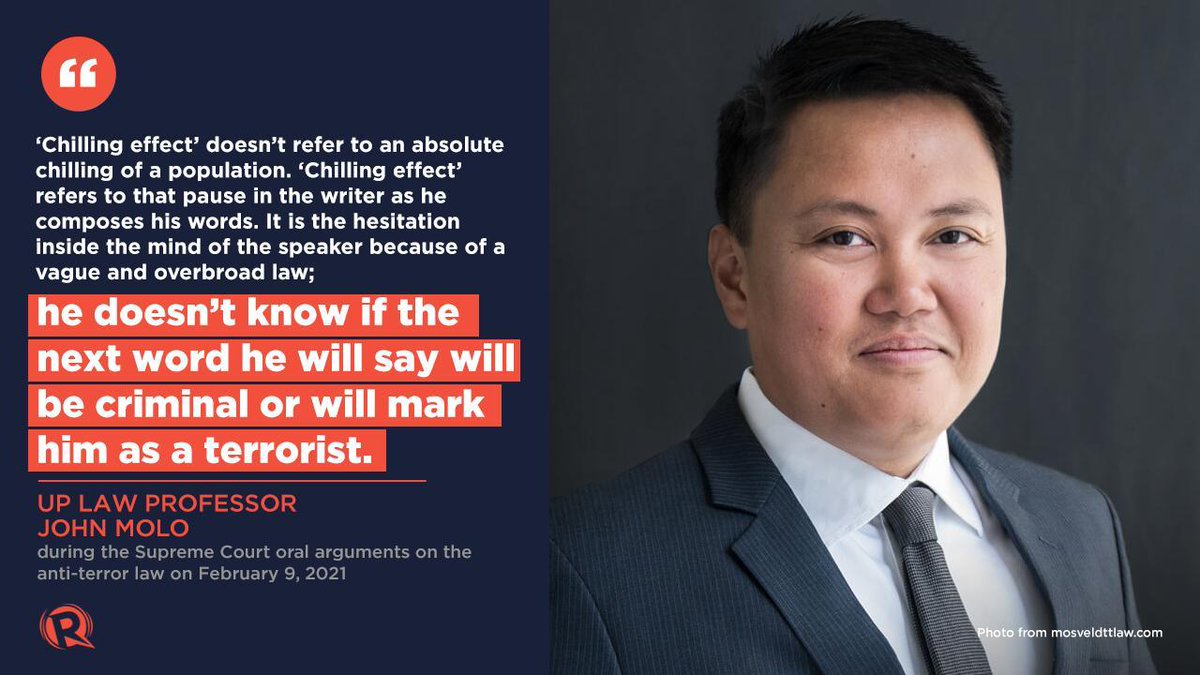
In Day 2 of #ATAOrals, the "chilling effect" was questioned by Assoc Justice Leonen, citing the likes of Antonio Carpio and Jay Batungbakal. This was UP Law Professor John Molo's response: https://t.co/zQKUKC8BPz
Justice Leonen questioned how the anti-terror law gives a “chilling effect,” citing the likes of Antonio Carpio advocating for the West Philippine Sea, and UP students and academics who continue to express their dissent.
Here’s how UP law professor John Molo responded. #ATAOrals
Supreme Court tells lawyers to avoid discussing the anti-terror law case to media.
CJ Peralta said they wouldn't like to use their powers so they're just asking the lawyers to refrain. via Rappler | @lianbuan