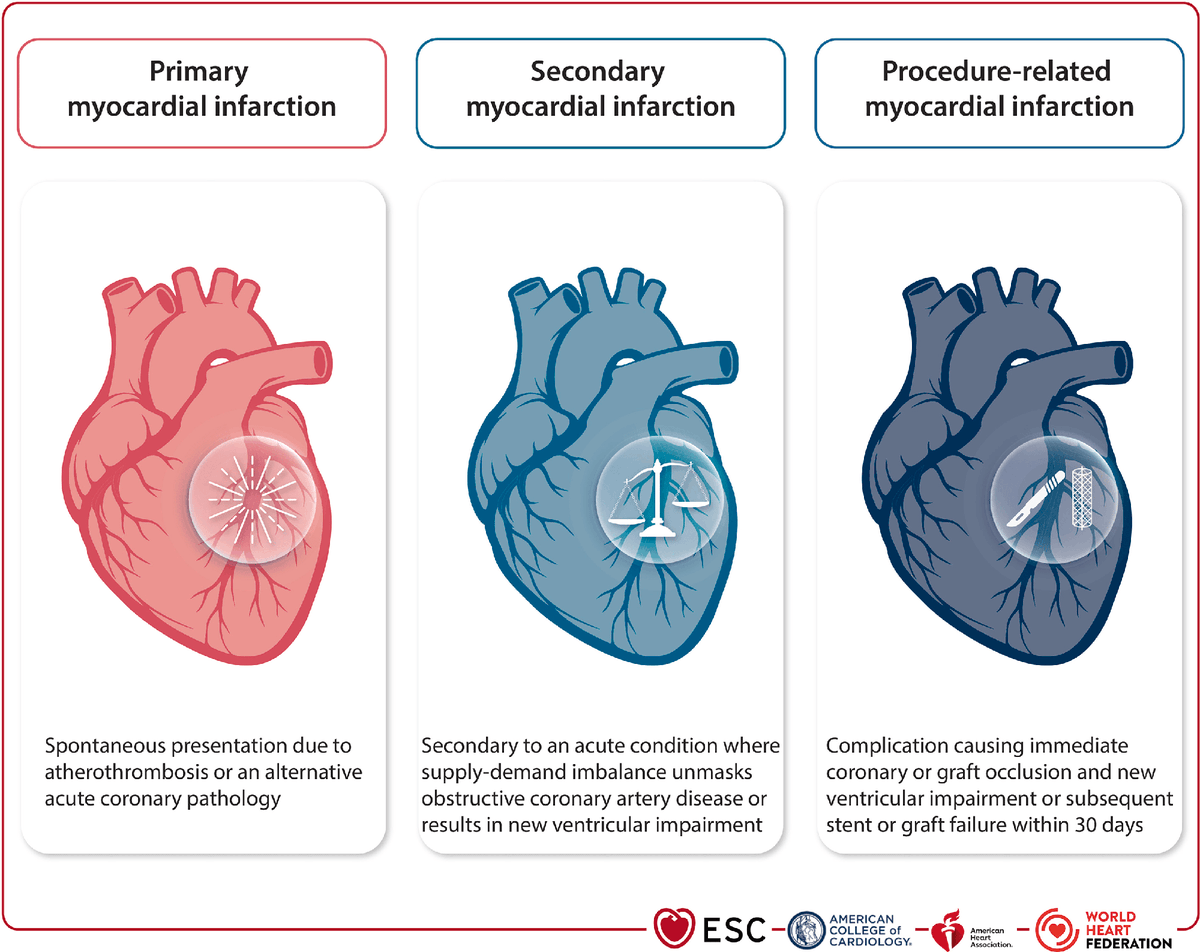
The Fifth Universal Definition of #cvMI, released by 🌏 CV societies, provides a 🆕 clinical classification of MI that is based on pathophysiology, aligns w/ clinical evaluation of patients & incorporates objective diagnostic criteria.
🔗 https://t.co/bfPRH5Ttbq #ESCCongress
@Hragy Wire in LAD, Wire in D1, IVUS to LAD, Provisional Stenting approach covering from D2 to ostium of LAD (Cx will not be compromise even 1-2 struts in LM), POT, re-wire, kissing with DCB in diagonal, Re-POT. Pressure wire in RCA, if negative, done.
@SaidAshrafMD AL 0.75, Whisper ES, IVUS, if Balloon Crossable IVL, if not crossable ROTASHOCK, Next Stenting, Post dilation guided with IVUS and final IVUS run.
Can you remove a fully deployed coronary stent?
Yes. And in selected cases, you should.
New review in Catheterization and Cardiovascular Interventions: indications, technique, imaging, and a 7-step algorithm for percutaneous stentectomy.
https://t.co/U0osPX8l0n
Lancisi Sign- Severe Tricuspid Regurgitation
🛑In case of severe TR, giant C-V waves or the Lancisi sign can be found on the jugular venous examination (seen in the video above). With increasing tricuspid regurgitation, there is an increased backflow of blood to the right atrium during systole. In patients with severe tricuspid regurgitation, the V wave of tricuspid regurgitation merges with the C wave forming a single prominent C-V wave that is often mistaken for the large carotid-pulse wave of severe aortic regurgitation.
Shared with patient permission
#CardioX #Medtwitter
A stent protruding into the aorta can cost your patient coronary access for life, especially once a valve is in.
Sometimes the answer is not to fix the stent. It is to remove it.
New review on percutaneous coronary stentectomy:
https://t.co/U0osPX8l0n
Respiratory tract bleeding following right heart catheterization should be considered pulmonary artery perforation until proven otherwise. The Ping Pong Guide technique is a feasible and safe treatment option.
Get the details in #JACCCaseReports: https://t.co/ACvJcIRkux #TEER
Can we extract previously placed #stents?🫀
Check out our case series of 6 protruding aorto-ostial #stents extracted using an #EnSnare device to facilitate #PCI. The series includes extractions of #stents placed up to 9 years prior‼️
Summary below👇🏽
https://t.co/vahbnSX6JC
#Sharing for learning
Your diagnosis? Cause? Treatment?Follow-up? and most importantly Prevention?
Rare complications may be infrequent, but they deserve greater attention. Every case is an opportunity to learn and highlights the need for standardized SOPs or a consensus statement to guide diagnosis, management, prevention, and follow-up.
What would you do?
My #interventionalcardiology Toolkit 🧰⚙️🪛 No-reflow: distal drug delivery with standard #PCI equipment
🔗https://t.co/xP0J8ewMix
No-reflow is one of the most critical peri-procedural complications and the development of no-reflow can rapidly trigger cardiogenic shock. Emrullah Kiziltunc, Ender Ornek, Adnan Abaci and Mustafa Cetin from 🇹🇷 provide a step-by-step methodology to manage this situation.
Reviewed by Manel Sabate.
.
#CardioEd #Cathlab
@kiadeb87@fjsawaya@sbrugaletta